
Bonsai care
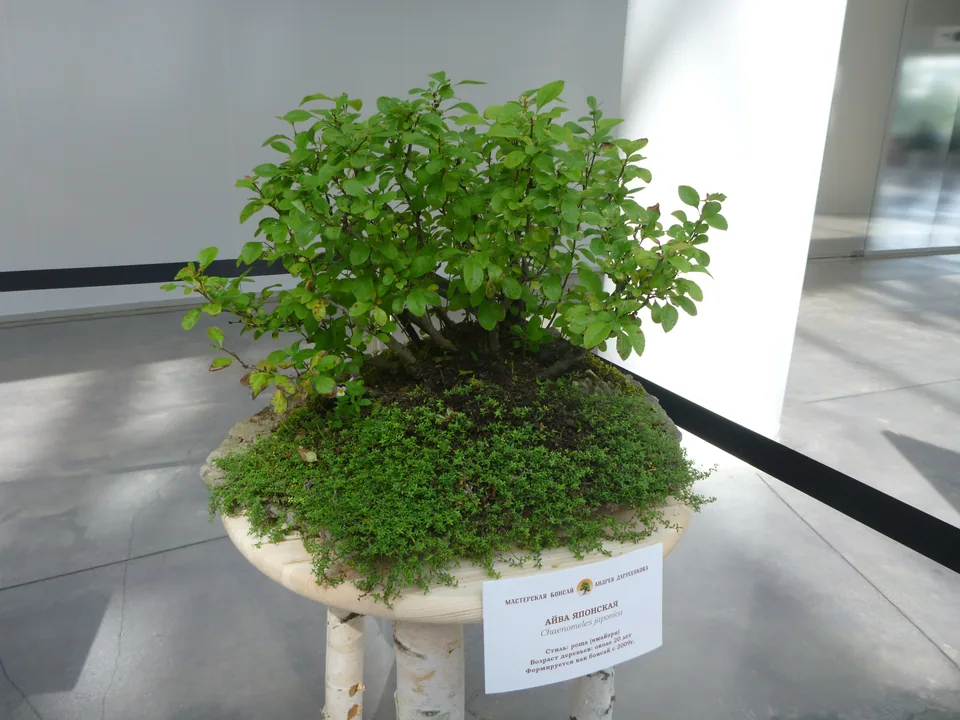
Japanese quince
Chaenomeles japonica
Written by Emilio Marruso
Each step is quoted from bonsai growers, clubs and magazines. Where they disagree we show every school of thought.
Care
Position and light
Sunny location, to promote flowering and fruiting.
To be verified: 1 source
Select a sunny location for your Chaenomeles, ensuring it receives lots of sunlight to promote flowering and fruiting.Watering
In winter water about once a month, only keeping the substrate from drying out; avoid watering during prolonged frost.
To be verified: 1 source
In inverno fornire acqua una volta al mese, osservando comunque che non asciughi troppo ed evitando di annaffiare nel caso di gelate prolungate.Feeding
Feed every two weeks from the end of flowering until the leaves fall.
- When
- end of flowering until leaf fall
- Note
- guida di genere
To be verified: 1 source
Every two weeks from the end of the flowering period until leaves fall.Maintenance pruning
Schools of thought: the sources disagree, each position is shown with its own sources.
Let new growth extend unpruned through the growing season, then cut back to the first or second node in autumn.
- When
- autumn
- Note
- guida di genere (bonsai4me); giardinaggio.it also adds a July pinching of shoots.
Documented: 2 or more sources
For flowers allow new growth to extend unpruned through the growing season then cut back to the first or second node of new growth in Autumn.in luglio è bene procedere alla cimatura dei germogliPrune back old growth right after flowering in spring; stop hard pruning and pinching after mid-summer so next year's flowering shoots are not harmed.
- When
- right after flowering
- Note
- Prairie State Bonsai Society (Illinois), Japanese quince / Chojubai.
To be verified: 1 source
Right after the tree has finished flowering in spring, any old growth should be pruned back.However, after mid-summer, all hard pruning and pinching our of new shoots should stopWiring
Wire can be used to refine structure, but with care on delicate branches; remove it promptly to avoid scars.
- Note
- No season given by the source.
To be verified: 1 source
Wiring can be used to refine the bonsai’s structure and create graceful curves, but exercise caution to avoid damaging the delicate branches and remove the wire promptly to prevent wire scars.When to repot
Schools of thought: the sources disagree, each position is shown with its own sources.
Repot every few years, preferably in autumn; spring is possible with care before leaf buds extend. Autumn protects flowering.
- When
- autumn
- Note
- Intervals differ: 2-3 years (bonsai4me), 3-4 years (giardinaggio.it).
Documented: 2 or more sources
Every 2-3 years in basic soil mix preferably in Autumn though Spring repotting is possible with care before leaf-buds extend.procedere al rinvaso ogni 3-4 anni, possibilmente in autunno, per evitare di compromettere la fiorituraRepot every two to three years in early spring, before new growth starts.
- When
- early spring, before the onset of new growth
- Note
- Same source also allows right after flowering.
To be verified: 1 source
Repot your Japanese Quince bonsai every two to three years during the early spring before the onset of new growth.Winter and frost (in a pot)
Schools of thought: the sources disagree, each position is shown with its own sources.
Protect from frost below 5 C, but the tree needs some cold or it flowers poorly.
- Lowest temperature
- 5 °C (41 °F)
- Note
- guida di genere; the source gives the frost-protection threshold, not a minimum survival temperature.
To be verified: 1 source
Protect in frosts below 5°C though without exposure to some cold Quinces flower poorly, if at all.Quince does not fear cold and can stay outside in winter; keep it in an unheated cold place for about three months of dormancy.
- Note
- No temperature limit given; Prairie State is in Illinois.
Documented: 2 or more sources
queste piante non temono il freddo, quindi in inverno possiamo lasciarle all'esternoA second method which is also common is to place your tree(s) in an unheated garage or shed.Pests and diseases
Pests and diseases named: canker, scale insects, aphids.
- Note
- guida di genere
To be verified: 1 source
Pests and diseases Canker, scale insects and aphids.Propagation
Seed sown outside in autumn, semi-ripe cuttings in mid-summer, layers in autumn.
- When
- autumn / mid-summer
To be verified: 1 source
Sow seed outside in Autumn, semi-ripe cuttings in mid-summer, layers taken in Autumn.Styles
Very common as multi-trunk, clump and sinuous forms; suits most styles except formal upright and broom, in small to medium sizes.
To be verified: 1 source
Very commonly seen in multiple trunk /clump/ sinuous forms though suitable for most forms other than formal upright and broom in small to medium sizes.Remedies
Each remedy shows what official sources say about it; traditional remedies without an official source are marked as such. Harmful ones are listed so you know to avoid them.
Treating the plant
aphids
potassium soft soap Not verified
Traditional remedy, not verified by an official source.
How: Mild infestations: use specific products or natural remedies such as soft potassium soap.
Sources
Every value above is quoted from these documents. Links lead to the original publisher.
- Tree of the Month - June 2024 - Prairie State Bonsai Society · prairiestatebonsai.com, consulted
- Cydonia, pesco giapponese, Fior di pesco - Chaenomeles japonica - Bonsai · giardinaggio.it, consulted
- Chaenomeles/ Flowering Quince Bonsai – Bonsai4Me · bonsai4me.com, consulted