
Bonsai care
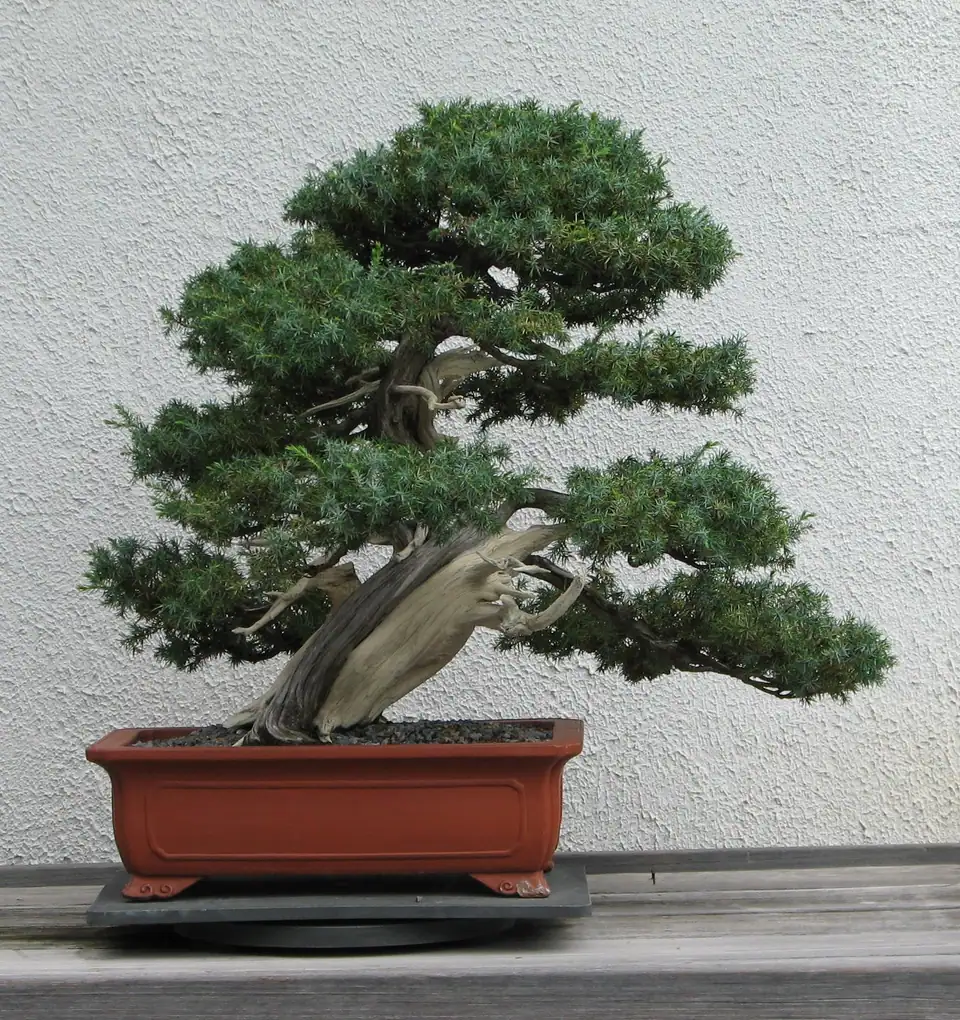
temple juniper
Juniperus rigida
Written by Emilio Marruso
Each step is quoted from bonsai growers, clubs and magazines. Where they disagree we show every school of thought.
Care
Position and light
Full sun all year; never grow indoors.
- When
- year-round
- Note
- Eisei-en (giapponesi, nomina J. rigida tosho) + bonsai4me (genere)
Documented: 2 or more sources
Place Japanese juniper bonsai in full sun year-round.Never try to grow Junipers indoors, though they may seem to tolerate indoor cultivation at firstWatering
Water when the soil surface dries; avoid overwatering poor compacted organic soil, which rots roots.
- When
- growing season
- Note
- Eisei-en (giapponesi) + bonsai4me (genere)
Documented: 2 or more sources
Water as the soil surface becomes dry and mist the foliage when watering in the morning.Ensure Junipers growing in poor, compacted organic soils are not over watered as they suffer root rot easily.Feeding
Older, more refined trees get a milder organic fertiliser with lower nitrogen.
- When
- early growing season through late Fall
- Note
- Eisei-en (giapponesi)
To be verified: 1 source
Older, more refined juniper bonsai should be fertilized with a milder organic fertilizer with a lower nitrogen value.Maintenance pruning
Let spring shoots elongate, prune back in early summer, again after the second flush six to eight weeks later.
- When
- early summer
- Note
- Eisei-en (giapponesi), guida di genere
To be verified: 1 source
Allow this secondary flush to elongate again for six to eight weeks, then prune again.Wiring
Any time of the year, including the semi-dormant winter.
- When
- any time throughout the year
- Note
- Eisei-en (giapponesi), guida di genere; bonsai4me: also winter
Documented: 2 or more sources
Wiring and styling of Japanese juniper bonsai can be done at any time throughout the year.Junipers can be wired at any time of the year including the semi-dormant period of Winter.When to repot
Schools of thought: the sources disagree, each position is shown with its own sources.
Early spring, when foliage returns to normal green.
- When
- early Spring
- Note
- Eisei-en (giapponesi), guida di genere
To be verified: 1 source
Repotting juniper bonsai is best done in early Spring just as the foliage begins to return to a normal green color.August-September, better than late spring; then every 3-5 years.
- When
- August-September
- Note
- bonsai4me, guida di genere (Juniperus)
To be verified: 1 source
Repot in August-September (late Summer/early Autumn), this is a much better window of opportunity than the more traditionally advised timing of late Spring.Repotting soil
Free-draining inorganic mix, never remove all the old soil; bonsai4me: never bare-root and change at most a third to a half.
- Note
- Eisei-en (giapponesi) + bonsai4me, guida di genere
Documented: 2 or more sources
Use a free-draining soil medium, such as [nome commerciale] or a mixture of akadama, lava rock and pumice in a ratio of 1:1:1.Never bare-root a Juniper or change more than a third of the soil (or at very most half) in any one repotting.Winter and frost (in a pot)
Protect during frosts below -10 C.
- When
- winter
- Lowest temperature
- -10 °C (14 °F)
- Note
- bonsai4me, guida di genere
To be verified: 1 source
During winter protect during frosts below -10°CPests and diseases
Aphids, bagworms, borers, scale and spider mites; tip blight and cedar-apple rust are the common diseases.
- Note
- Eisei-en (giapponesi), guida di genere
To be verified: 1 source
are susceptible to a number of pests including aphids, bagworms, borers, scale and spider mites.Styles
J. rigida, the needle juniper, is named as a very popular bonsai species with sharply pointed needle foliage.
- Note
- bonsai4me, guida di genere che nomina J. rigida
To be verified: 1 source
Another very popular species for bonsai is Juniperus rigida, theSources
Every value above is quoted from these documents. Links lead to the original publisher.
- Care and maintenance guide for native Japanese Juniper Bonsai (Juniperus) – Eisei-en · bjornbjorholm.com, consulted
- Juniperus/ Juniper Bonsai Species Guide – Bonsai4Me · bonsai4me.com, consulted