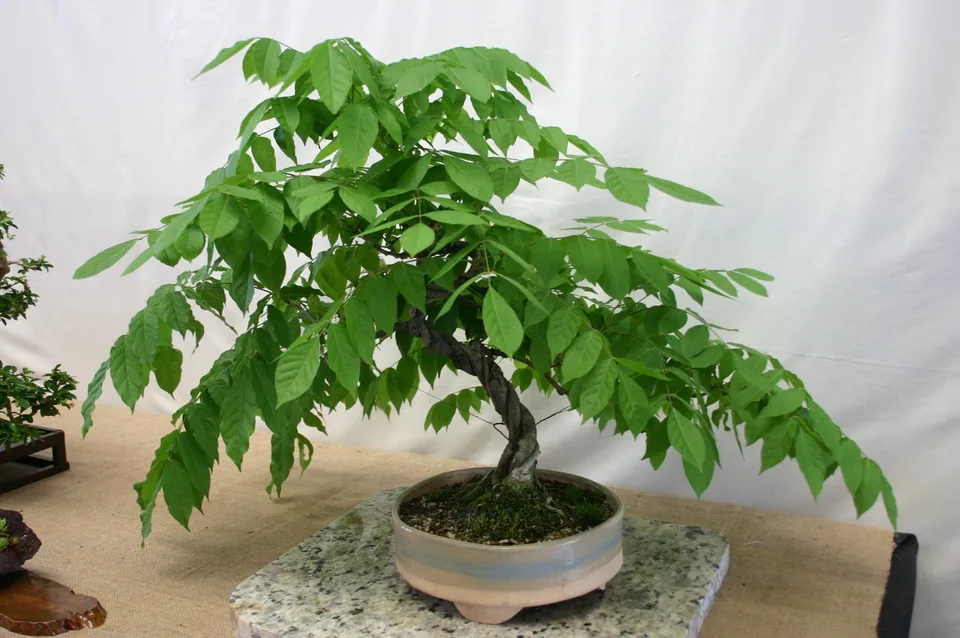

Bonsai care
Chinese wisteria
Wisteria sinensis
Written by Emilio Marruso
Each step is quoted from bonsai growers, clubs and magazines. Where they disagree we show every school of thought.
Care
Position and light
Full sun to partial shade.
- Note
- Phoenix Bonsai Society (Arizona); page covers Wisteria sp. (guida di genere).
To be verified: 1 source
Lighting : Full sun to partial shade.Watering
Needs a lot of water in the growing season; after flowering in summer, stand the pot in a tray of water, without letting water stagnate.
- Note
- Phoenix Bonsai Society (Arizona).
To be verified: 1 source
The wisteria needs lots of water during the growing season.In summer, after flowering, place the pot in a tray of water so that the plant can soak up as much water as it needs.Feeding
Feed more than most bonsai: heavily in spring before flowering and from late summer through autumn until the leaves drop.
- When
- spring before flowering; late summer and autumn until leaf drop
- Note
- Phoenix Bonsai Society (Arizona).
To be verified: 1 source
Fertilize heavily in spring before flowering and in late summer and autumn, until the leaves drop.Structural pruning
Schools of thought: the sources disagree, each position is shown with its own sources.
Structural pruning is done after the blooms have gone by.
- When
- after the blooms have gone by
- Note
- Phoenix Bonsai Society (Arizona). The same page says authors disagree widely on wisteria training.
To be verified: 1 source
Structural pruning and wiring are done after the blooms have gone by.Structural pruning is done in winter, when the plant has no leaves.
- When
- in inverno
- Note
- giardinaggio.net, Italian.
To be verified: 1 source
L’intervento si effettua in inverno, per avere la pianta completamente libera dalle foglie.Maintenance pruning
Pinch the long shoots throughout the growing season and do a thinning pruning right after flowering.
- When
- durante il periodo vegetativo; subito dopo la fioritura
- Note
- giardinaggio.it, Italian.
To be verified: 1 source
il glicine produce rami molto lunghi, che vanno cimati per tutto il periodo vegetativo; è consigliabile praticare una potatura di sfoltimento subito dopo la fiorituraWiring
Schools of thought: the sources disagree, each position is shown with its own sources.
Wiring is done after the blooms have gone by.
- When
- after the blooms have gone by
- Note
- Phoenix Bonsai Society (Arizona). giardinaggio.it also says wire can follow the post-flowering pruning, on young semi-woody branches only; thick adult bark makes wiring fail.
To be verified: 1 source
Structural pruning and wiring are done after the blooms have gone by.Wire can be applied after the post-flowering pruning, only on young, still semi-woody branches; thick bark makes wiring of old branches fail.
- When
- dopo la potatura di sfoltimento post-fioritura
- Note
- giardinaggio.it, Italian.
To be verified: 1 source
In seguito si può applicare il filo metallico, ricordando che gli unici rami che si possono mettere in forma sono quelli giovani, ancora semilegnosi.Wire is applied in summer, thick branches first and then thin ones.
- When
- in estate
- Note
- giardinaggio.net, Italian.
To be verified: 1 source
Il filo metallico va invece applicato in estate, avvolgendo prima i rami grossi e poi quelli piccoli.When to repot
Schools of thought: the sources disagree, each position is shown with its own sources.
Repot young trees every year and older trees every 1-2 years, in early spring or in autumn, combing out and reducing roots strongly.
- When
- early spring or in autumn
- Note
- Phoenix Bonsai Society (Arizona).
To be verified: 1 source
Young specimens should be repotted every year, and the roots must be combed out and reduced aggressively.Wisteria should be repotted in early spring or in autumn.Repot every 2-3 years in the dormant season, from winter to early spring before flowering.
- When
- fine inverno / inizio primavera, prima della fioritura; in inverno
- Note
- giardinaggio.net adds that root pruning at repotting makes flower buds drop, so no flowering the next spring.
Documented: 2 or more sources
Il glicine va tinvasato ogni 2-3 anni, alla fine dell'inverno o all'inizio della primavera, prima della fioritura.Il bonsai di glicine va rinvasato in inverno ogni due o tre anni.Winter and frost (in a pot)
Can stay outside in winter if the pot is protected from frost; young trees need protection from persistent frosts.
- Note
- No temperature given by the Italian sources.
Documented: 2 or more sources
In inverno, il bonsai può stare all’esterno purché il vaso sia adeguatamente protetto dalle gelate.In inverno è consigliabile proteggere dalle gelate persistenti gli esemplari giovani.Propagation
Propagated by cuttings and layering.
- Note
- Phoenix Bonsai Society.
To be verified: 1 source
Propagation : Cuttings, layeringSources
Every value above is quoted from these documents. Links lead to the original publisher.
- Wisteria - Phoenix Bonsai Society · phoenixbonsai.com, consulted
- Coltivazione glicine bonsai - Piante bonsai · giardinaggio.net, consulted
- Glicine - Wisterria sinensis - Bonsai (Wisteria sinensis) · giardinaggio.it, consulted