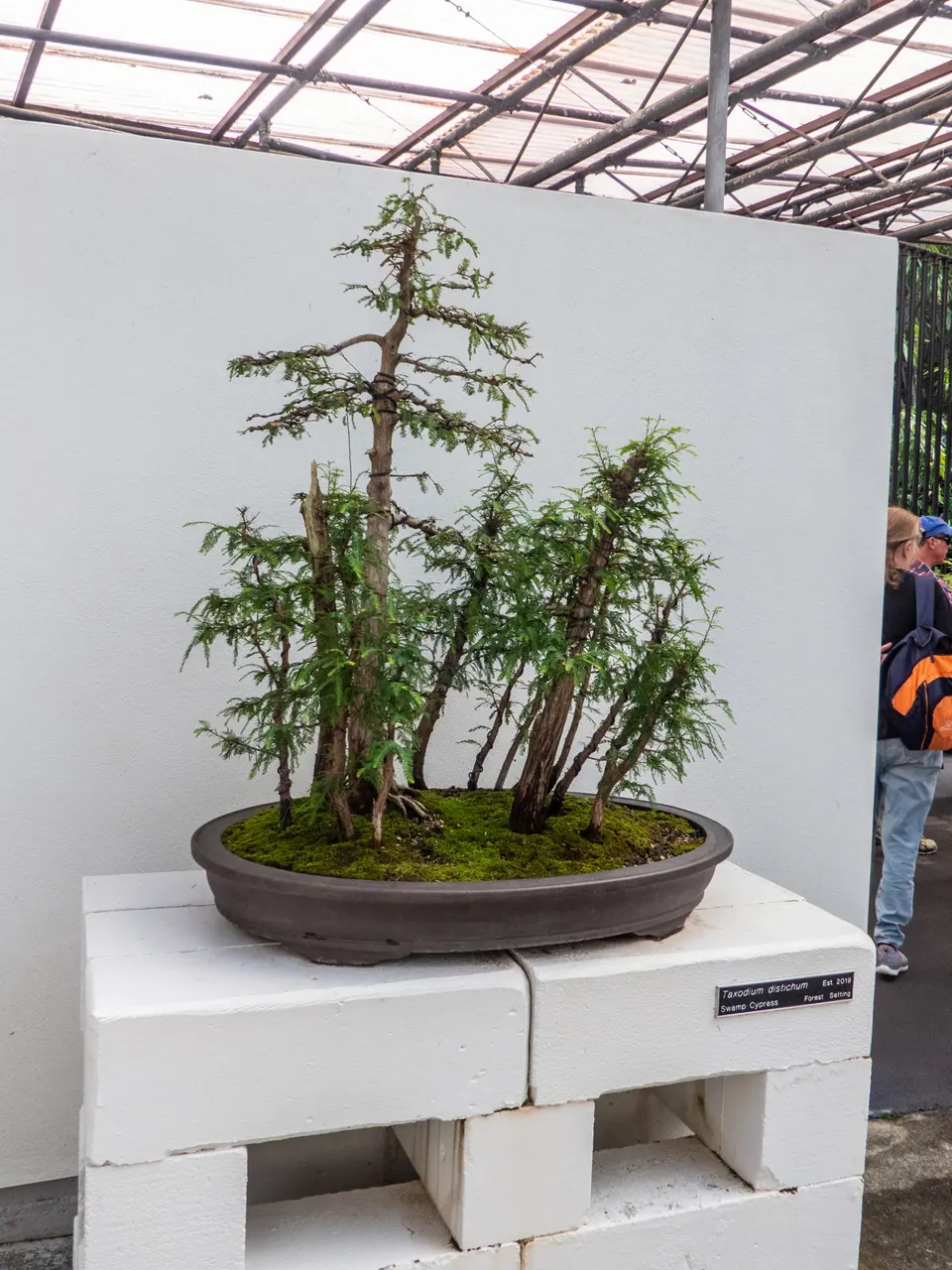

Cuidados del bonsái
bald cypress
Taxodium distichum
Escrito por Emilio Marruso
Cada paso se cita de cultivadores, clubes y revistas de bonsái. Donde no coinciden mostramos todas las escuelas de pensamiento.
Las indicaciones de cuidado están en inglés por ahora; las citas se mantienen en el idioma de la fuente.
Cuidados
Ubicación y luz
Riego
Keep moist at all times; it is thirsty, but standing permanently in water is not needed. In summer the pot may stand in a shallow tray of water.
- Cuándo
- summer (tray)
Documentado: 2 fuentes o más
Swamp Cypress should be kept moist at all times as they are thirsty trees.it is not necessary or beneficial to stand them permanently in water.a classic technique is to stand the pot in a shallow bowl/tray of water so the roots never dry out.Abonado
Balanced feed every one or two weeks in the growing season.
- Cuándo
- growing season
Documentado: 2 fuentes o más
require regular feeding every one or two weeks with a balanced feed.Fertilize any time from spring to autumn, ideally about once a week or once every two weeks.Poda de formación
Escuelas de pensamiento: las fuentes no coinciden, cada postura aparece con sus propias fuentes.
Hard pruning in late winter; it often buds from the trunk.
- Cuándo
- late Winter
Por verificar: 1 fuente
Hard pruning can be carried out in late Winter; this commonly results in prolific budding from the trunk.Heavy cuts in early spring before bud break, or in autumn after leaf drop.
- Cuándo
- early spring before bud-break, or autumn after leaf drop
Por verificar: 1 fuente
Heavy structural cuts are best made in early spring before bud-break or in autumn after leaf dropPoda de mantenimiento
Pinch out new shoots through the growing season.
- Cuándo
- growing season
Por verificar: 1 fuente
Pinch out new shoots throughout the growing season to keep in shape.Alambrado
Wire in the dormant season or early spring; the tree thickens fast, so remove wire quickly or use guy wires.
- Cuándo
- dormant season or early spring
Documentado: 2 fuentes o más
Wire in the dormant season or early spring.these trees are fast growing and wires will damage the bark if not removed quickly enough.Cuándo trasplantar
Repot in spring, at bud extension or before bud break; young trees yearly, older trees every two to three years.
- Cuándo
- early spring, before the buds break
Documentado: 2 fuentes o más
Repotting should be carried out annually in Spring as new buds extend.Repot in early spring before the buds break.young trees may need yearly repotting and older trees every 2 to 3 yearsSustrato del trasplante
Water-retentive but fast-draining mix; akadama-based works.
Documentado: 2 fuentes o más
Use a soil that is able to retain water but is still fast draining.Use an open, water-retentive bonsai mix (akadama-based, organic content fine)Invierno y heladas (en maceta)
Escuelas de pensamiento: las fuentes no coinciden, cada postura aparece con sus propias fuentes.
Fully hardy down to -10 C.
- Temperatura mínima
- -10 °C (14 °F)
- Nota
- Source does not say whether this is for potted trees.
Por verificar: 1 fuente
POSITION: Full sun. Fully hardy to -10°C.Hardy outdoors, but protect the potted roots in hard freezes; keep the rootball from drying in winter.
- Nota
- No temperature given.
Por verificar: 1 fuente
In the colder end of its range, protect the potted roots from hard freezes, as container roots are more exposed than they would be in the ground.Keep it inside in extreme cold; frost is not tolerated even in a container.
- Nota
- No temperature given; contradicts the other schools.
Por verificar: 1 fuente
It cannot tolerate low temperatures and will not do well with any amount of frost, even when grown in a container.Propagación
Cuttings most of the year, air layering in late spring.
- Cuándo
- cuttings at most times of the year; air layering late Spring
Por verificar: 1 fuente
Cuttings at most times of the year and air layering in late Spring.Estilos
Formal and informal upright, slanting, literati, twin-trunk and group; flat-top is classic.
Documentado: 2 fuentes o más
Formal and informal upright forms, slanting and literati, twin-trunk and group forms in all sizes.it lends itself beautifully to the tall, slender "flat-top" styleFuentes
Cada valor anterior se cita de estos documentos. Los enlaces llevan al editor original.
- Taxodium distichum/ Swamp or Bald Cypress Bonsai – Bonsai4Me · bonsai4me.com, consultado
- Bald Cypress Bonsai Care: Drying Out, Zones 5a to 11 · bonsaiwonderland.com, consultado
- Bald Cypress (Taxodium Distichum) Bonsai: A Beginner’s Guide | Florgeous · florgeous.com, consultado