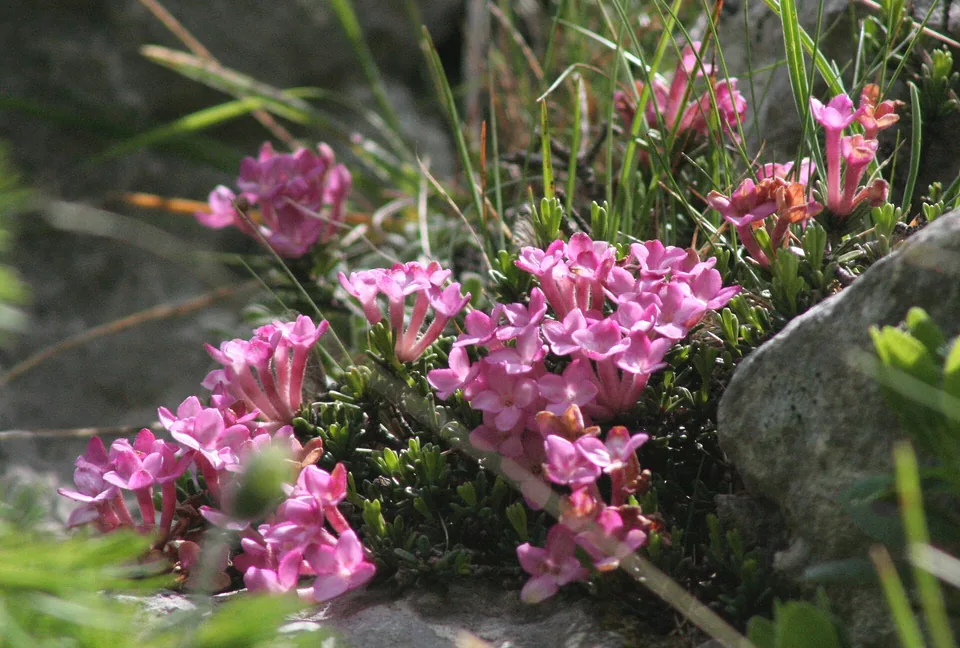
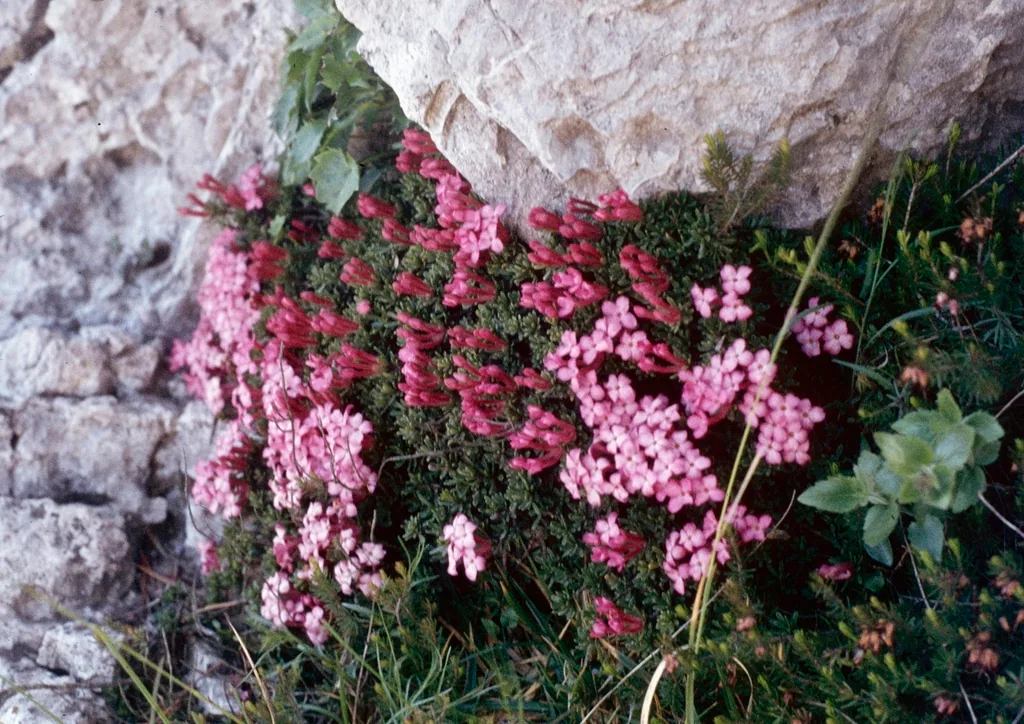

Cómo cultivar y cuidar Daphne petraea
Daphne petraea
Escrito por Emilio Marruso · última revisión
Tóxica para: Personas · Por qué
De un vistazo
Esta dafne adora el sol pleno y unas raíces profundas y húmedas en un suelo con grava, protegidas de la humedad del invierno. Casi no necesita poda, crece bien en maceta y puedes multiplicarla con semillas sembradas en cuanto maduran, o por esquejes y acodo. Eso sí, recuerda: todas las partes de la planta son muy tóxicas.
- Sol
Sol pleno
Qué dicen las fuentes (2)
Luz: Pleno sol
D. petraea is perfectly hardy and will grow well in the open ground if given a place in full sun with a deep and moist root-run in gritty soil with lime added.
— Bean's Trees and Shrubs [2] | Cultivation | sunny rock crevices, protection against winter wet alpine house, poor, drained soil, sun
— Daphne petraea Leyb. [3] - Riego
Mantén las raíces húmedas en profundidad, pero protégela de la humedad del invierno
Qué dicen las fuentes (2)
Notas sobre el riego: Suelo profundo y húmedo en tierra arenosa; protección contra la humedad invernal
D. petraea is perfectly hardy and will grow well in the open ground if given a place in full sun with a deep and moist root-run in gritty soil with lime added.
— Bean's Trees and Shrubs [2] | Cultivation | sunny rock crevices, protection against winter wet alpine house, poor, drained soil, sun
— Daphne petraea Leyb. [3] - Suelo
Suelo con grava y profundo para las raíces
Qué dicen las fuentes (2)
Notas sobre el riego: Suelo profundo y húmedo en tierra arenosa; protección contra la humedad invernal
D. petraea is perfectly hardy and will grow well in the open ground if given a place in full sun with a deep and moist root-run in gritty soil with lime added.
— Bean's Trees and Shrubs [2] | Cultivation | sunny rock crevices, protection against winter wet alpine house, poor, drained soil, sun
— Daphne petraea Leyb. [3] - Poda
Quita solo tallos secos o cruzados a principios de primavera o tras la floración; nunca la podes fuerte
Qué dicen las fuentes (5)
Cuándo podar: Se necesita poca poda: solo retira tallos muertos, dañados o cruzados, a principios de primavera o poco después de la floración.
Daphnes tend to grow slowly, so pruning is rarely necessary, except to remove damaged or dead stems.
— [6] This should be done in early spring or shortly after flowering
— [6] Little pruning is needed, but remove crossing or damaged stems, including stems and foliage damaged by winter burn.
— Daphnes for Pennsylvania Gardens [5] - Multiplicación
Esquejes a finales de verano, acodo en primavera, injerto o semilla
Qué dicen las fuentes (3)
Propagación: Injerto sobre portainjertos de plántula; esquejes (finales de verano); acodo (primavera); semilla
Propagation is usually achieved by grafting on to seedling stocks of D. mezereum , but evergreen species are also used as the stock and are perhaps preferable.
— Bean's Trees and Shrubs [2] | Propagation | seed when ripe or as soon as possible cuttings in late summer; layering in spring
— Daphne petraea Leyb. [3] Per gli orti botanici e giardini rocciosi sia di istituti che di privati si preferisce ricorrere ad innesto su Daphne alpina L.
— "NATURA BRESCIANA, A.nn. Mus. Civ. St. Nat. - Brescia, 10, pp. 3-24, 1973 [4] - Siembra
Siembra las semillas en cuanto estén maduras
Qué dicen las fuentes (1)
Siembra: Cuando estén maduras o lo antes posible
| Propagation | seed when ripe or as soon as possible cuttings in late summer; layering in spring
— Daphne petraea Leyb. [3] - Maceta
Crece también en maceta
Qué dicen las fuentes (2)
En maceta: Sí
Its full beauty and delicious scent is, however, best enjoyed when it is grown as a pot-plant.
— Bean's Trees and Shrubs [2] the most successful cultivator of this lovely alpine shrub was Reginald Farrer, who used to show little bushes grown in pots at the Temple Show in London, almost covered with blossom.
— Daphne petraea - Trees and Shrubs Online [1] - Seguridad
Todas sus partes, frutos incluidos, son muy tóxicas para personas y mascotas
Resumen
Daphne petraea es un pequeño arbusto perennifolio de 3 a 5 pulgadas [8–13 cm] de alto, con fragantes flores rosadas intensas que se producen en junio. [2] Es nativa de las montañas al oeste del extremo norte del lago de Garda, donde crece en acantilados de roca dolomítica. [2] En cultivo es resistente a pleno sol en suelo arenoso con cal añadida, pero a menudo se cultiva como planta de maceta. [2]
Citado en inglés, como en la fuente.
Esta ficha está incompleta: las fuentes consultadas aún no cubren todos los campos.
Aún no cubierto por nuestras fuentes: Riego, Rusticidad, zona más fría, Rusticidad, zona más cálida, Poda
Cuidados
Las medidas entre corchetes son nuestra conversión al otro sistema de unidades; el texto citado no cambia.
Riego
Riego
No figura en las fuentes consultadas.
Notas sobre el riego
Suelo profundo y húmedo en tierra arenosa; protección contra la humedad invernal
Qué dicen las fuentes (2)
D. petraea is perfectly hardy and will grow well in the open ground if given a place in full sun with a deep and moist root-run in gritty soil with lime added.| Cultivation | sunny rock crevices, protection against winter wet
alpine house, poor, drained soil, sunLuz
Pleno sol
Qué dicen las fuentes (2)
D. petraea is perfectly hardy and will grow well in the open ground if given a place in full sun with a deep and moist root-run in gritty soil with lime added.| Cultivation | sunny rock crevices, protection against winter wet
alpine house, poor, drained soil, sunClima y frío
Rusticidad, zona más fría
No figura en las fuentes consultadas.
Rusticidad, zona más cálida
No figura en las fuentes consultadas.
Dónde cultivarla
Sí
Qué dicen las fuentes (2)
Its full beauty and delicious scent is, however, best enjoyed when it is grown as a pot-plant.the most successful cultivator of this lovely alpine shrub was Reginald Farrer, who used to show little bushes grown in pots at the Temple Show in London, almost covered with blossom.Propagación
Injerto sobre portainjertos de plántula; esquejes (finales de verano); acodo (primavera); semilla
Qué dicen las fuentes (3)
Propagation is usually achieved by grafting on to seedling stocks of D. mezereum , but evergreen species are also used as the stock and are perhaps preferable.| Propagation | seed when ripe or as soon as possible
cuttings in late summer; layering in springPer gli orti botanici e giardini rocciosi sia di istituti che di privati si preferisce ricorrere ad innesto su Daphne alpina L.Cultivo
Raíces
Sistema radicular
Las fuentes dan valores distintos según la región, la zona o las condiciones de cultivo.
Lo que dice cada fuente
Daphne en general (plantas de jardín): La mayoría de los daphnes tienen raíces profundas y generalmente no crecen bien en contenedores.
Qué dicen las fuentes (1)
Daphne en general (plantas de jardín): Containers – most daphnes are deep rooted, so don’t generally grow well in containers, but smaller alpine daphnes (such as D. arbuscula ) should be fine.Propagación
Germinación
Las fuentes dan valores distintos según la región, la zona o las condiciones de cultivo.
Lo que dice cada fuente
Daphne en general (plantas de jardín): La germinación a partir de semillas puede tardar al menos dos años.
Daphne en general (plantas de jardín): Siembra las semillas de frutos carnosos maduros en un compost arenoso para semillas en un lugar resguardado y sombreado o en un marco frío.
Qué dicen las fuentes (2)
Daphne en general (plantas de jardín): Sowing seeds – germination can take at least two years, and with named cultivars the offspring may differ from the parent plant.Daphne en general (plantas de jardín): remove the seeds from ripe fleshy fruits and sow in gritty, peat-free seed compost . Place in a sheltered, shady spot or coldframe to germinate.Esquejes
Las fuentes dan valores distintos según la región, la zona o las condiciones de cultivo.
Lo que dice cada fuente
Daphne en general (plantas de jardín): Se propaga mediante esquejes de tallo o acodo.
Daphne en general (plantas de jardín), Reino Unido: Esquejes de talón semimaduros tomados a mediados o finales del verano.
Qué dicen las fuentes (2)
Daphne en general (plantas de jardín): Daphnes can be propagated through layering or through stem cuttings. Propagate with either softwood cuttings taken in early summer or hardwood cuttings taken in late summer.Daphne en general (plantas de jardín), Reino Unido: The main methods are: - Semi-ripe heel cuttings – taken in mid to late summer - Layering – suitable for species with low branches, such as D. cneorumCalor y sequía
Sequía
Las fuentes dan valores distintos según la región, la zona o las condiciones de cultivo.
Lo que dice cada fuente
Daphne en general (plantas de jardín): No tolera la sequía ni el encharcamiento.
Daphne en general (plantas de jardín): Riega durante los períodos secos; no dejes que el arbusto sufra sequía.
Qué dicen las fuentes (2)
Daphne en general (plantas de jardín): Well-drained but moisture-retentive soil that contains plenty of organic matter . They won’t tolerate drought or waterlogging.Daphne en general (plantas de jardín): Daphnes do not require much maintenance except for watering during a dry spell. Ensure that this shrub does not suffer from drought.Poda
Cuándo podar
Se necesita poca poda: solo retira tallos muertos, dañados o cruzados, a principios de primavera o poco después de la floración.
Qué dicen las fuentes (3)
Daphnes tend to grow slowly, so pruning is rarely necessary, except to remove damaged or dead stems.This should be done in early spring or shortly after floweringLittle pruning is needed, but remove crossing or damaged stems, including stems and foliage damaged by winter burn.Poda drástica
Es mejor evitarla: las daphnes generalmente no se recuperan bien, y la poda suele provocar muerte regresiva.
Remedios
Las fuentes consultadas no dan remedios para esta planta.
Toxicidad
Según la fuente, citada textualmente. No es un consejo médico ni veterinario: si una persona o un animal pudo haber ingerido esta planta, contacta con un centro de toxicología o con un veterinario.
These drupes, less than one inch in diameter, are poisonous to mammals, including humans and their pets. In fact, all parts of the plant are highly toxic.
[5]Aviso de género: dato referido a todo el género, no documentado para esta especie
Calendario
Siembra
Cuando estén maduras o lo antes posible
Qué dicen las fuentes (1)
| Propagation | seed when ripe or as soon as possible
cuttings in late summer; layering in springPoda
No figura en las fuentes consultadas.
Meses tal como los dan las fuentes, en su mayoría de Estados Unidos (hemisferio norte). En el hemisferio sur se desplazan unos seis meses.
Plantas similares
- Daphne alpina Daphne alpina
- Lilac Daphne Daphne genkwa
- Onishibari Daphne pseudomezereum
- Mezereón Daphne mezereum
- Tangut Daphne Daphne tangutica
- Caucasian Daphne Daphne caucasica
- Daphne blagayana Daphne blagayana
- Torvisco de los Pirineos Daphne cneorum
Fuentes
Cada valor anterior se cita de estos documentos. Los enlaces llevan al editor original.
- Daphne petraea - Trees and Shrubs Online · treesandshrubsonline.org, consultado
- Bean's Trees and Shrubs · beanstreesandshrubs.org, consultado
- Daphne petraea Leyb. · flora.kadel.cz, consultado
- "NATURA BRESCIANA, A.nn. Mus. Civ. St. Nat. - Brescia, 10, pp. 3-24, 1973 · comune.brescia.it, consultado
- Daphnes for Pennsylvania Gardens · extension.psu.edu, consultado
- rhs.org.uk · rhs.org.uk
Escrito por Emilio Marruso · última revisión