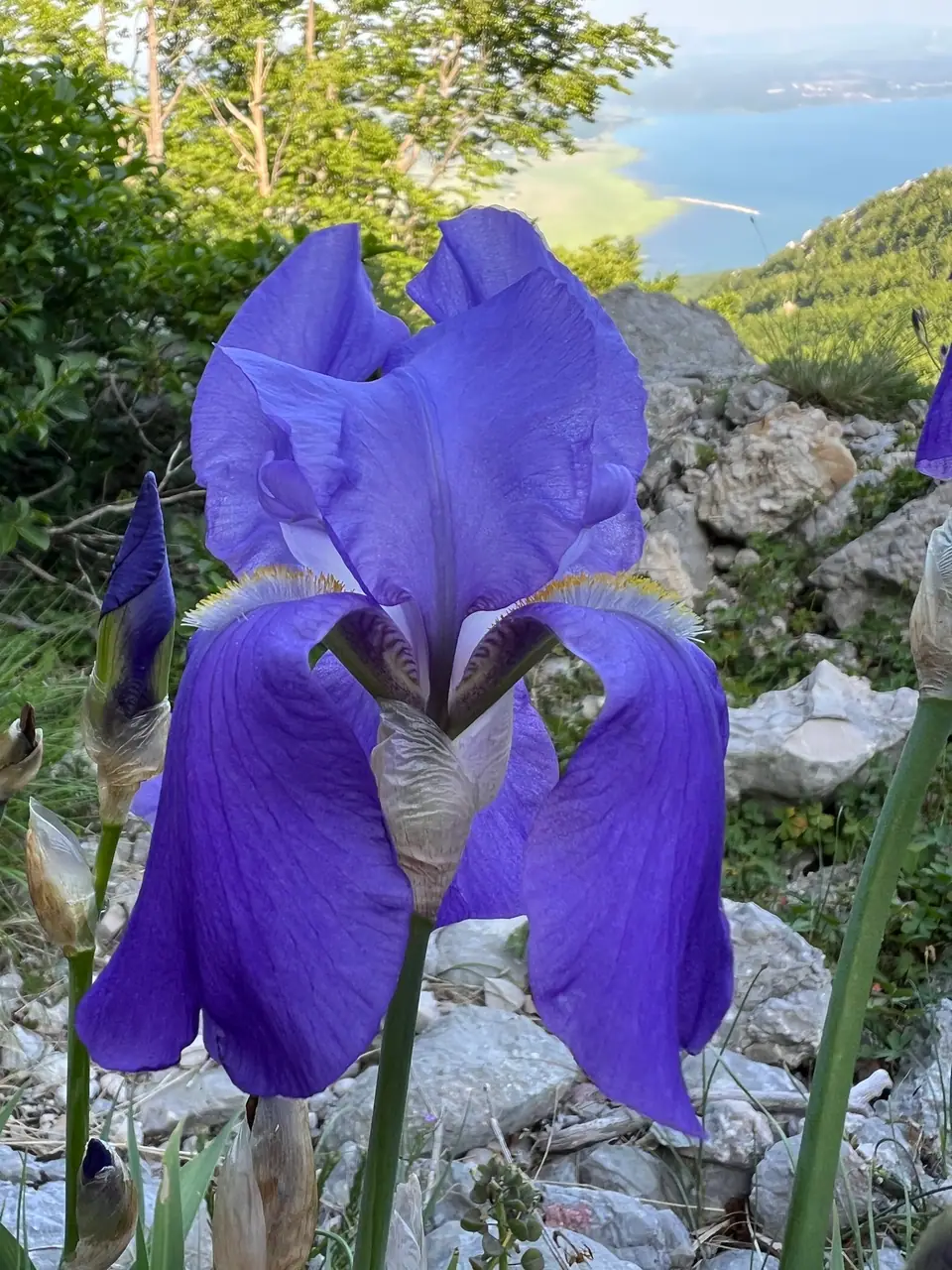
Cómo cultivar y cuidar Lirio pálido
Iris pallida
Escrito por Emilio Marruso · última revisión
De un vistazo
Este lirio está a gusto a pleno sol o en semisombra y, una vez asentado, aguanta bien algunas temporadas secas. Crece también en maceta, y puedes compartirlo con tus amigos dividiendo las matas. Su raíz fresca da incluso el aceite de lirio, un aroma que se usa en refrescos, caramelos y chicles. Solo necesita una tierra que drene bien.
- Sol
De pleno sol a semisombra
Qué dicen las fuentes (2)
Luz: Pleno sol a semisombra
Exposure: Full sun to partial shade
— How to Grow Fragrant Sweet Iris Flowers | Gardener's Path [4] sweet iris grows best in full sun to part shade locations with rich, moist but well-draining soil
— What Is Sweet Iris - Learn About Variegated Sweet Iris Plants | Gardening Know How [3] - Riego
Mantén la tierra húmeda; las plantas asentadas aguantan algo de sequía, las recién divididas necesitan mucho riego
Qué dicen las fuentes (3)
Riego: Mantén el suelo húmedo en todo momento; las plantas establecidas toleran algo la sequía.
The soil should ideally be moist at all times. The plants can tolerate standing water or drought for short periods.
— How to Grow Fragrant Sweet Iris Flowers | Gardener's Path [4] Once established, plants are somewhat drought tolerant .
— Iris pallida – Wisconsin Horticulture [1] Notas sobre el riego: Riega bien las plantas recién divididas.
keep newly divided plants well watered
— Iris pallida – Wisconsin Horticulture [1] - Frío
Aguanta inviernos de hasta −34,4 °C (−30 °F)
Muy rústica · USDA 4a · RHS H7 · Z4
Qué dicen las fuentes (4)
Rusticidad, zona más fría: 4a [mínima invernal de −34,4 a −31,7 °C (de −30 a −25 °F)]
It is hardy in zones 4a to 9b.
— Iris pallida – Wisconsin Horticulture [1] Rusticidad, zona más cálida:
Según University of Wisconsin Extension: It is hardy in zones 4a to 9b.
— Iris pallida – Wisconsin Horticulture [1] Según Gardening Know How: Hardy in zones 4 to 9, sweet iris grows best in full sun to part shade locations
— What Is Sweet Iris - Learn About Variegated Sweet Iris Plants | Gardening Know How [3] Según Gardener's Path: Hardiness (USDA Zone): 4-10
— How to Grow Fragrant Sweet Iris Flowers | Gardener's Path [4] - Suelo
Suelo de ligeramente ácido a ligeramente alcalino, pH 6,0–7,5
Qué dicen las fuentes (2)
pH del suelo, mínimo: 6.0
The pH can be anywhere from slightly acidic to slightly alkaline, 6.0 to 7.5 is ideal.
— How to Grow Fragrant Sweet Iris Flowers | Gardener's Path [4] pH del suelo, máximo: 7.5
The pH can be anywhere from slightly acidic to slightly alkaline, 6.0 to 7.5 is ideal.
— How to Grow Fragrant Sweet Iris Flowers | Gardener's Path [4] - Abonado
Abono bajo en nitrógeno, tipo 5-10-10, justo después de la floración; que no toque los rizomas
Qué dicen las fuentes (10)
Cuándo: Al preparar el suelo antes de plantar un nuevo lecho; en plantas establecidas, inmediatamente después de la floración
Fertilize a new iris bed when preparing the soil before planting with a complete fertilizer low in nitrogen and high in phosphorus and potassium.
— [5] If you use fertilizer, apply it immediately after plants bloom. Work it into the soil around plant bases. Use about ½ cup of 5-10-5 fertilizer for 6 small plants or about 1 cup for a large iris clump.
— [6] Abonos minerales: Fertilizante completo bajo en nitrógeno y alto en fósforo y potasio, como 5-10-10 o 5-10-5
Cama nueva, sin prueba de suelo: In the absence of test results apply 1 pound of 5-10-10 per 100 square feet. Work the fertilizer into the soil and let the bed settle before planting.
— [5] plantas establecidas, después de la floración: If you use fertilizer, apply it immediately after plants bloom. Work it into the soil around plant bases. Use about ½ cup of 5-10-5 fertilizer for 6 small plants or about 1 cup for a large iris clump.
— [6] Fertilize a new iris bed when preparing the soil before planting with a complete fertilizer low in nitrogen and high in phosphorus and potassium.
— [5] In the absence of test results apply 1 pound of 5-10-10 per 100 square feet. Work the fertilizer into the soil and let the bed settle before planting.
— [5] If you use fertilizer, apply it immediately after plants bloom. Work it into the soil around plant bases. Use about ½ cup of 5-10-5 fertilizer for 6 small plants or about 1 cup for a large iris clump.
— [6] Evitar: El fertilizante que toca los rizomas o las raíces; sobrealimentación; estiércol que no esté muy bien compostado, lo que puede favorecer la podredumbre blanda
When feeding established iris, do not let fertilizer touch the rhizomes. It is better to underfeed than to overfeed bearded iris.
— [5] Do not use manure unless it is very well-composted (aged for at least one year). Manure can encourage iris soft rot.
— [5] Thoroughly mix fertilizer into the soil so that lumps of it do not touch iris roots.
— [6] - Poda
Poda a principios de primavera, antes de que salgan las hojas nuevas
Qué dicen las fuentes (2)
Poda: A principios de primavera, antes de que aparezcan las hojas nuevas.
Remove old foliage before new leaves emerge in early spring.
— Iris pallida – Wisconsin Horticulture [1] Remove the dead foliage in the spring before the new leaves start to grow.
— How to Grow Fragrant Sweet Iris Flowers | Gardener's Path [4] - Cosecha
La raíz fresca da el aceite de lirio, un aroma para refrescos, caramelos y chicles
- Plagas
Vigila la oruga barrenadora del lirio
Qué dicen las fuentes (1)
Plagas: barrenador del iris
It has few pests – rabbit and deer rarely bother it and iris borer is much less of a problem than in bearded iris.
— Iris pallida – Wisconsin Horticulture [1] - Atención
Los rizomas se pudren con exceso de agua: planta en suelo con buen drenaje y tira los blandos o malolientes
Qué dicen las fuentes (3)
Evitar: El fertilizante que toca los rizomas o las raíces; sobrealimentación; estiércol que no esté muy bien compostado, lo que puede favorecer la podredumbre blanda
When feeding established iris, do not let fertilizer touch the rhizomes. It is better to underfeed than to overfeed bearded iris.
— [5] Do not use manure unless it is very well-composted (aged for at least one year). Manure can encourage iris soft rot.
— [5] Thoroughly mix fertilizer into the soil so that lumps of it do not touch iris roots.
— [6] - Multiplicación
Divide las matas o planta trozos de rizoma
Qué dicen las fuentes (2)
Propagación: División de los grupos; plantación de rizomas.
You can start by planting rhizomes you purchase or if you have an existing clump, by division.
— How to Grow Fragrant Sweet Iris Flowers | Gardener's Path [4] Divide the clumps as necessary every 3 to 4 years after flowering
— Iris pallida – Wisconsin Horticulture [1] - Maceta
Crece también en maceta
Qué dicen las fuentes (1)
En maceta: Sí
It can also be stunning in suitable containers.
— Iris pallida – Wisconsin Horticulture [1]
Resumen
Se desarrolla mejor a pleno sol o semisombra en suelo bien drenado y tolera algo de sequía una vez establecida. [3][1] Se propaga dividiendo matas establecidas o plantando rizomas. [4][1] El aceite de lirio, obtenido de la raíz fresca, se usa como saborizante en bebidas gaseosas, dulces y chicles. [1]
Citado en inglés, como en la fuente.
Cuidados
Riego
Riego
Mantén el suelo húmedo en todo momento; las plantas establecidas toleran algo la sequía.
Qué dicen las fuentes (2)
The soil should ideally be moist at all times. The plants can tolerate standing water or drought for short periods.Once established, plants are somewhat drought tolerant .Notas sobre el riego
Riega bien las plantas recién divididas.
Qué dicen las fuentes (1)
keep newly divided plants well wateredLuz
Pleno sol a semisombra
Qué dicen las fuentes (2)
Exposure: Full sun to partial shadesweet iris grows best in full sun to part shade locations with rich, moist but well-draining soilClima y frío
Rusticidad, zona más fría
4a [mínima invernal de −34,4 a −31,7 °C (de −30 a −25 °F)]
Qué dicen las fuentes (1)
It is hardy in zones 4a to 9b.Rusticidad, zona más cálida
Las fuentes dan valores distintos según la región, la zona o las condiciones de cultivo.
Lo que dice cada fuente
Según University of Wisconsin Extension: 9b [mínima invernal de −3,9 a −1,1 °C (de 25 a 30 °F)]
Según Gardening Know How: 9 [mínima invernal de −6,7 a −1,1 °C (de 20 a 30 °F)]
Según Gardener's Path: 10 [mínima invernal de −1,1 a 4,4 °C (de 30 a 40 °F)]
Qué dicen las fuentes (3)
Según University of Wisconsin Extension: It is hardy in zones 4a to 9b.Según Gardening Know How: Hardy in zones 4 to 9, sweet iris grows best in full sun to part shade locationsSegún Gardener's Path: Hardiness (USDA Zone): 4-10Suelo
pH del suelo, mínimo
6.0
Qué dicen las fuentes (1)
The pH can be anywhere from slightly acidic to slightly alkaline, 6.0 to 7.5 is ideal.pH del suelo, máximo
7.5
Qué dicen las fuentes (1)
The pH can be anywhere from slightly acidic to slightly alkaline, 6.0 to 7.5 is ideal.Dónde cultivarla
Sí
Qué dicen las fuentes (1)
It can also be stunning in suitable containers.Propagación
División de los grupos; plantación de rizomas.
Cultivo
Plagas y enfermedades
Plagas
barrenador del iris
Qué dicen las fuentes (1)
It has few pests – rabbit and deer rarely bother it and iris borer is much less of a problem than in bearded iris.Abonado
Cuándo
Al preparar el suelo antes de plantar un nuevo lecho; en plantas establecidas, inmediatamente después de la floración
Qué dicen las fuentes (2)
Fertilize a new iris bed when preparing the soil before planting with a complete fertilizer low in nitrogen and high in phosphorus and potassium.If you use fertilizer, apply it immediately after plants bloom. Work it into the soil around plant bases. Use about ½ cup of 5-10-5 fertilizer for 6 small plants or about 1 cup for a large iris clump.Abonos naturales
Solo estiércol muy bien compostado, con al menos un año de antigüedad
Qué dicen las fuentes (1)
Do not use manure unless it is very well-composted (aged for at least one year). Manure can encourage iris soft rot.Abonos minerales
Fertilizante completo bajo en nitrógeno y alto en fósforo y potasio, como 5-10-10 o 5-10-5
Lo que dice cada fuente
Cama nueva, sin prueba de suelo: 48.8 g/m² de 5-10-10 incorporado al suelo antes de plantar
plantas establecidas, después de la floración: 5-10-5: 118 mL para 6 plantas pequeñas o 237 mL para un grupo grande
Qué dicen las fuentes (5)
Cama nueva, sin prueba de suelo: In the absence of test results apply 1 pound of 5-10-10 per 100 square feet. Work the fertilizer into the soil and let the bed settle before planting.plantas establecidas, después de la floración: If you use fertilizer, apply it immediately after plants bloom. Work it into the soil around plant bases. Use about ½ cup of 5-10-5 fertilizer for 6 small plants or about 1 cup for a large iris clump.Fertilize a new iris bed when preparing the soil before planting with a complete fertilizer low in nitrogen and high in phosphorus and potassium.In the absence of test results apply 1 pound of 5-10-10 per 100 square feet. Work the fertilizer into the soil and let the bed settle before planting.If you use fertilizer, apply it immediately after plants bloom. Work it into the soil around plant bases. Use about ½ cup of 5-10-5 fertilizer for 6 small plants or about 1 cup for a large iris clump.Evitar
El fertilizante que toca los rizomas o las raíces; sobrealimentación; estiércol que no esté muy bien compostado, lo que puede favorecer la podredumbre blanda
Qué dicen las fuentes (3)
When feeding established iris, do not let fertilizer touch the rhizomes. It is better to underfeed than to overfeed bearded iris.Do not use manure unless it is very well-composted (aged for at least one year). Manure can encourage iris soft rot.Thoroughly mix fertilizer into the soil so that lumps of it do not touch iris roots.Signos de exceso
Floración deficiente
Qué dicen las fuentes (1)
Poor flowering is normally due to planting in excessive shade, using too much fertilizer, planting the rhizomes too deep, or plants that have become too crowded and need dividing.Problemas
Podredumbre de rizomas
Síntoma: Hojas amarillentas, marchitas o pardas; el follaje puede tener áreas grandes podridas o descoloridas.
Qué hacer: Planta en un suelo que drene bien y no riegues en exceso; desecha los rizomas con áreas marrones, malolientes o blandas.
Remedios
Las fuentes consultadas no dan remedios para esta planta.
Calendario
Poda
A principios de primavera, antes de que aparezcan las hojas nuevas.
Meses tal como los dan las fuentes, en su mayoría de Estados Unidos (hemisferio norte). En el hemisferio sur se desplazan unos seis meses.
Comestibilidad
Según la fuente, citada textualmente. No comas una planta basándote solo en esta página: los errores de identificación pueden ser peligrosos.
Orris oil, derived from the fresh root, is used as a flavoring in soft drinks, candies and chewing gum
[1]
Plantas similares
- Algerian Iris Iris unguicularis
- Belencanda Iris domestica
- Blood Iris Iris sanguinea
- Blue Iris Iris spuria
- Copper iris Iris fulva
- Dixie Iris Iris hexagona
- Dwarf Iris Iris reticulata
- Dwarf Iris Iris verna
Fuentes
Cada valor anterior se cita de estos documentos. Los enlaces llevan al editor original.
- Iris pallida – Wisconsin Horticulture · hort.extension.wisc.edu, consultado
- n. s. Volume LVIII ANNALI DI BOTANICA 2000 · rosa.uniroma1.it, consultado
- What Is Sweet Iris - Learn About Variegated Sweet Iris Plants | Gardening Know How · gardeningknowhow.com, consultado
- How to Grow Fragrant Sweet Iris Flowers | Gardener's Path · gardenerspath.com, consultado
- hgic.clemson.edu · hgic.clemson.edu
- extension.usu.edu · extension.usu.edu
Escrito por Emilio Marruso · última revisión