
Cómo cultivar y cuidar Niguela
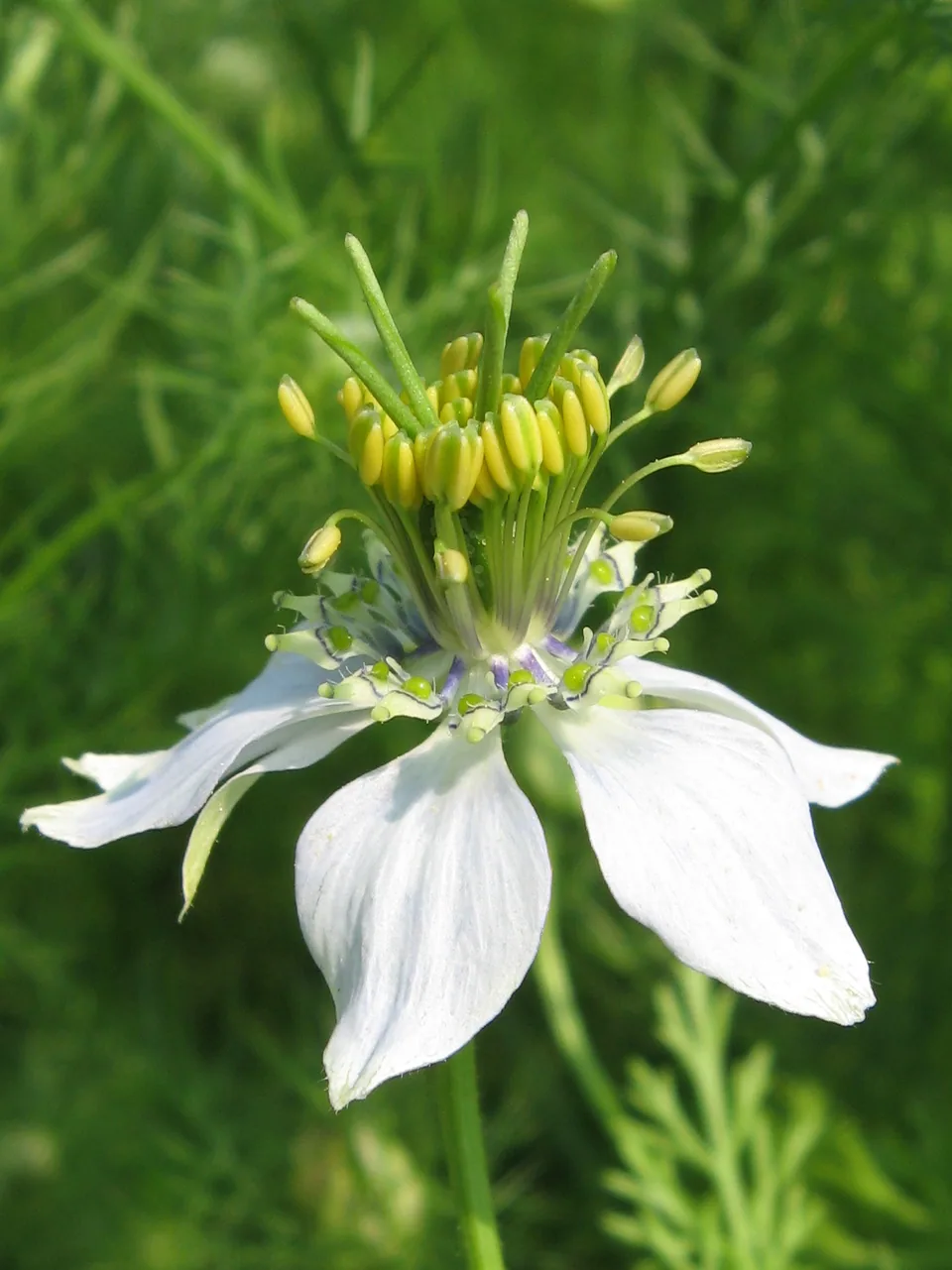
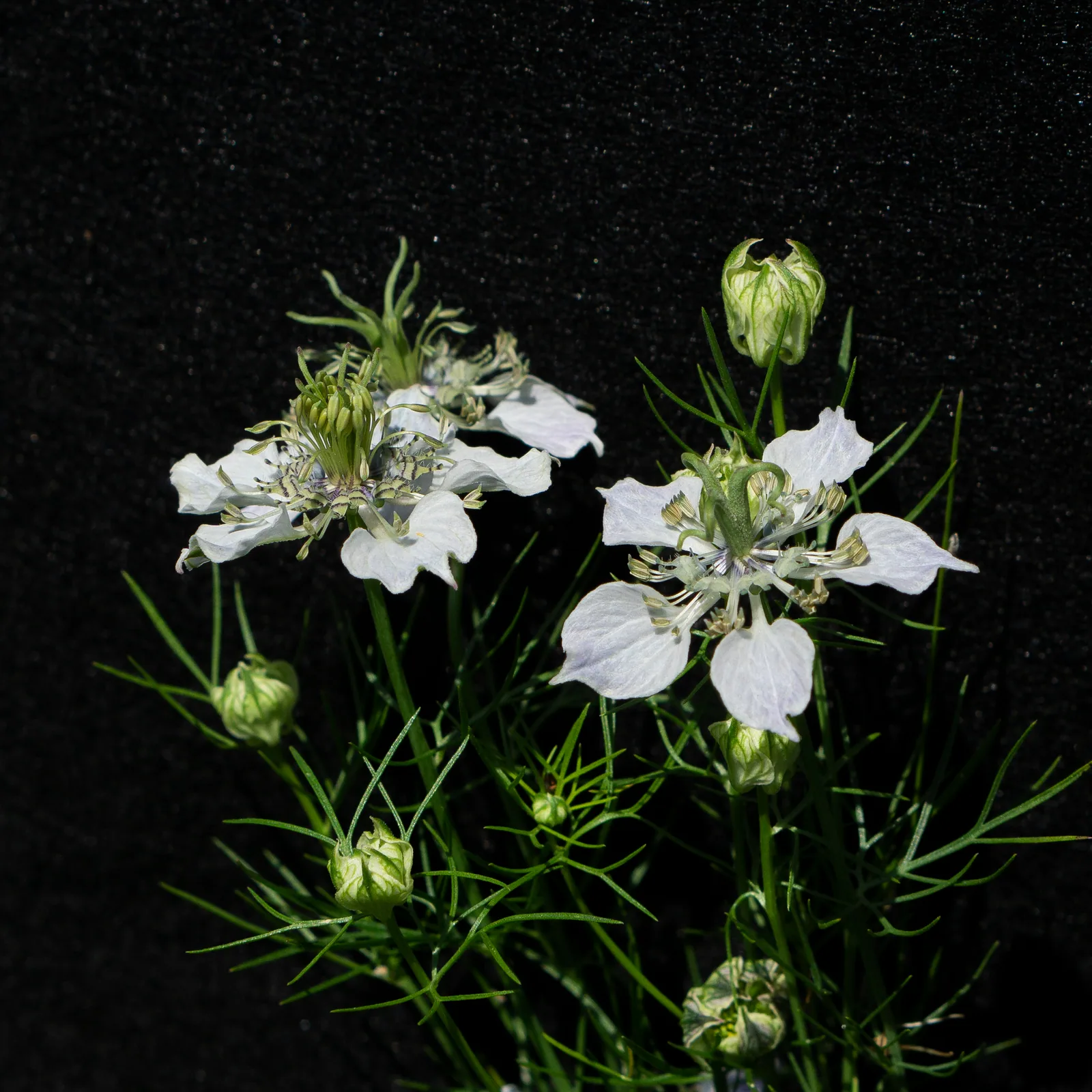
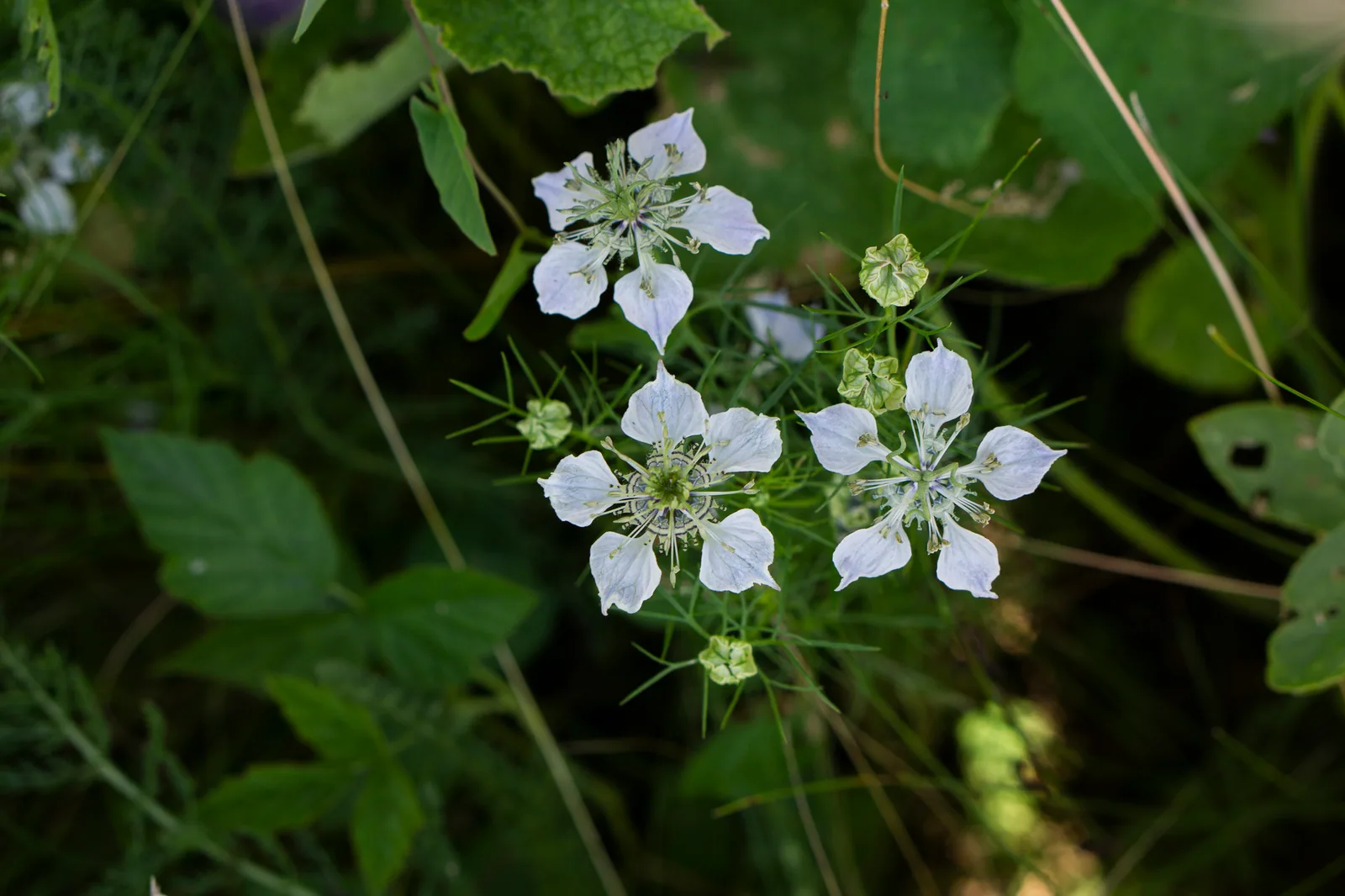
Nigella sativa
Escrito por Emilio Marruso · última revisión
Tóxica para: Personas · Por qué
De un vistazo
La neguilla es una anual agradecida que adora el sol pleno, aunque también tolera la semisombra. Siémbrala en primavera o en otoño, dale un riego normal y aguantará incluso breves periodos de sequía. En 135–150 días podrás recoger sus semillas, que se comen crudas o cocinadas para dar sabor a panes, bizcochos, curris y encurtidos, o molidas en la mesa como la pimienta.
- Sol
Sol pleno; también tolera la semisombra
Qué dicen las fuentes (2)
- Riego
Riego normal; aguanta breves sequías, pero no dejes la tierra demasiado mojada
Qué dicen las fuentes (3)
Riego: Riego medio; tolera períodos cortos de sequía; riega regularmente durante períodos largos sin lluvia
Black cumin does fine with average watering and can tolerate short periods of drought , but water plants regularly during long periods without rain to keep the soil from drying out too much.
— How To Grow Nigella Sativa [3] Water moderately, allowing the soil to dry slightly between each watering.
— Nigella Plant Growing & Care Guide for Gardeners [4] Notas sobre el riego: Evita que el suelo quede demasiado húmedo; si la primavera es seca, riega para mantener las plantas erguidas
Avoid getting the soil overly wet to maintain healthy plants.
— Nigella Plant Growing & Care Guide for Gardeners [4] - Plantación
Planta en primavera o en otoño
Qué dicen las fuentes (1)
Plantación: Primavera u otoño.
allow seven weeks or so before transplanting them in the garden in spring or autumn at about 25 cm (2 feet) apart
— Nigella Plant Growing & Care Guide for Gardeners [4] - Cosecha
Semillas listas 135–150 días tras la siembra; úsalas para dar sabor a panes, curris y encurtidos
Qué dicen las fuentes (2)
Cosecha: 135-150 días después de la siembra
After seeding, the crop matures 135 to 150 days later.
— Step-by-Step Guide to Grow Black Cumin (Kalonji) [6] Plants commence flowering about 100 days after sowing the seed, with mature seed being ready to harvest 50 days later
— Nigella sativa - Useful Temperate Plants [5] - Atención
Se resiembra sola y puede extenderse: recoge las cápsulas o quita las flores marchitas
- Tamaño
25 cm de alto
Qué dicen las fuentes (1)
Altura adulta: 25 cm [9,8 in]
Annual, taprooted, initially rosetted, 1-stemmed at base, in range unbranched, erect, to 25 cm tall;
— Vascular Plants of Williamson County [1] - Multiplicación
Se multiplica por semilla
Qué dicen las fuentes (1)
Propagación: Semilla
Sow seeds directly into the garden immediately after the danger of frost has passed.
— How To Grow Nigella Sativa [3] - Maceta
Crece también en maceta
Qué dicen las fuentes (1)
En maceta: Sí
If you are growing as an ornamental garden plant then they do well in numerous circumstances, such as in containers, as a patio feature plant, in borders, beds, coastal, and cottage gardens.
— Nigella Plant Growing & Care Guide for Gardeners [4] - Seguridad
Sin peligros conocidos
Resumen
Nigella sativa es una hierba anual cuyas semillas se utilizan como especia. [6] Crece a pleno sol con buen drenaje y tolera la semisombra. [3] Las semillas se cosechan secando las vainas en una bolsa de papel. [3]
Citado en inglés, como en la fuente.
Cuidados
Riego
Riego
Riego medio; tolera períodos cortos de sequía; riega regularmente durante períodos largos sin lluvia
Qué dicen las fuentes (2)
Black cumin does fine with average watering and can tolerate short periods of drought , but water plants regularly during long periods without rain to keep the soil from drying out too much.Water moderately, allowing the soil to dry slightly between each watering.Notas sobre el riego
Evita que el suelo quede demasiado húmedo; si la primavera es seca, riega para mantener las plantas erguidas
Qué dicen las fuentes (1)
Avoid getting the soil overly wet to maintain healthy plants.Luz
Pleno sol; tolera semisombra
Suelo
pH del suelo, mínimo
Las fuentes no coinciden:
Prefers a pH in the range 6.5 - 7.3, tolerating 6 - 8
[5]
Qué dicen las fuentes (2)
Ideally Black cumin should be grown in a sunny part of the garden that has good drainage, and a soil of pH 6 to 7.verify the pH is slightly acidic with a value of 6.0 to 7.0pH del suelo, máximo
Las fuentes no coinciden:
Prefers a pH in the range 6.5 - 7.3, tolerating 6 - 8
[5]
Qué dicen las fuentes (2)
Ideally Black cumin should be grown in a sunny part of the garden that has good drainage, and a soil of pH 6 to 7.verify the pH is slightly acidic with a value of 6.0 to 7.0Dónde cultivarla
En maceta
Sí
Qué dicen las fuentes (1)
If you are growing as an ornamental garden plant then they do well in numerous circumstances, such as in containers, as a patio feature plant, in borders, beds, coastal, and cottage gardens.Distancia de plantación
Las fuentes dan valores distintos según la región, la zona o las condiciones de cultivo.
Lo que dice cada fuente
Según Hunker: 15.2-22.9 cm (6-9 pulgadas)
Según Gardener's HQ: 25 cm (2 pies)
Según Krishi Jagran: 10.2-15.2 cm (4-6 pulgadas)
Qué dicen las fuentes (3)
Según Hunker: thin seedlings so that the best specimens remain and are spaced 6 to 9 inches apartSegún Gardener's HQ: allow seven weeks or so before transplanting them in the garden in spring or autumn at about 25 cm (2 feet) apartSegún Krishi Jagran: space each seed 4 to 6 inches apartPropagación
Semilla
Qué dicen las fuentes (1)
Sow seeds directly into the garden immediately after the danger of frost has passed.Cultivo
La planta
Ciclo de vida
anual
Qué dicen las fuentes (1)
Annual, taprooted, initially rosetted, 1-stemmed at base, in range unbranched, erect, to 25 cm tall;Familia
Ranunculaceae
Qué dicen las fuentes (1)
Vascular Plants of Williamson County Nigella sativa − BLACK CUMIN, BLACK CARAWAY [Ranunculaceae] Nigella sativa L., BLACK CUMIN, BLACK CARAWAY.Altura adulta
25 cm [9,8 in]
Qué dicen las fuentes (1)
Annual, taprooted, initially rosetted, 1-stemmed at base, in range unbranched, erect, to 25 cm tall;Problemas
Propagación por auto-siembra
Síntoma: La planta se autosiembra y puede ser invasiva en algunas zonas.
Qué hacer: Recoge las vainas de semillas o elimina las flores marchitas.
Qué dicen las fuentes (1)
With its habit of reseeding, the plant can be invasive in some locations.
— How To Grow Nigella Sativa [3]
Remedios
Las fuentes consultadas no dan remedios para esta planta.
Toxicidad
Según la fuente, citada textualmente. No es un consejo médico ni veterinario: si una persona o un animal pudo haber ingerido esta planta, contacta con un centro de toxicología o con un veterinario.
]. ## Known Hazards None known ## Botanical References
[5]
Calendario
Siembra
Las fuentes no coinciden:
It is best to sow black cumin seeds once a month from just before the last frost of spring until early summer, and then once again towards the end of autumn.
[4]
Plantación
Primavera u otoño.
Qué dicen las fuentes (1)
allow seven weeks or so before transplanting them in the garden in spring or autumn at about 25 cm (2 feet) apartCosecha
135-150 días después de la siembra
Meses tal como los dan las fuentes, en su mayoría de Estados Unidos (hemisferio norte). En el hemisferio sur se desplazan unos seis meses.
Comestibilidad
Según la fuente, citada textualmente. No comas una planta basándote solo en esta página: los errores de identificación pueden ser peligrosos.
Plantas similares
- Arañuela Nigella damascena
- Acónito común Aconitum napellus
- Que también Actaea racemosa
- Blue Jasmine Clematis crispa
- Bugbane Actaea podocarpa
- Hierba de San Cristóbal Actaea simplex
- Bush Clematis Clematis integrifolia
- Clemátide recta Clematis recta
Fuentes
Cada valor anterior se cita de estos documentos. Los enlaces llevan al editor original.
- Vascular Plants of Williamson County · w3.biosci.utexas.edu, consultado
- UNIFIND - CNR -Nutritional and zootechnical aspects of Nigella sativa: A review · explore.cnr.it, consultado
- How To Grow Nigella Sativa · hunker.com, consultado
- Nigella Plant Growing & Care Guide for Gardeners · gardenershq.com, consultado
- Nigella sativa - Useful Temperate Plants · temperate.theferns.info, consultado
- Step-by-Step Guide to Grow Black Cumin (Kalonji) · krishijagran.com, consultado
- Nigella sativa (Black Cumin) - World of Flowering Plants · worldoffloweringplants.com, consultado
Escrito por Emilio Marruso · última revisión