
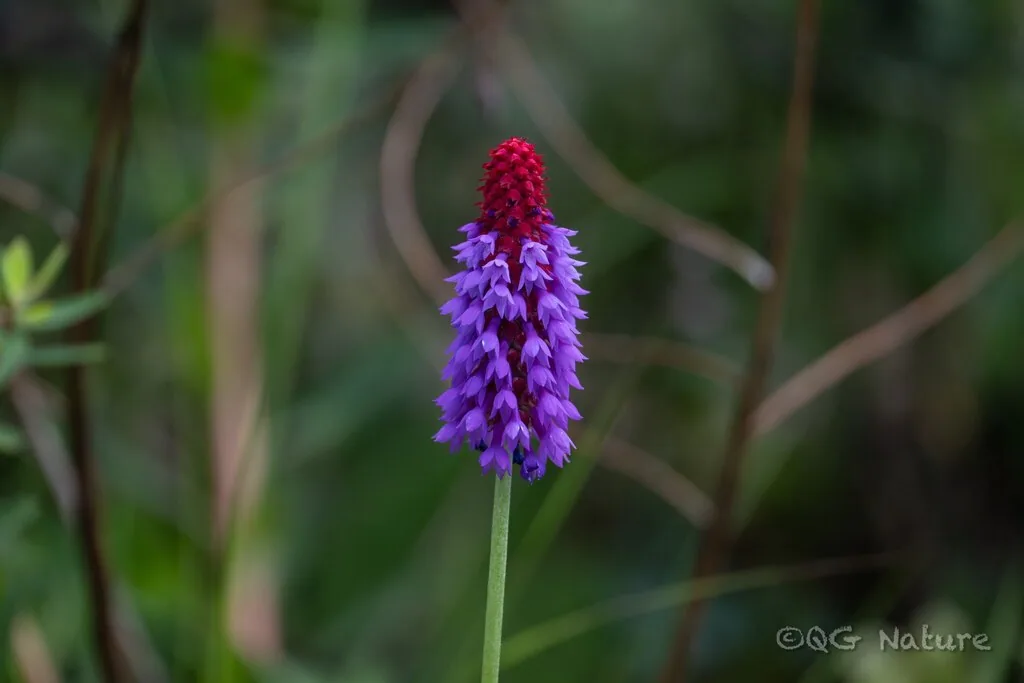

Cómo cultivar y cuidar Primula vialii
Primula vialii
Escrito por Emilio Marruso · última revisión
Tóxica para: Gatos, Perros, Caballos, Aves, Ganado, Personas · Por qué
De un vistazo
Esta prímula es una pequeña aventura: le encanta la tierra muy húmeda mientras tiene hojas y bastante seca en invierno, y también crece feliz en maceta. Siémbrala a finales de invierno sin cubrir la semilla, o divide las matas grandes después de la floración. En invierno se esconde bajo tierra, así que marca su sitio y espera su regreso.
- Riego
Mantén la tierra húmeda: muy mojada mientras tiene hojas, bastante seca en invierno
Qué dicen las fuentes (2)
Riego: Mantén la tierra húmeda; muy húmeda mientras tiene hojas, bastante seca en invierno
For best results grow Primula vialii in moist soil in partial shade. Divide large clumps after flowering.
— Primula vialii (Vial's Primrose) | BBC Gardeners World Magazine [1] Just remember to keep the plants very wet in their leafy, non-dormant state, and fairly dry in winter (Snow covering is good).
— Primula vialii The American Primrose Society [2] - Frío
Aguanta inviernos de hasta −28,9 °C (−20 °F)
Muy rústica · USDA 5 · RHS H7 · Z5
Qué dicen las fuentes (2)
Rusticidad, zona más fría: 5 [mínima invernal de −28,9 a −23,3 °C (de −20 a −10 °F)]
Hardiness: Sunset zones: 1-6, 17. USDA zones: 5-8. Mature size:
— Primula vialii - PRIMROSE [3] Rusticidad, zona más cálida: 8 [mínima invernal de −12,2 a −6,7 °C (de 10 a 20 °F)]
Hardiness: Sunset zones: 1-6, 17. USDA zones: 5-8. Mature size:
— Primula vialii - PRIMROSE [3] - Atención
Desaparece bajo tierra siete meses: marca su sitio y no tires las macetas que parezcan vacías
- Multiplicación
Por semilla, o dividiendo las matas grandes después de la floración
Qué dicen las fuentes (2)
Propagación: Semilla; división de grupos grandes después de la floración
Propagation Methods: Sow seed in late winter to early spring 68°F (20°C). Do not cover seed.
— Primula vialii - PRIMROSE [3] For best results grow Primula vialii in moist soil in partial shade. Divide large clumps after flowering.
— Primula vialii (Vial's Primrose) | BBC Gardeners World Magazine [1] - Siembra
Siembra de finales de invierno a principios de primavera a 20 °C; no cubras la semilla
Qué dicen las fuentes (1)
Siembra: Finales de invierno a principios de primavera a 20 °C (68 °F); no cubras la semilla
Propagation Methods: Sow seed in late winter to early spring 68°F (20°C). Do not cover seed.
— Primula vialii - PRIMROSE [3] - Maceta
Crece también en maceta
Qué dicen las fuentes (1)
En maceta: Sí
This summer I have kept my potted vialii soaking in a trough of water, sunk half-way up the sides of the pots, and they are thriving!
— Primula vialii The American Primrose Society [2] - Seguridad
Puede ser tóxica para gatos, perros y caballos
Resumen
La prímula de Vial es una prímula perenne de vida corta con espigas en forma de pica de brotes rojos que se abren en flores rosa-lila a principios y mediados del verano. [1][3] Su follaje está inactivo durante unos siete meses, por lo que las plantas se desentierran fácilmente por error y sus posiciones deben marcarse. [2][3]
Citado en inglés, como en la fuente.
Esta ficha está incompleta: las fuentes consultadas aún no cubren todos los campos.
Aún no cubierto por nuestras fuentes: Poda
Cuidados
Riego
Riego
Mantén la tierra húmeda; muy húmeda mientras tiene hojas, bastante seca en invierno
Qué dicen las fuentes (2)
For best results grow Primula vialii in moist soil in partial shade. Divide large clumps after flowering.Just remember to keep the plants very wet in their leafy, non-dormant state, and fairly dry in winter (Snow covering is good).Notas sobre el riego
Las fuentes no coinciden:
Qué dicen las fuentes (2)
Just remember to keep the plants very wet in their leafy, non-dormant state, and fairly dry in winter (Snow covering is good).It can also be planted en masse in bog gardens or at the pond edge – make sure the soil stays moist to compensate for the lack of shade in these situations.Luz
Las fuentes dan valores distintos según la región, la zona o las condiciones de cultivo.
Lo que dice cada fuente
Según Rainy Side Gardeners: Semisombra
Según Gardeners' World: Sombra moteada, pleno sol, semisombra
Jardines de pantano o borde de estanque: Pleno sol tolerado si el suelo se mantiene húmedo
Qué dicen las fuentes (6)
Según Rainy Side Gardeners: Growth habit:
Rosette forming.
Light:
Partial shade.
Soil:
Moist, humus rich, well-drained, neutral to acidic soil.Según Gardeners' World: Sun Exposure:
Dappled shade, full sun, partial shade
|
Aspect:
East facing, north facing, west facingJardines de pantano o borde de estanque: It can also be planted en masse in bog gardens or at the pond edge – make sure the soil stays moist to compensate for the lack of shade in these situations.Growth habit:
Rosette forming.
Light:
Partial shade.
Soil:
Moist, humus rich, well-drained, neutral to acidic soil.For best results grow Primula vialii in moist soil in partial shade. Divide large clumps after flowering.This primula is native to China and prefers moist soil and partial shade.Clima y frío
Rusticidad, zona más fría
5 [mínima invernal de −28,9 a −23,3 °C (de −20 a −10 °F)]
Qué dicen las fuentes (1)
Hardiness:
Sunset zones: 1-6, 17.
USDA zones: 5-8.
Mature size:Rusticidad, zona más cálida
8 [mínima invernal de −12,2 a −6,7 °C (de 10 a 20 °F)]
Qué dicen las fuentes (1)
Hardiness:
Sunset zones: 1-6, 17.
USDA zones: 5-8.
Mature size:Dónde cultivarla
Sí
Qué dicen las fuentes (1)
This summer I have kept my potted vialii soaking in a trough of water, sunk half-way up the sides of the pots, and they are thriving!Propagación
Semilla; división de grupos grandes después de la floración
Qué dicen las fuentes (2)
Propagation Methods:
Sow seed in late winter to early spring 68°F (20°C). Do not cover seed.For best results grow Primula vialii in moist soil in partial shade. Divide large clumps after flowering.Problemas
Plantas perdidas durante el reposo
Síntoma: Las plantas desaparecen bajo tierra durante unos siete meses y se desentierran o se descartan por error
Qué hacer: Marca sus posiciones; no tires las macetas aparentemente vacías en invierno
Vida corta
Síntoma: Las plantas pueden sobrevivir solo una o dos temporadas
Qué hacer: Cultiva en suelo pantanoso y constantemente húmedo durante el crecimiento
Qué dicen las fuentes (1)
Perhaps this answers the mystery of why they seem short-lived (Richards says, “It was originally considered a rather tricky species to grow…”) – Your soil may not be boggy enough!
— Primula vialii The American Primrose Society [2]
Remedios
Las fuentes consultadas no dan remedios para esta planta.
Venenosa para los animales
Según la fuente, citada textualmente. No es un consejo médico ni veterinario: si una persona o un animal pudo haber ingerido esta planta, contacta con un centro de toxicología o con un veterinario.
Primula ‘Vialii’ can be toxic. Toxic to: Is known to attract Cats Cats Is known to attract Dogs Dogs Is known to attract Horses
[1]La fuente señala el riesgo para este animal pero no explica por qué.
No reported toxicity to: Is not known to attract Birds Birds Is not known to attract Livestock Livestock Is not known to attract People
[1]La fuente señala el riesgo para este animal pero no explica por qué.
Calendario
Siembra
Finales de invierno a principios de primavera a 20 °C (68 °F); no cubras la semilla
Qué dicen las fuentes (1)
Propagation Methods:
Sow seed in late winter to early spring 68°F (20°C). Do not cover seed.Plantación
Las fuentes dan valores distintos según la región, la zona o las condiciones de cultivo.
Lo que dice cada fuente
Según Gardeners' World: De mayo a septiembre
Plantas cultivadas a partir de semilla, fuente: Rainy Side Gardeners: Primavera, después de endurecerlas
Qué dicen las fuentes (3)
Según Gardeners' World: | Plant | | | | | yes | yes | yes | yes | yes | | |
| Flowers | | | | | | yes | yes | | | | |Plantas cultivadas a partir de semilla, fuente: Rainy Side Gardeners: Easy to start from seed, I sow in late winter and keep in the greenhouse until spring, when the plants are moved into the garden after a hardening period.| Plant | | | | | yes | yes | yes | yes | yes | | |
| Flowers | | | | | | yes | yes | | | | |Poda
No figura en las fuentes consultadas.
Meses tal como los dan las fuentes, en su mayoría de Estados Unidos (hemisferio norte). En el hemisferio sur se desplazan unos seis meses.
Valores orientativos
Valores de una fuente secundaria, no comprobados palabra por palabra como el resto de esta página. Úselos como punto de partida.
- Ciclo de vida
- Perenne herbáceaValor orientativo, adáptalo a tu clima · Fuente secundaria
- Altura adulta
- 30.5-61 cm (1-2 pies)Valor orientativo, adáptalo a tu clima · Fuente secundaria
- Horas de sol
- 4-6 horasValor orientativo, adáptalo a tu clima · Fuente secundaria
- pH del suelo
- 5.5-6.5Valor orientativo, adáptalo a tu clima · Fuente secundaria
- En interior
- SíValor orientativo, adáptalo a tu clima · Fuente secundaria
- Nivel de cuidado
- MedioValor orientativo, adáptalo a tu clima · Fuente secundaria
- Crecimiento
- BajoValor orientativo, adáptalo a tu clima · Fuente secundaria
- Poda
- Febrero, marzo, abril, mayo, marzo, abril, mayo, junio, julio, agosto, septiembreValor orientativo, adáptalo a tu clima · Fuente secundaria
Plantas similares
- Oreja de oso Primula auricula
- Cowslip Primula veris
- Eastern Shooting Star Primula meadia
- Prímula Primula elatior
- Primrose Primula obconica
- Primavera Primula vulgaris
- Primula allionii Primula allionii
- Primula malacoides Primula malacoides
Fuentes
Cada valor anterior se cita de estos documentos. Los enlaces llevan al editor original.
- Primula vialii (Vial's Primrose) | BBC Gardeners World Magazine · gardenersworld.com, consultado
- Primula vialii The American Primrose Society · americanprimrosesociety.org, consultado
- Primula vialii - PRIMROSE · rainyside.com, consultado
- Maine Day 3: Primula vialii - Fine Gardening · finegardening.com, consultado
Escrito por Emilio Marruso · última revisión