Garden Compost at Home: How to Use Spent Coffee Grounds
Build and troubleshoot a backyard compost pile, measure coffee grounds by volume, and check that the compost is ready before using it.
by Emilio MarrusoPublished
Put spent coffee grounds in your backyard compost with dry leaves and other ingredients. Keep the batch damp and aerated and use it in the garden after it finishes and cures. U.S. Environmental Protection Agency, Composting at home explains how to run the pile, and Oregon State University Extension Service, Coffee grounds in the garden limits used grounds to 20% of total pile volume [1] [2].
In short:
- Keep dry browns handy to mix with and cover wet scraps.
- Count coffee grounds as a green ingredient and stay below or at the volume limit.
- Correct poor drainage, low moisture or a sour smell before adding more material.
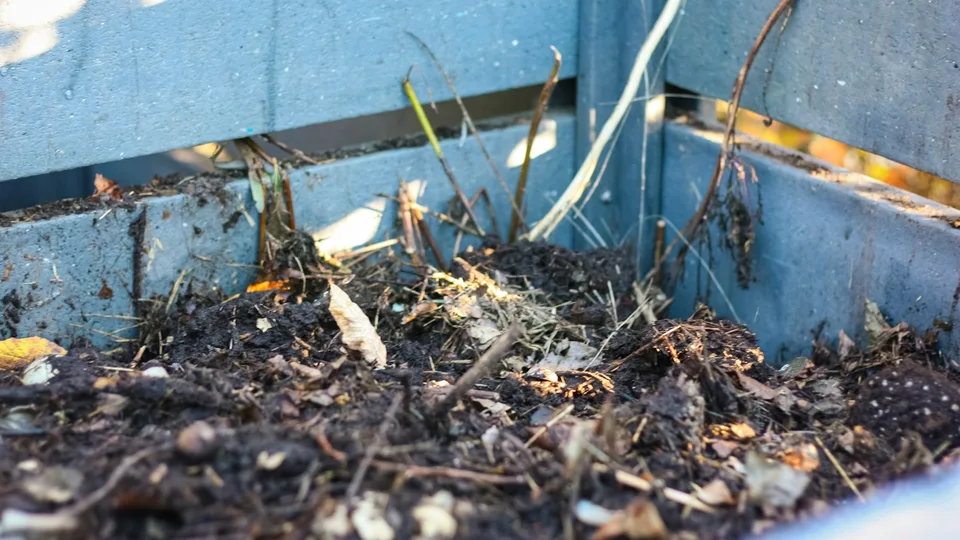
Set up a pile you can tend
Pick a well-drained spot you can get to all year. Keep water available nearby. A bin helps contain the ingredients where space is tight. Leave enough working room to lift the lid, add leaves and turn the contents. Keep a separate stock of dried leaves or plain shredded cardboard so you can cover wet kitchen scraps when you bring them out [1].
Start with a loose layer of coarse brown material such as twigs or wood chips. That layer lets air in at the bottom and takes up some of the liquid that drains down. Add green materials such as fruit and vegetable scraps or coffee grounds and mix in dry browns. Break bulky scraps into smaller pieces along the way so they break down more readily [1] [2].
How much coffee can the pile take?
Step 1 Count grounds toward the green ingredients
Used grounds are a green in composting terms. Their color does not make them a substitute for dry leaves. If you add a container of grounds to the pile, account for it alongside other greens such as vegetable scraps. Mix the grounds through the browns before covering your fresh additions [1] [2].
Step 2 Measure the share before mixing
For a worked example, use a batch made of 10 equal scoops of ingredients in total. At Oregon State's 20% ceiling, up to 2 of those 10 scoops can be grounds, with the other 8 made up of other ingredients. The scoops measure the ingredients added to the batch. Measurements of a partly decomposed pile reflect settling and changes in volume [2].
Step 3 Leave room for browns
The coffee ceiling is separate from the balance of greens and browns. If the other ingredients already include a lot of wet scraps, add dry material or use fewer grounds. At the example ceiling, the 8 other scoops cannot all be wet food scraps if you want the pile to stay airy. Start small if your supply of dry leaves is limited [1] [2].
What does the pile need right now?
| What you notice | What to do |
|---|---|
| Food scraps are exposed | Bury them in the pile and cover them with browns [1]. |
| Contents are dry and decomposition has slowed | Moisten as you mix, using the squeezed-sponge check [1]. |
| Contents are wet and smell bad | Add dry browns and turn to bring in air [1]. |
| A fresh batch of coffee grounds has arrived | Measure the grounds as part of the total ingredients and mix them through [2]. |
| Recognizable scraps remain in the batch | Keep decomposing and wait before using the batch in planting soil [1]. |
Make one adjustment and check a handful from inside. The top can dry while the middle stays wet. When there is a bad smell, look for wet clumps and add structure with dry material. If a handful from inside is dry, add moisture while mixing instead of pouring water into one spot [1].
When can you use the compost in your garden?
Set aside the batch once it stops heating after mixing and the original scraps are no longer recognizable. Let it cure before using it. A finished batch smells earthy and has a dark, crumbly texture. Material that still looks like fresh scraps belongs in the active pile. Screen out coarse pieces if you want a finer material and return those pieces to the next batch [1].
Use finished compost as a soil amendment or spread it at the soil surface. The same batch can support the soil in a vegetable bed or around established ornamentals. Keep track of where you used it so you can compare how the soil behaves over time. If the pile looks finished while one section still contains fresh material, finish that section separately rather than mixing it into the material you are about to use [1].
Can you put coffee grounds directly on plants?
Send them through the compost first, especially if you have a substantial quantity. Oregon State warns that excess fresh grounds in soil can temporarily tie up nitrogen and slow the growth or germination of some plants. For an established bigleaf hydrangea, choose any pH adjustment from a soil test rather than treating spent coffee as a predictable acidifier [2].
For a batch you can check at a glance, use EPA's ratio of 2 to 3 parts browns to 1 part greens by volume. In the 10-scoop example, 7 scoops of browns and 3 scoops of greens fit that range. The greens can be 2 scoops of grounds and 1 scoop of vegetable scraps. This puts coffee at the ceiling, so switch some of those grounds for other greens if more coffee comes in. Keep extra dry leaves outside the bin so they are available if the pile gets wet [1] [2].
For curing, EPA specifies at least 4 weeks after the batch stops reheating and food scraps disappear. Start that count from the change in the pile, rather than from the date you began collecting grounds [1].
Frequently asked questions
Do paper coffee filters belong in the pile?
EPA lists coffee grounds and paper filters as acceptable in a backyard compost pile [1].
How can you tell whether a wet pile needs more water?
Take a handful from inside. If it is already waterlogged or smells bad, add dry browns and turn the pile [1].
Sources
- U.S. Environmental Protection Agency, Composting at home · epa.gov, consulted
- Oregon State University Extension Service, Coffee grounds in the garden · extension.oregonstate.edu, consulted
Written by Emilio Marruso · last checked