When to Cut Back Hydrangeas: A Pruning Guide by Plant Type
Find out whether your hydrangea flowers on old wood, new wood, or both, then choose the right season and the right stem to cut.
by Emilio MarrusoPublished
Prune old-wood hydrangeas just after flowering if they need shaping. Prune new-wood hydrangeas in late winter or early spring if they need thinning or shortening. If you cannot identify the plant, keep its living stems until you can see what blooms. Compare the types and cuts described by University of Maryland Extension, Pruning hydrangeas and University of New Hampshire Extension, Pruning hydrangeas [1] [2].
In short:
- Match the species and cultivar to the wood that bears flowers.
- Keep healthy old stems on bigleaf, mountain and oakleaf hydrangeas.
- Thin panicle and smooth hydrangeas before new growth when there is a reason to prune.
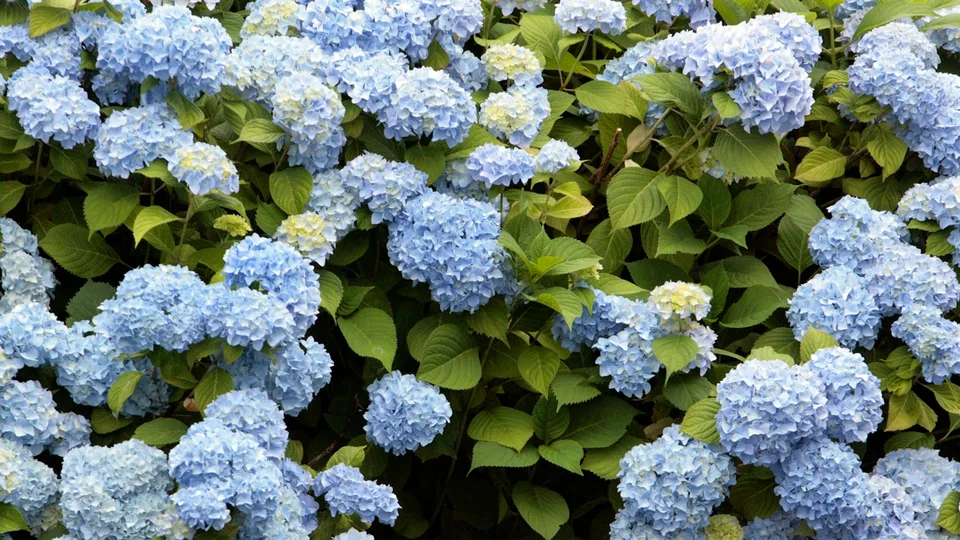
Which hydrangea do you have?
| Type | Where flowers form | When to shape |
|---|---|---|
| Bigleaf hydrangea | Usually on old wood. Rebloomers can use both [1] [2]. | Just after bloom if needed. |
| Mountain hydrangea | Usually on old wood. Reblooming cultivars exist [1] [2]. | Just after bloom if needed. |
| Oakleaf hydrangea | Old wood [1] [2]. | Thin sparingly after flowering. |
| Smooth hydrangea | New wood [1] [2]. | Late winter or early spring. |
| Panicle hydrangea | New wood [1] [2]. | Late winter or early spring. |
| Climbing hydrangea | Old wood [1] [2]. | Trim lightly after flowering if needed. |
Use a plant label or cultivar name first. Large rounded clusters alone cannot tell you which wood carries the flowers. Smooth and bigleaf hydrangeas can both have rounded heads, while oakleaf foliage provides a more distinctive clue than a cone-shaped flower cluster. Panicle and oakleaf hydrangeas both have elongated clusters, so look at leaves and overall habit as well as flowers [1] [2].
What should you cut after flowering?
On an old-wood shrub, start with the branch that is actually causing trouble. Follow it from its tip back toward the center of the plant. If it is growing into a path or another branch, choose a selective cut that solves the problem while leaving the other stems standing. You can leave a healthy shrub alone when you are happy with its shape and there is room for it to grow [1] [2].
The timing matters because last season's stems hold the buds for the next display. A hedge-style trim across the whole shrub takes buds from many branches at once. If you want to remove only dry flowers, trace the flower stem down to the nearest sound pair of buds and keep the rest of the branch. Treat a cut near the flower head and a cut at the base of a live stem as different jobs [1] [2].
How should you handle winter dieback?
Step 1 Wait for signs of live growth
On a bigleaf or mountain hydrangea with winter damage, wait in spring for viable buds to show themselves before deciding what died. Examine the branch from the tip down. If only the tip is dead and you can see live buds farther down the stem, let those buds guide the cut. A stem without obvious growth on the first warm day still deserves a second look [2].
Step 2 Keep the healthy framework
Remove wood that is genuinely dead, keeping sound branches where they are growing well. If the entire shrub appears bare, compare several stems and wait for the growth that lets you make a better decision. Oakleaf hydrangeas also carry flowers on old growth and generally need little pruning. For a climbing hydrangea, let the main framework keep its hold and deal with stray stems selectively after flowering [1] [2].
Step 3 Recheck the plant at bloom
Make a note of whether an established stem flowers or a shoot from the current season does. Add a photo of the foliage and overall habit so you can check the identification later. If an old-wood hydrangea produces leaves only after a hard winter, flower buds may have suffered even though the plant itself survived [1] [2].
How far back can you cut panicle and smooth hydrangeas?
Start by deciding whether you need to thin crowded branches or change the outline. For a panicle shrub, a thinning cut takes out an entire branch. A heading cut shortens a branch above a live bud, allowing growth from that point. Preserve useful branches that give the plant its shape and spread the cuts through the shrub instead of reducing every stem just because you can [1] [2].
Smooth hydrangeas tolerate a much lower cut because the new shoots can bear flowers. You can also leave stems taller or skip pruning. Think about the structure left behind and what you want the shrub to do in that spot. On a tree-form panicle hydrangea, keep the trunk and make cuts in the crown. The trunk is part of the permanent form you are maintaining [1] [2].
What changes with a reblooming cultivar?
Reblooming bigleaf or mountain hydrangeas can flower on both old and new stems. Keep live old stems for the early flowers. Later flowers on new shoots are an additional opportunity for bloom. If you cut the shrub hard in spring, the ability to flower on new growth does not restore the early buds you removed [1] [2].
Check the cultivar rather than treating every bigleaf as a rebloomer. If a plant came with no tag, the safest shaping window remains the time just after flowering, when you can see which stems flowered and which branches truly need attention [1] [2].
If the same branch needs cutting every year to keep a doorway or a path usable, check how wide the cultivar grows before you decide on the next cut. The natural shape may be easier to maintain with more room. When moving the plant is impractical, select the stems that cause the obstruction and keep the rest for bloom [1] [2].
Frequently asked questions
Sources
- University of Maryland Extension, Pruning hydrangeas · extension.umd.edu, consulted
- University of New Hampshire Extension, Pruning hydrangeas · extension.unh.edu, consulted
Written by Emilio Marruso · last checked