87% of Europe's wild bee species persist, but most are losing ground
A century of records from 4 million records shows Europe has lost few bee species outright, yet most now live in fewer places. Here is the data, a bird and butterfly outlook, and what it means for your garden's native bees.
by Emilio MarrusoPublished
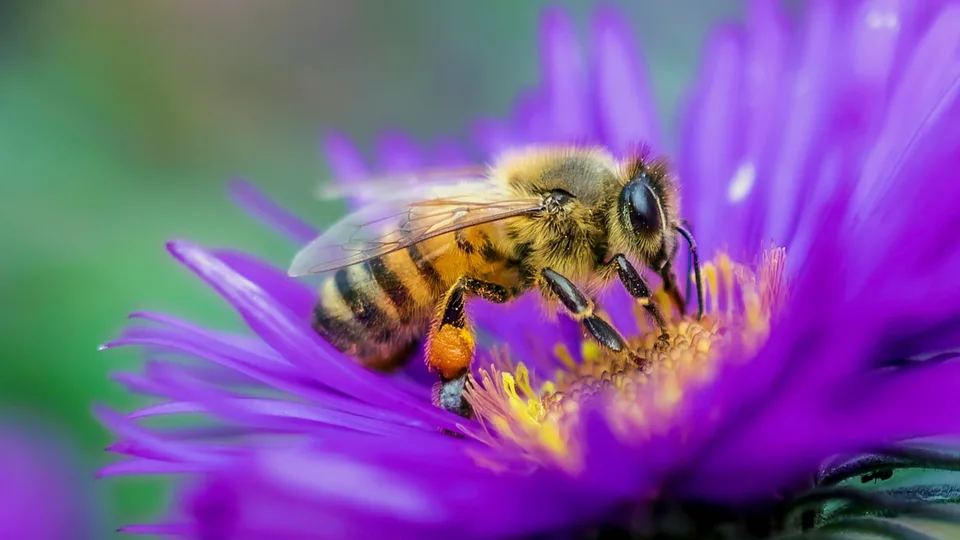
Here is a bee story with a hopeful twist. A century of records shows that 87% of Europe's wild bee species are still being found, yet most now turn up in fewer places, according to a study in Proceedings of the National Academy of Sciences [1]. The team, led by the Doñana Biological Station of Spain's research council CSIC, says continent-wide extinctions are rare so far, so there is still time to act [2].
In short: - Modern records exist for 87% of Europe's bee species and 89% of its hoverfly species, but most bee species declined in occupancy [1]. - On average, a bee species lost 0.4% of its European range per year, nearly a third over a century, in the reading of an independent expert [3]. - A separate 2026 study projects that common birds and butterflies keep declining to 2050 even if Europe meets its conservation targets [4].
- Who
- Doñana Biological Station (EBD-CSIC), first author Carlos Martínez-Núñez, with partners in France, Belgium, Serbia and Morocco [2]
- Data
- more than 4 million records of wild bees and hoverflies, 1921–2020 [2]
- Coverage
- 88% of Europe's bee and hoverfly species [1]
- Journal
- PNAS, volume 123, issue 44, published 19 October 2026 [1]
Still here, but in fewer places
Hoverflies, or flower flies, also pollinate [2]. Species numbers per region changed little, with declines in the Atlantic and Continental regions and recent gains for bees in the Alpine region [1]. The worry sits one level down: most bee species, and half of the hoverfly species studied, now occupy a smaller share of the map [2].
Every region had more species shrinking than spreading except the Alpine areas, where CSIC links the gains to species moving up from the valleys as temperatures rise [2]. Bees listed as critically endangered by the IUCN declined most steeply [2]. CSIC names habitat loss, fewer flowers and pesticide use tied to intensive farming as the main causes, with climate change perhaps the biggest threat ahead [2].
The key figures side by side
| Figure | Value | Source |
|---|---|---|
| Records analyzed | more than 4 million | CSIC [2] |
| Species covered | 88% of European bees and hoverflies | PNAS [1] |
| Bee species with modern records | 87% | PNAS [1] |
| Hoverfly species with modern records | 89% | PNAS [1] |
| Average yearly loss of range, bees | 0.4% | expert reading [3] |
| Same loss compounded over 100 years | 33.0% | our calculation |
The 33.0% is our arithmetic, 1 minus 0.996 raised to the power of 100, and it matches the expert's "nearly a third" [3].
Birds and butterflies point the same way
In Nature Ecology & Evolution, a team led by Stanislas Rigal modeled 265 common bird and 144 common butterfly species from more than 20 000 sites in 27 countries, using data from 2000 to 2021, and projected them to 2050 [4]. Under scenarios that meet conservation goals, bird trends improve but still decline, farmland birds above all, with few effects on butterflies; no scenario stops or reverses the average decline [4]. Co-author institute INBO sums it up: current policy on its own is not enough [5].
What it means for an American garden
Co-author Ignasi Bartomeus' advice travels well: plant native flowers in gardens and on balconies, avoid pesticides and offer small refuges [2]. US Extension services add these steps for late fall.
Trim stems, do not scalp them
Many native bees nest inside hollow or pithy dead stems [6]. After splitting nearly 3000 stems from 20 gardens, NC State Extension found that stems are empty in their first winter: trim them after the first frost and before the last frost, then leave the stubs until they fall apart [6].
Leave stubs at least 12 inches tall
Oregon State University Extension suggests leaving dead stems at least 12 inches (30.48 cm) tall, plus some bare, untidy edges for ground-nesting bees [7].
Keep something in bloom
Late and early bloomers such as witch hazel, heather and heath feed bees when flowers are scarce [7].
What the study does not say
Early records are scarce and opportunistic, northwest Europe is far better sampled than the south and east, and trends could be estimated for fewer than half of the species, mostly common ones [3]. The paper tracks occupancy, where species are recorded, not how many bees there are [1]. Many hoverflies were described only recently, which limits long-term comparisons [2]. The bird and butterfly study is a set of scenario projections, not a forecast [4]. Neither paper covers North America: the garden tips come from NC State and Oregon State Extension [6] [7].
Frequently asked questions
Have Europe's wild bees gone extinct?
Not at the continental scale: 87% of bee species have modern records, and continent-wide extinctions are rare so far [1] [2].
When should I cut back perennial stems for bees?
In their first winter, after the first frost and before the last frost, leaving a stub [6].
Sources
- Martínez-Núñez et al. (2026), Historical trends show more declining than increasing species among European pollinators — Proceedings of the National Academy of Sciences 123 (44), e2600774123 · doi.org, consulted
- Cien años de datos revelan un declive generalizado de polinizadores silvestres en Europa — CSIC, 19 October 2026 · csic.es, consulted
- Most species of wild bees are in decline in Europe, according to an analysis covering the last century — Science Media Centre Spain, expert reactions, 19 October 2026 · sciencemediacentre.es, consulted
- Rigal et al. (2026), Predicted decline in common bird and butterfly species even under conservation policy scenarios in Europe — Nature Ecology & Evolution, published online 31 July 2026 · nature.com, consulted
- Current European nature conservation policy is not sufficient to halt the decline in common bird and butterfly populations — Research Institute for Nature and Forest (INBO), September 2026 · vlaanderen.be, consulted
- Winter Is a Great Time to Tidy Up Perennial Stems for Pollinator Habitat — NC State Extension · pollinators.ces.ncsu.edu, consulted
- Maintain a bee-friendly garden in fall and winter, too — Oregon State University Extension Service · extension.oregonstate.edu, consulted
Written by Emilio Marruso · last checked