Petal windows warm fetterbush flowers and curb mold, FAU study finds
Clear patches at the base of the petals let infrared light into the flowers of a native Southern shrub. A new study links that warmth to fewer microbes, and finds its close cousin plays by different rules.
by Emilio MarrusoPublished
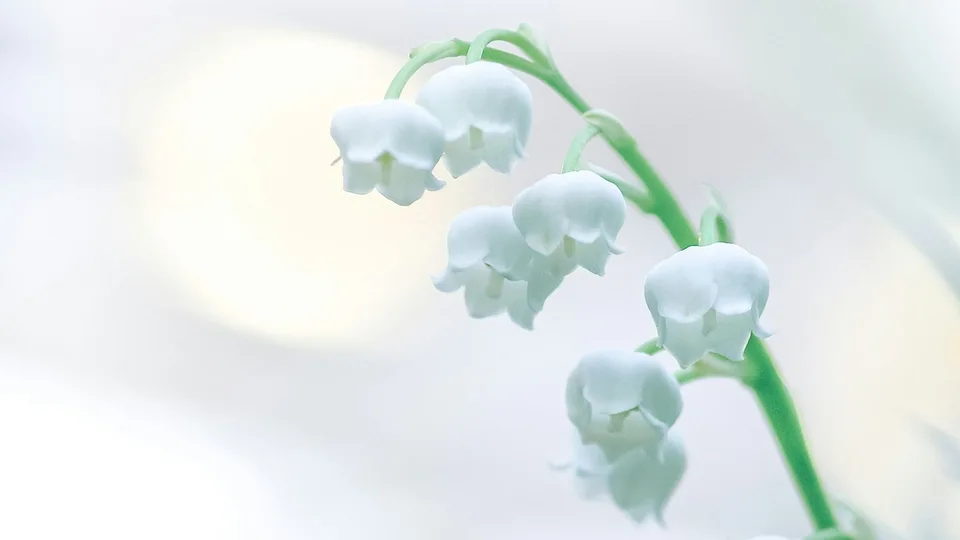
Hold a fetterbush flower up to the sun and you can see small, clear patches at the base of the petals. Researchers at Florida Atlantic University report that these petal "windows" change the light and heat inside the flower, and with them the microbes that live there [1]. The study, led by doctoral student Jessica Williams with assistant professor Jacob Francis as lead principal investigator, is published in New Phytologist [1] [2].
In short: - Petal windows in two native Lyonia shrubs let through more ultraviolet and infrared light than the colored petal tissue [2]. - Infrared light warmed fetterbush (Lyonia lucida) flowers, but not staggerbush (Lyonia fruticosa) flowers [2]. - Warmer flowers held fewer microbes overall, and flowers whose windows let through more infrared had less mold [2].
- Who
- Florida Atlantic University; first author Jessica Williams, lead investigator Jacob Francis [1]
- Plants
- Lyonia lucida and Lyonia fruticosa, blueberry relatives native to the Southeast [1]
- Where and when
- Archbold Biological Station, Florida, May 7 to 9, 2025 and May 21, 2026 [2]
- Sample
- 108 flowers from 18 plants in the main analysis [2]
- Journal
- New Phytologist, volume 252, December 2026 issue [2]
Windows in a petal
Many members of the heath family, Ericaceae, which includes blueberries, have such semi-translucent petal sections [1]. The windows are unpigmented areas at the base of the flower's petal tube [2]. For 150 years, Williams notes, flower color has been studied mostly for how it draws pollinators; this work looks at the climate inside the bloom [1].
What the team measured
The 108 flowers with complete data, 50 staggerbush and 58 fetterbush, got temperature readings inside and outside, counts of the yeasts, molds and bacteria that grew in culture, and spectrometer readings of the ultraviolet (280–400 nm) and infrared (700–880 nm) light passing through the petals [2]. In 2026 a lamp test with filters, letting through only infrared or blocking it, followed on 28 flowers from cut stems [2].
Two neighbors, two answers
The two shrubs bloom side by side yet behave very differently, Francis says [1]. Our comparison:
| What was measured | Fetterbush (L. lucida) | Staggerbush (L. fruticosa) |
|---|---|---|
| Rise inside the flower for each degree outside | 0.57 degree [2] | 0.07 degree [2] |
| Infrared through windows vs colored petal | higher, borderline result [2] | significantly higher [2] |
| More infrared through windows, warmer flower? | yes [2] | no link [2] |
| Infrared-only lamp vs infrared blocked | 5.78°F (3.21°C) warmer [2] | no significant difference, 1.21°F (0.67°C) [2] |
| Mold in the flowers | more [2] | less [2] |
| Main visitors at the site | night-flying moths [2] | various Hymenoptera, the bee and wasp group [2] |
In everyday terms: when the air outside warms by 10 degrees, °F or °C alike, the inside of a fetterbush flower warms by 5.7 degrees and a staggerbush flower by 0.7 (our calculation from the slopes in the study [2]). In the 10-minute lamp test, infrared-only fetterbush flowers ended 12.92°F (7.18°C) above their starting temperature, against 7.15°F (3.97°C) with infrared blocked: 1.81 times the warming (our calculation [2]).
Less mold in warmer flowers
Across all flowers, warmer ones held fewer microbes [2]. Yeasts dropped with warmth in both species; bacteria dropped in warmer staggerbush flowers only [2]. Ultraviolet light, the kind used to sterilize surfaces, cut microbes in a lab treatment, but natural differences in how much ultraviolet the petals let through did not predict how the microbes fared [1] [2]. The authors conclude that the effect runs through infrared warming, not ultraviolet sterilization [2].
Meet the two shrubs
Fetterbush is a native evergreen in the heath family, found in swampy areas, bogs and wet woods from Virginia to Florida and west to Louisiana [3]. It grows 3–6 feet (0.91–1.83 m) tall and wide, with small fragrant flowers in spring, and suits wet sites, rain gardens and hedges [3]. Staggerbush, also called poor-grub, reaches 6 feet (1.83 m), with white hairs on new stems [4]; the Florida Native Plant Society lists it for full sun and sandy acidic soil, and notes that it attracts bees [5].
What the study does not say
The work covers two species at one Florida field station, in late spring, and counted only microbes that grow in culture [2]. The lamp test showed that infrared warms fetterbush flowers; the link between warmth and fewer microbes comes from field measurements [2]. Why staggerbush does not warm under infrared is still open [1]. The study did not track pollinators: that flower microbes can affect nectar and pollinator visits, and that windows could act as visual cues, are the authors' hypotheses [1] [2]. The plant notes come from NC State Extension, UF/IFAS and the Florida Native Plant Society, not from the study [3] [4] [5].
Frequently asked questions
What are petal windows?
Clear, unpigmented areas at the base of the petal tube that let in more ultraviolet and infrared light [2].
Do warmer flowers have fewer microbes?
In this study, yes overall [2].
Do the windows help pollinators?
Not tested: the authors raise it as a possibility [1].
Sources
- FAU Study: Tiny Windows in Petals Shape the Environment Inside Flowers — Florida Atlantic University News, 28 October 2026 · fau.edu, consulted
- Williams, Barker, Millet, Carcache & Francis (2026), Petal infrared transmission warms flowers and reduces microbial abundance — New Phytologist 252 (5): 2056–2069 · doi.org, consulted
- Lyonia lucida (Fetterbush) — North Carolina Extension Gardener Plant Toolbox, NC State Extension · plants.ces.ncsu.edu, consulted
- Rusty Lyonia (with notes on poor-grub, Lyonia fruticosa) — Florida 4-H Forest Ecology, UF/IFAS · florida4h.ifas.ufl.edu, consulted
- Lyonia fruticosa, staggerbush — Florida Native Plant Society Plant Database · fnps.org, consulted
Written by Emilio Marruso · last checked