Smaller russets cost less: USDA prices for your Thanksgiving mash
Smaller Idaho russets cost less at wholesale in 3 markets. Compare the USDA quotes and pick a potato for fluffy Thanksgiving mash.
by Emilio MarrusoPublished
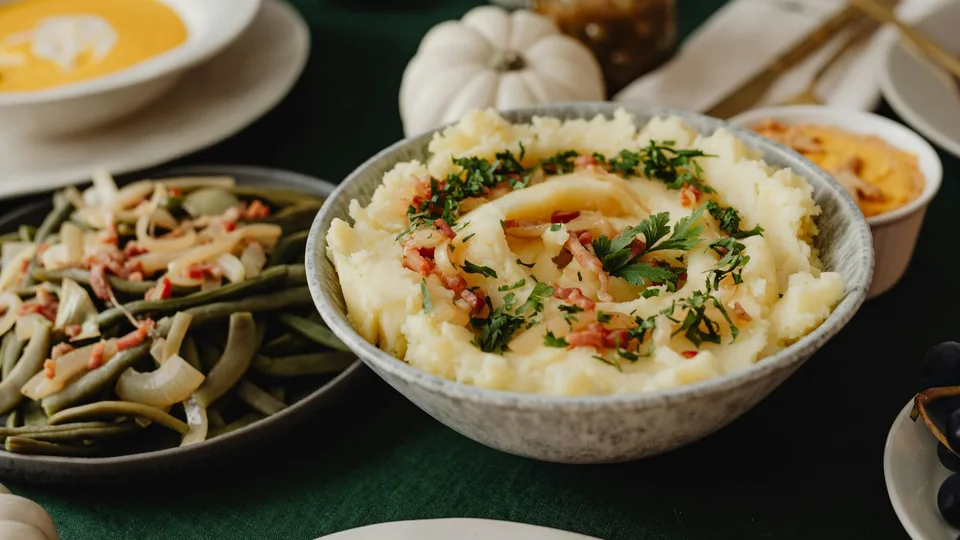
The USDA Agricultural Marketing Service published its November 24 wholesale potato report two days before Thanksgiving. In 3 markets, cartons of smaller Idaho Norkotah russets had lower reported prices than cartons of larger ones of the same grade and weight [1]. If you're making mash, look for a starchy potato first, then compare the shelf price per pound across sizes [1] [2].
In short: - In New York, Idaho Norkotah russets in the 100-count size were listed at $26–$28 per wholesale carton. The 70-count size was $34–$36 for the same weight [1]. - Chicago and Los Angeles showed the same ordering for those 2 carton sizes [1]. - Dry-fleshed potatoes such as russets are a good fit for fluffy mash. Save waxy potatoes for dishes where you want the pieces to hold together [2].
Compare the same potato in 2 sizes
The 70s and 100s in the USDA table tell you the count size for a carton. At the same weight, a higher count means less weight per potato on average. Matching the origin, variety, grade and carton weight makes the size comparison easy to see. These rows all come from the wholesale terminal market section of the same report [1].
We divided each listed carton price by the carton weight. Read across a row to see what a pound cost at wholesale in the larger and smaller size classes, then use the same arithmetic if you're comparing bags with different weights at the store [1].
| Wholesale market | 70s, price per carton | 100s, price per carton | 70s, per lb | 100s, per lb |
|---|---|---|---|---|
| New York [1] | $34–$36 | $26–$28 | $0.68–$0.72 | $0.52–$0.56 |
| Chicago [1] | $39–$40 | $24–$26 | $0.78–$0.80 | $0.48–$0.52 |
| Los Angeles [1] | $32 | $22 | $0.64 | $0.44 |
The closest the two prices come is in New York, where the highest quote on the smaller potatoes is still below the lowest quote on the larger ones. The size difference is especially easy to see in Los Angeles, where the report lists a single price for each size [1]. In all 3 markets, the price ranges for the 2 sizes never overlap [1].
Pick the texture you want on the plate
University of Minnesota Extension recommends dry-fleshed potatoes such as russets for mashing. They take up butter or gravy well. Waxy potatoes stay firm in soups and salads and tend to turn sticky when mashed. Yukon Gold falls between the two groups and is an all-purpose option [2].
At the store, start with that texture choice. If your options are two bags of russets, look for the unit price on the shelf label or divide each bag price by its weight. If you're choosing from your own harvest, sort by variety before size. Put the dry-fleshed ones in the mash and keep the waxier ones for a dish with distinct pieces [2].
Plan next year's potato patch from the table
If you like the texture of today's mash, write down the variety for spring. Minnesota Extension recommends starting with certified disease-free seed tubers and planting when the soil warms. Pick a sunny spot with well-drained soil. Choose a bed with no tomatoes, peppers, eggplants or potatoes in the past 3 to 4 years [2].
Extension also connects the spacing in the row to the size of the harvest. Closer spacing favors smaller tubers. More room gives you fewer but larger ones. Once the shoots emerge, mound soil along the plants to keep shallow tubers covered and out of the light [2].
What the report does not say
These are wholesale quotes from a single day. To follow a price over time, match the market, origin, variety, grade, weight and count size before comparing dates. Your grocery receipt will reflect the price at your store. For today's dinner, use the wholesale table to understand what size means on a price sheet and the shelf label to decide what goes in your basket [1].
Sources
- USDA Agricultural Marketing Service — National Potato and Onion Report, November 24, 2026, page 6 · mymarketnews.ams.usda.gov, consulted
- University of Minnesota Extension — Growing potatoes in home gardens · extension.umn.edu, consulted
Written by Emilio Marruso · last checked