Thanksgiving weather alerts in 8 states: What to protect now
See 8 selected Thanksgiving weather alerts and what to do for shrubs, vegetable beds and tender pots before or after the storm.
by Emilio MarrusoPublished
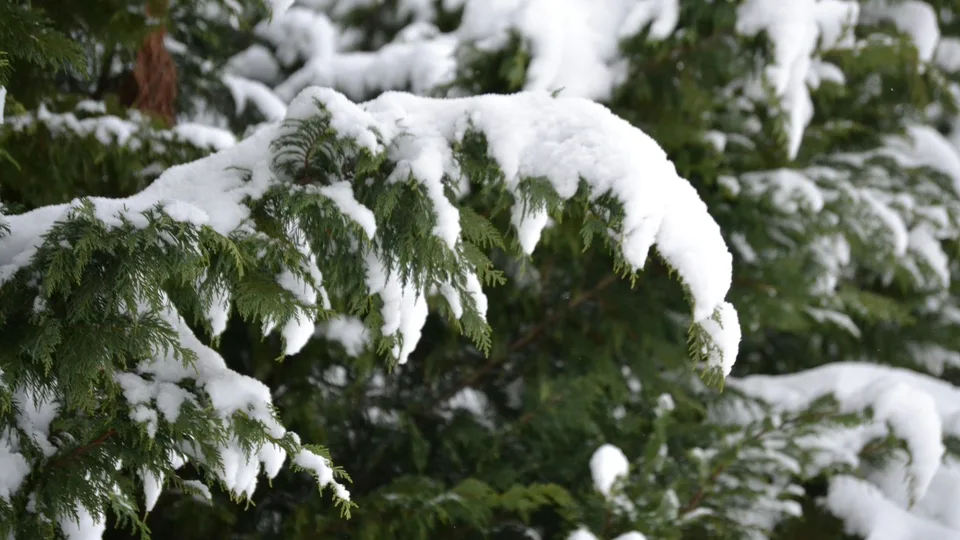
Thanksgiving week brings snow warnings to parts of Illinois, Missouri and Washington, flood alerts from North Carolina to Maryland and along a Northern California shoreline, and an overnight freeze warning in part of Texas. Those are selected alerts from the National Weather Service as of 3:59 AM ET on November 25 [1]. Find your area in the table, then focus on the job that matches the alert. If your part of Texas is under the overnight warning, for example, start with the tender pots you can carry indoors [5].
In short: - NOAA’s Thanksgiving forecast flags heavy rain and strong winds in the East, with mountain snow in the Pacific Northwest [2]. - Illinois Extension advises gently lifting loose snow off small shrubs if needed and letting ice melt in place [3]. - Illinois Extension’s flood guidance calls for discarding produce touched by floodwater, including vegetables with hard rinds [4].
When do the alerts start where you garden?
The table matches selected NWS bulletins to garden actions. Times are local to each alert, with Wednesday on November 25, Thursday on November 26 and Friday on November 27 [1]. For an alert that has already begun, the table shows the end time. The watches flag areas where flooding is possible under the conditions described by the issuing offices [1].
| Area | Alert | Local window | Garden priority |
|---|---|---|---|
| Southwest and west-central Illinois, east-central and southeast Missouri | Winter Storm Warning | Noon Wed to 6 PM Thu CST [1] | Check upright shrubs after the storm [3] |
| Bollinger, Cape Girardeau, Perry and Wayne, Missouri | Winter Storm Warning | 3 PM Wed to 3 PM Thu CST [1] | Leave ice to melt [3] |
| Central North Carolina, including Wake and Durham | Flood Watch | 4 PM Wed to 10 AM Thu EST [1] | Check how high floodwater reached [4] |
| Northeast North Carolina and southeast Virginia | Flood Watch | 7 PM Wed to 1 PM Thu EST [1] | Stay out of inundated beds [4] |
| Southeast Maryland and eastern Virginia | Flood Watch | 10 PM Wed to 4 PM Thu EST [1] | Keep exposed produce out of compost [4] |
| Central Texas, including Bell and McLennan | Freeze Warning | 11 PM Wed to 9 AM Thu CST [1] | Shelter tender pots [5] |
| Whatcom and Skagit Cascades, Washington | Winter Storm Warning | 7 PM Wed to 4 AM Fri PST [1] | Inspect small shrubs once safe [3] |
| Low Solano County shorelines, California | Flood Warning | Already in effect through 4 PM Thu PST [1] | Stay clear of flooded ground [4] |
Snow on shrubs: Let the weather pass first
Look at upright evergreens and small shrubs once the storm has passed and the ground is safe to walk on. Snow can bend branches without breaking them, and a small tree that is simply bent often recovers by itself. If a small shrub is still bowed under loose snow and you can reach it safely, Illinois Extension recommends easing the snow off with gentle upward sweeps of a broom. Let ice or snow that sticks to branches melt naturally. Pulling it free adds stress to wood already carrying weight [3].
Wait for melting before you assess the whole shrub. For damaged limbs touching a power line, keep away and contact the utility and an arborist [3].
Flood watch: Know what to keep out of the kitchen
If floodwater moves through your vegetable beds, wait until it recedes before entering. Then look at where the water and mud reached. Illinois Extension recommends discarding produce exposed to floodwater, even when it looks sound or has a hard rind. That includes squash as well as leafy greens. Leave exposed crops out of the compost and clean your tools before using them in an unaffected bed [4].
Freeze warning: Bring in the pots you can lift
UF/IFAS Extension recommends moving tender container plants into the house or garage. Group pots that need to stay outside in a sheltered spot and cover them together. Secure the edges of the cover to the ground if it is windy. Our frost protection guide shows how to set up a cover [5].
What the forecast does not say
The table covers selected areas. A snowfall range applies across a warning area and gives no reading for the branches outside your window. A river or coastal alert applies to the places described in its bulletin. Open the latest local forecast with your ZIP code before deciding when to head outside, especially if you are leaving home before Thanksgiving and planning to check the garden when you return [1] [2].
Sources
- National Weather Service active alerts API · api.weather.gov, consulted
- NOAA Thanksgiving week forecast, November 24, 2026 · noaa.gov, consulted
- Illinois Extension: The weight of winter · extension.illinois.edu, consulted
- Illinois Extension: Flooded gardens · extension.illinois.edu, consulted
- UF/IFAS Extension: Cold protection for landscapes · blogs.ifas.ufl.edu, consulted
Written by Emilio Marruso · last checked