Scientists got a tobacco relative to make the yew tree’s cancer drug
Researchers measured 61.05 micrograms of paclitaxel per gram of dry plant material in a new laboratory proof of concept.
by Emilio MarrusoPublished
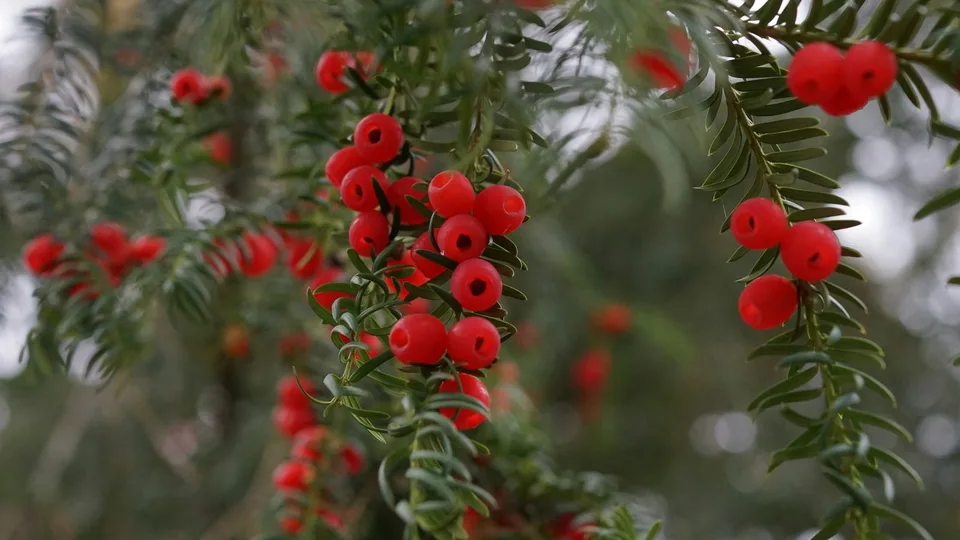
A tobacco relative has made paclitaxel, an existing chemotherapy compound first isolated from the bark of the Pacific yew. In a study published November 23 in Nature Chemical Biology, researchers reported producing and measuring the compound in a laboratory plant called Nicotiana benthamiana [1]. The result brings together two very different plants. The National Cancer Institute traces the original yew sample to a collecting trip in Washington state in 1962, 64 calendar years before the new paper [2].
In short: - The tobacco relative produced a compound already known from the Pacific yew [1] [2]. - The team measured 61.05 micrograms of paclitaxel per gram of dry plant material [1]. - The study is a laboratory proof of concept. The paper reports a concentration, with no production cost or commercial output attached to that figure [1].
How a tree and a tobacco relative became part of the same story
The original work started with collecting samples, not with a plant already known to contain the compound. According to the National Cancer Institute, a USDA botanist collected Pacific yew bark and other samples in Washington. Researchers later isolated paclitaxel from the bark. The institute says the trees grew slowly, and harvesting the bark killed them. That made the search for other ways to supply paclitaxel especially important as research moved forward [2].
The new paper starts at a different point. The compound’s identity is already known. The research team tested production in a different plant and checked the result against a known standard. It reported that the concentration in the experiment was comparable to levels found in yew bark. The historical discovery and the new experiment therefore answer different questions, as the timeline shows [1] [2].
| When | Milestone | What that milestone established |
|---|---|---|
| 1962 [2] | Pacific yew material collected in Washington | The starting sample for a later discovery |
| 1992 [2] | First FDA approval of paclitaxel, for ovarian cancer | A regulatory decision on a medicine |
| 2026 [1] | Paclitaxel measured in a tobacco relative in the laboratory | Proof of concept for production in a different plant |
The dates also put the original discovery in perspective. The bark collection and the first approval are 30 calendar years apart. In the intervening years, researchers isolated the compound and tested it, and the National Cancer Institute worked with a commercial partner on a supply route. That history helps explain why making the compound and supplying a medicine are separate milestones [2].
What does the reported concentration measure?
The 61.05 micrograms per gram reported in the study is the same concentration as 61.05 milligrams per kilogram of dry material. The second unit gives a way to read an unfamiliar number, and both describe the same measurement. The denominator is the weight of dry plant material, so a fresh leaf on a kitchen scale gives you a different measurement. The paper’s comparison with yew bark concerns the amount per unit of dry material [1].
The concentration also leaves open questions that matter when a laboratory finding turns into a production proposal. For example, how much dry material is produced in a given space or time? What fraction of the compound is recovered from it? Those are separate quantities from the concentration reported here [1].
What the study does not say
The report documents production in an experimental plant. It gives no retail price, schedule for commercial production, or comparison of what it costs to deliver the finished medicine through this route. The FDA milestone in the timeline comes from the earlier history of paclitaxel. The new paper answers a plant chemistry question [1] [2].
For gardeners, there is another reason to keep the plants themselves in view. NC State Extension identifies Pacific yew as a plant with poisonous characteristics. The yew in this story belongs in the history of how researchers found the compound. The laboratory plant belongs in the account of how they tested a new way that a plant can make it [1] [2] [3].
Sources
- Nature Chemical Biology: Complete biosynthesis and production of paclitaxel in a plant host · nature.com, consulted
- National Cancer Institute: A natural compound from Pacific yew · cancer.gov, consulted
- NC State Extension: Pacific yew · plants.ces.ncsu.edu, consulted
Written by Emilio Marruso · last checked