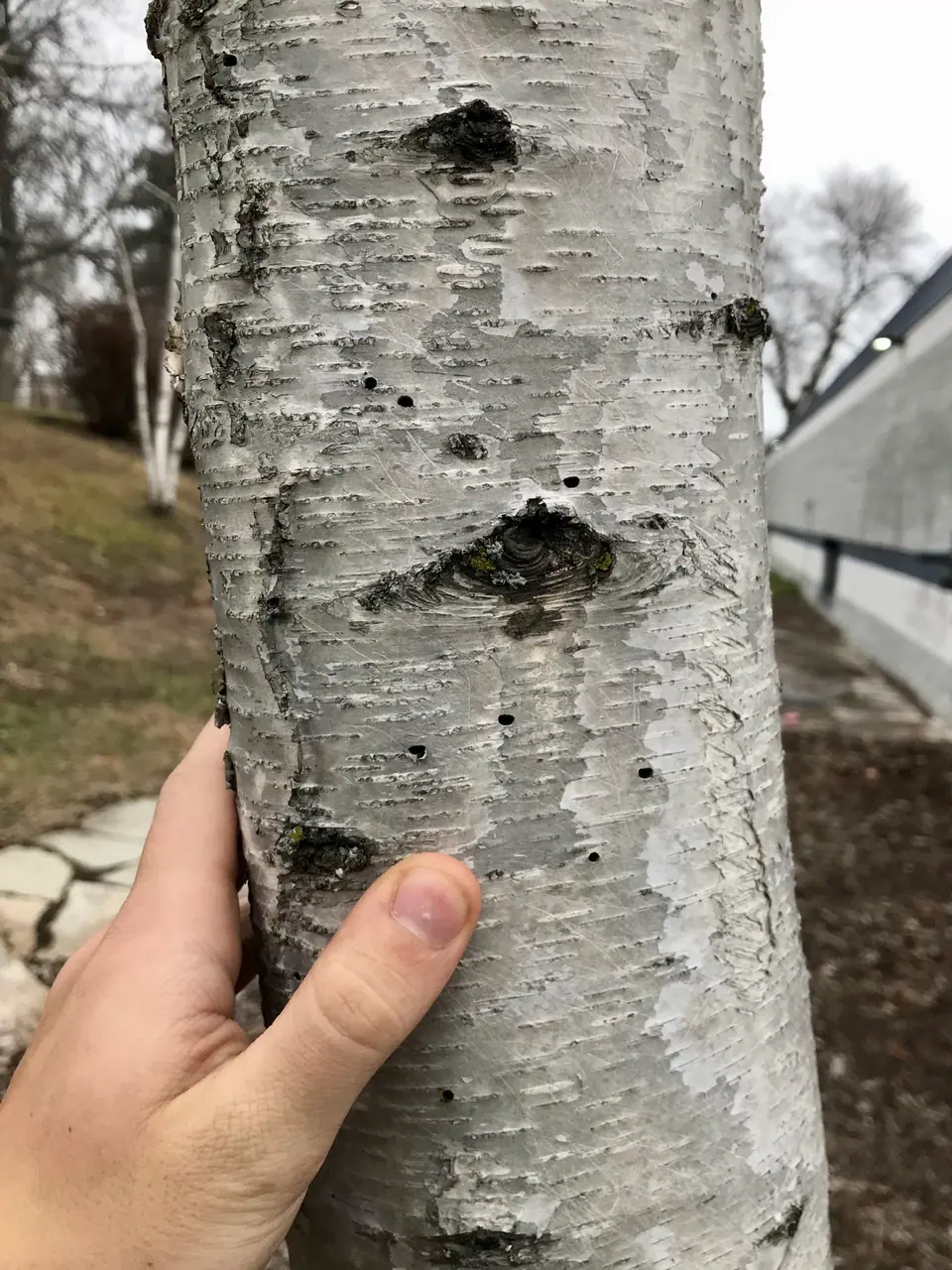
Insect
Bronze birch borer
Agrilus anxius
Written by Emilio Marruso
Classification: Arthropoda › Hexapoda › Insecta › Coleoptera › Buprestidae › Agrilus
Plants it attacks
Plants in our guide where this problem is reported. Open a plant to see the sources.
- Jacquemontii Birch Tree
Symptom: Stressed birches can become vulnerable to the borer, which infects and kills trees.
- Sweet Birch
Symptom: Listed as an insect and disease problem in Maine; Illinois notes it is less prone to bronze birch borers than white-barked birches
- Paper Birch
Symptom: Can infect and kill trees; drought stress followed by borer attack often causes decline
- European White Birch
Symptom: Infests and kills trees; European White Birch is one of the most susceptible birches
Also reported on: Monarch Birch, River Birch, Yellow Birch
Remedies
What our plant sheets report, with the outcome checked against official sources. Traditional remedies without an official source are flagged.
Treat
mulching and deep watering Partly works
How: Mulch and water deeply to protect healthy trees or those in early stages of infestation.
Reported for 1 plant: Jacquemontii Birch Tree
solarizing removed birch wood Official source, not independently tested
How: Remove dead and dying birch; chip the wood or cut it into logs and solarize it under clear plastic.
Reported for 1 plant: Jacquemontii Birch Tree
pruning infested branches Not verified
How: When one or two branches are infested, heavy pruning and burning of the infested branches, along with practices to maintain the vigour of the tree.
Reported for 1 plant: Sweet Birch
watering and mulching to keep the tree vigorous Not verified
How: Fertilize and water trees adequately to keep them vigorous; a mulched area around the base cuts competition from grass roots.
Reported for 1 plant: Sweet Birch
Where it is found
Present in 2 countries.
Regulated as a quarantine pest in: Armenia, Kazakhstan, Morocco, Norway, Serbia, Switzerland, Türkiye, Ukraine, United Kingdom.