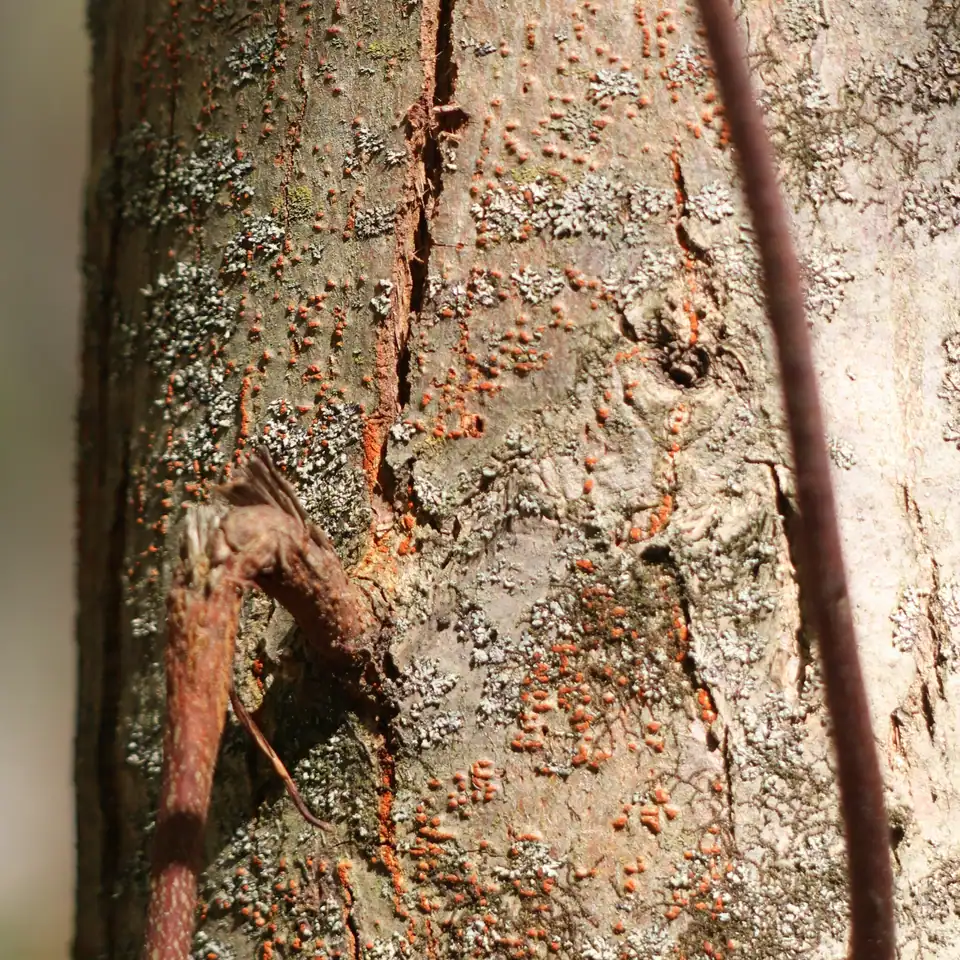
Fungus
Blight of chestnut
Cryphonectria parasitica
Written by Emilio Marruso
Classification: Ascomycota › Pezizomycotina › Sordariomycetes › Diaporthomycetidae › Diaporthales › Cryphonectriaceae › Cryphonectria
Plants it attacks
Plants in our guide where this problem is reported. Open a plant to see the sources.
- American chestnut
Symptom: Very susceptible; cankers (sunken or swollen wounds) in the wood cut off nutrient flow and kill the tree
- Sweet chestnut
Symptom: A serious problem; the reason the species is not commercially grown in the United States.
- Oglethorpe Oak
Symptom: Susceptible to chestnut blight
- Post Oak
Symptom: The tree occasionally succumbs to chestnut blight and is susceptible to oak wilt.
Also reported on: European Hornbeam, Hungarian Oak, Live Oak, Scarlet oak, Sessile Oak, White Oak
Remedies
What our plant sheets report, with the outcome checked against official sources. Traditional remedies without an official source are flagged.
Treat
mud plaster and plastic wrap on cankers Works
How: Plaster the canker generously with mud and wrap the stem with plastic to keep the mud wet; remove the plastic after two months.
Reported for 1 plant: Sweet chestnut
taping a package of soil around the infected segment Partly works
How: Tape a package of soil around an infected segment of the tree for months; it blocks the spread but does not prevent new infections.
Reported for 1 plant: American chestnut
cutting off and burning affected branches Not verified
How: Cut the affected branch and burn it.
Reported for 1 plant: Sweet chestnut
Where it is found
Present in 43 countries.
Regulated as a quarantine pest in: Argentina, Azerbaijan, Chile, Iran, Israel, Jordan, Morocco, Norway, Serbia, Switzerland, Türkiye, United Kingdom, United States.