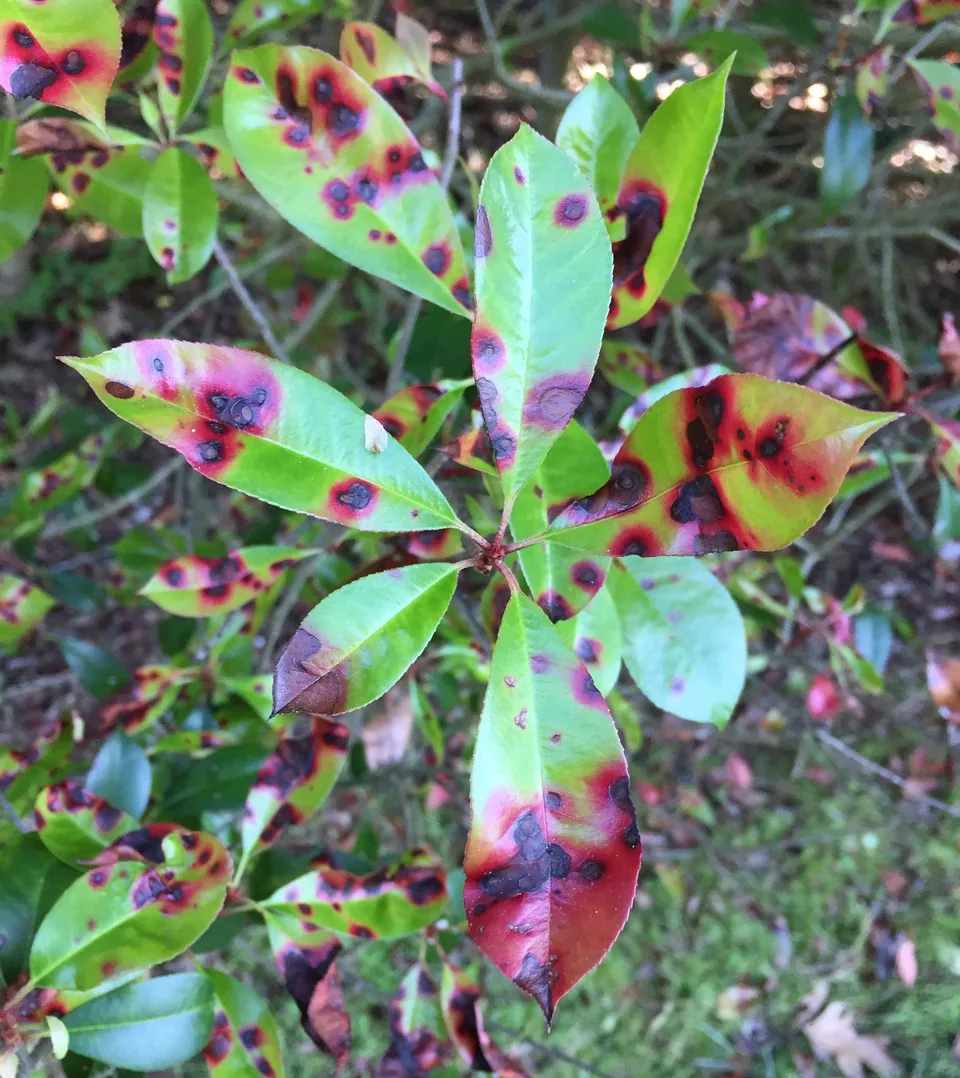
Fungus
Black spot of pear
Diplocarpon mespili
Written by Emilio Marruso
Classification: Ascomycota › Pezizomycotina › Leotiomycetes › Helotiales › Drepanopezizaceae › Diplocarpon
Plants it attacks
Plants in our guide where this problem is reported. Open a plant to see the sources.
- Japanese Photinia
Symptom: Highly susceptible; use for hedging not recommended
- Indian Hawthorn
Symptom: Tiny, round, red spots on both sides of the leaves
Also reported on: Allegheny Serviceberry, Chinese Hawthorn, Chinese Quince
Remedies
What our plant sheets report, with the outcome checked against official sources. Traditional remedies without an official source are flagged.
Treat
remove spotted leaves and leaf debris Partly works
How: Remove and dispose of spotted leaves on the plant and on the ground near it.
Reported for 1 plant: Chinese Quince
sanitation pruning and leaf debris removal Partly works
How: Prune out symptomatic foliage and remove leaf debris.
Reported for 1 plant: Chinese Hawthorn
sanitation: removing infected foliage and fallen leaves Partly works
How: Prune out symptomatic foliage and remove leaf debris; rake up and discard fallen leaves and apply fresh mulch to cover any missed leaves.
Reported for 1 plant: Japanese Photinia
drip irrigation instead of overhead Official source, not independently tested
How: Use drip, flood or low-volume sprinklers instead of overhead irrigation.
Reported for 1 plant: Chinese Quince
drip irrigation instead of overhead watering Official source, not independently tested
How: Surface or drip irrigation is preferred to overhead sprinklers; if sprinklers are used, schedule them between 2 and 6 a.m. or at midday.
Reported for 1 plant: Japanese Photinia
spacing and thinning for air circulation Official source, not independently tested
How: Space plants to improve air movement and speed evaporation of moisture from the foliage; thin out a few plants in a hedge.
Reported for 1 plant: Japanese Photinia
winter pruning Official source, not independently tested
How: Prune in winter when dormant; pruning during the growing season encourages new growth, which is highly susceptible to the fungus.
Reported for 1 plant: Japanese Photinia
open canopy, leaf litter removal and dry foliage Not verified
How: Keep an open canopy through proper pruning, remove leaf litter in the fall and avoid irrigation that wets the leaves
Reported for 1 plant: Allegheny Serviceberry
Where it is found
No distribution data.