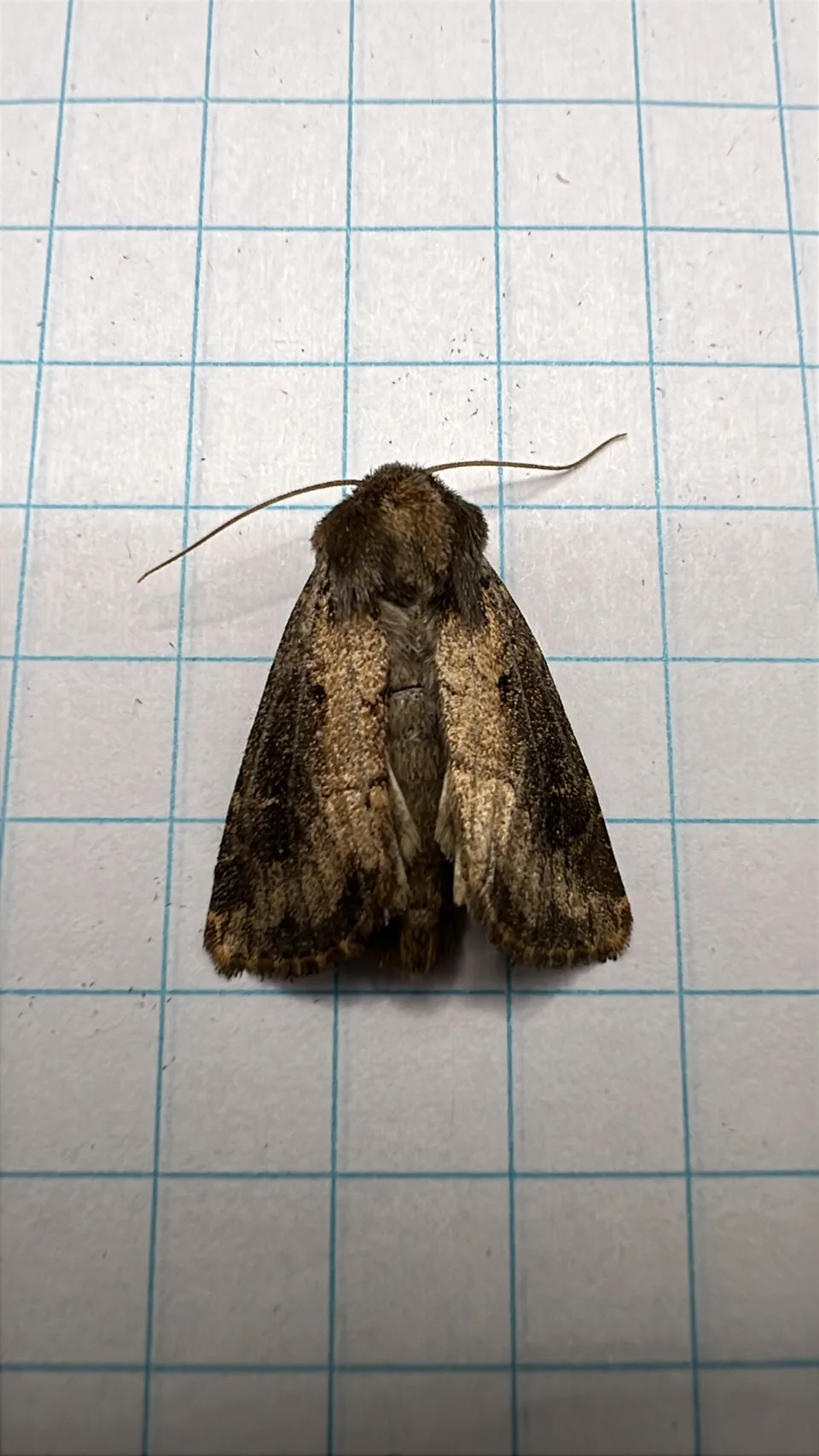
Insect
Iris borer
Macronoctua onusta
Written by Emilio Marruso
Classification: Arthropoda › Hexapoda › Insecta › Lepidoptera › Noctuidae › Macronoctua
Plants it attacks
Plants in our guide where this problem is reported. Open a plant to see the sources.
- Blackberry Lily
Symptom: Rhizomes could be affected
- Dixie Iris
Symptom: Subject to iris borers, whiteflies, aphids, thrips and the fungal, bacterial difficulties of the Iris family
Also reported on: Blood Iris, Blue Iris, Dwarf Iris, Fringed Iris, Japanese Iris, Larger Blue Flag Iris, Savannah Iris, Siberian Iris, Zigzag Iris
Remedies
What our plant sheets report, with the outcome checked against official sources. Traditional remedies without an official source are flagged.
Treat
beneficial nematodes Works
How: Apply Heterorhabditis or Steinernema nematodes as a soil drench in June and early July, when the soil is moist.
Reported for 2 plants: Blood Iris, Blue Iris
crushing larvae in the leaf Works
How: squish the larvae between the fan-like leaves before they tunnel into the rhizomes
Reported for 1 plant: Siberian Iris
hand crushing larvae Works
How: watch the leaves in spring and squash the young larvae by hand
Reported for 1 plant: Blackberry Lily
removing old plant debris Partly works
How: In fall remove and destroy (burning or burying) old iris leaves, stems and nearby plant debris to kill overwintering eggs; clean up beds after a hard frost.
Reported for 2 plants: Blood Iris, Blue Iris
beneficial nematodes Partly works
How: apply when iris leaves are almost fully expanded but before flowering; repeat about a week later; the easiest time is during a rain shower, or water iris before and after applying
Reported for 1 plant: Japanese Iris
remove old plant debris Partly works
How: Remove old plant debris near iris plants to destroy overwintering sites for iris borer eggs.
Reported for 1 plant: Dixie Iris
removing old leaves and debris Partly works
How: remove old iris leaves and stalks in late fall to eliminate overwintering eggs
Reported for 1 plant: Blackberry Lily
crushing small larvae by hand Official source, not independently tested
How: In spring, watch for small larvae as they begin to tunnel into iris leaves and crush them by hand.
Reported for 3 plants: Dixie Iris, Blood Iris, Savannah Iris
autumn removal and destruction of old iris debris Official source, not independently tested
How: remove and destroy (e.g. burning or burying) old iris leaves, stems and any nearby plant debris; clean up iris beds anytime after a hard frost
Reported for 1 plant: Japanese Iris
autumn removal of old iris leaves and debris Official source, not independently tested
How: Remove and destroy old iris leaves, stems and nearby plant debris, by burning or burying; clean up the beds after a hard frost.
Reported for 1 plant: Dwarf Iris
crushing larvae by hand Official source, not independently tested
How: If you find damage early in the season, crush the insect while it is inside the leaf or remove the damaged leaf.
Reported for 1 plant: Blue Iris
crushing the borer in the leaf or removing the damaged leaf Official source, not independently tested
How: If damage is found early in the season, crush the insect while it is inside the leaf or remove the damaged leaf.
Reported for 1 plant: Dwarf Iris
crushing the caterpillar in the leaf Official source, not independently tested
How: If damage is found early in spring, crush the insect inside the leaf or remove the damaged leaf.
Reported for 1 plant: Zigzag Iris
cutting out damaged rhizome and removing the larva Not verified
How: Begin cutting off wounded or rotted portions until you reach the worm. Pull the worm out and discard it in soapy water.
Reported for 1 plant: Larger Blue Flag Iris
digging borers out by hand Not verified
How: Dig up the infested bulb, find the spot where the borer entered and carefully cut the hole larger until you see the worm.
Reported for 1 plant: Blood Iris
fall cleanup of dead leaves and debris Not verified
How: Removing dead leaves, stems, and nearby weeds in autumn lowers the chances of eggs hatching next spring.
Reported for 1 plant: Larger Blue Flag Iris
murphy's oil soap solution Not verified
How: 10% solution (one part soap for every nine parts water)
Reported for 1 plant: Blackberry Lily
sealing infested rhizomes in a plastic bag in the sun Not verified
How: Put the rhizomes in a plastic trash bag, seal it, and leave it in direct sunlight in the yard for a few weeks.
Reported for 1 plant: Larger Blue Flag Iris
soaking rhizomes in soapy water Not verified
How: Dig up the bulbs and place them in a bucket of soapy water; the borers exit the bulbs and drown.
Reported for 1 plant: Blood Iris
6 more remedies are reported in single plant sheets.
Where it is found
Regulated as a quarantine pest in: Mexico.