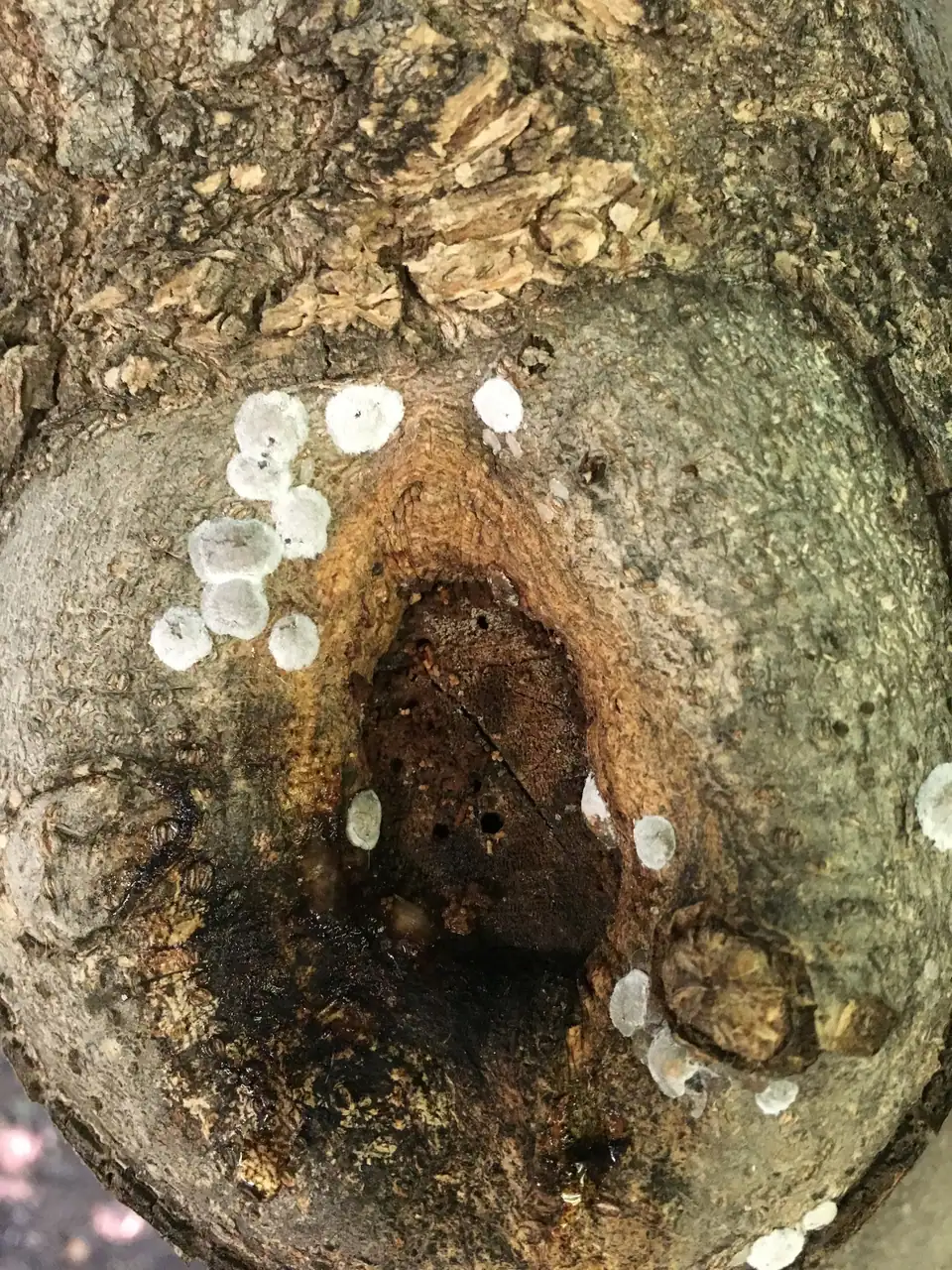
Insect
Magnolia scale
Neolecanium cornuparvum
Written by Emilio Marruso
Classification: Arthropoda › Hexapoda › Insecta › Hemiptera › Sternorrhyncha › Coccidae › Neolecanium
Plants it attacks
Plants in our guide where this problem is reported. Open a plant to see the sources.
- Cucumber Tree
Symptom: Magnolia scale is a potential problem; otherwise no serious insect or disease problems.
- Fraser Magnolia
Symptom: Monitor for ambrosia beetles and magnolia scale
- Star Magnolia
Symptom: Infested plants have shiny sticky leaves, often with black sooty mold growing on the honeydew.
Also reported on: Ashe Magnolia, Cylindrical Magnolia, Kobus Magnolia, Lily Magnolia, Oyama Magnolia, Smiling Monkey Forest Tree, Southern Magnolia, Sweetbay, Umbrella Magnolia, Zen Magnolia
Remedies
What our plant sheets report, with the outcome checked against official sources. Traditional remedies without an official source are flagged.
Treat
horticultural oil Works
How: A dormant spray just before bud break in late March to April, with thorough coverage of stems and branches, suffocates the overwintering nymphs.
Reported for 3 plants: Ashe Magnolia, Fraser Magnolia, Smiling Monkey Forest Tree
insecticidal soap Works
How: spray crawlers in August or September with thorough coverage of all twigs and stems
Reported for 2 plants: Cucumber Tree, Ashe Magnolia
insecticidal soap spray Works
How: Spray infested plants in August through September to kill newly emerged crawlers; thorough coverage, at least two applications 7 to 10 days apart.
Reported for 2 plants: Oyama Magnolia, Umbrella Magnolia
dormant horticultural oil Works
How: apply in early spring after the danger of freezing nights has passed but before the buds have opened
Reported for 1 plant: Cucumber Tree
horticultural oil spray Works
How: Apply horticultural oil in early spring and late summer to smother active and recently settled crawlers.
Reported for 1 plant: Oyama Magnolia
horticultural oils Works
How: Apply at the label rate after the crawlers have settled in late August; thoroughly wet down the stems and leaves.
Reported for 1 plant: Zen Magnolia
hose spray Partly works
How: spray adults off the canopy with a garden hose nozzle set to a concentrated stream, never a power washer; may need repeating for several years
Reported for 2 plants: Cucumber Tree, Kobus Magnolia
dormant oil spray Partly works
How: Apply dormant oil sprays in early spring, before buds begin to break; good coverage is essential.
Reported for 1 plant: Star Magnolia
insecticidal soap spray on crawlers Partly works
How: Spray infested plants in August through September to kill newly-emerged crawlers; make at least two applications 7 to 10 days apart.
Reported for 1 plant: Sweetbay
removing by hand or soft brush Partly works
How: If the infestation is small and reachable, remove scales by hand or with a soft-bristled scrub brush before crawlers emerge; prune out heavily infested branches.
Reported for 1 plant: Southern Magnolia
removing scale by hand Partly works
How: Wear rubber gloves and rub or brush scales from the plant in July when first noticed, before the next generation of crawlers emerges; be firm but gentle so as not to injure the bark.
Reported for 1 plant: Oyama Magnolia
removing scale by hand or soft brush Partly works
How: If the infestation is small and reachable, remove the scale by hand or with a soft-bristled scrub brush, as soon as noticed and before crawlers emerge, taking care not to damage the bark.
Reported for 1 plant: Star Magnolia
pruning out infested branches Official source, not independently tested
How: prune out severely infested branches
Reported for 3 plants: Cucumber Tree, Kobus Magnolia, Lily Magnolia
brushing scales off into soapy water Official source, not independently tested
How: Light infestations can be removed by hand by softly brushing the scales off the plant into a collection container with soapy water, in July as soon as the still maturing females are noticed.
Reported for 1 plant: Kobus Magnolia
brushing them off the plant and into a collection container with soapy water Official source, not independently tested
How: Do this in July as soon as the still maturing females are noticed, and before early August, when crawlers emerge from the females.
Reported for 1 plant: Zen Magnolia
dormant horticultural oil Official source, not independently tested
How: Apply in early spring after the danger of freezing nights has passed, but before the buds have opened.
Reported for 1 plant: Cylindrical Magnolia
dormant oils Official source, not independently tested
How: Dormant oils can be applied in October through November and again in March to kill the overwintering nymphs located on the stems.
Reported for 1 plant: Zen Magnolia
hand removal of scales Official source, not independently tested
How: Wear rubber gloves and rub or brush scales from the plant in July, before crawlers emerge.
Reported for 1 plant: Lily Magnolia
garlic spray Not verified
How: spray the affected branches and leaves
Reported for 1 plant: Cucumber Tree
onion water Not verified
How: spray the affected branches and leaves
Reported for 1 plant: Cucumber Tree
stinging nettle tea Not verified
How: spray the affected branches and leaves
Reported for 1 plant: Cucumber Tree
17 more remedies are reported in single plant sheets.
Where it is found
No distribution data.