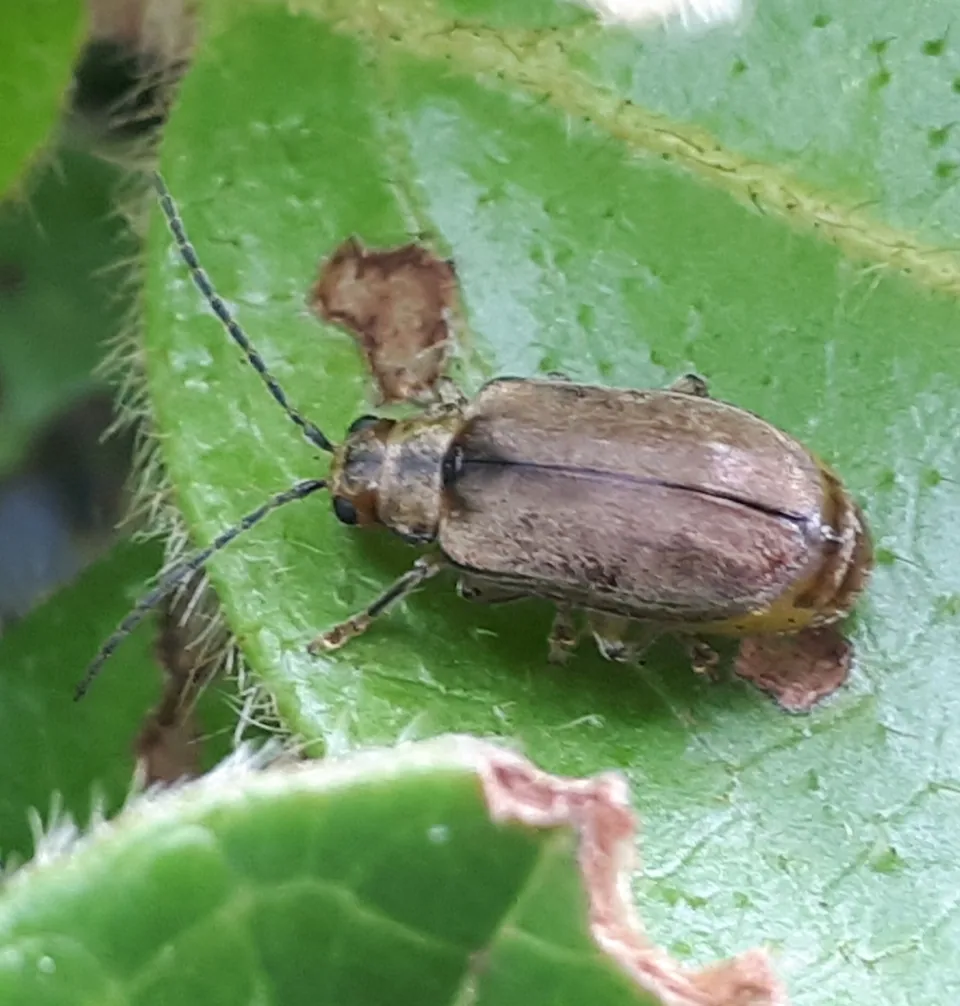
Insect
Viburnum leaf beetle
Pyrrhalta viburni
Written by Emilio Marruso
Classification: Arthropoda › Hexapoda › Insecta › Coleoptera › Chrysomelidae › Pyrrhalta
Plants it attacks
Plants in our guide where this problem is reported. Open a plant to see the sources.
- Wayfaringtree Viburnum
Symptom: Moderately susceptible to viburnum leaf beetle
- Nannyberry
Symptom: Moderately susceptible to leaf beetle damage
- European Cranberry
Symptom: Very susceptible to viburnum leaf beetle
Also reported on: Arrow-wood Viburnum, Blackhaw, Blue Haw, Bracted Viburnum, Chinese Evergreen Viburnum, Chinese Snowball Viburnum, Cranberry Viburnum, Downy Arrowwood, Hobblebush, Leatherleaf Viburnum, Linden Viburnum, Manchurian Viburnum, Mapleleaf Viburnum, Rusty Blackhaw, Sandankwa Viburnum, Service Viburnum, Smooth Witherod, Tea Viburnum, Wright Viburnum
Remedies
What our plant sheets report, with the outcome checked against official sources. Traditional remedies without an official source are flagged.
Treat
insecticidal soap spray Works
How: Spray the larvae when small, in late April and early May; direct contact with the larvae is required.
Reported for 5 plants: Mapleleaf Viburnum, Manchurian Viburnum, Blue Haw, Linden Viburnum, Nannyberry
insecticidal soap Works
How: insecticidal soap is an organic option; apply when larvae are small and before they have caused significant damage
Reported for 3 plants: Hobblebush, European Cranberry, Rusty Blackhaw
pruning out egg-nesting sites Works
How: Prune out the egg-nesting sites on the bush and throw them away in the trash once the leaves have fallen; destroy them from early October to mid-April while plants are leafless.
Reported for 3 plants: Mapleleaf Viburnum, Linden Viburnum, Blackhaw
hand-picking larvae and adults Works
How: hand-remove the larvae and adults in the morning hours before they warm up and become more active
Reported for 1 plant: Hobblebush
handpicking and pruning off egg twigs Works
How: Larvae and adults can be handpicked; twigs with eggs can be pruned off during the winter.
Reported for 1 plant: Chinese Snowball Viburnum
insecticidal soap on larvae Works
How: direct contact with the larvae is required
Reported for 1 plant: Blackhaw
dormant horticultural oil Partly works
How: Dormant horticultural oil applications done before the leaves emerge reduce egg hatch.
Reported for 2 plants: Blue Haw, Rusty Blackhaw
dormant horticultural oil spray Partly works
How: Prior to bud break, apply horticultural oil to twigs where VLB eggs have been laid.
Reported for 2 plants: Manchurian Viburnum, Linden Viburnum
insecticidal soap spray Partly works
How: Add a few drops of castile soap to a spray bottle with water, shake, and apply all over the infested plant.
Reported for 2 plants: Arrow-wood Viburnum, Sandankwa Viburnum
neem oil Partly works
How: neem oil is an organic option; apply when larvae are small and before they have caused significant damage
Reported for 2 plants: Hobblebush, European Cranberry
sticky barrier around the trunk Partly works
How: Wrap a barrier at the base of the shrub and apply a sticky substance to capture larvae moving to the ground to pupate; never put sticky substances on the bark itself.
Reported for 2 plants: Mapleleaf Viburnum, Rusty Blackhaw
dormant horticultural oil on egg sites Partly works
How: In March before bud break, apply horticultural oil at the dormant rate to kill eggs glued to stems.
Reported for 1 plant: Arrow-wood Viburnum
pruning out egg-laying twigs Official source, not independently tested
How: Prune out and destroy these twigs to reduce VLB numbers.
Reported for 4 plants: Manchurian Viburnum, Chinese Evergreen Viburnum, Service Viburnum, Wright Viburnum
hand-picking larvae and adults Official source, not independently tested
How: Hand-remove the larvae and adults in the morning hours before they warm up and become more active.
Reported for 2 plants: Leatherleaf Viburnum, Service Viburnum
horticultural oil Official source, not independently tested
How: Spray horticultural oil on the leafless, dormant plant to kill the overwintering eggs, before leaf emergence.
Reported for 2 plants: Downy Arrowwood, Wright Viburnum
dormant horticultural oil spray Official source, not independently tested
How: In March, before bud break, apply horticultural oil at the dormant rate (4%) to kill eggs glued to stems.
Reported for 1 plant: Chinese Evergreen Viburnum
hand removal of larvae and adults Official source, not independently tested
How: Hand-remove the larvae and adults in the morning hours before they warm up and become more active.
Reported for 1 plant: Rusty Blackhaw
hand-picking larvae Official source, not independently tested
How: Hand-pick and kill emerging larvae.
Reported for 1 plant: Bracted Viburnum
handpicking into soapy water Not verified
How: Place a bucket of soapy water under infested branches and knock the beetles into it with a stick; larvae can be picked off by hand.
Reported for 2 plants: Arrow-wood Viburnum, Wayfaringtree Viburnum
hand-removing larvae and adults Not verified
How: Hand-remove larvae and adults in the morning before they warm up; on a small infestation lay a tarp or old sheet under the bush and shake or tap the branches so the larvae fall, then gather and dispose of them.
Reported for 1 plant: Mapleleaf Viburnum
removing and destroying egg-bearing twig tips Not verified
How: remove the twig tips from October through April, then destroy them by burning where permitted, chipping, or burying
Reported for 1 plant: Smooth Witherod
shaking branches over soapy water Not verified
How: Shake infested branches over a soapy bucket of water, best done early in the morning.
Reported for 1 plant: Leatherleaf Viburnum
25 more remedies are reported in single plant sheets.
Where it is found
No distribution data.