
How to Grow and Care for Fragrant clematis
Clematis flammula
Written by Emilio Marruso · last checked
Toxic to: People · Why
At a glance
This clematis is happy anywhere from full sun to partial shade, so it fits easily into most gardens. Plant it out in late spring or early summer, once the last frosts are over, and give it a blanket of compost at its base each spring. Better still, one plant can become many: it grows from seed, cuttings and layering.
- Sun
Full sun to partial shade
What the sources say (1)
Light: Full sun to partial shade
Sun Exposure: Full sun
— Clematis flammula | BBC Gardeners World Magazine [1] - Cold
Survives winters down to −10 °F (−23.3 °C)
Very hardy · USDA 6 · RHS H7 · Z6
What the sources say (1)
Hardiness, coldest zone: 6 [winter low −23.3 to −17.8 °C (−10 to 0 °F)]
Water moderate Hardiness Zone 6+
— Fragrant Virgin's Bower (Clematis flammula) — Practical Plants [4] - Spacing
4 ft between plants
What the sources say (2)
Spacing: 120 cm (1.2 metres apart)
ground cover: Plants can be grown as ground cover, planted about 1.2 metres apart and allowed to scramble over the ground
— Clematis flammula - Useful Temperate Plants [2] Plants can be grown as ground cover, planted about 1.2 metres apart and allowed to scramble over the ground
— Clematis flammula - Useful Temperate Plants [2] - Planting
Plant in late spring or early summer, after the last frosts
What the sources say (1)
Planting: Late spring or early summer, after the last expected frosts (seedlings)
Plant out in late spring or early summer, after the last expected frosts.
— Clematis flammula - Useful Temperate Plants [2] - Feeding
Each spring, 2–3 in of compost at the base, not touching the stems; don't overfeed new plants
What the sources say (4)
Natural fertilizers: Compost or chicken manure once established; each spring a 5–7.5 cm [2–3 in] mulch of leaf mould, garden compost or well-rotted manure at the base, not against the stems
Once established, clematis responds well to rose or tomato fertilizer (5-10-5 or 5-10-10), compost or chicken manure. Feed three times a year in spring, summer and fall.
— [7] Annual mulching is very beneficial, helping to improve the soil, retain moisture and smother weed growth. Spread a 5-7.5cm (2-3in) layer of organic matter, like leaf mould, garden compost
— [6] or well-rotted manure, around the base of your plant each spring, being careful not to bank it up against stems to prevent rotting.
— [6] Avoid: Overfertilizing new plants
Water new plants well but avoid overfertilizing. Once established, clematis responds well to rose or tomato fertilizer (5-10-5 or 5-10-10), compost or chicken manure.
— [7] - Pests
To avoid clematis wilt, plant the root ball 3 in deeper in the soil
- Propagation
Grows from seed, soft or half-ripe cuttings, and layering
What the sources say (3)
Propagation: Seed; internodal cuttings of soft to semi-ripe wood; half-ripe cuttings; layering
Seed - best sown as soon as it is ripe in a cold frame
— Clematis flammula - Useful Temperate Plants [2] Internodal cuttings of soft to semi-ripe wood, late spring in sandy soil in a frame
— Clematis flammula - Useful Temperate Plants [2] Layering of old stems in late winter or early spring
— Clematis flammula - Useful Temperate Plants [2] - Sowing
Sow the seed as soon as it is ripe, in a cold frame
What the sources say (1)
Sowing: As soon as the seed is ripe, in a cold frame
Seed - best sown as soon as it is ripe in a cold frame
— Clematis flammula - Useful Temperate Plants [2] - Containers
In a pot, feed with liquid fertilizer all through spring and summer
What the sources say (4)
When: In spring, summer and fall, once established
in containers: In containers, clematis can benefit from being fed throughout spring and summer. Use an organic based, general-purpose liquid fertiliser, following the dose rate and frequency recommended on the packaging.
— [6] Once established, clematis responds well to rose or tomato fertilizer (5-10-5 or 5-10-10), compost or chicken manure. Feed three times a year in spring, summer and fall.
— [7] Mineral fertilizers: Rose or tomato fertilizer such as 5-10-5 or 5-10-10
in containers: In containers, clematis can benefit from being fed throughout spring and summer. Use an organic based, general-purpose liquid fertiliser, following the dose rate and frequency recommended on the packaging.
— [6] Once established, clematis responds well to rose or tomato fertilizer (5-10-5 or 5-10-10), compost or chicken manure. Feed three times a year in spring, summer and fall.
— [7] - Safety
All parts of the plant are poisonous to people
Overview
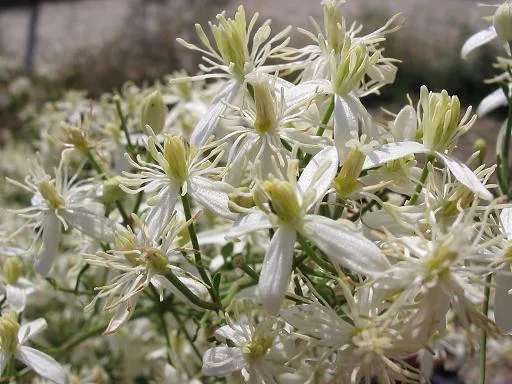
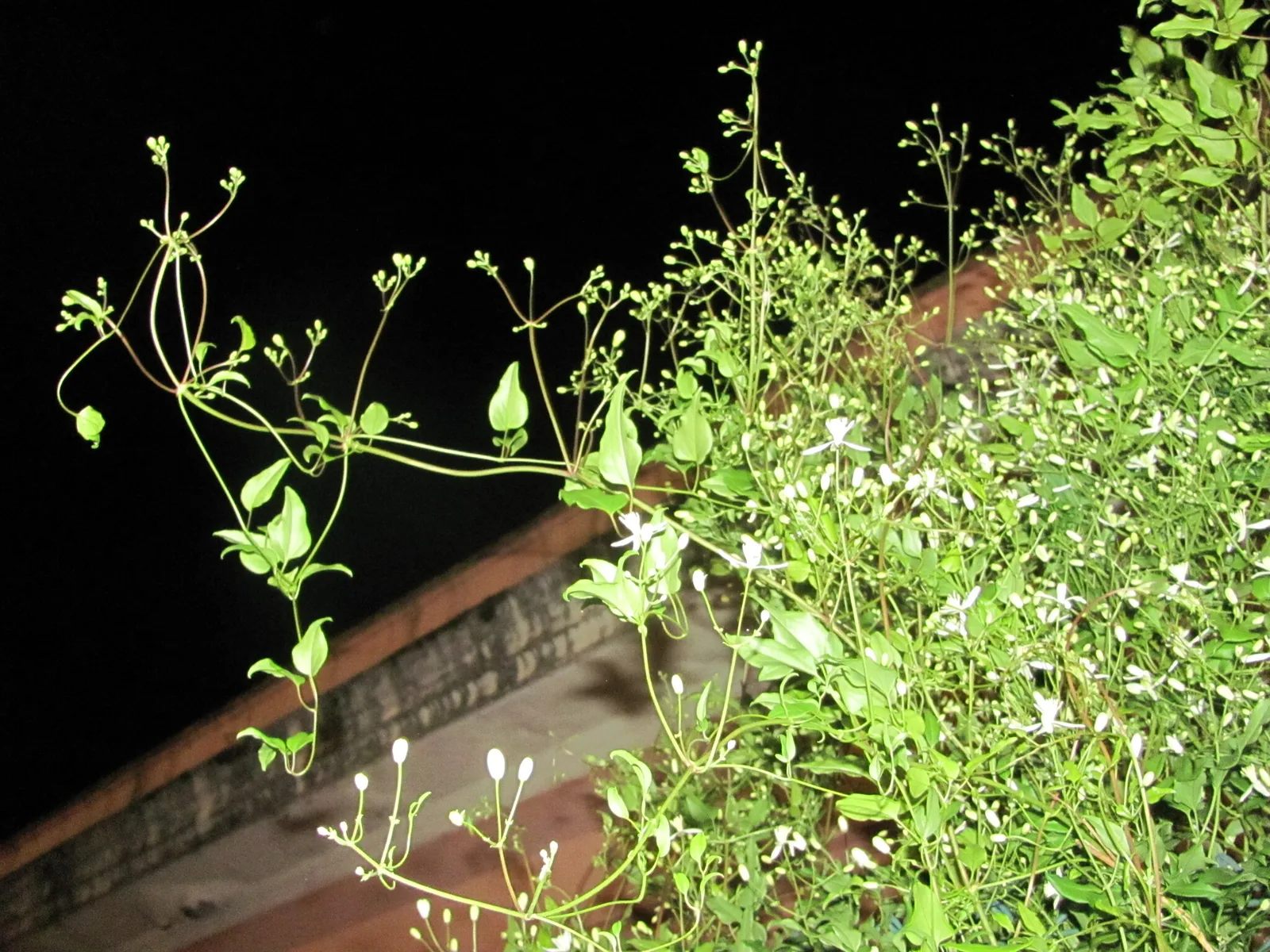
Clematis flammula is a vigorous deciduous climber grown for scented white flowers in late summer and autumn. [1][2] It is grown in full sun to partial shade in well-drained soil and belongs to Pruning Group 3. [1] All parts of the plant are described as poisonous. [2]
This record is incomplete: the sources we read do not cover every field yet.
Not yet covered by our sources: Watering, Hardiness, warmest zone, Pruning
Fragrant clematis care
How to water Fragrant clematis
The sources give different values depending on region, zone or growing conditions.
What each source says
According to Practical Plants: Drought intolerant
What the sources say (1)
According to Practical Plants: Tolerates Nutritionally Poor Soil
No
Drought
intolerantHow much light Fragrant clematis needs
Full sun to partial shade
What the sources say (1)
Sun Exposure:
Full sunHow much cold Fragrant clematis can take
Hardiness, coldest zone
6 [winter low −23.3 to −17.8 °C (−10 to 0 °F)]
What the sources say (1)
Water
moderate
Hardiness
Zone 6+Hardiness, warmest zone
Not stated in the sources we read.
Where to grow Fragrant clematis
120 cm (1.2 metres apart)
What each source says
ground cover: 120 cm (1.2 metres apart)
What the sources say (2)
ground cover: Plants can be grown as ground cover, planted about 1.2 metres apart and allowed to scramble over the groundPlants can be grown as ground cover, planted about 1.2 metres apart and allowed to scramble over the groundHow to propagate Fragrant clematis
Seed; internodal cuttings of soft to semi-ripe wood; half-ripe cuttings; layering
What the sources say (3)
Seed - best sown as soon as it is ripe in a cold frameInternodal cuttings of soft to semi-ripe wood, late spring in sandy soil in a frameLayering of old stems in late winter or early springHow to grow Fragrant clematis
Fertilizing
When
In spring, summer and fall, once established
What each source says
in containers: Throughout spring and summer
What the sources say (2)
in containers: In containers, clematis can benefit from being fed throughout spring and summer. Use an organic based, general-purpose liquid fertiliser, following the dose rate and frequency recommended on the packaging.Once established, clematis responds well to rose or tomato fertilizer (5-10-5 or 5-10-10), compost or chicken manure. Feed three times a year in spring, summer and fall.How often
The sources disagree:
What each source says
in containers: Throughout spring and summer, at the frequency on the label
What the sources say (1)
in containers: In containers, clematis can benefit from being fed throughout spring and summer. Use an organic based, general-purpose liquid fertiliser, following the dose rate and frequency recommended on the packaging.Natural fertilizers
Compost or chicken manure once established; each spring a 5–7.5 cm [2–3 in] mulch of leaf mould, garden compost or well-rotted manure at the base, not against the stems
What the sources say (3)
Once established, clematis responds well to rose or tomato fertilizer (5-10-5 or 5-10-10), compost or chicken manure. Feed three times a year in spring, summer and fall.Annual mulching is very beneficial, helping to improve the soil, retain moisture and smother weed growth. Spread a 5-7.5cm (2-3in) layer of organic matter, like leaf mould, garden compostor well-rotted manure, around the base of your plant each spring, being careful not to bank it up against stems to prevent rotting.Mineral fertilizers
Rose or tomato fertilizer such as 5-10-5 or 5-10-10
What each source says
in containers: Organic-based general-purpose liquid fertilizer at the label dose
What the sources say (2)
in containers: In containers, clematis can benefit from being fed throughout spring and summer. Use an organic based, general-purpose liquid fertiliser, following the dose rate and frequency recommended on the packaging.Once established, clematis responds well to rose or tomato fertilizer (5-10-5 or 5-10-10), compost or chicken manure. Feed three times a year in spring, summer and fall.Avoid
Overfertilizing new plants
What the sources say (1)
Water new plants well but avoid overfertilizing. Once established, clematis responds well to rose or tomato fertilizer (5-10-5 or 5-10-10), compost or chicken manure.Fragrant clematis pests and problems
Clematis wilt
What to do: Plant the rootball about 8cm deeper in the soil to avoid the disease
What the sources say (1)
When planting out, in order to avoid the disease 'clematis wilt', it is best to plant the rootball about 8cm deeper in the soil.
— Clematis flammula - Useful Temperate Plants [2]
Remedies
The sources we checked give no remedies for this plant.
Is Fragrant clematis poisonous?
Reported by the source, quoted verbatim. This is not medical or veterinary advice: if a person or an animal may have eaten this plant, contact a poison control centre or a veterinarian.
Calendar
Sowing
As soon as the seed is ripe, in a cold frame
What the sources say (1)
Seed - best sown as soon as it is ripe in a cold framePlanting
Late spring or early summer, after the last expected frosts (seedlings)
What the sources say (1)
Plant out in late spring or early summer, after the last expected frosts.Pruning
Not stated in the sources we read.
Months as given by the sources, which are mostly from the United States (northern hemisphere). In the southern hemisphere they shift by about six months.
Edibility
Reported by the source, quoted verbatim. Do not eat a plant on the basis of this page alone: identification mistakes can be dangerous.
Young shoots - cooked [8] [2] [6] . Some caution is advised due to reports of toxicity[K].
[4]
Similar plants
- Blue Jasmine Clematis crispa
- Bush Clematis Clematis integrifolia
- Bush Clematis Clematis recta
- Curlyhead Clematis ochroleuca
- Golden Bell Clematis Clematis tangutica
- Italian Clematis Clematis viticella
- Leatherflower Clematis viorna
- Mountain Clematis Clematis montana
Sources
Every value above is quoted from these documents. Links lead to the original publisher.
- Clematis flammula | BBC Gardeners World Magazine · gardenersworld.com, consulted
- Clematis flammula - Useful Temperate Plants · temperate.theferns.info, consulted
- Bean's Trees and Shrubs · beanstreesandshrubs.org, consulted
- Fragrant Virgin's Bower (Clematis flammula) — Practical Plants · practicalplants.org, consulted
- clemdetail - · clematisontheweb.org, consulted
- rhs.org.uk · rhs.org.uk
- extension.oregonstate.edu · extension.oregonstate.edu
Written by Emilio Marruso · last checked