
How to Grow and Care for Pacific dogwood
Cornus nuttallii
Written by Emilio Marruso · last checked
At a glance
This dogwood grows into a stately tree 30–40 feet tall, happy in full sun or part shade. Give it what it loves (deep, moist, humus-rich soil with excellent drainage, a shaded trunk and little pruning) and it is better able to resist dogwood anthracnose. Feed it twice a year, in March and July, and go easy on summer watering.
- Sun
Full sun to part shade
- Water
Not too much water in summer; in severe drought use a soaker hose, not a sprinkler
What the sources say (1)
Watering: Not too much summer watering; use a soaker hose, not an overhead sprinkler, during severe drought
Although during severe drought watering might be called for, use a soaker hose, not an overhead sprinkler.
— Cornus nuttallii - PACIFIC DOGWOOD [5] - Cold
Survives winters down to 0 °F (−17.8 °C)
Hardy in very cold winters · USDA 7 · RHS H6 · Z7
What the sources say (3)
Hardiness, coldest zone: 7 [winter low −17.8 to −12.2 °C (0 to 10 °F)]
Hardy to USDA Zone 7
— Cornus nuttallii | Landscape Plants | Oregon State University [1] USDA zones: 7-8.
— Cornus nuttallii - PACIFIC DOGWOOD [5] Hardiness, warmest zone: 8 [winter low −12.2 to −6.7 °C (10 to 20 °F)]
USDA zones: 7-8.
— Cornus nuttallii - PACIFIC DOGWOOD [5] - Soil
Deep, moist, humus-rich soil with excellent drainage
What the sources say (1)
Watering notes: Needs excellent drainage and moist, humus-rich, deep soil
Soil: Moist, humus rich, deep, well-drained soil.
— Cornus nuttallii - PACIFIC DOGWOOD [5] - Feeding
Twice a year, in March and July, with a 12-4-8 or 16-4-8 fertilizer
What the sources say (4)
When: March and again in July
A newly-planted dogwood 6 ft tall requires about ¼ cup (4 tablespoons) of a 12-4-8 or 16-4-8 fertilizer in March and again in July.
— [8] How often: Twice a year, in March and July
A newly-planted dogwood 6 ft tall requires about ¼ cup (4 tablespoons) of a 12-4-8 or 16-4-8 fertilizer in March and again in July.
— [8] Mineral fertilizers: General-purpose 12-4-8 or 16-4-8 fertilizer
newly planted trees: A newly-planted dogwood 6 ft tall requires about ¼ cup (4 tablespoons) of a 12-4-8 or 16-4-8 fertilizer in March and again in July.
— [8] A newly-planted dogwood 6 ft tall requires about ¼ cup (4 tablespoons) of a 12-4-8 or 16-4-8 fertilizer in March and again in July.
— [8] - Pruning
Prune as little as possible
- Pests
Dogwood anthracnose kills it limb by limb; a stress-free tree with a shaded trunk resists best
What the sources say (1)
Diseases: dogwood anthracnose
it is susceptible to dogwood anthracnose, a disease caused by the nonnative fungus Discula destructiva .
— Pacific Dogwood [3] - Size
30 to 40 ft tall
What the sources say (1)
Mature height: 914.4-1219.2 cm (30-40 ft)
Broadleaf deciduous tree, 30-40 ft (9-12 m), upright (excurrent).
— Cornus nuttallii | Landscape Plants | Oregon State University [1] - Propagation
By seed, by layering in June and July, or by cuttings in early summer
What the sources say (1)
Propagation: Seed (stratified if stored), layering in June to July, cuttings in early summer
Layer in June to July. It takes 9 months to strike roots.
— Cornus nuttallii - PACIFIC DOGWOOD [5] - Sowing
Sow in autumn, when the seed is ripe, in a cold frame; stored seed needs a cold treatment first
What the sources say (2)
Sowing: Autumn, when the seed is ripe, in a cold frame
Sow seeds when ripe in autumn and place in a cold frame.
— Cornus nuttallii - PACIFIC DOGWOOD [5] Propagation: Seed (stratified if stored), layering in June to July, cuttings in early summer
Layer in June to July. It takes 9 months to strike roots.
— Cornus nuttallii - PACIFIC DOGWOOD [5]
Overview
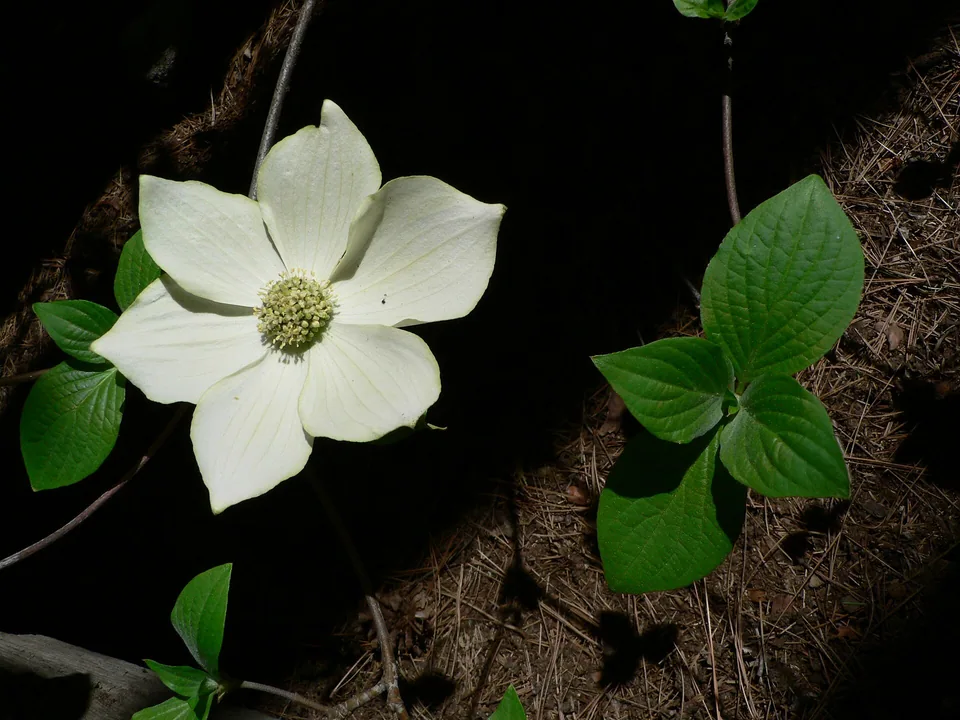
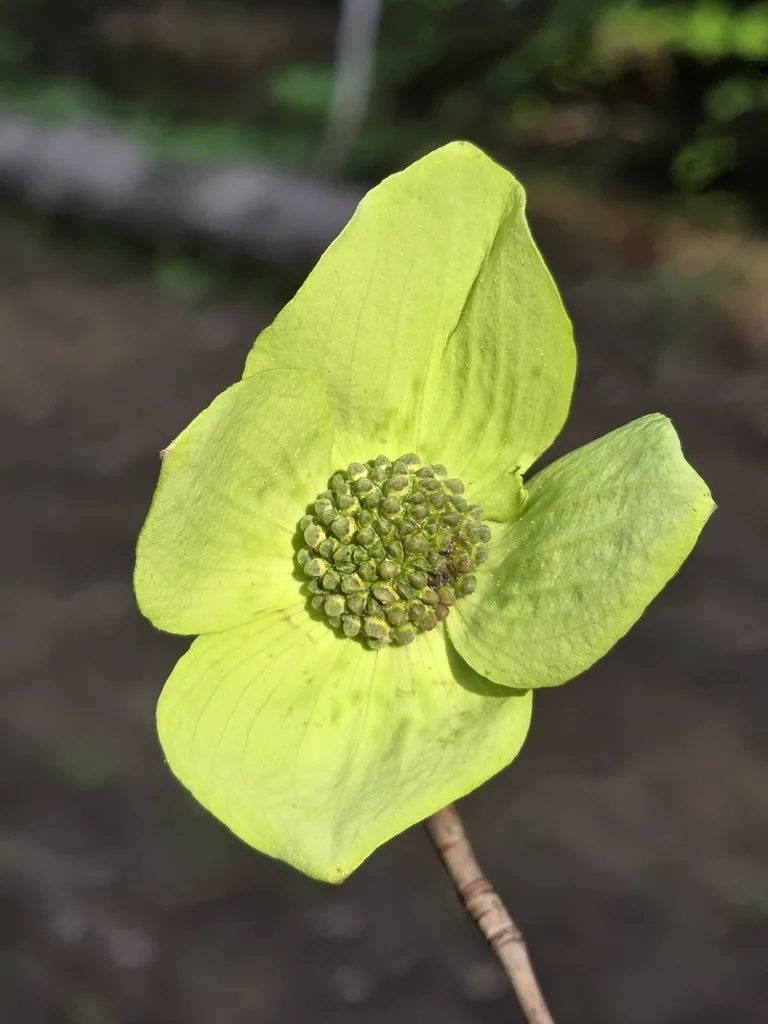
Pacific dogwood is a deciduous tree native to the Pacific coast of North America, with showy white bracts in spring. [1] It does best in well-drained, humus-rich soil with minimal pruning, and is susceptible to dogwood anthracnose. [5][3]
This record is incomplete: the sources we read do not cover every field yet.
Not yet covered by our sources: Pruning
Pacific dogwood care
How to water Pacific dogwood
Watering
Not too much summer watering; use a soaker hose, not an overhead sprinkler, during severe drought
What the sources say (1)
Although during severe drought watering might be called for, use a soaker hose, not an overhead sprinkler.Watering notes
Needs excellent drainage and moist, humus-rich, deep soil
What the sources say (1)
Soil:
Moist, humus rich, deep, well-drained soil.How much light Pacific dogwood needs
How much cold Pacific dogwood can take
Hardiness, coldest zone
7 [winter low −17.8 to −12.2 °C (0 to 10 °F)]
Hardiness, warmest zone
8 [winter low −12.2 to −6.7 °C (10 to 20 °F)]
What the sources say (1)
USDA zones: 7-8.How to propagate Pacific dogwood
Seed (stratified if stored), layering in June to July, cuttings in early summer
What the sources say (1)
Layer in June to July. It takes 9 months to strike roots.How to grow Pacific dogwood
The plant
Family
Cornaceae
What the sources say (1)
Common name:
Pacific Dogwood
Western Dogwood
Pronunciation:
KOR-nus nu-TAL-e-i
Family:
CornaceaeMature height
914.4-1219.2 cm (30-40 ft)
What the sources say (1)
Broadleaf deciduous tree, 30-40 ft (9-12 m), upright (excurrent).Pests and diseases
Diseases
dogwood anthracnose
What the sources say (1)
it is susceptible to dogwood anthracnose, a disease caused by the nonnative fungus Discula destructiva .Fertilizing
When
March and again in July
What the sources say (1)
A newly-planted dogwood 6 ft tall requires about ¼ cup (4 tablespoons) of a 12-4-8 or 16-4-8 fertilizer in March and again in July.How often
Twice a year, in March and July
What the sources say (1)
A newly-planted dogwood 6 ft tall requires about ¼ cup (4 tablespoons) of a 12-4-8 or 16-4-8 fertilizer in March and again in July.Mineral fertilizers
General-purpose 12-4-8 or 16-4-8 fertilizer
What each source says
newly planted trees: 59.3 mL of 12-4-8 or 16-4-8 for a 1.83 m [6 ft] tree, in March and again in July
What the sources say (2)
newly planted trees: A newly-planted dogwood 6 ft tall requires about ¼ cup (4 tablespoons) of a 12-4-8 or 16-4-8 fertilizer in March and again in July.A newly-planted dogwood 6 ft tall requires about ¼ cup (4 tablespoons) of a 12-4-8 or 16-4-8 fertilizer in March and again in July.Pacific dogwood pests and problems
Dogwood anthracnose
Symptom: Slowly kills the tree, limb by limb.
What to do: Grow the tree stress free in conditions similar to its natural habitat: excellent drainage, humus-rich soil, shaded trunk, minimal pruning.
What the sources say (1)
Keeping the tree stress free is the best prevention for this disease.
— Cornus nuttallii - PACIFIC DOGWOOD [5]
Remedies
Each remedy shows what official sources say about it; traditional remedies without an official source are marked as such. Harmful ones are listed so you know to avoid them.
Treating the plant
dogwood anthracnose
prune and discard blighted shoots Official source, not independently tested
How: Prune and discard blighted shoots and stems as they develop and remove any epicormic sprouts that form as a result of the disease.
Prune and discard blighted shoots and stems as they develop and remove any epicormic sprouts that form as a result of the disease.
— umass.edu [9] collect and discard shed infected leaves Official source, not independently tested
How: Collect and discard all infected leaves that are shed throughout the growing season.
Collect and discard all infected leaves that are shed throughout the growing season.
— umass.edu [9]
Calendar
Sowing
Autumn, when the seed is ripe, in a cold frame
What the sources say (1)
Sow seeds when ripe in autumn and place in a cold frame.Pruning
Not stated in the sources we read.
Months as given by the sources, which are mostly from the United States (northern hemisphere). In the southern hemisphere they shift by about six months.
Indicative values
Values from a secondary source, not checked word for word like the rest of this page. Use them as a starting point.
- Life cycle
- PerennialIndicative value, adapt it to your climate · Secondary source
- Soil
- Sandy Loamy Clay HumusIndicative value, adapt it to your climate · Secondary source
- Soil pH
- 5.5-6.5Indicative value, adapt it to your climate · Secondary source
- Care level
- MediumIndicative value, adapt it to your climate · Secondary source
- Growth rate
- ModerateIndicative value, adapt it to your climate · Secondary source
- Pruning
- February, March, April, May, MayIndicative value, adapt it to your climate · Secondary source
- Pests
- Anthracnose, Diptera - true flies, Fungal leaf spot, Mildew, Deer resistantIndicative value, adapt it to your climate · Secondary source
Similar plants
- Alternate-leaf Dogwood Cornus alternifolia
- Blood-twig Dogwood Cornus sanguinea
- Bunchberry Cornus canadensis
- Cornelian Cherry Cornus mas
- Giant Dogwood Cornus controversa
- Gray Dogwood Cornus racemosa
- Japanese Cornelian Dogwood Cornus officinalis
- Red-Twig Dogwood Cornus sericea
Sources
Every value above is quoted from these documents. Links lead to the original publisher.
- Cornus nuttallii | Landscape Plants | Oregon State University · landscapeplants.oregonstate.edu, consulted
- Plant Propagation Protocol for Cornus nuttallii · courses.washington.edu, consulted
- Pacific Dogwood · fs.usda.gov, consulted
- Cornus nuttallii - Trees and Shrubs Online · treesandshrubsonline.org, consulted
- Cornus nuttallii - PACIFIC DOGWOOD · rainyside.com, consulted
- Pacific Dogwood: Common Trees of the Pacific Northwest · treespnw.forestry.oregonstate.edu, consulted
- Cornus nuttallii | Portland.gov · portland.gov, consulted
- extension.uga.edu · extension.uga.edu
- umass.edu · umass.edu
Written by Emilio Marruso · last checked