
How to Grow and Care for Cotoneaster franchetii
Cotoneaster franchetii
Written by Emilio Marruso · last checked
At a glance
This cotoneaster is easy to please: it grows in full sun or part shade and needs only moderate watering, because it handles dry spells well. You can start new plants from seed or from cuttings, soft or woody, so one plant can soon become many. A forgiving, generous choice for anyone just starting out in the garden.
- Sun
Full sun to part shade
What the sources say (1)
Light: Full sun to part shade
Exposure: Full sun, Part sun/part shade
— Franchet cotoneaster - KPU Plant DB [3] - Water
Water moderately; it handles dry spells
- Cold
Survives winters down to −10 °F (−23.3 °C)
Very hardy · USDA 6 · RHS H7 · Z6
What the sources say (1)
Hardiness, coldest zone: 6 [winter low −23.3 to −17.8 °C (−10 to 0 °F)]
Hardiness Rating: Zone 6: (-23 to -18 °C)
— Franchet cotoneaster - KPU Plant DB [3] - Pests
Watch for mites, scale insects, rust and blight
- Propagation
From seed or from cuttings, soft or woody
What the sources say (1)
Propagation: Seed, greenwood cuttings, softwood cuttings, hardwood cuttings
Propagation: Seed, Greenwood cuttings, Softwood cuttings, Hardwood cuttings
— Franchet cotoneaster - KPU Plant DB [3]
Overview
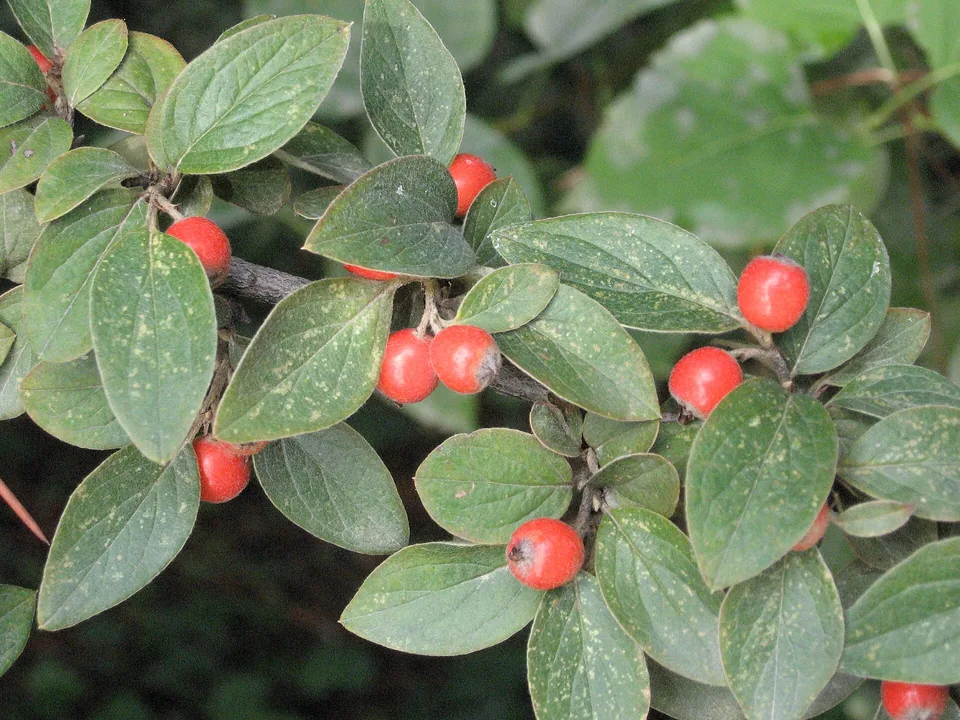
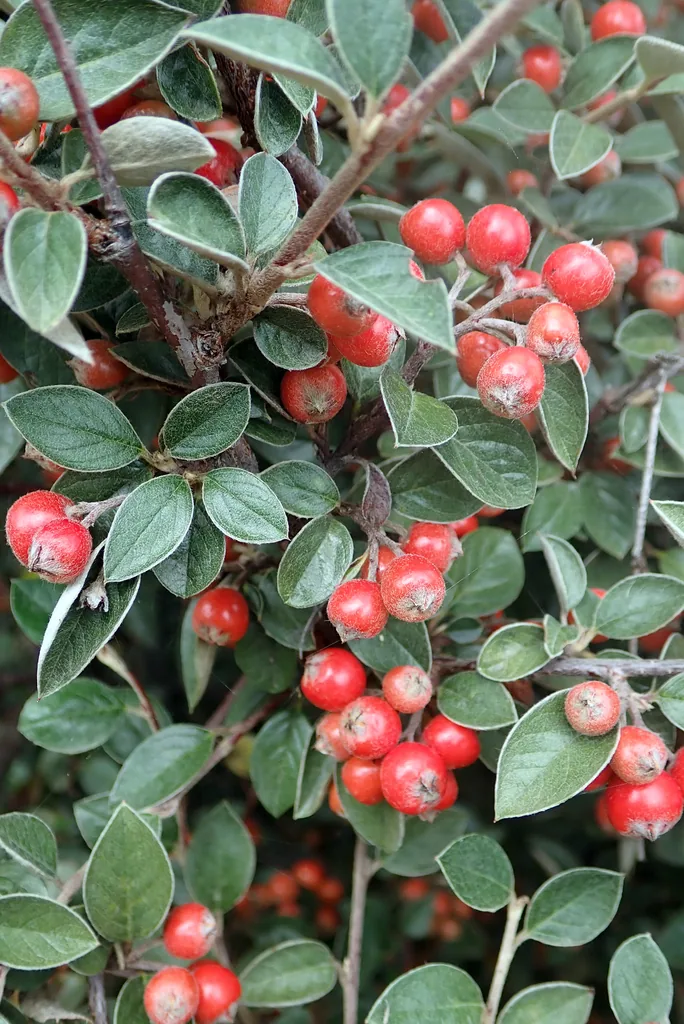
Franchet's cotoneaster is an evergreen to semi-evergreen arching shrub native to China that is used as a garden ornamental. [6][5] It grows in full sun or part shade in well-drained soil with moderate water use. [3] It is classified as a weed in New Zealand, where birds disperse the seeds. [5]
This record is incomplete: the sources we read do not cover every field yet.
Not yet covered by our sources: Hardiness, warmest zone, Pruning
Cotoneaster franchetii care
How to water Cotoneaster franchetii
How much light Cotoneaster franchetii needs
Full sun to part shade
What the sources say (1)
Exposure:
Full sun, Part sun/part shadeHow much cold Cotoneaster franchetii can take
Hardiness, coldest zone
6 [winter low −23.3 to −17.8 °C (−10 to 0 °F)]
What the sources say (1)
Hardiness Rating:
Zone 6: (-23 to -18 °C)Hardiness, warmest zone
Not stated in the sources we read.
How to propagate Cotoneaster franchetii
Seed, greenwood cuttings, softwood cuttings, hardwood cuttings
What the sources say (1)
Propagation:
Seed, Greenwood cuttings, Softwood cuttings, Hardwood cuttingsCotoneaster franchetii pests and problems
Pests and diseases listed for the species
Symptom: Listed susceptibilities: blight or needle cast, mites, rust, scale insects.
What to do: Not stated in the sources.
What the sources say (1)
Blight or needle cast, Mites, Rust, Scale insects (Deer resistant, Drought tolerant)
— Franchet cotoneaster - KPU Plant DB [3]
Remedies
Each remedy shows what official sources say about it; traditional remedies without an official source are marked as such. Harmful ones are listed so you know to avoid them.
Getting rid of it
cotoneaster seedlings and small plants
pulling seedlings and small plants Not verified
Traditional remedy, not verified by an official source.
Seedlings can be hand pulled if all the roots can be removed.
— weedsbluemountains.org.au [8] Mechanical removal of the shrubs can provide good control, but follow-up is needed, as the plants may resprout from the roots.
— cal-ipc.org [9] How: Small plants are removed by pulling; keep pulling seedlings throughout the year because seed germination occurs all year round.
bird-spread berries
bagging berries or hot composting them Not verified
Traditional remedy, not verified by an official source.
Stumps resprout, often even after swabbing. Bared areas are reinfested by seed bank.
— weedbusters.org.nz [10] How: Treat plants before they fruit; bag and dispose of the berries, or place them in a hot compost to kill the seeds.
cotoneaster seedling regrowth on cleared sites
replanting cleared sites with dense low native shrubs Not verified
Traditional remedy, not verified by an official source.
Stumps resprout, often even after swabbing. Bared areas are reinfested by seed bank.
— weedbusters.org.nz [10] How: Replant cleared sites quickly with dense, low growing native shrubs.
Calendar
Pruning
Not stated in the sources we read.
Months as given by the sources, which are mostly from the United States (northern hemisphere). In the southern hemisphere they shift by about six months.
Indicative values
Values from a secondary source, not checked word for word like the rest of this page. Use them as a starting point.
- Life cycle
- PerennialIndicative value, adapt it to your climate · Secondary source
- Mature height
- 182.9-304.8 cm (6-10 ft)Indicative value, adapt it to your climate · Secondary source
- Hours of sun
- 4-6 hoursIndicative value, adapt it to your climate · Secondary source
- Soil
- Well-drainedIndicative value, adapt it to your climate · Secondary source
- Soil pH
- 6-7.5Indicative value, adapt it to your climate · Secondary source
- Care level
- MediumIndicative value, adapt it to your climate · Secondary source
- Growth rate
- ModerateIndicative value, adapt it to your climate · Secondary source
- Pruning
- February, March, AprilIndicative value, adapt it to your climate · Secondary source
- Pests
- Mites, Rust, Scale insects, Deer resistant, Drought resistantIndicative value, adapt it to your climate · Secondary source
Similar plants
- Bearberry Cotoneaster Cotoneaster dammeri
- Cotoneaster Cotoneaster apiculatus
- Creeping Cotton Easter Cotoneaster adpressus
- Littleleaf Cotoneaster Cotoneaster microphyllus
- Parney Cotoneaster Cotoneaster coriaceus
- Rockspray Cotoneaster horizontalis
- Spreading Cotoneaster Cotoneaster divaricatus
- Willowleaf Cotoneaster Cotoneaster salicifolius
Sources
Every value above is quoted from these documents. Links lead to the original publisher.
- Cotoneaster franchetii - Trees and Shrubs Online · treesandshrubsonline.org, consulted
- Cotoneaster franchetii - FNA · floranorthamerica.org, consulted
- Franchet cotoneaster - KPU Plant DB · plantdatabase.kpu.ca, consulted
- Flora of New Zealand | Taxon Profile | Cotoneaster franchetii · nzflora.info, consulted
- Cotoneaster franchetii · weeds.doc.govt.nz, consulted
- Bean's Trees and Shrubs · beanstreesandshrubs.org, consulted
- Plants of South Eastern New South Wales · apps.lucidcentral.org, consulted
- weedsbluemountains.org.au · weedsbluemountains.org.au
- cal-ipc.org · cal-ipc.org
- weedbusters.org.nz · weedbusters.org.nz
Written by Emilio Marruso · last checked