
How to Grow and Care for Daphne alpina
Daphne alpina
Written by Emilio Marruso · last checked
Toxic to: People · Why
At a glance
Daphne alpina is an easygoing plant for full sun or partial shade: keep the soil moderately moist and it asks for very little pruning, just a tidy-up of dead or crossing stems in early spring or after flowering. You can even grow it from seed. Plant it where children and pets can't reach it, because every part is highly toxic.
- Sun
Full sun to partial shade
What the sources say (1)
Light: Full sun to partial shade
D. alpina prefers a sunny to half-shady situation in moderately moist soil of gritty loam.
— Daphnes — The Hopeful Fragrance of Spring – Piedmont Master Gardeners [3] - Water
Keep the soil moderately moist
What the sources say (1)
Watering: Keep soil moderately moist
D. alpina prefers a sunny to half-shady situation in moderately moist soil of gritty loam.
— Daphnes — The Hopeful Fragrance of Spring – Piedmont Master Gardeners [3] - Pruning
Only remove dead, damaged or crossing stems in early spring or after flowering; never cut it back hard
What the sources say (5)
When to prune: Little pruning is needed: only remove dead, damaged or crossing stems, in early spring or shortly after flowering.
Daphnes tend to grow slowly, so pruning is rarely necessary, except to remove damaged or dead stems.
— [5] This should be done in early spring or shortly after flowering
— [5] Little pruning is needed, but remove crossing or damaged stems, including stems and foliage damaged by winter burn.
— Daphnes for Pennsylvania Gardens [4] - Propagation
Grow new plants from seed
What the sources say (1)
Propagation: Seed
There are a number of compact, deciduous daphnes that arc easily grown from seed and quite permanent in the garden. Daphne alpina (Zones 4-9) has silvery leaves and a compact habit.
— The Dwarf Daphnes - Horticulture [2] - Safety
All parts, including the berries, are highly toxic to people and pets
Overview
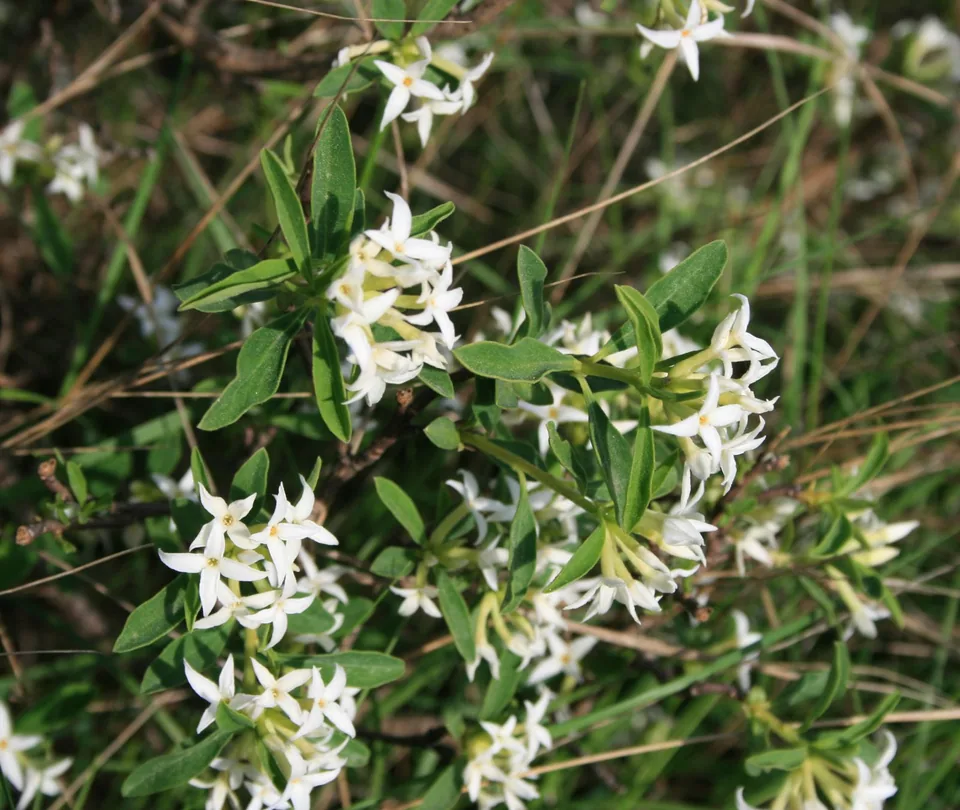
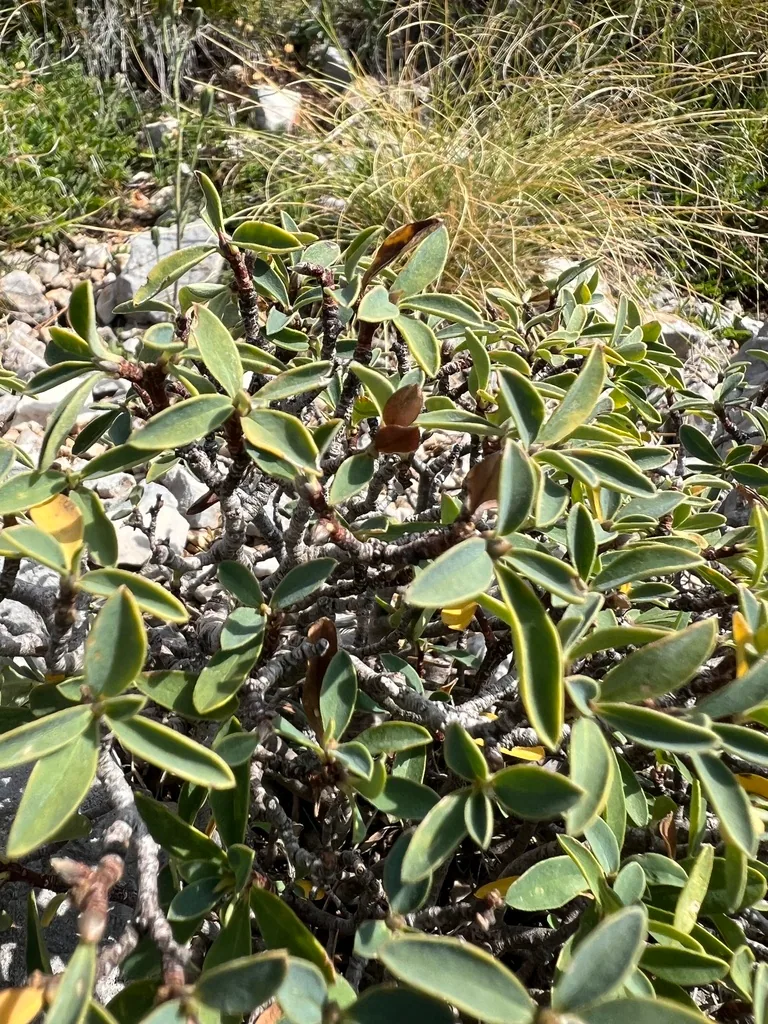
Daphne alpina is a dwarf deciduous shrub with fragrant white flowers, suited to the rock garden, especially on limestone. [1] It prefers a sunny to half-shady position in moderately moist, gritty loam. [3]
This record is incomplete: the sources we read do not cover every field yet.
Not yet covered by our sources: Pruning
Daphne alpina care
How to water Daphne alpina
Keep soil moderately moist
What the sources say (1)
D. alpina prefers a sunny to half-shady situation in moderately moist soil of gritty loam.How much light Daphne alpina needs
Full sun to partial shade
What the sources say (1)
D. alpina prefers a sunny to half-shady situation in moderately moist soil of gritty loam.How much cold Daphne alpina can take
Hardiness, coldest zone
The sources give different values depending on region, zone or growing conditions.
What each source says
According to Horticulture magazine: 4 [winter low −34.4 to −28.9 °C (−30 to −20 °F)]
According to Piedmont Master Gardeners: 5 [winter low −28.9 to −23.3 °C (−20 to −10 °F)]
What the sources say (2)
According to Horticulture magazine: Daphne alpina (Zones 4-9) has silvery leaves and a compact habit. Abundant white clusters of flowers appear in April and May as the leaves emergeAccording to Piedmont Master Gardeners: D. alpina is a deciduous prostrate species of daphne which can tolerate cold climates up to zone 5.Hardiness, warmest zone
9 [winter low −6.7 to −1.1 °C (20 to 30 °F)]
What the sources say (1)
Daphne alpina (Zones 4-9) has silvery leaves and a compact habit. Abundant white clusters of flowers appear in April and May as the leaves emergeHow to propagate Daphne alpina
Seed
What the sources say (1)
There are a number of compact, deciduous daphnes that arc easily grown from seed and quite permanent in the garden. Daphne alpina (Zones 4-9) has silvery leaves and a compact habit.How to grow Daphne alpina
Roots
Root system
The sources give different values depending on region, zone or growing conditions.
What each source says
Daphne in general (garden plants): Most daphnes are deep rooted and do not generally grow well in containers
What the sources say (1)
Daphne in general (garden plants): Containers – most daphnes are deep rooted, so don’t generally grow well in containers, but smaller alpine daphnes (such as D. arbuscula ) should be fine.Propagation
Germination
The sources give different values depending on region, zone or growing conditions.
What each source says
Daphne in general (garden plants): Germination from seed can take at least two years
Daphne in general (garden plants): Sow seeds from ripe fleshy fruits in gritty seed compost in a sheltered, shady spot or coldframe
What the sources say (2)
Daphne in general (garden plants): Sowing seeds – germination can take at least two years, and with named cultivars the offspring may differ from the parent plant.Daphne in general (garden plants): remove the seeds from ripe fleshy fruits and sow in gritty, peat-free seed compost . Place in a sheltered, shady spot or coldframe to germinate.Cuttings
The sources give different values depending on region, zone or growing conditions.
What each source says
Daphne in general (garden plants): Propagated by stem cuttings or layering
Daphne in general (garden plants), United Kingdom: Semi-ripe heel cuttings taken in mid to late summer
What the sources say (2)
Daphne in general (garden plants): Daphnes can be propagated through layering or through stem cuttings. Propagate with either softwood cuttings taken in early summer or hardwood cuttings taken in late summer.Daphne in general (garden plants), United Kingdom: The main methods are: - Semi-ripe heel cuttings – taken in mid to late summer - Layering – suitable for species with low branches, such as D. cneorumHeat and drought
Drought
The sources give different values depending on region, zone or growing conditions.
What each source says
Daphne in general (garden plants): Does not tolerate drought or waterlogging
Daphne in general (garden plants): Water during dry spells; do not let the shrub suffer from drought
What the sources say (2)
Daphne in general (garden plants): Well-drained but moisture-retentive soil that contains plenty of organic matter . They won’t tolerate drought or waterlogging.Daphne in general (garden plants): Daphnes do not require much maintenance except for watering during a dry spell. Ensure that this shrub does not suffer from drought.Pruning
When to prune
Little pruning is needed: only remove dead, damaged or crossing stems, in early spring or shortly after flowering.
What the sources say (3)
Daphnes tend to grow slowly, so pruning is rarely necessary, except to remove damaged or dead stems.This should be done in early spring or shortly after floweringLittle pruning is needed, but remove crossing or damaged stems, including stems and foliage damaged by winter burn.Hard pruning
Best avoided: daphnes do not usually recover well, and pruning often results in die-back.
Remedies
The sources we checked give no remedies for this plant.
Is Daphne alpina poisonous?
Reported by the source, quoted verbatim. This is not medical or veterinary advice: if a person or an animal may have eaten this plant, contact a poison control centre or a veterinarian.
These drupes, less than one inch in diameter, are poisonous to mammals, including humans and their pets. In fact, all parts of the plant are highly toxic.
[4]Genus-level warning: refers to the whole genus, not documented for this species
Calendar
Pruning
Not stated in the sources we read.
Months as given by the sources, which are mostly from the United States (northern hemisphere). In the southern hemisphere they shift by about six months.
Similar plants
- Caucasian Daphne Daphne caucasica
- Daphne blagayana Daphne blagayana
- Daphne petraea Daphne petraea
- Lilac Daphne Daphne genkwa
- Onishibari Daphne pseudomezereum
- Spurge Laurel Daphne mezereum
- Tangut Daphne Daphne tangutica
- Winter Daphne Daphne odora
Sources
Every value above is quoted from these documents. Links lead to the original publisher.
- Daphne alpina - Trees and Shrubs Online · treesandshrubsonline.org, consulted
- The Dwarf Daphnes - Horticulture · hortmag.com, consulted
- Daphnes — The Hopeful Fragrance of Spring – Piedmont Master Gardeners · piedmontmastergardeners.org, consulted
- Daphnes for Pennsylvania Gardens · extension.psu.edu, consulted
- rhs.org.uk · rhs.org.uk
Written by Emilio Marruso · last checked