
How to Grow and Care for Carthusian Pink
Dianthus carthusianorum
Written by Emilio Marruso · last checked
Classified as poisonous · Why
At a glance
Carthusian pink is a sun lover that's easy to start from seed. Scatter the seeds and barely cover them with soil, since they need light to sprout; at 54–68 °F they usually come up within 7 days. Plant it out in May or June in full sun, in soil that stays moist but drains well, and watch it settle in.
- Sun
Full sun
What the sources say (3)
Light: Full sun
Sun Exposure: Full sun
— Dianthus carthusianorum | BBC Gardeners World Magazine [1] Grow Dianthus carthusianorum in moist but well-drained, alkaline soil, in full sun.
— Dianthus carthusianorum | BBC Gardeners World Magazine [1] Karthäuser-Nelken kommen in mageren, voll besonnten Lebensräumen auf sandigen bis lehmigen Böden vor
— Artensteckbrief [5] - Water
Keep the soil moist but well drained
What the sources say (1)
Watering notes: Moist but well-drained soil
Grow Dianthus carthusianorum in moist but well-drained, alkaline soil, in full sun.
— Dianthus carthusianorum | BBC Gardeners World Magazine [1] - Planting
Plant in May or June
What the sources say (1)
Planting: May-June
Jan | Feb | Mar | Apr | May | Jun | Jul | Aug | Sep | Oct | Nov | Dec | Plant | | | | | yes | yes
— Dianthus carthusianorum | BBC Gardeners World Magazine [1] - Propagation
From seed: barely cover it, it needs light; it sprouts within 7 days at 54–68 °F
What the sources say (1)
Propagation: Seed, only lightly covered with soil and treated as a light germinator; usually germinates within 7 days at 12-20 °C [54–68 °F]
Das Saatgut sollte nur schwach mit Erde bedeckt und als Lichtkeimer behandelt werden. Es keimt meist binnen 7 Tagen nach der Aussaat. Gute Keimtemperaturen liegen im Bereich von 12-20°C.
— Artensteckbrief [5]
Overview
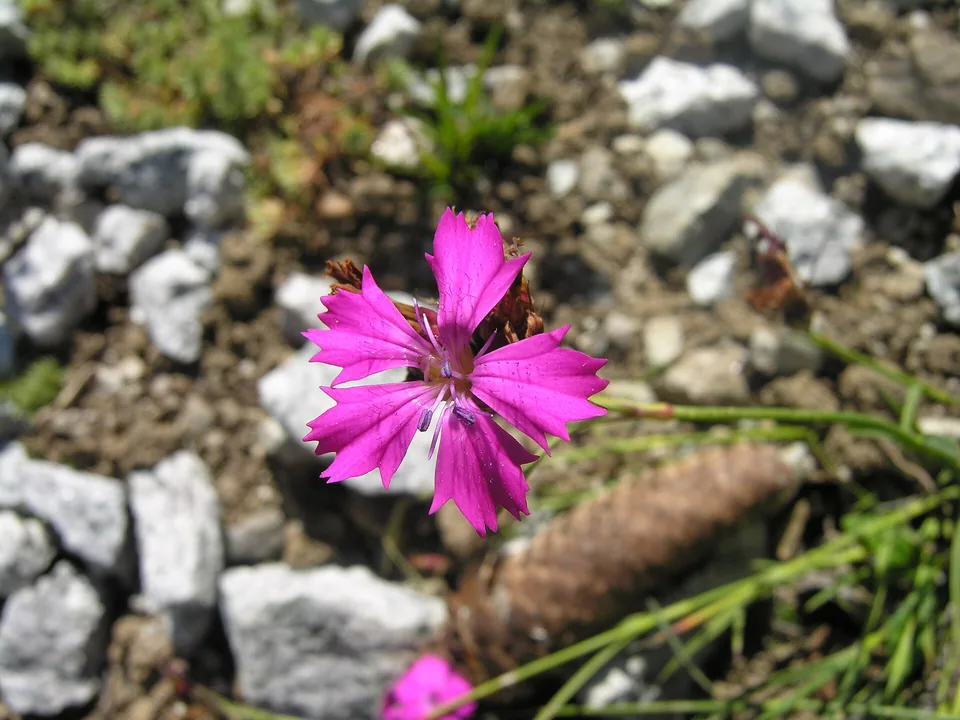
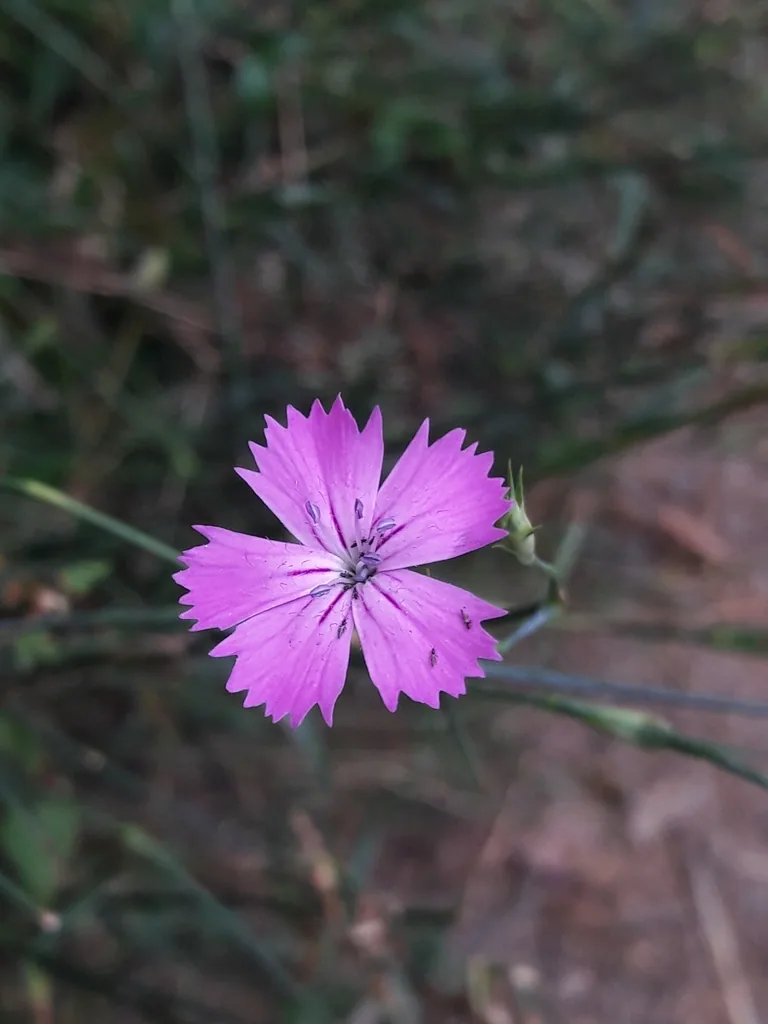
Carthusian pink is a tall pink with small dark pink flowers, suited to borders and meadow-style plantings. [1] It is grown in moist but well-drained alkaline soil in full sun. [1]
This record is incomplete: the sources we read do not cover every field yet.
Not yet covered by our sources: Watering, Hardiness, coldest zone, Hardiness, warmest zone, Pruning
Carthusian Pink care
Measurements in square brackets are our conversion into the other unit system; the quoted text is unchanged.
How to water Carthusian Pink
Watering
Not stated in the sources we read.
Watering notes
Moist but well-drained soil
What the sources say (1)
Grow Dianthus carthusianorum in moist but well-drained, alkaline soil, in full sun.How much light Carthusian Pink needs
Full sun
What the sources say (3)
Sun Exposure:
Full sunGrow Dianthus carthusianorum in moist but well-drained, alkaline soil, in full sun.Karthäuser-Nelken kommen in mageren, voll besonnten Lebensräumen auf sandigen bis lehmigen Böden vorHow much cold Carthusian Pink can take
Hardiness, coldest zone
Not stated in the sources we read.
Hardiness, warmest zone
Not stated in the sources we read.
How to propagate Carthusian Pink
Seed, only lightly covered with soil and treated as a light germinator; usually germinates within 7 days at 12-20 °C [54–68 °F]
What the sources say (1)
Das Saatgut sollte nur schwach mit Erde bedeckt und als Lichtkeimer behandelt werden. Es keimt meist binnen 7 Tagen nach der Aussaat. Gute Keimtemperaturen liegen im Bereich von 12-20°C.How to grow Carthusian Pink
The plant
Family
Caryophyllaceae
What the sources say (1)
Family
Caryophyllaceae
View Family Tree opens in aFertilizing
When
The sources give different values depending on region, zone or growing conditions.
What each source says
Dianthus in general, as cool-season bedding plants (Mississippi): At transplanting, then monthly through the winter
What the sources say (1)
Dianthus in general, as cool-season bedding plants (Mississippi): Dianthus is a vigorous grower, so fertilize at transplanting with a good, slow-release fertilizer, and then supplement monthly with water-soluble fertilizer through the winter to keep the flowers coming.How often
The sources give different values depending on region, zone or growing conditions.
What each source says
Dianthus in general, in the ground: No additional feeding needed
Dianthus in general, in containers: Additional fertiliser, especially for short-lived bedding types
Dianthus in general, as cool-season bedding plants (Mississippi): Monthly through the winter after a slow-release feed at transplanting
Dianthus in general, for continued blooming: Light feeding every six to eight weeks
What the sources say (4)
Dianthus in general, in the ground: Dianthus grown in the ground are unlikely to need additional feeding. Plants in containers, especially short-lived bedding types, will benefit from additional fertiliserDianthus in general, in containers: Dianthus grown in the ground are unlikely to need additional feeding. Plants in containers, especially short-lived bedding types, will benefit from additional fertiliserDianthus in general, as cool-season bedding plants (Mississippi): Dianthus is a vigorous grower, so fertilize at transplanting with a good, slow-release fertilizer, and then supplement monthly with water-soluble fertilizer through the winter to keep the flowers coming.Dianthus in general, for continued blooming: For continued blooming, feed these flowers lightly every six to eight weeks with an all purpose liquid fertilizer.Mineral fertilizers
The sources give different values depending on region, zone or growing conditions.
What each source says
Dianthus in general, as cool-season bedding plants (Mississippi): Slow-release fertilizer at transplanting, then water-soluble fertilizer
Dianthus in general, for continued blooming: All-purpose liquid fertilizer, applied lightly
What the sources say (2)
Dianthus in general, as cool-season bedding plants (Mississippi): Dianthus is a vigorous grower, so fertilize at transplanting with a good, slow-release fertilizer, and then supplement monthly with water-soluble fertilizer through the winter to keep the flowers coming.Dianthus in general, for continued blooming: For continued blooming, feed these flowers lightly every six to eight weeks with an all purpose liquid fertilizer.Remedies
Each remedy shows what official sources say about it; traditional remedies without an official source are marked as such. Harmful ones are listed so you know to avoid them.
Treating the plant
root and crown rot
removing highly symptomatic plants Official source, not independently tested
How: Highly symptomatic plants can be rogued and removed since recovery is unlikely.
Highly symptomatic plants can be rogued and removed since recovery is unlikely.
— portal.ct.gov [9]
leaf spots
picking off symptomatic leaves Official source, not independently tested
How: Pick and remove symptomatic leaves as soon as they develop; water early in the day to give the foliage a chance to dry before nighttime.
However, watering should be done early in the day to give the foliage a chance to dry before nighttime. It is also helpful to pick and remove symptomatic leaves as
— portal.ct.gov [9]
Calendar
May-June
What the sources say (1)
Jan | Feb | Mar | Apr | May | Jun | Jul | Aug | Sep | Oct | Nov | Dec
| Plant | | | | | yes | yesNot stated in the sources we read.
Months as given by the sources, which are mostly from the United States (northern hemisphere). In the southern hemisphere they shift by about six months.
Similar plants
- Carnation Dianthus caryophyllus
- Cheddar Pink Dianthus gratianopolitanus
- Chinese Pink Dianthus chinensis
- Cottage Pink Dianthus plumarius
- Deptford Pink Dianthus armeria
- Maiden Pink Dianthus deltoides
- Peacock-eye Pink Dianthus pavonius
- Sweet William Dianthus barbatus
Sources
Every value above is quoted from these documents. Links lead to the original publisher.
- Dianthus carthusianorum | BBC Gardeners World Magazine · gardenersworld.com, consulted
- · naturblick.museumfuernaturkunde.berlin, consulted
- Dianthus carthusianorum L. | Plants of the World Online | Kew Science · powo.science.kew.org, consulted
- Search for species - Kartäuser-Nelke (Dianthus carthusianorum L.) · i-flora.com, consulted
- Artensteckbrief · bund-mecklenburg-vorpommern.de, consulted
- extension.msstate.edu · extension.msstate.edu
- rhs.org.uk · rhs.org.uk
- ask.extension.org · ask.extension.org
- portal.ct.gov · portal.ct.gov
Written by Emilio Marruso · last checked