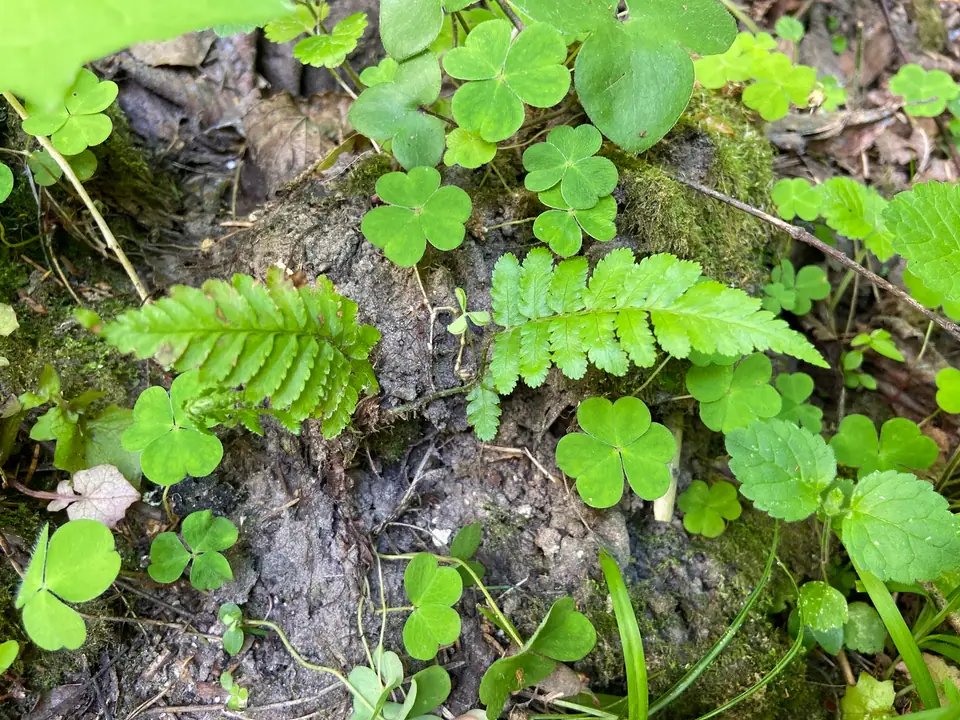
How to Grow and Care for Male fern
Dryopteris filix-mas
Written by Emilio Marruso · last checked
Toxic to: Cattle, People · Why
At a glance
Male fern fills shady corners with green, happy anywhere from dappled sun to full shade. Give it moist, rich, well-drained soil and it grows to 3 feet tall, with no serious pests or diseases to worry about. Feed it lightly in spring, since ferns are very sensitive to too much fertilizer, and divide it to share with friends.
- Sun
Dappled sun to full shade
What the sources say (2)
Light: Dappled sun to full shade
According to New England Wild Flower Society (Native Plant Trust): ## Exposure | • | Part Shade | • | Shade | ## Soil Moisture
— male fern Dryopteris filix-mas from New England Wild Flower Society [3] Even though it prefers moist, well-drained, organically-rich soil, it adapts to various soil conditions and grows in dappled sun to full shade.
— Dryopteris filix-mas (Male Fern) | North Carolina Extension Gardener Plant Toolbox [1] - Water
Keep the soil moist, but never soggy
What the sources say (1)
Watering notes: Prefers moist, well-drained, organically-rich soil; adapts to various soil conditions
Even though it prefers moist, well-drained, organically-rich soil, it adapts to various soil conditions and grows in dappled sun to full shade.
— Dryopteris filix-mas (Male Fern) | North Carolina Extension Gardener Plant Toolbox [1] - Cold
Survives winters down to −30 °F (−34.4 °C)
Very hardy · USDA 4a · RHS H7 · Z4
What the sources say (1)
Hardiness, coldest zone: 4a [winter low −34.4 to −31.7 °C (−30 to −25 °F)]
USDA Plant Hardiness Zone: 4a, 4b, 5a, 5b, 6a, 6b, 7a, 7b, 8a, 8b, 9a, 9b
— Dryopteris filix-mas (Male Fern) | North Carolina Extension Gardener Plant Toolbox [1] - Soil
Rich, well-drained soil is best, but it adapts to many soils
What the sources say (1)
Watering notes: Prefers moist, well-drained, organically-rich soil; adapts to various soil conditions
Even though it prefers moist, well-drained, organically-rich soil, it adapts to various soil conditions and grows in dappled sun to full shade.
— Dryopteris filix-mas (Male Fern) | North Carolina Extension Gardener Plant Toolbox [1] - Spacing
3 ft between plants
What the sources say (1)
Spacing: 91.4 cm (3 ft)
The erect fronds are 3 feet tall and occasionally 4 feet. Allow 3 feet between plants.
— Dryopteris filix-mas (Male Fern) | North Carolina Extension Gardener Plant Toolbox [1] - Feeding
Compost or a little fertilizer in spring as new growth starts; too much harms it
What the sources say (6)
When: Spring, just after new growth has begun
compost, first years after planting: These ferns like moist soil in shade. They appreciate annual applications organic material, such as well-rotted garden compost, in late winter for few years after planting.
— [5] Fertilizing should be done in spring, just after new growth has begun.
— [6] Natural fertilizers: Complete organic fertilizers; well-rotted garden compost each year for the first few years after planting
Complete organic fertilizers also work very well. Always follow package instructions for fertilizer rates.
— [6] These ferns like moist soil in shade. They appreciate annual applications organic material, such as well-rotted garden compost, in late winter for few years after planting.
— [5] - Pests
No serious pests or diseases
What the sources say (2)
Pests: no serious insect problems
Insects, Diseases, and Other Plant Problems: No serious insect or disease problems.
— Dryopteris filix-mas (Male Fern) | North Carolina Extension Gardener Plant Toolbox [1] Diseases: no serious disease problems
Insects, Diseases, and Other Plant Problems: No serious insect or disease problems.
— Dryopteris filix-mas (Male Fern) | North Carolina Extension Gardener Plant Toolbox [1] - Size
3 ft tall, sometimes 4 ft
What the sources say (1)
Mature height: 91.4 cm (3 ft), occasionally 121.9 (4 ft)
The erect fronds are 3 feet tall and occasionally 4 feet. Allow 3 feet between plants.
— Dryopteris filix-mas (Male Fern) | North Carolina Extension Gardener Plant Toolbox [1] - Propagation
Divide the clump, or grow it from spores
What the sources say (2)
Propagation: Division; spores; division of the rhizome
Propagation can be done by division or spores.
— Dryopteris filix-mas (Male Fern) | North Carolina Extension Gardener Plant Toolbox [1] It is multiplied by division of the rhizome or by spores.
— Dryopteris filix-mas - Monaco Nature Encyclopedia [4] - Safety
Poisonous if eaten: it can cause vomiting, diarrhea, seizures and blindness
Overview
Male fern is a deciduous fern native to the northern temperate regions of Europe, Asia, North Africa and North America. [1] It prefers moist, well-drained, organically-rich soil and grows in dappled sun to full shade. [1] The rhizome is toxic: poisoning is characterized by vomiting, diarrhea, headaches, seizures and blindness. [4]
This record is incomplete: the sources we read do not cover every field yet.
Not yet covered by our sources: Watering, Hardiness, warmest zone, Pruning
Male fern care
How to water Male fern
Watering
Not stated in the sources we read.
Watering notes
Prefers moist, well-drained, organically-rich soil; adapts to various soil conditions
What the sources say (1)
Even though it prefers moist, well-drained, organically-rich soil, it adapts to various soil conditions and grows in dappled sun to full shade.How much light Male fern needs
Dappled sun to full shade
What each source says
According to New England Wild Flower Society (Native Plant Trust): Part shade to shade
What the sources say (2)
According to New England Wild Flower Society (Native Plant Trust): ## Exposure
| •
| Part Shade
| •
| Shade
|
## Soil MoistureEven though it prefers moist, well-drained, organically-rich soil, it adapts to various soil conditions and grows in dappled sun to full shade.How much cold Male fern can take
Hardiness, coldest zone
4a [winter low −34.4 to −31.7 °C (−30 to −25 °F)]
What the sources say (1)
USDA Plant Hardiness Zone:
4a, 4b, 5a, 5b, 6a, 6b, 7a, 7b, 8a, 8b, 9a, 9bHardiness, warmest zone
Not stated in the sources we read.
Where to grow Male fern
91.4 cm (3 ft)
What the sources say (1)
The erect fronds are 3 feet tall and occasionally 4 feet. Allow 3 feet between plants.How to propagate Male fern
Division; spores; division of the rhizome
How to grow Male fern
The plant
Family
Mature height
91.4 cm (3 ft), occasionally 121.9 (4 ft)
What the sources say (1)
The erect fronds are 3 feet tall and occasionally 4 feet. Allow 3 feet between plants.Pests and diseases
Pests
no serious insect problems
What the sources say (1)
Insects, Diseases, and Other Plant Problems: No serious insect or disease problems.Diseases
no serious disease problems
What the sources say (1)
Insects, Diseases, and Other Plant Problems: No serious insect or disease problems.Fertilizing
When
Spring, just after new growth has begun
What each source says
compost, first years after planting: Late winter
What the sources say (2)
compost, first years after planting: These ferns like moist soil in shade. They appreciate annual applications organic material, such as well-rotted garden compost, in late winter for few years after planting.Fertilizing should be done in spring, just after new growth has begun.How often
The sources give different values depending on region, zone or growing conditions.
What each source says
compost, first years after planting: Once a year
What the sources say (1)
compost, first years after planting: These ferns like moist soil in shade. They appreciate annual applications organic material, such as well-rotted garden compost, in late winter for few years after planting.Natural fertilizers
Complete organic fertilizers; well-rotted garden compost each year for the first few years after planting
What the sources say (2)
Complete organic fertilizers also work very well.
Always follow package instructions for fertilizer rates.These ferns like moist soil in shade. They appreciate annual applications organic material, such as well-rotted garden compost, in late winter for few years after planting.Mineral fertilizers
Slow-release fertilizer at the rate on the label
Avoid
Over-fertilizing, to which ferns are very sensitive; fertilizing fall transplants
Remedies
Each remedy shows what official sources say about it; traditional remedies without an official source are marked as such. Harmful ones are listed so you know to avoid them.
Getting rid of it
invasive spread
pull out the whole plant, contain spores Not verified
Traditional remedy, not verified by an official source.
How: Pull out, taking care to contain the spores and remove all fragments of the plant including the roots; dispose of securely bagged plant material in general waste.
Is Male fern toxic to pets?
Reported by the source, quoted verbatim. This is not medical or veterinary advice: if a person or an animal may have eaten this plant, contact a poison control centre or a veterinarian.
Animals
Cattle have been found blind or in a comatose state after grazing on this fern to the base.
[4]- Symptoms
Cattle have been found blind or in a comatose state after grazing on this fern to the base.
[4]
People
Despite its low absorption, in the presence of fats or oils this absorption increases and can cause poisoning, characterized by vomiting, diarrhea, headaches, seizures and blindness.
[4]- Poisonous parts
The male fern rhizome has been used since ancient times for its anthelmintic properties, already described by Theophrastus and Dioscorides.
[4]- Toxic principle
The active components, soluble in ether, are a mixture of phloroglucinol (a benzenetriol) derivatives, called crude filicin in the pharmacopoeia
[4]- Symptoms
Despite its low absorption, in the presence of fats or oils this absorption increases and can cause poisoning, characterized by vomiting, diarrhea, headaches, seizures and blindness.
[4]
Calendar
Pruning
Not stated in the sources we read.
Months as given by the sources, which are mostly from the United States (northern hemisphere). In the southern hemisphere they shift by about six months.
Similar plants
- Broad Wood Fern Dryopteris dilatata
- Crested Woodfern Dryopteris cristata
- Evergreen Woodfern Dryopteris intermedia
- Goldie's Woodfern Dryopteris goldieana
- Log Fern Dryopteris celsa
- Marginal Shieldfern Dryopteris marginalis
- Rigid Buckler Fern Dryopteris villarii
- Siebold's Woodfern Dryopteris sieboldii
Sources
Every value above is quoted from these documents. Links lead to the original publisher.
- Dryopteris filix-mas (Male Fern) | North Carolina Extension Gardener Plant Toolbox · plants.ces.ncsu.edu, consulted
- Dryopteris filix-mas (L.) Schott - Herbari Virtual del Mediterrani Occidental · herbarivirtual.uib.cat, consulted
- male fern Dryopteris filix-mas from New England Wild Flower Society · plantfinder.nativeplanttrust.org, consulted
- Dryopteris filix-mas - Monaco Nature Encyclopedia · monaconatureencyclopedia.com, consulted
- rhs.org.uk · rhs.org.uk
- hgic.clemson.edu · hgic.clemson.edu
Written by Emilio Marruso · last checked