
How to Grow and Care for Winterberry Euonymus
Euonymus bungeanus
Written by Emilio Marruso · last checked
Toxic to: People · Why
At a glance
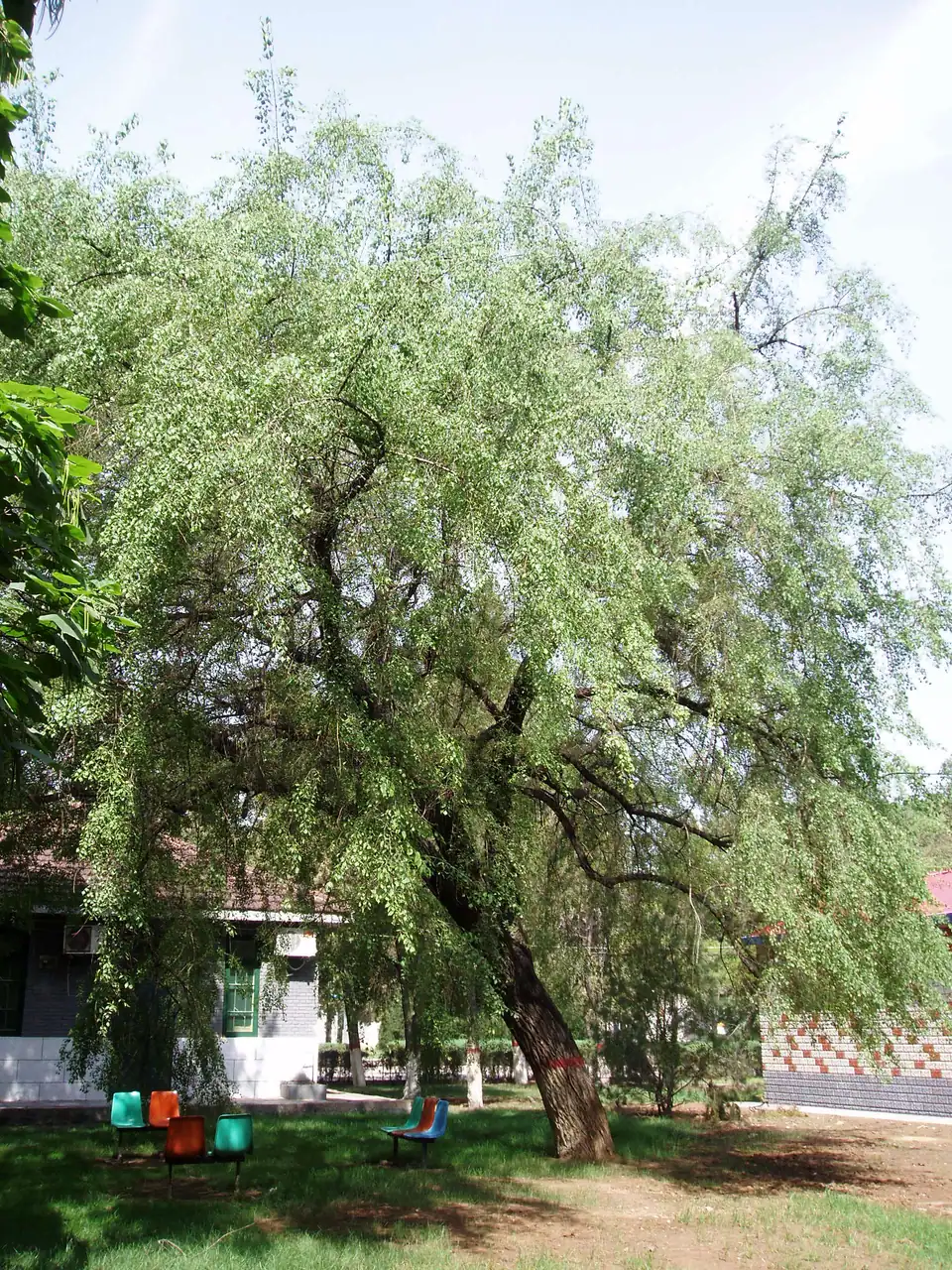
This euonymus grows into a small tree 15–25 ft tall and just as wide, happy in full sun or partial shade. Give it a spot where the soil never stays wet, and it will keep growing year after year. You can even start new plants from seed or stem cuttings to share with friends and family.
- Sun
Full sun to partial shade
What the sources say (2)
Light: Full sun to partial shade
The plant will grow well in most soils with full sun or partial shade, but it does not tolerate wet conditions.
— Euonymus maackii (Winterberry Euonymus) | North Carolina Extension Gardener Plant Toolbox [1] Light: Full sun to part shade.
— Winterberry Euonymus | NDSU Agriculture [2] - Water
Hates wet feet: never let the soil stay soggy
What the sources say (1)
Watering notes: Does not tolerate wet conditions
The plant will grow well in most soils with full sun or partial shade, but it does not tolerate wet conditions.
— Euonymus maackii (Winterberry Euonymus) | North Carolina Extension Gardener Plant Toolbox [1] - Cold
Survives winters down to −30 °F (−34.4 °C)
Very hardy · USDA 4a · RHS H7 · Z4
What the sources say (3)
Hardiness, coldest zone: 4a [winter low −34.4 to −31.7 °C (−30 to −25 °F)]
USDA Plant Hardiness Zone: 4a, 4b, 5a, 5b, 6a, 6b, 7a, 7b, 8a, 8b
— Euonymus maackii (Winterberry Euonymus) | North Carolina Extension Gardener Plant Toolbox [1] Hardiness: Zone 4
— Winterberry Euonymus | NDSU Agriculture [2] Hardiness, warmest zone: 8b [winter low −9.4 to −6.7 °C (15 to 20 °F)]
USDA Plant Hardiness Zone: 4a, 4b, 5a, 5b, 6a, 6b, 7a, 7b, 8a, 8b
— Euonymus maackii (Winterberry Euonymus) | North Carolina Extension Gardener Plant Toolbox [1] - Pests
Watch for euonymus scale, the main pest of this plant
What the sources say (1)
Pests: euonymus scale
Euonymus scale is a problem with most species of this plant.
— Euonymus maackii (Winterberry Euonymus) | North Carolina Extension Gardener Plant Toolbox [1] - Size
15–25 ft tall and 15–25 ft wide
What the sources say (2)
Mature height: 457-762 cm (15-25 ft)
Height: 15 ft. 0 in. - 25 ft. 0 in.
— Euonymus maackii (Winterberry Euonymus) | North Carolina Extension Gardener Plant Toolbox [1] Mature width: 457-762 cm (15-25 ft)
Width: 15 ft. 0 in. - 25 ft. 0 in.
— Euonymus maackii (Winterberry Euonymus) | North Carolina Extension Gardener Plant Toolbox [1] - Propagation
Grow new plants from seed or stem cuttings
What the sources say (1)
Propagation: Seed; stem cutting
Recommended Propagation Strategy: Seed Stem Cutting
— Euonymus maackii (Winterberry Euonymus) | North Carolina Extension Gardener Plant Toolbox [1] - Safety
Eating large amounts of any part of the plant is poisonous
Overview
Winterberry euonymus can be grown as a shrub with significant pruning, or as a small tree reaching 25 feet [7.6 m] at maturity. [1] It tolerates full sun to part shade and is adapted to a wide variety of soils. [2] Its fruits are toxic if eaten. [2]
This record is incomplete: the sources we read do not cover every field yet.
Not yet covered by our sources: Watering, Pruning
Winterberry Euonymus care
Measurements in square brackets are our conversion into the other unit system; the quoted text is unchanged.
How to water Winterberry Euonymus
Watering
Not stated in the sources we read.
Watering notes
Does not tolerate wet conditions
What the sources say (1)
The plant will grow well in most soils with full sun or partial shade, but it does not tolerate wet conditions.How much light Winterberry Euonymus needs
Full sun to partial shade
What the sources say (2)
The plant will grow well in most soils with full sun or partial shade, but it does not tolerate wet conditions.Light: Full sun to part shade.How much cold Winterberry Euonymus can take
Hardiness, coldest zone
4a [winter low −34.4 to −31.7 °C (−30 to −25 °F)]
Hardiness, warmest zone
8b [winter low −9.4 to −6.7 °C (15 to 20 °F)]
What the sources say (1)
USDA Plant Hardiness Zone:
4a, 4b, 5a, 5b, 6a, 6b, 7a, 7b, 8a, 8bHow to propagate Winterberry Euonymus
Seed; stem cutting
What the sources say (1)
Recommended Propagation Strategy:
Seed
Stem CuttingHow to grow Winterberry Euonymus
The plant
Life cycle
perennial
What the sources say (1)
Genus:
Euonymus
Species:
maackii
Family:
Celastraceae
Life Cycle:
PerennialFamily
Celastraceae
What the sources say (1)
Genus:
Euonymus
Species:
maackii
Family:
Celastraceae
Life Cycle:
PerennialMature height
457-762 cm (15-25 ft)
What the sources say (1)
Height: 15 ft. 0 in. - 25 ft. 0 in.Mature width
457-762 cm (15-25 ft)
What the sources say (1)
Width: 15 ft. 0 in. - 25 ft. 0 in.Pests and diseases
Pests
euonymus scale
What the sources say (1)
Euonymus scale is a problem with most species of this plant.Winterberry Euonymus pests and problems
Euonymus scale
Symptom: Euonymus scale is a problem with most species of this plant.
What to do: The source refers to a Clemson Cooperative Extension factsheet on common pests and diseases.
What the sources say (2)
Euonymus scale is a problem with most species of this plant.
— Euonymus maackii (Winterberry Euonymus) | North Carolina Extension Gardener Plant Toolbox [1] The Clemson Cooperative Extension Home & Garden Information Center has a factsheet on common pests and diseases.
— Euonymus maackii (Winterberry Euonymus) | North Carolina Extension Gardener Plant Toolbox [1]
Remedies
The sources we checked give no remedies for this plant.
Is Winterberry Euonymus poisonous?
Reported by the source, quoted verbatim. This is not medical or veterinary advice: if a person or an animal may have eaten this plant, contact a poison control centre or a veterinarian.
Ingesting large amounts of any part of the plant is toxic and can result in poisoning.
[1]
Calendar
Pruning
Not stated in the sources we read.
Months as given by the sources, which are mostly from the United States (northern hemisphere). In the southern hemisphere they shift by about six months.
Indicative values
Values from a secondary source, not checked word for word like the rest of this page. Use them as a starting point.
- Hours of sun
- 6-8 hoursIndicative value, adapt it to your climate · Secondary source
- Watering
- AverageIndicative value, adapt it to your climate · Secondary source
- Drought tolerant
- yesIndicative value, adapt it to your climate · Secondary source
- Soil pH
- 6-7.5Indicative value, adapt it to your climate · Secondary source
- Growth rate
- LowIndicative value, adapt it to your climate · Secondary source
- Pruning
- March, April, August, March, April, AugustIndicative value, adapt it to your climate · Secondary source
Similar plants
- Burning Bush Euonymus alatus
- Japanese Euonymus Euonymus japonicus
- Spindle Tree Euonymus europaeus
- Strawberry Bush Euonymus americanus
- Wahoo Euonymus atropurpureus
- Wintercreeper Euonymus fortunei
- Euonymus latifolius Euonymus latifolius
- Bittersweet Celastrus scandens
Sources
Every value above is quoted from these documents. Links lead to the original publisher.
- Euonymus maackii (Winterberry Euonymus) | North Carolina Extension Gardener Plant Toolbox · plants.ces.ncsu.edu, consulted
- Winterberry Euonymus | NDSU Agriculture · ndsu.edu, consulted
- Euonymus maackii - Trees and Shrubs Online · treesandshrubsonline.org, consulted
Written by Emilio Marruso · last checked