
How to Grow and Care for Wood Spurge
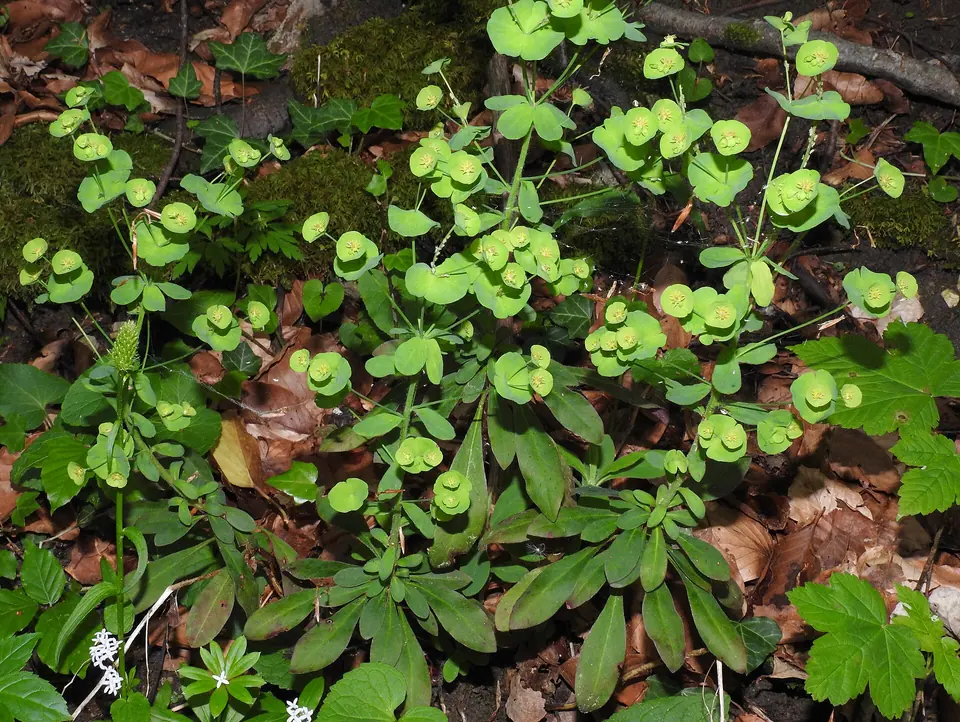
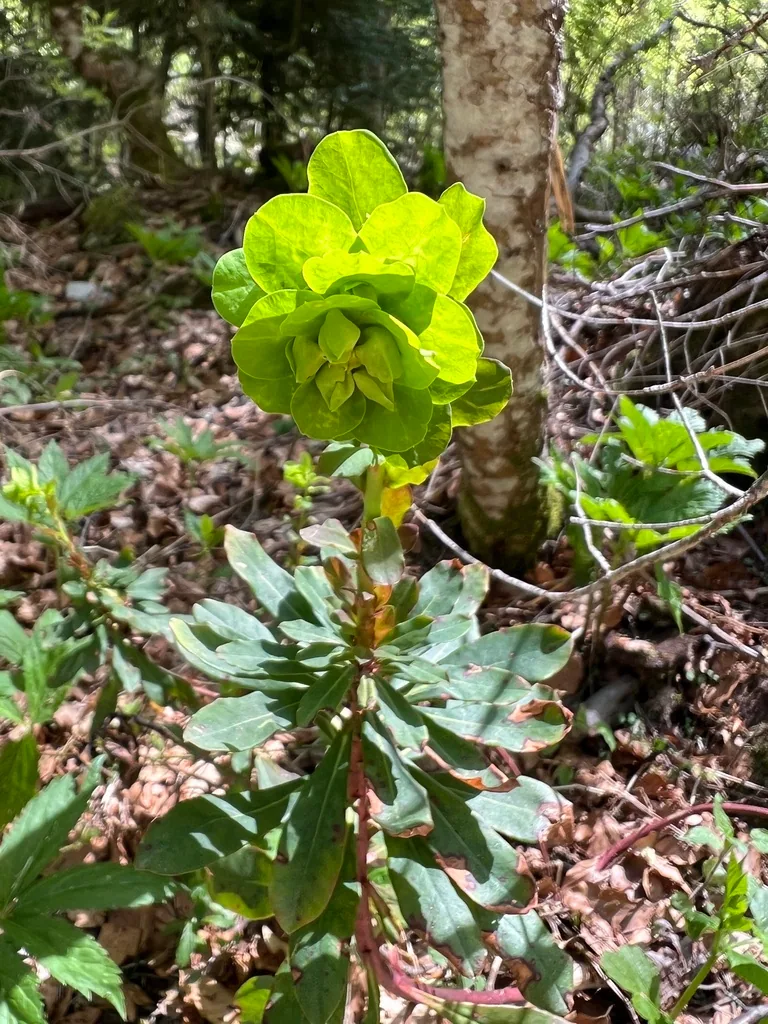
Euphorbia amygdaloides
Written by Emilio Marruso · last checked
Classified as poisonous · Why
At a glance
Wood spurge is an easygoing plant that asks for very little: moist soil, a bit of compost at planting time, and almost no feeding at all. Trim it after flowering, grow it in a container if you like, and make more plants from seed or by dividing clumps in early spring. Too much food only makes it lush and leggy, so less is more.
- Water
Likes soil that stays moist
What the sources say (1)
Watering: Prefers moist soil
This plant prefers moist soil in dappled shade.
— Wood spurge - Fine Gardening [2] - Cold
Survives winters down to −10 °F (−23.3 °C)
Very hardy · USDA 6 · RHS H7 · Z6
- Feeding
Mix compost into the soil at planting; rarely needs more, and too much makes it leggy
What the sources say (4)
How often: Rarely needed
Euphorbias rarely need feeding. They often become lush and leggy if the soil is rich or they are fed too much.
— [6] Natural fertilizers: Well-rotted garden compost worked into the soil at planting
of the new plant, placing it in the hole, and backfilling with soil that has been improved with organic matter such as well-rotted garden compost
— [6] Avoid: Overfeeding and rich soil
Euphorbias rarely need feeding. They often become lush and leggy if the soil is rich or they are fed too much.
— [6] Signs of excess: Lush, leggy growth
Euphorbias rarely need feeding. They often become lush and leggy if the soil is rich or they are fed too much.
— [6] - Pruning
Prune after flowering
What the sources say (1)
Pruning: After flowering
Cut down the foliage after flowering for fresh growth.
— Wood spurge - Fine Gardening [2] - Propagation
From seed, or divide the clumps in early spring
- Sowing
Sow the seeds as soon as they are ripe or in spring
What the sources say (1)
Sowing: When ripe or in spring
Propagation Sow seed when ripe or in spring; divide in early spring.
— Wood spurge - Fine Gardening [2] - Containers
Grows in containers too
What the sources say (1)
In containers: Yes
Container planting, Cut flower or foliage, Ground cover, Group or mass planting, Mixed shrub border
— wood spurge - KPU Plant DB [4]
Overview
Wood spurge is an evergreen herbaceous perennial that flowers in spring and grows up to 40 cm [16 in] tall. [1]
Wood Spurge care
Measurements in square brackets are our conversion into the other unit system; the quoted text is unchanged.
How to water Wood Spurge
Prefers moist soil
What the sources say (1)
This plant prefers moist soil in dappled shade.How much light Wood Spurge needs
The sources give different values depending on region, zone or growing conditions.
What each source says
According to Fine Gardening: Full sun to partial shade
According to Wildlife Gardening Forum: Partial to full shade
According to KPU Plant Database: Full sun only if soil kept moist, part sun/part shade, filtered shade, deep shade
What the sources say (3)
According to Fine Gardening: Light :
Full Sun to Partial ShadeAccording to Wildlife Gardening Forum: Sun – partial to full shadeAccording to KPU Plant Database: Full sun only if soil kept moist, Part sun/part shade, Filtered shade, Deep shadeHow much cold Wood Spurge can take
Hardiness, coldest zone
6 [winter low −23.3 to −17.8 °C (−10 to 0 °F)]
What the sources say (1)
Zones :
6, 7, 8, 9Hardiness, warmest zone
9 [winter low −6.7 to −1.1 °C (20 to 30 °F)]
What the sources say (1)
Zones :
6, 7, 8, 9Where to grow Wood Spurge
Yes
What the sources say (1)
Container planting, Cut flower or foliage, Ground cover, Group or mass planting, Mixed shrub borderHow to propagate Wood Spurge
How to grow Wood Spurge
Fertilizing
How often
Rarely needed
What the sources say (1)
Euphorbias rarely need feeding. They often become lush and leggy if the soil is rich or they are fed too much.Natural fertilizers
Well-rotted garden compost worked into the soil at planting
What the sources say (1)
of the new plant, placing it in the hole, and backfilling with soil that has been improved with organic matter such as well-rotted garden compostAvoid
Overfeeding and rich soil
What the sources say (1)
Euphorbias rarely need feeding. They often become lush and leggy if the soil is rich or they are fed too much.Signs of excess
Lush, leggy growth
What the sources say (1)
Euphorbias rarely need feeding. They often become lush and leggy if the soil is rich or they are fed too much.Remedies
Each remedy shows what official sources say about it; traditional remedies without an official source are marked as such. Harmful ones are listed so you know to avoid them.
Treating the plant
self-seeding
deadheading spent flowers Official source, not independently tested
Use protective gloves and eyewear when handling this plant to avoid contact with the toxic sap.
— plants.ces.ncsu.edu [7] How: Deadhead the spent flowers before they set seeds.
This plant can be propagated by division in the spring, and it will also self-seed in the garden unless spent flowers are deadheaded before the flowers set seeds.
— plants.ces.ncsu.edu [7]
invasive spread
strict containment on all sides Official source, not independently tested
All have a milky white sap in their stems that is irritating on contact, can be toxic if ingested and especially painful if it gets into the eyes.
— ucanr.edu [8] How: Keep the plant strictly contained on all sides.
Euphorbia amygdaloides robbiae. This species can become an undesirable and invasive nuisance unless it is strictly contained on all sides; then, it is an easy-care plant needing little attention.
— ucanr.edu [8]
Calendar
Sowing
When ripe or in spring
What the sources say (1)
Propagation Sow seed when ripe or in spring; divide in early spring.Pruning
After flowering
What the sources say (1)
Cut down the foliage after flowering for fresh growth.Months as given by the sources, which are mostly from the United States (northern hemisphere). In the southern hemisphere they shift by about six months.
Similar plants
- Crown of Thorns Euphorbia milii
- Cushion Spurge Euphorbia epithymoides
- Cypress Spurge Euphorbia cyparissias
- Graceful Spurge Euphorbia hypericifolia
- Indian Corn Cob Euphorbia mammillaris
- Mottled Spurge Euphorbia lactea
- Myrtle Spurge Euphorbia myrsinites
- Pencil Tree Euphorbia tirucalli
Sources
Every value above is quoted from these documents. Links lead to the original publisher.
- Wood Spurge | Wildlife Gardening Forum · wlgf.org, consulted
- Wood spurge - Fine Gardening · finegardening.com, consulted
- Purple Wood Spurge, How to grow and care for Spurge Plants, Euphorbia amygdaloides - Garden Helper, Gardening Questions and Answers · thegardenhelper.com, consulted
- wood spurge - KPU Plant DB · plantdatabase.kpu.ca, consulted
- Euphorbia: How to grow and look after euphorbia in your garden | Gardens Illustrated · gardensillustrated.com, consulted
- rhs.org.uk · rhs.org.uk
- plants.ces.ncsu.edu · plants.ces.ncsu.edu
- ucanr.edu · ucanr.edu
Written by Emilio Marruso · last checked