
How to Grow and Care for Iris florentina
Iris florentina
Written by Emilio Marruso · last checked
At a glance
Iris florentina asks for very little: just set its rhizomes on top of well-drained soil. Feed it right after it blooms, mixing the fertilizer well into the soil at the base of the plants. Its rhizome, known as orris root, has a surprising second life: it flavors gin and is part of the Moroccan spice blend ras el hanout.
- Cold
Survives winters down to −40 °F (−40 °C)
Very hardy · USDA 3 · RHS H7 · Z3
What the sources say (2)
Hardiness, coldest zone: 3 [winter low −40 to −34.4 °C (−40 to −30 °F)]
Florentine iris (Iris florentina) is a perennial herb. It is hardy in USDA zones 3-9.
— Florentine Iris - St. Louis Herb Society [3] Hardiness, warmest zone: 9 [winter low −6.7 to −1.1 °C (20 to 30 °F)]
Florentine iris (Iris florentina) is a perennial herb. It is hardy in USDA zones 3-9.
— Florentine Iris - St. Louis Herb Society [3] - Soil
Well-drained soil; the rhizomes sit on top of the soil, not buried
What the sources say (1)
Watering notes: Rhizomes should sit atop well-drained soil
It is easy to grow provided that the rhizomes reside atop soil that is well drained.
— Florentine Iris - St. Louis Herb Society [3] - Feeding
Right after bloom, mix 5-10-5 fertilizer into the soil at the base; keep lumps away from the roots
What the sources say (4)
When: Immediately after bloom, worked into the soil at the plant bases; on poor soil, also when preparing the bed
If you use fertilizer, apply it immediately after plants bloom. Work it into the soil around plant bases. Use about ½ cup of 5-10-5 fertilizer for 6 small plants or about 1 cup for a large iris clump.
— [5] Use commercial fertilizer to enrich poor soil in the iris bed; use organic matter to improve soil structure and productivity.
— [5] Mineral fertilizers: 5-10-5 after bloom: 118 mL for 6 small plants or 237 mL for a large clump
If you use fertilizer, apply it immediately after plants bloom. Work it into the soil around plant bases. Use about ½ cup of 5-10-5 fertilizer for 6 small plants or about 1 cup for a large iris clump.
— [5] Avoid: Fertilizer lumps touching the roots: mix it thoroughly into the soil
Thoroughly mix fertilizer into the soil so that lumps of it do not touch iris roots.
— [5] - Harvest
The rhizome, called orris root, flavors gin and goes into the spice blend ras el hanout
Overview
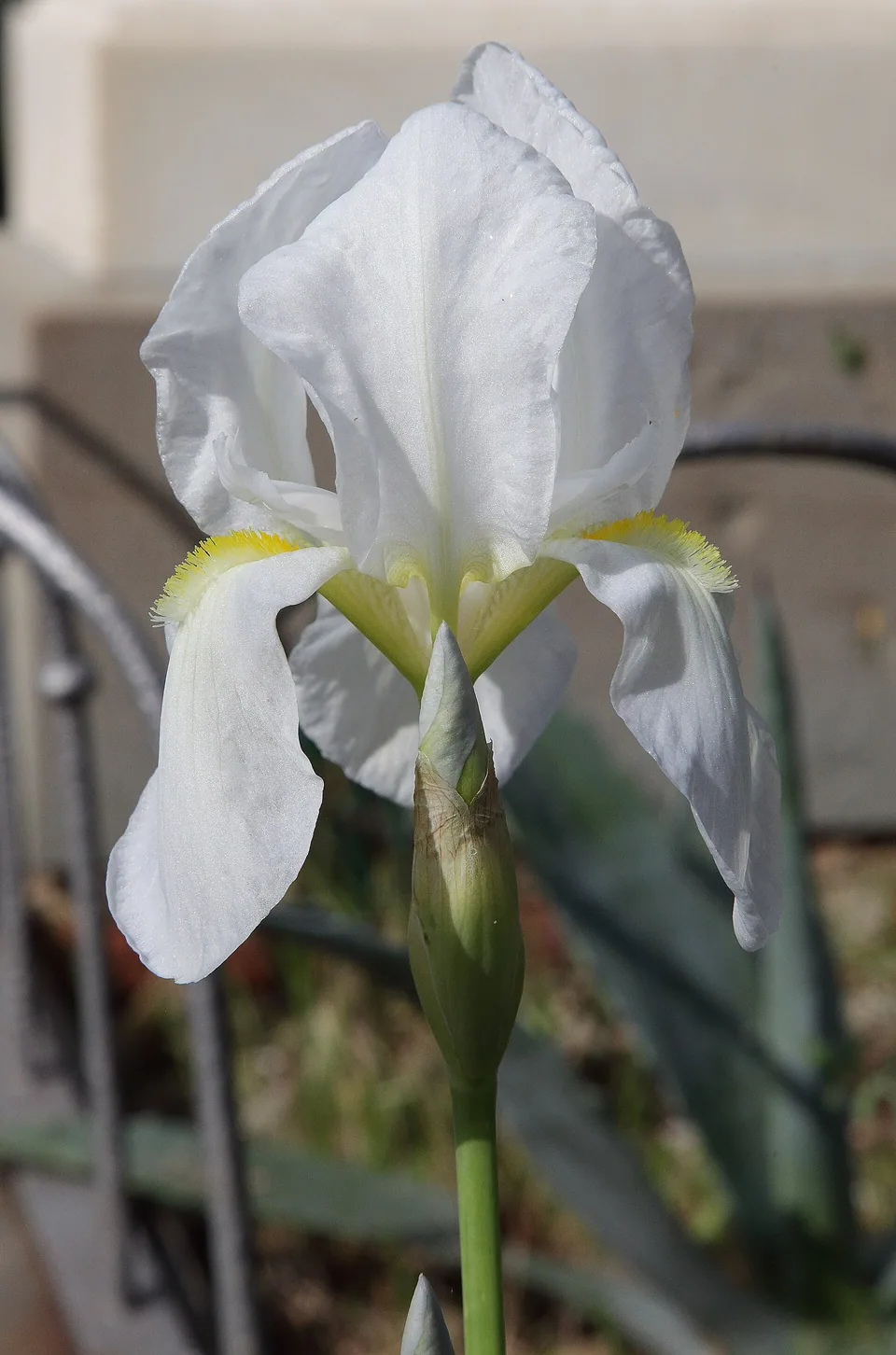
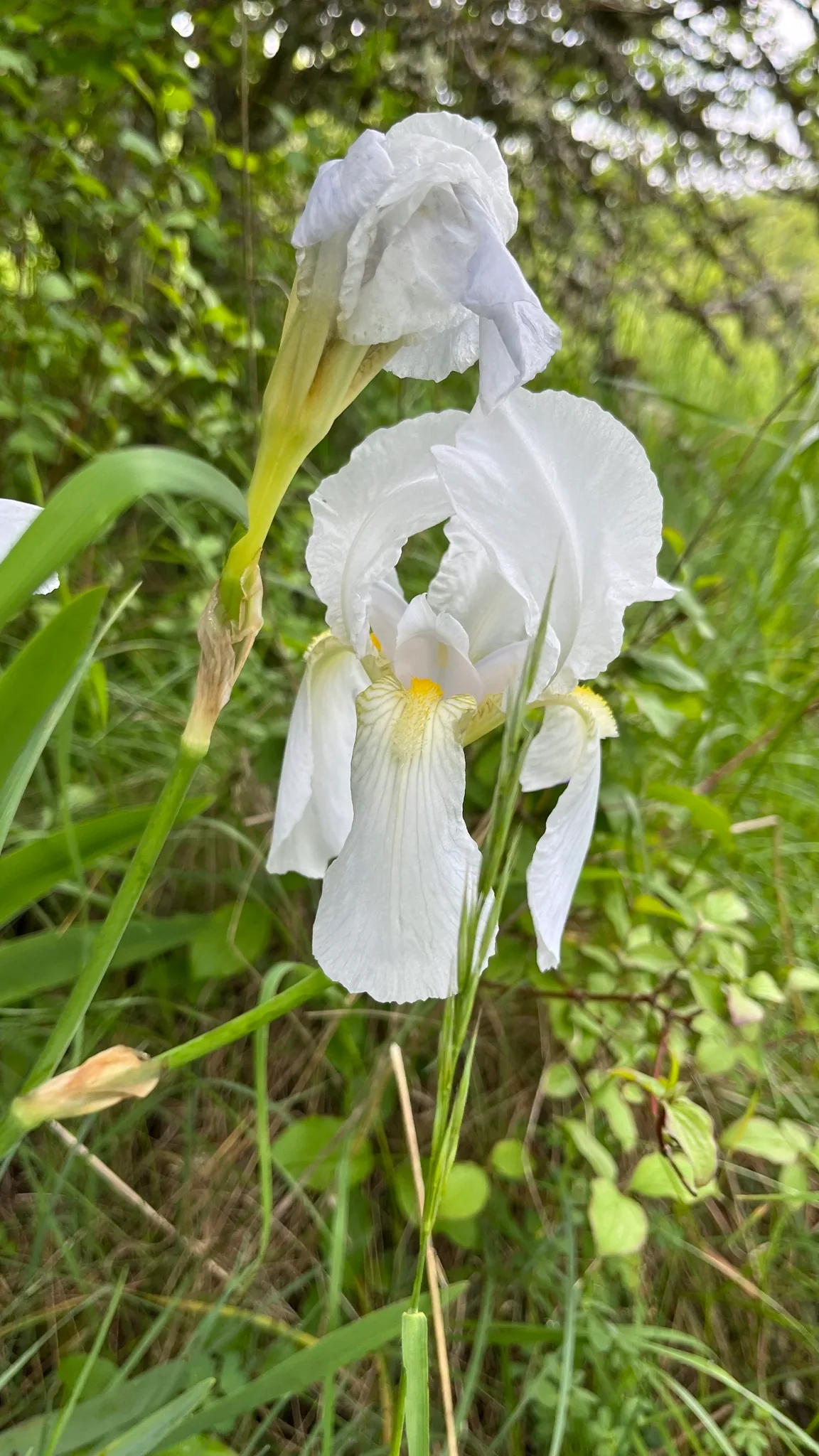
Iris florentina is a perennial herb cultivated as an ornamental and for its rhizomes (orris root), used in perfumery. [2][3] It is listed as hardy in USDA zones 3-9 and easy to grow when the rhizomes sit atop well-drained soil. [3] The white iris, Iris florentina, is the emblem of Florence and grew spontaneously along the Arno valley and city walls. [1]
This record is incomplete: the sources we read do not cover every field yet.
Not yet covered by our sources: Watering, Light, Pruning, Propagation
Iris florentina care
How to water Iris florentina
Watering
Not stated in the sources we read.
Watering notes
Rhizomes should sit atop well-drained soil
What the sources say (1)
It is easy to grow provided that the rhizomes reside atop soil that is well drained.How much light Iris florentina needs
Not stated in the sources we read.
How much cold Iris florentina can take
Hardiness, coldest zone
3 [winter low −40 to −34.4 °C (−40 to −30 °F)]
What the sources say (1)
Florentine iris (Iris florentina) is a perennial herb. It is hardy in USDA zones 3-9.Hardiness, warmest zone
9 [winter low −6.7 to −1.1 °C (20 to 30 °F)]
What the sources say (1)
Florentine iris (Iris florentina) is a perennial herb. It is hardy in USDA zones 3-9.How to propagate Iris florentina
Not stated in the sources we read.
How to grow Iris florentina
The plant
Family
Iridaceae
What the sources say (1)
Family
Iridaceae (
1IRIF )
Subfamily
Iridoideae (
1IRIS )
Genus
Iris (
1IRIG )
Species
Iris florentinaFertilizing
When
Immediately after bloom, worked into the soil at the plant bases; on poor soil, also when preparing the bed
What the sources say (2)
If you use fertilizer, apply it immediately after plants bloom. Work it into the soil around plant bases. Use about ½ cup of 5-10-5 fertilizer for 6 small plants or about 1 cup for a large iris clump.Use commercial fertilizer to enrich poor soil in the iris bed; use organic matter to improve soil structure and productivity.Mineral fertilizers
5-10-5 after bloom: 118 mL for 6 small plants or 237 mL for a large clump
What the sources say (1)
If you use fertilizer, apply it immediately after plants bloom. Work it into the soil around plant bases. Use about ½ cup of 5-10-5 fertilizer for 6 small plants or about 1 cup for a large iris clump.Avoid
Fertilizer lumps touching the roots: mix it thoroughly into the soil
What the sources say (1)
Thoroughly mix fertilizer into the soil so that lumps of it do not touch iris roots.Remedies
The sources we checked give no remedies for this plant.
Calendar
Pruning
Not stated in the sources we read.
Months as given by the sources, which are mostly from the United States (northern hemisphere). In the southern hemisphere they shift by about six months.
Edibility
Reported by the source, quoted verbatim. Do not eat a plant on the basis of this page alone: identification mistakes can be dangerous.
Similar plants
- Algerian Iris Iris unguicularis
- Blackberry Lily Iris domestica
- Blood Iris Iris sanguinea
- Blue Iris Iris spuria
- Dixie Iris Iris hexagona
- Dwarf Iris Iris reticulata
- English Iris Iris latifolia
- Fringed Iris Iris japonica
Sources
Every value above is quoted from these documents. Links lead to the original publisher.
- n. s. Volume LVIII ANNALI DI BOTANICA 2000 · rosa.uniroma1.it, consulted
- Iris florentina (IRIFL)[Overview]| EPPO Global Database · gd.eppo.int, consulted
- Florentine Iris - St. Louis Herb Society · stlouisherbsociety.org, consulted
- HortFlora · hortflora.rbg.vic.gov.au, consulted
- extension.usu.edu · extension.usu.edu
Written by Emilio Marruso · last checked