
How to Grow and Care for Stinking iris
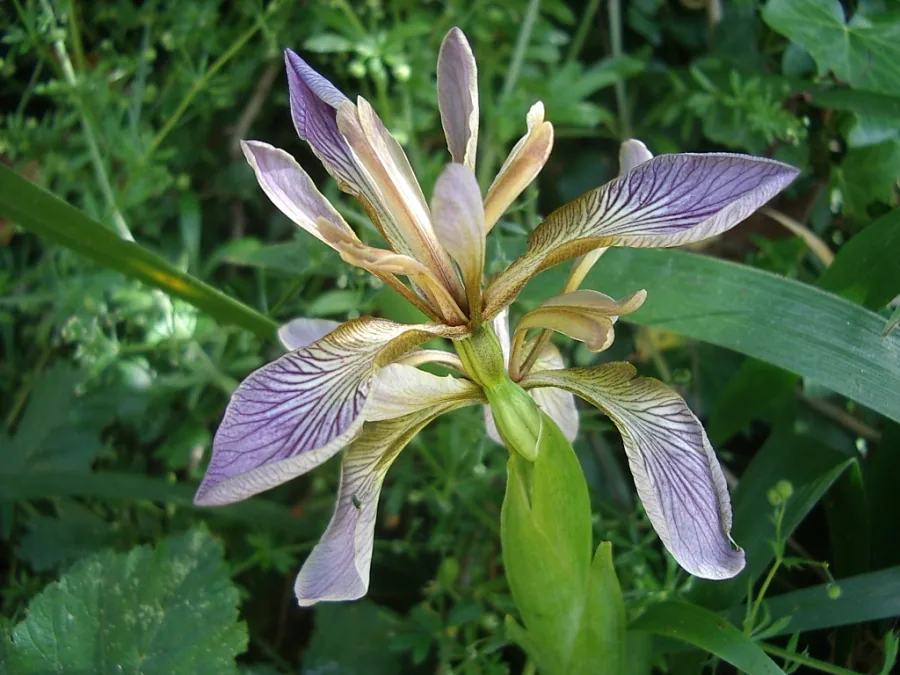
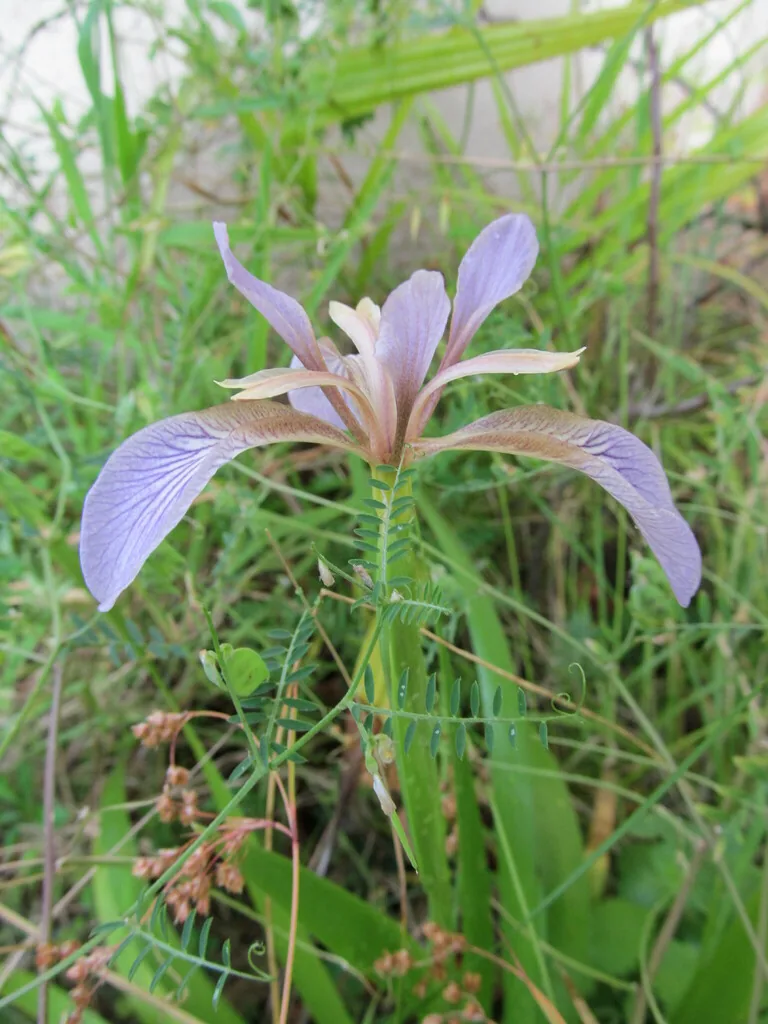
Iris foetidissima
Written by Emilio Marruso · last checked
Toxic to: Livestock, People · Why
At a glance
This tough perennial iris grows almost anywhere: in full sun, partial shade or even full shade. It prefers moist soil but also succeeds in dry soils, and once established it handles drought. Plant it from May to November, 2 ft apart, and it makes an easy ground cover that only asks you to remove faded leaves in autumn.
- Sun
Full sun to full shade: it grows in any light
- Water
Likes moist soil but handles dry soil; drought tolerant once established
What the sources say (1)
Watering: Prefers moist soil but succeeds in dry soils; drought tolerant once established
succeeds in dry soils and, once established, is drought tolerant
— Iris foetidissima - Useful Temperate Plants [1] - Soil
Moist but well-drained soil
What the sources say (1)
Watering notes: Grow in moist but well-drained soil
Grow Iris foetidissima in moist but well-drained soil in sun or shade.
— Iris foetidissima | BBC Gardeners World Magazine [3] - Spacing
2 ft apart each way for ground cover
What the sources say (1)
Spacing: 60 cm (about 60cm [24 in] apart each way, for ground cover)
Plants should be spaced about 60cm apart each way
— Iris foetidissima - Useful Temperate Plants [1] - Planting
Plant from May to November
What the sources say (1)
Planting: May to November
Plant | | | | | yes | yes | yes | yes | yes | yes | yes
— Iris foetidissima | BBC Gardeners World Magazine [3] - Feeding
Feed right after bloom, mixed well into the soil so no lumps touch the roots
What the sources say (3)
When: Immediately after bloom, worked into the soil at the plant bases; on poor soil, also when preparing the bed
If you use fertilizer, apply it immediately after plants bloom. Work it into the soil around plant bases. Use about ½ cup of 5-10-5 fertilizer for 6 small plants or about 1 cup for a large iris clump.
— [5] Use commercial fertilizer to enrich poor soil in the iris bed; use organic matter to improve soil structure and productivity.
— [5] Avoid: Fertilizer lumps touching the roots: mix it thoroughly into the soil
Thoroughly mix fertilizer into the soil so that lumps of it do not touch iris roots.
— [5] - Pruning
In autumn, remove the faded leaves
What the sources say (1)
Pruning: Autumn (remove faded foliage)
Remove faded foliage in autumn.
— Iris foetidissima | BBC Gardeners World Magazine [3] - Propagation
By seed or by dividing the clump in July, after flowering
- Sowing
Sow stored seed as early in the year as possible, in a cold frame
What the sources say (1)
Sowing: As early in the year as possible (stored seed, in a cold frame)
Stored seed should be sown as early in the year as possible in a cold frame
— Iris foetidissima - Useful Temperate Plants [1] - Safety
Can irritate the skin of some people; the roots are toxic to grazing animals
Overview
Stinking iris is an evergreen perennial suited to shady spots, with orange-red seeds that persist into winter. [3] It succeeds in most positions in sun or partial shade and tolerates dry soil once established. [1]
This record is incomplete: the sources we read do not cover every field yet.
Not yet covered by our sources: Hardiness, coldest zone, Hardiness, warmest zone
Stinking iris care
Measurements in square brackets are our conversion into the other unit system; the quoted text is unchanged.
How to water Stinking iris
Watering
Prefers moist soil but succeeds in dry soils; drought tolerant once established
What the sources say (1)
succeeds in dry soils and, once established, is drought tolerantWatering notes
Grow in moist but well-drained soil
What the sources say (1)
Grow Iris foetidissima in moist but well-drained soil in sun or shade.How much light Stinking iris needs
How much cold Stinking iris can take
Hardiness, coldest zone
Not stated in the sources we read.
Hardiness, warmest zone
Not stated in the sources we read.
Where to grow Stinking iris
60 cm (about 60cm [24 in] apart each way, for ground cover)
What the sources say (1)
Plants should be spaced about 60cm apart each wayHow to propagate Stinking iris
How to grow Stinking iris
The plant
Life cycle
perennial
What the sources say (1)
Life form Perennial hemicryptophyte ## Habitats ## Habitats © Delarze & al. 2015Family
Iridaceae
What the sources say (1)
Family Iridaceae View Family Tree opens in a new tabFertilizing
When
Immediately after bloom, worked into the soil at the plant bases; on poor soil, also when preparing the bed
What the sources say (2)
If you use fertilizer, apply it immediately after plants bloom. Work it into the soil around plant bases. Use about ½ cup of 5-10-5 fertilizer for 6 small plants or about 1 cup for a large iris clump.Use commercial fertilizer to enrich poor soil in the iris bed; use organic matter to improve soil structure and productivity.Mineral fertilizers
5-10-5 after bloom: 118 mL for 6 small plants or 237 mL for a large clump
What the sources say (1)
If you use fertilizer, apply it immediately after plants bloom. Work it into the soil around plant bases. Use about ½ cup of 5-10-5 fertilizer for 6 small plants or about 1 cup for a large iris clump.Avoid
Fertilizer lumps touching the roots: mix it thoroughly into the soil
What the sources say (1)
Thoroughly mix fertilizer into the soil so that lumps of it do not touch iris roots.Remedies
Each remedy shows what official sources say about it; traditional remedies without an official source are marked as such. Harmful ones are listed so you know to avoid them.
First aid
First aid: not a substitute for a doctor
skin contact with sap
swallowed plant parts
removing plant pieces from the mouth and sipping water or milk Official source, not independently tested
Give them a few sips of water or milk. - Call the poison center at 1-800-222-1222.
— nnepc.org [6] How: take all pieces of the plant out of the mouth and give a few sips of water or milk
Take all pieces of the plant out of the person’s mouth. - Give them a few sips of water or milk.
— nnepc.org [6]
Treating the plant
slugs
hand collecting Not verified
Traditional remedy, not verified by an official source.
How: collecting them by hand in the mornings and evenings
beer trap Official source, not independently tested
How: a bowl of beer sunk into the ground, with a roof to protect it from sun and keep large animals out
A bowl of beer, sunk into the ground, with a roof to protect from sun and keep large animals out, will act as a bait and the slugs will drown.
— portal.ct.gov [7]
aphids
squashing by hand Not verified
Traditional remedy, not verified by an official source.
How: running a finger and thumb up the fan, squeezing at the same time
insecticidal soap spray Official source, not independently tested
How: spray when aphids are abundant
If they are abundant, a spray of malathion or insecticidal soap, which are among the compounds registered for control of this pest in Connecticut, will kill them.
— portal.ct.gov [7]
iris borer
crushing the caterpillar and removing the damaged leaf Official source, not independently tested
How: check iris in spring for chewing damage and water-soaked streaks on leaves
If you find damage early in the season, you can crush the insect while it is inside the leaf or remove the damaged leaf.
— extension.umn.edu [8] autumn clean-up of old leaves and debris Works
How: remove and destroy old iris leaves, stems and nearby plant debris, anytime after a hard frost
Remove and destroy (e.g. burning or burying) old iris leaves, stems and any nearby plant debris.
— extension.umn.edu [8] What the evidence says Remove and destroy (e.g. burning or burying) old iris leaves, stems and any nearby plant debris. - This will remove and kill eggs, and reduce the risk of iris borers next year.
— extension.umn.edu [8] beneficial nematodes Partly works
How: apply during a rain shower or water iris before and after; apply when leaves are almost fully expanded but before flowering
They are microscopic worms that look for and kill the caterpillars by introducing a bacteria.
— extension.umn.edu [8] What the evidence says Beneficial nematodes (roundworms) are a natural option to help control some borers.
— extension.umn.edu [8]
leaf spot
removing leaf debris at the end of the year Official source, not independently tested
How: remove and dispose of all leaf debris at the end of the year
Remove and dispose of all leaf debris at the end of the year. This is particularly important where iris leaf spot is a problem
— rhs.org.uk [9]
soft rot
cutting away the rotted part of the rhizome Official source, not independently tested
How: cut with a clean, sharp knife disinfected regularly, then let the cut surfaces dry before replanting
Where only a small part of the rhizome is affected by bacterial decay, this can be cut away using a clean, sharp knife that is disinfected regularly. Allow the cut surfaces to dry before replanting
— rhs.org.uk [9]
Is Stinking iris toxic to pets?
Reported by the source, quoted verbatim. This is not medical or veterinary advice: if a person or an animal may have eaten this plant, contact a poison control centre or a veterinarian.
Animals
The roots of this plant are toxic to grazing mammals
[1]- Poisonous parts
The roots of this plant are toxic to grazing mammals
[1]
People
Plants can cause skin irritations and allergies in some people
[1]
Calendar
As early in the year as possible (stored seed, in a cold frame)
What the sources say (1)
Stored seed should be sown as early in the year as possible in a cold frameMay to November
What the sources say (1)
Plant | | | | | yes | yes | yes | yes | yes | yes | yesAutumn (remove faded foliage)
What the sources say (1)
Remove faded foliage in autumn.Months as given by the sources, which are mostly from the United States (northern hemisphere). In the southern hemisphere they shift by about six months.
Indicative values
Values from a secondary source, not checked word for word like the rest of this page. Use them as a starting point.
- Mature height
- 30.5-61 cm (1-2 ft)Indicative value, adapt it to your climate · Secondary source
- Drought tolerant
- yesIndicative value, adapt it to your climate · Secondary source
- Soil pH
- 6-7.5Indicative value, adapt it to your climate · Secondary source
- USDA hardiness zones
- 6-9 [winter low −23.3 to −1.1 °C (−10 to 30 °F)]Indicative value, adapt it to your climate · Secondary source
- Care level
- MediumIndicative value, adapt it to your climate · Secondary source
- Growth rate
- LowIndicative value, adapt it to your climate · Secondary source
Similar plants
- Algerian Iris Iris unguicularis
- Blackberry Lily Iris domestica
- Blood Iris Iris sanguinea
- Blue Iris Iris spuria
- Dixie Iris Iris hexagona
- Dwarf Iris Iris reticulata
- English Iris Iris latifolia
- Fringed Iris Iris japonica
Sources
Every value above is quoted from these documents. Links lead to the original publisher.
- Iris foetidissima - Useful Temperate Plants · temperate.theferns.info, consulted
- Iris foetidissima L. · infoflora.ch, consulted
- Iris foetidissima | BBC Gardeners World Magazine · develop.gardenersworld.com, consulted
- Iris foetidissima L. | Plants of the World Online | Kew Science · powo.science.kew.org, consulted
- extension.usu.edu · extension.usu.edu
- nnepc.org · nnepc.org
- portal.ct.gov · portal.ct.gov
- extension.umn.edu · extension.umn.edu
- rhs.org.uk · rhs.org.uk
Written by Emilio Marruso · last checked