
How to Grow and Care for Copper iris
Iris fulva
Written by Emilio Marruso · last checked
Toxic to: Cats, Dogs, Horses, People · Why
At a glance
Iris fulva is a perfect match for the wettest corner of your garden: it loves soil that stays moist to wet and can even grow in shallow water. Give it full sun or partial shade and never let it dry out. When the clump grows, simply divide it to get new plants for other damp spots.
- Sun
Full sun to partial shade
What the sources say (3)
Light: Full sun to partial shade
Water Use: Medium , High Light Requirement: Sun , Part Shade Soil Moisture: Moist , Wet
— Lady Bird Johnson Wildflower Center - The University of Texas at Austin [2] Light : Full Sun to Partial Shade - Moisture : Medium to Wet
— Louisiana iris - Fine Gardening [5] It grows well in sun and partial shade with a low tolerance for drought.
— MDWFP - Copper Iris [4] - Water
Keep the soil moist to wet and never let it dry out; it can even grow in shallow water
What the sources say (5)
Watering: Keep soil moist to wet; high water use
Water Use: Medium , High Light Requirement: Sun , Part Shade Soil Moisture: Moist , Wet
— Lady Bird Johnson Wildflower Center - The University of Texas at Austin [2] Care Prefers very moist soil, even water gardens, ponds, streams, or bogs, but can be grown in average garden soil.
— Louisiana iris - Fine Gardening [5] Watering notes: Low drought tolerance; can grow in shallow water
Soil pH: Alkaline (pH>7.2) , Acidic (pH CaCO3 Tolerance: High Drought Tolerance: Low
— Lady Bird Johnson Wildflower Center - The University of Texas at Austin [2] It grows well in sun and partial shade with a low tolerance for drought.
— MDWFP - Copper Iris [4] I. fulva can grow in shallow water or in rich soil and deserves to be cultivated much more.
— Iris fulva page [6] - Cold
Survives winters down to −30 °F (−34.4 °C)
Very hardy · USDA 4 · RHS H7 · Z4
What the sources say (2)
Hardiness, coldest zone: 4 [winter low −34.4 to −28.9 °C (−30 to −20 °F)]
Zones : 4, 5, 6, 7, 8, 9 - Characteristics : Attracts Hummingbirds
— Louisiana iris - Fine Gardening [5] Hardiness, warmest zone: 9 [winter low −6.7 to −1.1 °C (20 to 30 °F)]
Zones : 4, 5, 6, 7, 8, 9 - Characteristics : Attracts Hummingbirds
— Louisiana iris - Fine Gardening [5] - Propagation
Divide the clumps or grow it from seed
What the sources say (2)
Propagation: Clump (root) division, seed
Propagation Material: Root Division , Seeds Description: Clump division is the usual method of increase. All native iris can be grown from seed.
— Lady Bird Johnson Wildflower Center - The University of Texas at Austin [2] These irises can be reproduced by seeds or by root division. Root clump division is the most common way to increase the number of irises in a garden.
— MDWFP - Copper Iris [4] - Safety
Mildly toxic if eaten, also for cats, dogs and horses; seeds, roots and sap can irritate skin
Overview
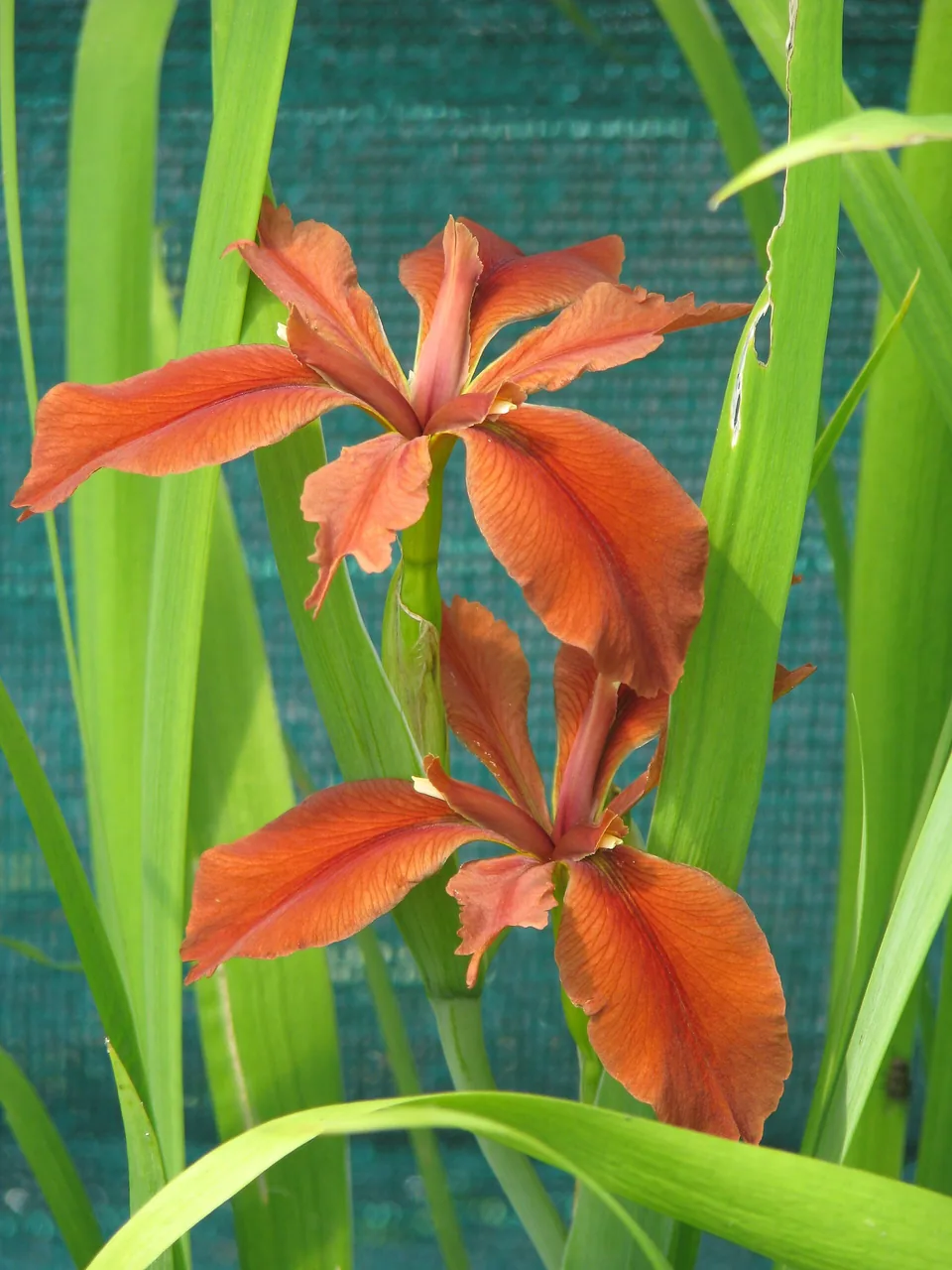
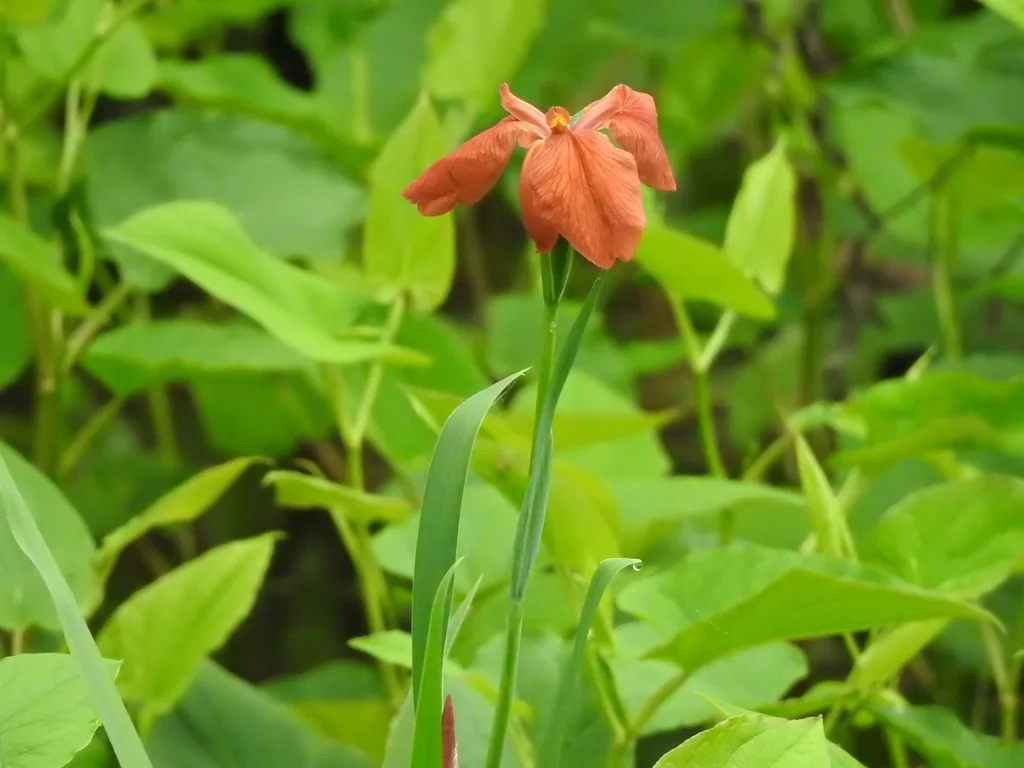
Iris fulva is a rhizomatous native iris of the south-central United States with copper-red to brick-red, sometimes yellow, flowers. [1] It grows in swamps, wet meadows and pond margins, and in gardens it wants rich, moist to wet soil in sun or part shade. [1][3] It spreads by rhizomes and is usually increased by dividing the clumps. [2]
This record is incomplete: the sources we read do not cover every field yet.
Not yet covered by our sources: Pruning
Copper iris care
How to water Copper iris
Watering
Keep soil moist to wet; high water use
What the sources say (2)
Water Use: Medium , High
Light Requirement: Sun , Part Shade
Soil Moisture: Moist , WetCare Prefers very moist soil, even water gardens, ponds, streams, or bogs, but can be grown in average garden soil.Watering notes
Low drought tolerance; can grow in shallow water
What the sources say (3)
Soil pH: Alkaline (pH>7.2) , Acidic (pH CaCO3 Tolerance: High
Drought Tolerance: LowIt grows well in sun and partial shade with a low tolerance for drought.I. fulva can grow in shallow water or in rich soil and deserves to be cultivated much more.How much light Copper iris needs
Full sun to partial shade
What the sources say (3)
Water Use: Medium , High
Light Requirement: Sun , Part Shade
Soil Moisture: Moist , WetLight :
Full Sun to Partial Shade
-
Moisture :
Medium to WetIt grows well in sun and partial shade with a low tolerance for drought.How much cold Copper iris can take
Hardiness, coldest zone
4 [winter low −34.4 to −28.9 °C (−30 to −20 °F)]
What the sources say (1)
Zones :
4, 5, 6, 7, 8, 9
-
Characteristics :
Attracts HummingbirdsHardiness, warmest zone
9 [winter low −6.7 to −1.1 °C (20 to 30 °F)]
What the sources say (1)
Zones :
4, 5, 6, 7, 8, 9
-
Characteristics :
Attracts HummingbirdsHow to propagate Copper iris
Clump (root) division, seed
What the sources say (2)
Propagation Material: Root Division , Seeds
Description: Clump division is the usual method of increase. All native iris can be grown from seed.These irises can be reproduced by seeds or by root division. Root clump division is the most common way to increase the number of irises in a garden.Remedies
The sources we checked give no remedies for this plant.
Is Copper iris toxic to pets?
Reported by the source, quoted verbatim. This is not medical or veterinary advice: if a person or an animal may have eaten this plant, contact a poison control centre or a veterinarian.
Animals
Problems: Contact Dermatitis Poisonous to Humans Problem for Cats Problem for Dogs Problem for Horses
[8]Genus-level warning: refers to the whole genus, not documented for this species
- Severity
This plant has low severity poison characteristics.
[8]
People
Poisonous to Humans: Poison Severity: Low Poison Symptoms: CAUSES ONLY LOW TOXICITY IF EATEN. SKIN IRRITATION MINOR, OR LASTING ONLY FOR A FEW MINUTES. Nausea, salivation, vomiting, abdominal pain, lethargy, diarrhea, elevated temperature following ingestion; skin irritation upon contact with seeds, rootstock, or cell sap.
[8]Genus-level warning: refers to the whole genus, not documented for this species
Calendar
Pruning
Not stated in the sources we read.
Months as given by the sources, which are mostly from the United States (northern hemisphere). In the southern hemisphere they shift by about six months.
Indicative values
Values from a secondary source, not checked word for word like the rest of this page. Use them as a starting point.
- Life cycle
- Herbaceous PerennialIndicative value, adapt it to your climate · Secondary source
- Mature height
- 61-91.4 cm (2-3 ft)Indicative value, adapt it to your climate · Secondary source
- Soil pH
- 6-7Indicative value, adapt it to your climate · Secondary source
- Care level
- MediumIndicative value, adapt it to your climate · Secondary source
- Growth rate
- LowIndicative value, adapt it to your climate · Secondary source
- Pruning
- March, April, May, MayIndicative value, adapt it to your climate · Secondary source
Similar plants
- Algerian Iris Iris unguicularis
- Blackberry Lily Iris domestica
- Blood Iris Iris sanguinea
- Blue Iris Iris spuria
- Dixie Iris Iris hexagona
- Dwarf Iris Iris reticulata
- Dwarf Iris Iris verna
- English Iris Iris latifolia
Sources
Every value above is quoted from these documents. Links lead to the original publisher.
- Louisiana Irises - Iris fulva · fs.usda.gov, consulted
- Lady Bird Johnson Wildflower Center - The University of Texas at Austin · wildflower.org, consulted
- Copper Iris | Missouri Department of Conservation · mdc.mo.gov, consulted
- MDWFP - Copper Iris · mdwfp.com, consulted
- Louisiana iris - Fine Gardening · finegardening.com, consulted
- Iris fulva page · missouriplants.com, consulted
- Copper Iris (Iris fulva) - bplant.org · bplant.org, consulted
- Iris (Flag, Iris, Snake Lily, Water Flag) | North Carolina Extension Gardener Plant Toolbox · plants.ces.ncsu.edu, consulted
Written by Emilio Marruso · last checked