
How to Grow and Care for Missouri flag
Iris missouriensis
Written by Emilio Marruso · last checked
Toxic to: Cattle, People · Why
At a glance
This perennial iris is easy to share and enjoy: it grows in full sun to partial shade and likes wet soil in spring, as long as water never sits around it. Divide the rhizomes after flowering, or sow fresh seed in mid-August, when the pods begin to split. Even the seed has a use: roasted, it makes a coffee substitute.
- Sun
Full sun to partial shade; in hot summers, give it some afternoon shade
What the sources say (4)
Light: Full sun to partial shade
mild summer climates: In mild summer climates, Iris missouriensis performs best in medium to wet, well-drained soils in full sun.
— Plant Propagation Protocol for Iris missouriensis [2] hot summer climates: In hot summer climates, Iris missouriensis appreciates some afternoon shade.
— Plant Propagation Protocol for Iris missouriensis [2] Light : Full Sun to Partial Shade - Moisture : Medium to Wet
— Rocky Mountain iris - Fine Gardening [3] In mild summer climates, Iris missouriensis performs best in medium to wet, well-drained soils in full sun. In hot summer climates, Iris missouriensis appreciates some afternoon shade.
— Plant Propagation Protocol for Iris missouriensis [2] - Water
Keep the soil wet in spring, but never let water stand
What the sources say (1)
Watering notes: Soil should be wet in spring; intolerant of stagnant water
Requires a moist soil, growing well in a moist border, but intolerant of stagnant water [1] . Easily grown in a sunny position so long as the soil is wet in the spring [5] .
— Rocky Mountain Iris (Iris missouriensis) — Practical Plants [5] - Cold
Survives winters down to −40 °F (−40 °C)
Very hardy · USDA 3 · RHS H7 · Z3
What the sources say (2)
Hardiness, coldest zone: 3 [winter low −40 to −34.4 °C (−40 to −30 °F)]
Plant Height : 1 to 3 feet - Zones : 3, 4, 5, 6, 7, 8
— Rocky Mountain iris - Fine Gardening [3] Hardiness, warmest zone: 8 [winter low −12.2 to −6.7 °C (10 to 20 °F)]
Plant Height : 1 to 3 feet - Zones : 3, 4, 5, 6, 7, 8
— Rocky Mountain iris - Fine Gardening [3] - Harvest
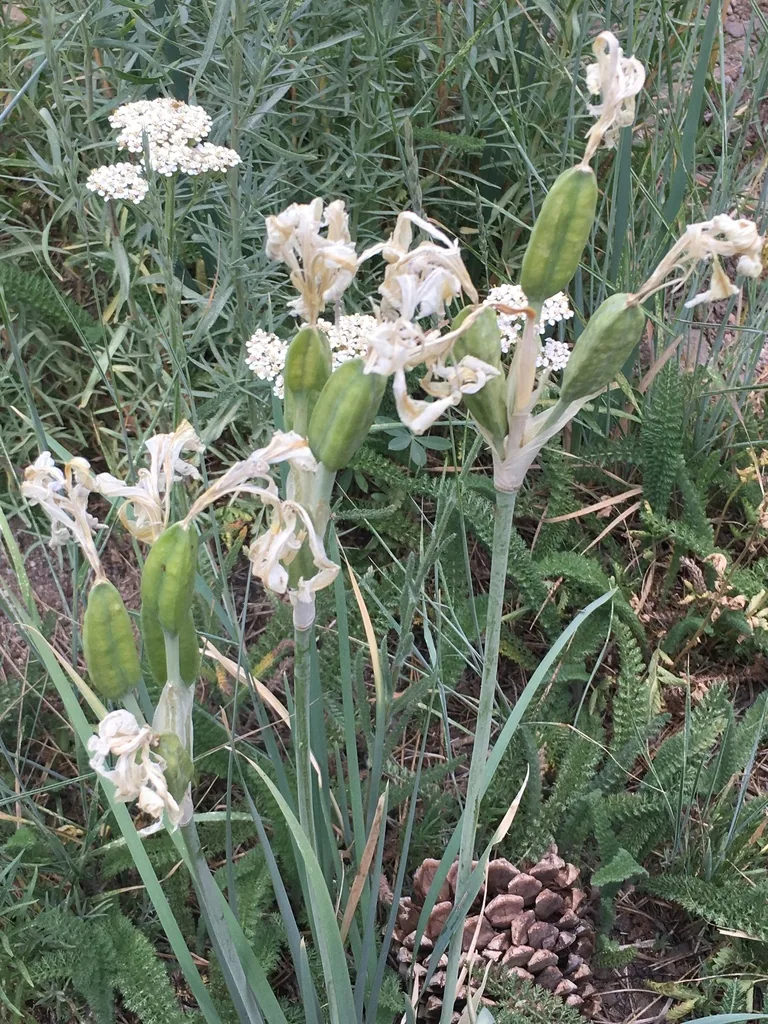
Collect seed early to mid August, as the pods split; roasted, it's a coffee substitute
What the sources say (1)
Harvest: Seed collected early to mid August when capsules begin to split
Seed is collected when the capsules begin to split in early to mid August and should be cleaned and planted immediately.
— Plant Propagation Protocol for Iris missouriensis [2] - Pests
Iris borers, weevils, thrips, aphids, whiteflies, slugs and snails
- Propagation
Divide the rhizomes after flowering, in spring or in early fall
What the sources say (5)
Propagation: Seed; division of rhizomes
According to Practical Plants (PFAF notes), division: Division, best done after flowering. Another report says that it is best done in spring or early autumn [5] .
— Rocky Mountain Iris (Iris missouriensis) — Practical Plants [5] According to Fine Gardening, division: Propagation Lift and divide clumps, or separate bulb offsets, and plant immediately, in early autumn.
— Rocky Mountain iris - Fine Gardening [3] Seed - best sown as soon as it is ripe in a cold frame.
— Rocky Mountain Iris (Iris missouriensis) — Practical Plants [5] Plants may be propagated by division of the thick rhizome.9 This method should only be used for plants growing in cultivation.
— Plant Propagation Protocol for Iris missouriensis [2] Propagation Lift and divide clumps, or separate bulb offsets, and plant immediately, in early autumn.
— Rocky Mountain iris - Fine Gardening [3] - Sowing
Sow fresh seed as soon as it's ripe, in mid-August; stored seed as early in the year as possible
What the sources say (5)
Sowing: As soon as seed is ripe (fresh seed, mid-August)
According to Practical Plants (PFAF notes), fresh seed in a cold frame: Seed - best sown as soon as it is ripe in a cold frame.
— Rocky Mountain Iris (Iris missouriensis) — Practical Plants [5] According to Practical Plants (PFAF notes), stored seed: Stored seed should be sown as early in the year as possible in a cold frame.
— Rocky Mountain Iris (Iris missouriensis) — Practical Plants [5] nursery container production, Pullman, WA: In mid-August fresh seed is sown in 10 cu. in. Ray Leach Super cell conetainers filled with Sunshine #4 and covered lightly.
— Plant Propagation Protocol for Iris missouriensis [2] Seed - best sown as soon as it is ripe in a cold frame. Stored seed should be sown as early in the year as possible in a cold frame.
— Rocky Mountain Iris (Iris missouriensis) — Practical Plants [5] In mid-August fresh seed is sown in 10 cu. in. Ray Leach Super cell conetainers filled with Sunshine #4 and covered lightly.
— Plant Propagation Protocol for Iris missouriensis [2] - Safety
Can irritate the skin of some people; it may be toxic to cattle
Overview
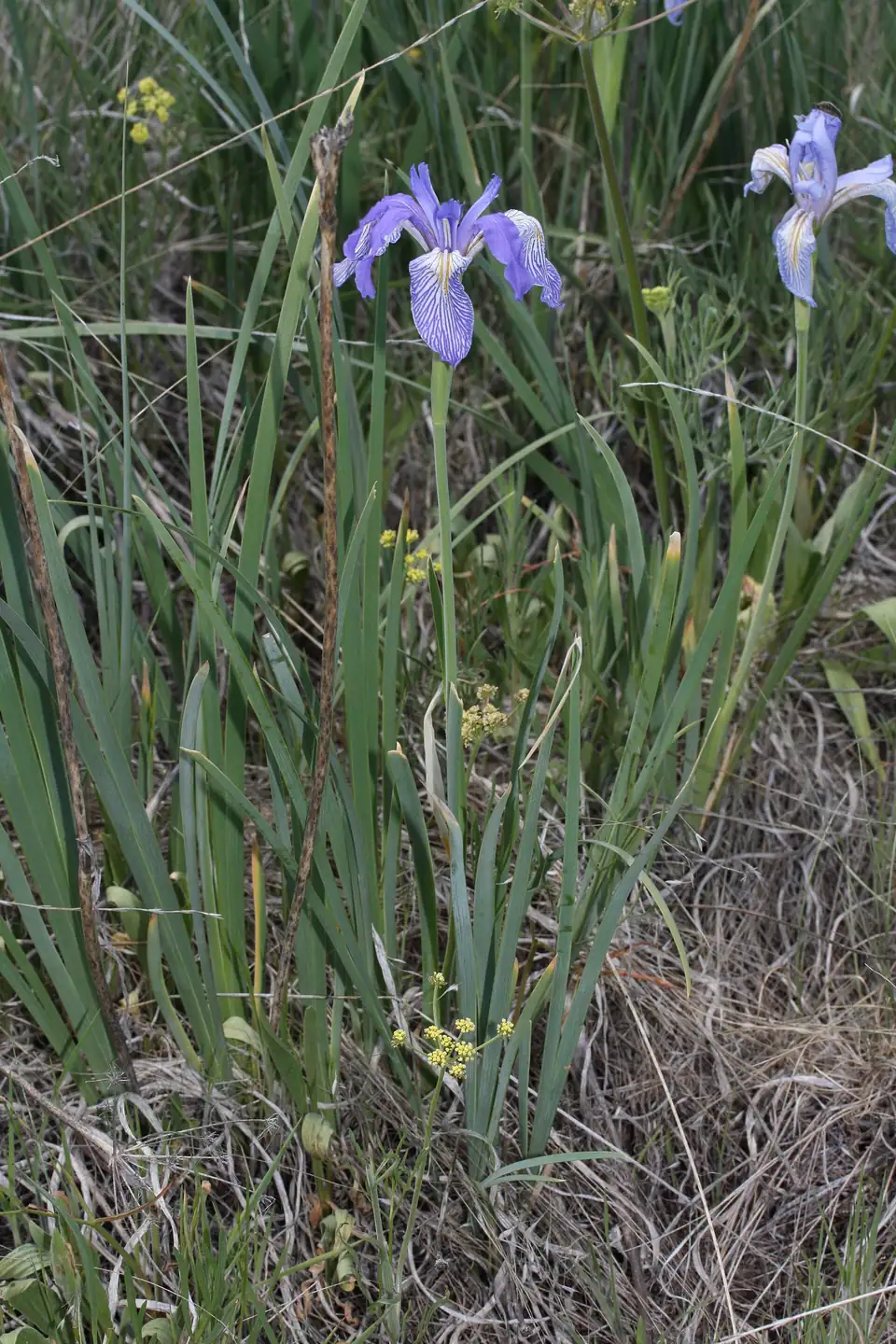
Rocky Mountain iris is a rhizomatous perennial of wet meadows, streambanks and seeps in western North America. [1] It bears pale blue to violet flowers streaked with white, up to 4 inches [10 cm] wide, from May onward. [1] It is propagated from fresh seed or by dividing the rhizomes, and it can be toxic to cattle. [5][2]
This record is incomplete: the sources we read do not cover every field yet.
Not yet covered by our sources: Pruning
Missouri flag care
Measurements in square brackets are our conversion into the other unit system; the quoted text is unchanged.
How to water Missouri flag
Watering
The sources give different values depending on region, zone or growing conditions.
What each source says
According to University of Washington ESRM 412 protocol: Moisture in spring only; tolerates most droughts
According to Practical Plants (PFAF notes): High; drought intolerant
According to Fine Gardening: Medium to wet
What the sources say (3)
According to University of Washington ESRM 412 protocol: In terms of moisture, Iris missouriensis only needs moisture in spring and will tolerate most droughts.According to Practical Plants (PFAF notes): Water
high
Soil textures
sandy, loamy
Soil pH
acid, neutral, alkaline
Tolerates Nutritionally Poor Soil
No
Drought
intolerantAccording to Fine Gardening: Light :
Full Sun to Partial Shade
-
Moisture :
Medium to WetWatering notes
Soil should be wet in spring; intolerant of stagnant water
What the sources say (1)
Requires a moist soil, growing well in a moist border, but intolerant of stagnant water [1] . Easily grown in a sunny position so long as the soil is wet in the spring [5] .How much light Missouri flag needs
Full sun to partial shade
What each source says
mild summer climates: Full sun
hot summer climates: Some afternoon shade
What the sources say (4)
mild summer climates: In mild summer climates, Iris missouriensis performs best in medium to wet, well-drained soils in full sun.hot summer climates: In hot summer climates, Iris missouriensis appreciates some afternoon shade.Light :
Full Sun to Partial Shade
-
Moisture :
Medium to WetIn mild summer climates, Iris missouriensis performs best in medium to wet, well-drained soils in full sun. In hot summer climates, Iris missouriensis appreciates some afternoon shade.How much cold Missouri flag can take
Hardiness, coldest zone
3 [winter low −40 to −34.4 °C (−40 to −30 °F)]
What the sources say (1)
Plant Height :
1 to 3 feet
-
Zones :
3, 4, 5, 6, 7, 8Hardiness, warmest zone
8 [winter low −12.2 to −6.7 °C (10 to 20 °F)]
What the sources say (1)
Plant Height :
1 to 3 feet
-
Zones :
3, 4, 5, 6, 7, 8How to propagate Missouri flag
Seed; division of rhizomes
What each source says
According to Practical Plants (PFAF notes), division: Division after flowering, or in spring or early autumn
According to Fine Gardening, division: Division in early autumn
What the sources say (5)
According to Practical Plants (PFAF notes), division: Division, best done after flowering. Another report says that it is best done in spring or early autumn [5] .According to Fine Gardening, division: Propagation Lift and divide clumps, or separate bulb offsets, and plant immediately, in early autumn.Seed - best sown as soon as it is ripe in a cold frame.Plants may be propagated by division of the thick rhizome.9 This method should only be used for plants growing in cultivation.Propagation Lift and divide clumps, or separate bulb offsets, and plant immediately, in early autumn.How to grow Missouri flag
The plant
Life cycle
perennial
What the sources say (2)
Plant type: Forb, Herb Growing Season: No information found Life Cycle: PerennialUpright perennial that grows in clumps with green sword-shaped leaves and large, showy, lilac-blue flowers with pale throats.Family
Iridaceae
What the sources say (1)
Scientific Family Iridaceae Synonyms Iris longipetala, Iris pariensis, Iris tolmieanaMissouri flag pests and problems
Insect pests and molluscs
Symptom: Iris borer, verbena bud moth, whiteflies, iris weevil, thrips, slugs and snails, aphids, nematodes
What the sources say (1)
Problems Iris borer, verbena bud moth, whiteflies, iris weevil, thrips, slugs and snails, aphids, and nematodes.
— Rocky Mountain iris - Fine Gardening [3] Seed predation
Symptom: Seeds eaten by insect larvae
What the sources say (1)
Other Comments Seed predation by insect larva has been observed.
— Plant Propagation Protocol for Iris missouriensis [2]
Remedies
Each remedy shows what official sources say about it; traditional remedies without an official source are marked as such. Harmful ones are listed so you know to avoid them.
First aid
First aid: not a substitute for a doctor
skin irritation
washing the skin with plenty of water Official source, not independently tested
Minor skin irritation when touched, low toxicity if ingested. Symptoms include nausea, vomiting, abdominal pain, diarrhea, elevated temperature following ingestion
— wildflower.org [7] How: Wash the area with a lot of water to remove any traces of the irritant still on the skin, and avoid further exposure.
Often, treatment includes washing the area with a lot of water to get rid of any traces of the irritant that are still on the skin. You should avoid further exposure to the substance.
— medlineplus.gov [6]
Is Missouri flag toxic to pets?
Reported by the source, quoted verbatim. This is not medical or veterinary advice: if a person or an animal may have eaten this plant, contact a poison control centre or a veterinarian.
Animals
May outcompete grasses and be toxic to cattle.
[2]The source flags the risk for this animal but does not explain why.
People
Calendar
As soon as seed is ripe (fresh seed, mid-August)
What each source says
According to Practical Plants (PFAF notes), fresh seed in a cold frame: As soon as ripe
According to Practical Plants (PFAF notes), stored seed: As early in the year as possible
nursery container production, Pullman, WA: Mid-August
What the sources say (5)
According to Practical Plants (PFAF notes), fresh seed in a cold frame: Seed - best sown as soon as it is ripe in a cold frame.According to Practical Plants (PFAF notes), stored seed: Stored seed should be sown as early in the year as possible in a cold frame.nursery container production, Pullman, WA: In mid-August fresh seed is sown in 10 cu. in. Ray Leach Super cell conetainers filled with Sunshine #4 and covered lightly.Seed - best sown as soon as it is ripe in a cold frame. Stored seed should be sown as early in the year as possible in a cold frame.In mid-August fresh seed is sown in 10 cu. in. Ray Leach Super cell conetainers filled with Sunshine #4 and covered lightly.The sources give different values depending on region, zone or growing conditions.
What each source says
According to Practical Plants (PFAF notes), seedlings: Late spring or early summer
sufficient soil moisture (outplanting): Late fall
very dry fall conditions (outplanting): Early spring
What the sources say (3)
According to Practical Plants (PFAF notes), seedlings: Plant out into their permanent positions in late spring or early summer.sufficient soil moisture (outplanting): If there is sufficient soil moisture, survival of transplants is higher with late fall plantings.very dry fall conditions (outplanting): Under very dry fall conditions, planting should be postponed until early spring.Seed collected early to mid August when capsules begin to split
What the sources say (1)
Seed is collected when the capsules begin to split in early to mid August and should be cleaned and planted immediately.Not stated in the sources we read.
Months as given by the sources, which are mostly from the United States (northern hemisphere). In the southern hemisphere they shift by about six months.
Edibility
Reported by the source, quoted verbatim. Do not eat a plant on the basis of this page alone: identification mistakes can be dangerous.
The roasted seed is a coffee substitute [3] [4] . Product or use Coffee substitute
[5]
Indicative values
Values from a secondary source, not checked word for word like the rest of this page. Use them as a starting point.
- Hours of sun
- 6-8 hoursIndicative value, adapt it to your climate · Secondary source
- Soil
- Sandy Loamy Clay RockyIndicative value, adapt it to your climate · Secondary source
- Soil pH
- 6-7Indicative value, adapt it to your climate · Secondary source
- Care level
- MediumIndicative value, adapt it to your climate · Secondary source
- Growth rate
- LowIndicative value, adapt it to your climate · Secondary source
- Pruning
- February, March, April, May, MayIndicative value, adapt it to your climate · Secondary source
Similar plants
- Algerian Iris Iris unguicularis
- Blackberry Lily Iris domestica
- Blood Iris Iris sanguinea
- Blue Iris Iris spuria
- Dixie Iris Iris hexagona
- Dwarf Iris Iris reticulata
- English Iris Iris latifolia
- Fringed Iris Iris japonica
Sources
Every value above is quoted from these documents. Links lead to the original publisher.
- Iris missouriensis - Rocky Mountain iris | Yavapai County Native and Naturalized Plants · yavapaiplants.extension.arizona.edu, consulted
- Plant Propagation Protocol for Iris missouriensis · courses.washington.edu, consulted
- Rocky Mountain iris - Fine Gardening · finegardening.com, consulted
- danielle_test | USU · extension.usu.edu, consulted
- Rocky Mountain Iris (Iris missouriensis) — Practical Plants · practicalplants.org, consulted
- medlineplus.gov · medlineplus.gov
- wildflower.org · wildflower.org
Written by Emilio Marruso · last checked