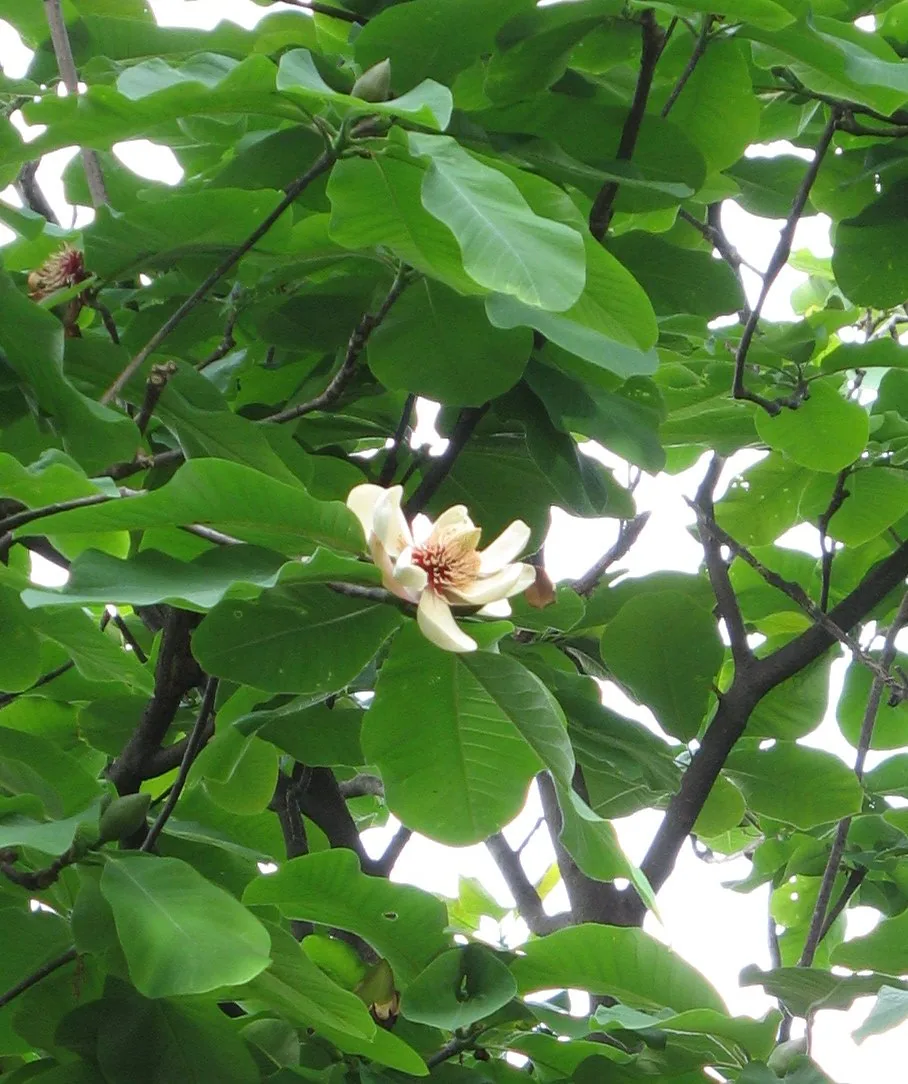
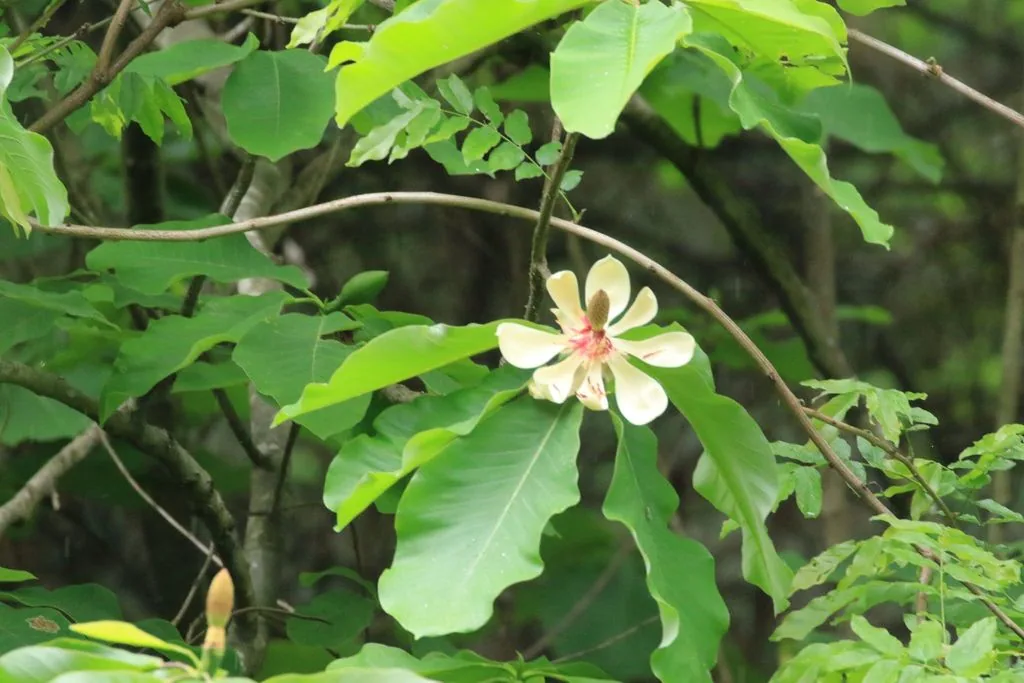

How to Grow and Care for Japanese Big Leaf Magnolia
Magnolia obovata
Written by Emilio Marruso · last checked
At a glance
This magnolia comes from cool, moist forests, and it is happiest when your garden reminds it of home. Give it rich soil that holds on to moisture, and it will feel right where it belongs. You can even start your own from seed, a lovely way to watch a forest tree grow up with your garden from the very beginning.
- Water
Keep the soil moist, like the cool, damp forests it comes from
What the sources say (1)
Watering notes: Prefers a rich, moisture-retaining soil; originates from cool and moist forest environments
A rich and moisture-retaining soil is preferable – do not forget that the species originates from cool and moist forest environments in Japan and eastern Russia
— The Plantsman’s Choice: Japanese bigleaf magnolia - Tree Care Supporters [4] - Cold
Survives winters down to −20 °F (−28.9 °C)
Very hardy · USDA 5 · RHS H7 · Z5
What the sources say (2)
Hardiness, coldest zone: 5 [winter low −28.9 to −23.3 °C (−20 to −10 °F)]
Moist to mesic forests, 100–1800 m. USDA Hardiness Zone  5-8 RHS Hardiness Rating
— Magnolia obovata - Trees and Shrubs Online [2] Best if planted in open areas to allow for its open habit. Zones 5-7(8).
— Species Records | Boone County Arboretum [3] - Soil
Rich soil that holds on to moisture
What the sources say (1)
Watering notes: Prefers a rich, moisture-retaining soil; originates from cool and moist forest environments
A rich and moisture-retaining soil is preferable – do not forget that the species originates from cool and moist forest environments in Japan and eastern Russia
— The Plantsman’s Choice: Japanese bigleaf magnolia - Tree Care Supporters [4] - Propagation
Grows from seed
What the sources say (1)
Propagation: Seed; sometimes used as a rootstock for Magnolia x wieseneri and its cultivars
The species flowers from seed at 10 – 15 years. Seed propagation is the norm, while it is sometimes used as a rootstock for M. × wiesneri and cultivars within this group
— Magnolia obovata - Trees and Shrubs Online [2]
Overview
Magnolia obovata is a fast-growing deciduous tree with large leaves clustered towards the shoot tips in false whorls. [2] It prefers a rich, moisture-retaining soil, being native to cool and moist forest environments in Japan and eastern Russia. [4] Seed propagation is the norm. [2]
This record is incomplete: the sources we read do not cover every field yet.
Not yet covered by our sources: Watering, Hardiness, warmest zone, Pruning
Japanese Big Leaf Magnolia care
How to water Japanese Big Leaf Magnolia
Watering
Not stated in the sources we read.
Watering notes
Prefers a rich, moisture-retaining soil; originates from cool and moist forest environments
What the sources say (1)
A rich and moisture-retaining soil is preferable – do not forget that the species originates from cool and moist forest environments in Japan and eastern RussiaHow much light Japanese Big Leaf Magnolia needs
The sources give different values depending on region, zone or growing conditions.
What each source says
optimal growth conditions: Sunny, sheltered site
mature park environments: Fairly shady position
What the sources say (4)
optimal growth conditions: Under optimal conditions (a sunny, sheltered site on rich, moisture-retentive, slightly acidic soil) a young tree can put on as much asmature park environments: The species is also an interesting choice for mature park environments where you want an exciting addition in a fairly shady position, such as under a canopy of other light-transmitting tree speciesUnder optimal conditions (a sunny, sheltered site on rich, moisture-retentive, slightly acidic soil) a young tree can put on as much asThe species is also an interesting choice for mature park environments where you want an exciting addition in a fairly shady position, such as under a canopy of other light-transmitting tree speciesHow much cold Japanese Big Leaf Magnolia can take
Hardiness, coldest zone
5 [winter low −28.9 to −23.3 °C (−20 to −10 °F)]
Hardiness, warmest zone
Not stated in the sources we read.
How to propagate Japanese Big Leaf Magnolia
Seed; sometimes used as a rootstock for Magnolia x wieseneri and its cultivars
What the sources say (1)
The species flowers from seed at 10 – 15 years. Seed propagation is the norm, while it is sometimes used as a rootstock for M. × wiesneri and cultivars within this groupRemedies
The sources we checked give no remedies for this plant.
Calendar
Pruning
Not stated in the sources we read.
Months as given by the sources, which are mostly from the United States (northern hemisphere). In the southern hemisphere they shift by about six months.
Indicative values
Values from a secondary source, not checked word for word like the rest of this page. Use them as a starting point.
- Life cycle
- PerennialIndicative value, adapt it to your climate · Secondary source
- Mature height
- 762-1219.2 cm (25-40 ft)Indicative value, adapt it to your climate · Secondary source
- Hours of sun
- 2-5 hoursIndicative value, adapt it to your climate · Secondary source
- Watering
- AverageIndicative value, adapt it to your climate · Secondary source
- Soil pH
- 5.5-6.5Indicative value, adapt it to your climate · Secondary source
- Care level
- MediumIndicative value, adapt it to your climate · Secondary source
- Growth rate
- LowIndicative value, adapt it to your climate · Secondary source
- Pruning
- February, MayIndicative value, adapt it to your climate · Secondary source
Similar plants
- Ashe Magnolia Magnolia ashei
- Banana Magnolia Magnolia figo
- Bigleaf Magnolia Magnolia macrophylla
- Cucumber Tree Magnolia acuminata
- Cylindrical Magnolia Magnolia cylindrica
- Fraser Magnolia Magnolia fraseri
- Kobus Magnolia Magnolia kobus
- Lily Magnolia Magnolia liliiflora
Sources
Every value above is quoted from these documents. Links lead to the original publisher.
- Magnolias Plant Directory · rhodogroup-rhs.org, consulted
- Magnolia obovata - Trees and Shrubs Online · treesandshrubsonline.org, consulted
- Species Records | Boone County Arboretum · bcarboretum.org, consulted
- The Plantsman’s Choice: Japanese bigleaf magnolia - Tree Care Supporters · treecare.org.uk, consulted
Written by Emilio Marruso · last checked