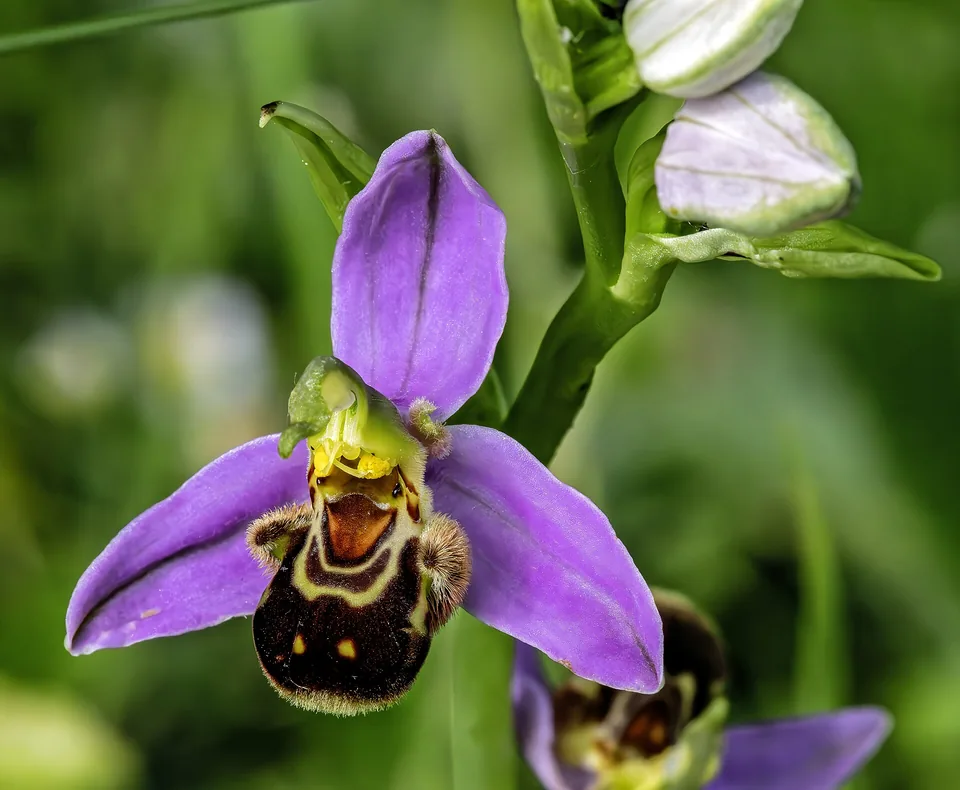
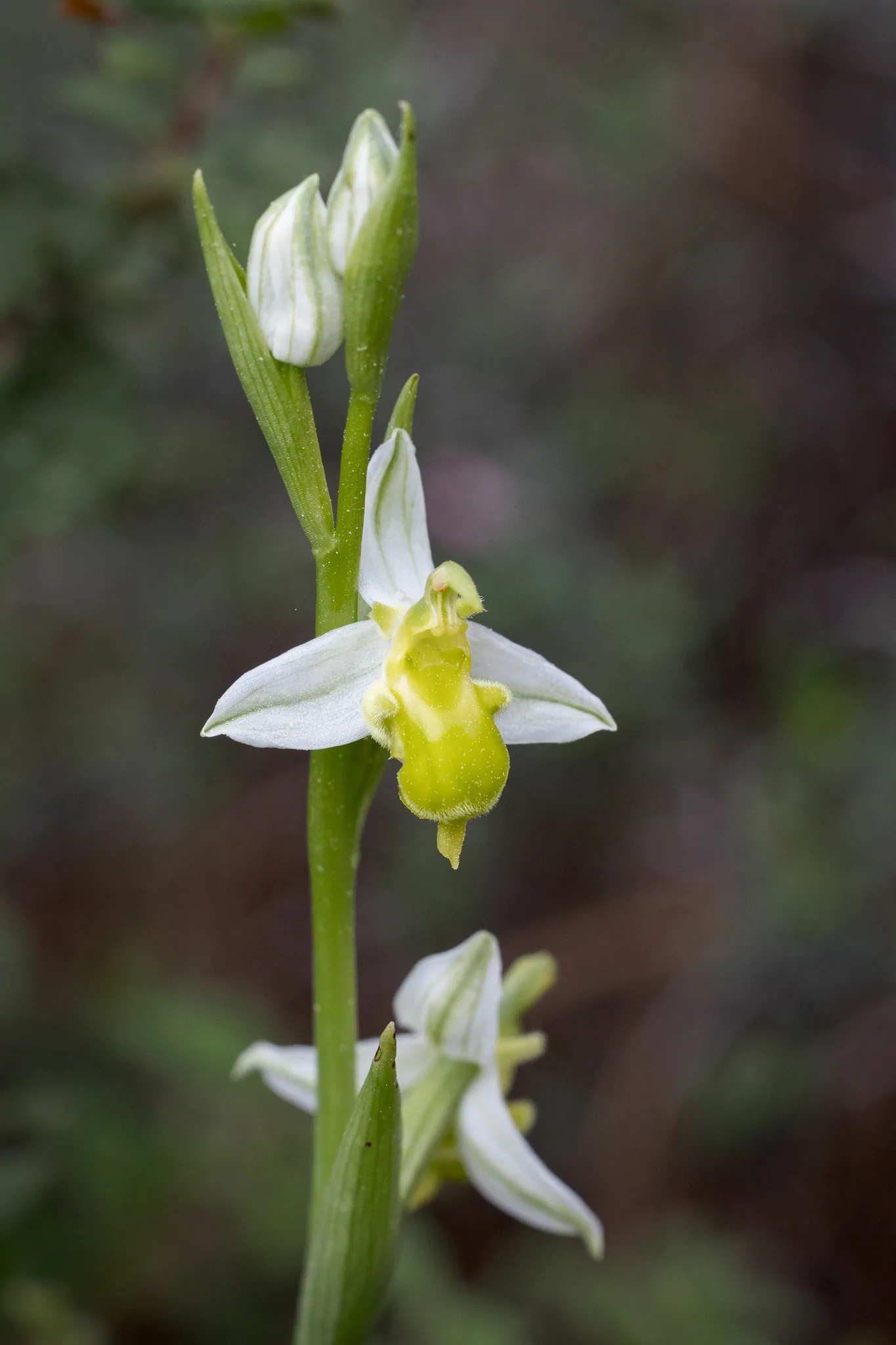

How to Grow and Care for Bee orchid
Ophrys apifera
Written by Emilio Marruso · last checked
At a glance
This little orchid fits into almost any garden: it grows in full sun or partial shade and stands just 8 to 16 inches tall. It likes slightly acidic soil and dry to normal watering, and it is happy in a pot too. Keep it dry while it rests, and watch out for slugs and snails.
- Sun
Full sun to partial shade
- Water
Dry to normal watering; keep it dry while it rests
- Cold
Survives winters down to 0 °F (−17.8 °C)
Hardy in very cold winters · USDA 7 · RHS H6 · Z7
What the sources say (2)
Hardiness, coldest zone: 7 [winter low −17.8 to −12.2 °C (0 to 10 °F)]
USDA Hardiness Zone: 7 to 9
— Ophrys apifera ( Bee Orchid ) - Professional Gardening Tips [5] Hardiness, warmest zone: 9 [winter low −6.7 to −1.1 °C (20 to 30 °F)]
USDA Hardiness Zone: 7 to 9
— Ophrys apifera ( Bee Orchid ) - Professional Gardening Tips [5] - Soil
Slightly acidic soil, pH 5.5–6.5
- Pests
Slugs and snails chew holes in the leaves; pick them off at dusk and dawn or use beer traps
- Size
8 to 16 inches tall
What the sources say (1)
Mature height: 20-40 cm [8–16 in]
20-40 cm hoch, wenigblütig. Die 3 äusseren Perigonblätter rosa oder weiss , mit grünem Mittelnerv, behaart.
— Ophrys apifera Huds. [1] - Containers
Grows in containers too
What the sources say (1)
In containers: Yes
Use terrestrial orchid potting mix and bright filtered light.
— Ophrys apifera ( Bee Orchid ) - Professional Gardening Tips [5]
Overview
Ophrys apifera, the bee orchid, is a hardy tuberous orchid of calcareous dry grassland with pink flowers. [3] In cultivation it is treated as a high-maintenance terrestrial orchid grown in part shade to full sun. [5] It is illegal to remove orchids from the wild. [4]
This record is incomplete: the sources we read do not cover every field yet.
Not yet covered by our sources: Pruning, Propagation
Bee orchid care
How to water Bee orchid
Watering
Dry to normal
What the sources say (1)
Water Range:
Dry to NormalWatering notes
Keep dry when dormant
What the sources say (1)
When dormant, keep dry and temperate.How much light Bee orchid needs
How much cold Bee orchid can take
Hardiness, coldest zone
7 [winter low −17.8 to −12.2 °C (0 to 10 °F)]
What the sources say (1)
USDA Hardiness Zone:
7 to 9Hardiness, warmest zone
9 [winter low −6.7 to −1.1 °C (20 to 30 °F)]
What the sources say (1)
USDA Hardiness Zone:
7 to 9Best soil for Bee orchid
Soil pH, minimum
5.5
What the sources say (1)
pH Range:
5.5 to 6.5Soil pH, maximum
6.5
What the sources say (1)
pH Range:
5.5 to 6.5Where to grow Bee orchid
Yes
What the sources say (1)
Use terrestrial orchid potting mix and bright filtered light.How to propagate Bee orchid
Not stated in the sources we read.
How to grow Bee orchid
The plant
Family
Orchidaceae
What the sources say (1)
Species SIFS: 277950 Checklist: 1031070 - Orchidaceae - Ophrys - Ophrys apifera Huds.Mature height
20-40 cm [8–16 in]
What the sources say (1)
20-40 cm hoch, wenigblütig. Die 3 äusseren Perigonblätter rosa oder weiss , mit grünem Mittelnerv, behaart.Bee orchid pests and problems
Slugs and snails
Symptom: Holes in leaves, stripped stems, silvery slimy trails
What to do: Remove hiding places, destroy eggs and adults at dusk and dawn, set beer traps from late spring through fall
What the sources say (1)
They may eat holes in leaves, strip entire stems, or completely devour seedlings and tender transplants, leaving behind tell-tale silvery, slimy trails.
— Ophrys apifera ( Bee Orchid ) - Professional Gardening Tips [5]
Remedies
The sources we checked give no remedies for this plant.
Calendar
Pruning
Not stated in the sources we read.
Months as given by the sources, which are mostly from the United States (northern hemisphere). In the southern hemisphere they shift by about six months.
Similar plants
- Bertoloni's bee orchid Ophrys bertolonii
- Early spider-orchid Ophrys sphegodes
- Butterfly orchid Encyclia tampensis
- Chinese Ground Orchid Bletilla striata
- Cranefly Orchid Tipularia discolor
- Dinner-Plate Orchid Platanthera orbiculata
- Downy Rattlesnake Plantain Goodyera pubescens
- Dragon's mouth Arethusa bulbosa
Sources
Every value above is quoted from these documents. Links lead to the original publisher.
- Ophrys apifera Huds. · infoflora.ch, consulted
- Ophrys apifera Huds. - Herbari Virtual del Mediterrani Occidental · herbarivirtual.uib.cat, consulted
- Ophrys apifera | Pacific Bulb Society · pacificbulbsociety.org, consulted
- World Plants · worldplants.ca, consulted
- Ophrys apifera ( Bee Orchid ) - Professional Gardening Tips · backyardgardener.com, consulted
Written by Emilio Marruso · last checked