
How to Grow and Care for Beardlip penstemon
Penstemon barbatus
Written by Emilio Marruso · last checked
At a glance
This penstemon is a perennial that comes back year after year and asks for very little water: it's happy in dry soil. It grows 1 to 4 feet tall, and you can make new plants from cuttings in summer, by dividing it in spring, or from seed. An easy, thrifty choice for a low-water garden.
- Water
Needs little water; likes dry soil
What the sources say (1)
Watering: Low water use; dry soil moisture
Water Use: Low Light Requirement: Part Shade Soil Moisture: Dry Soil Description: Rocky soils.
— Lady Bird Johnson Wildflower Center - The University of Texas at Austin [3] - Cold
Survives winters down to −30 °F (−34.4 °C)
Very hardy · USDA 4 · RHS H7 · Z4
What the sources say (2)
Hardiness, coldest zone: 4 [winter low −34.4 to −28.9 °C (−30 to −20 °F)]
Plant Width : 1 to 3 feet - Zones : 4, 5, 6, 7, 8, 9 - Moisture : Adaptable
— Beardlip penstemon - Fine Gardening [4] Hardiness, warmest zone: 9 [winter low −6.7 to −1.1 °C (20 to 30 °F)]
Plant Width : 1 to 3 feet - Zones : 4, 5, 6, 7, 8, 9 - Moisture : Adaptable
— Beardlip penstemon - Fine Gardening [4] - Size
1 to 4 ft tall
What the sources say (1)
Mature height: 30.48-121.92 cm (1-4 ft)
Origin Native Lifecycle Perennial Height 1 to 4 feet
— Penstemon barbatus - beardlip penstemon | Yavapai County Native and Naturalized Plants [1] - Propagation
Cuttings in early to mid-summer, division in spring, or seed after a cold, moist spell
What the sources say (2)
Propagation: Softwood cuttings in early summer; semi-ripe cuttings in mid-summer; division in spring; seed (cold-moist stratification)
Propagation Take softwood cuttings in early summer or semi-ripe cuttings in mid-summer. Divide in spring.
— Beardlip penstemon - Fine Gardening [4] Description: Propagate by seed. Seed Treatment: Germination is best with cold-moist stratification.
— Lady Bird Johnson Wildflower Center - The University of Texas at Austin [3]
Overview
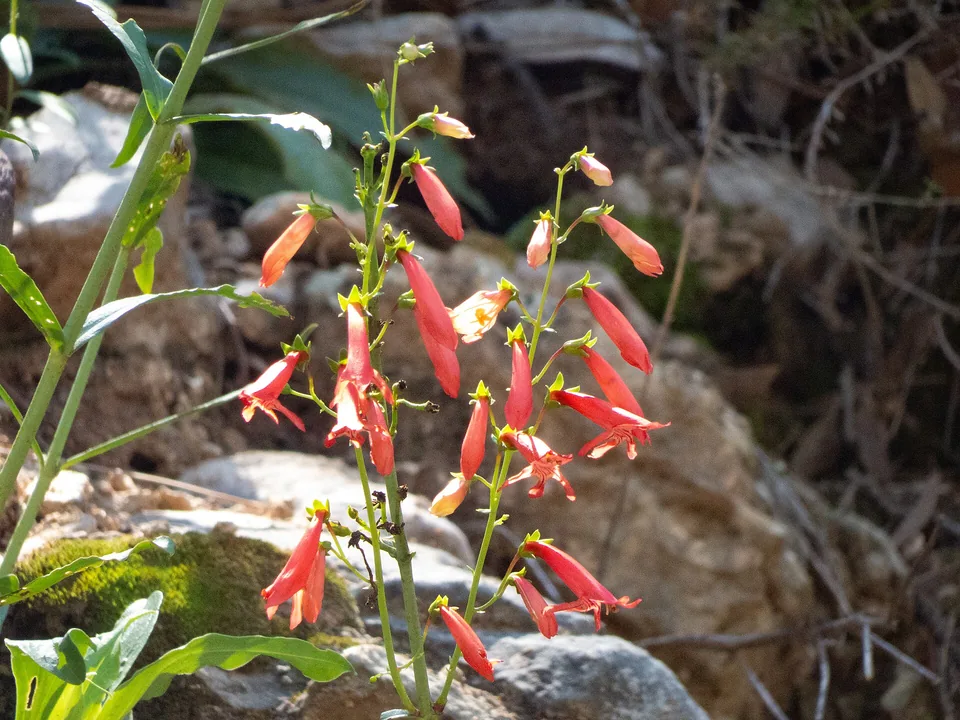
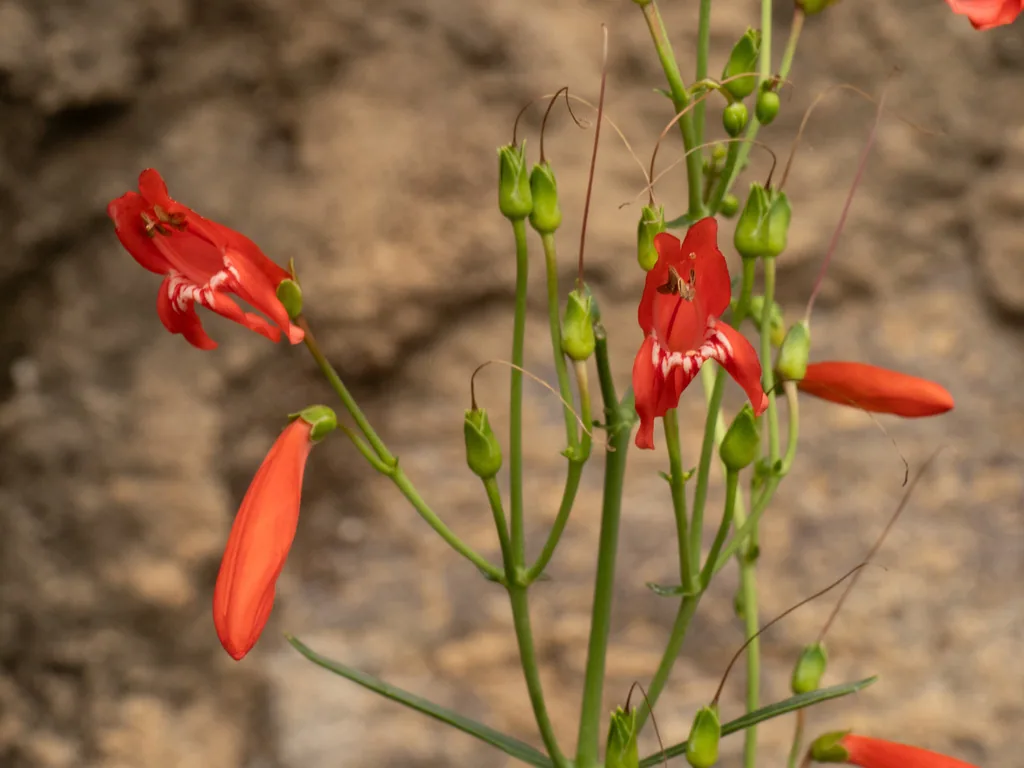
Beardlip penstemon is a perennial with brilliant scarlet flowers on 2 to 4 ft [0.6–1.2 m] stalks that hummingbirds visit. [2] It can be propagated by cuttings, division or seed. [4][3]
This record is incomplete: the sources we read do not cover every field yet.
Not yet covered by our sources: Pruning
Beardlip penstemon care
Measurements in square brackets are our conversion into the other unit system; the quoted text is unchanged.
How to water Beardlip penstemon
Low water use; dry soil moisture
What the sources say (1)
Water Use: Low
Light Requirement: Part Shade
Soil Moisture: Dry
Soil Description: Rocky soils.How much light Beardlip penstemon needs
The sources disagree:
Water Use: Low Light Requirement: Part Shade Soil Moisture: Dry Soil Description: Rocky soils.
[3]
How much cold Beardlip penstemon can take
Hardiness, coldest zone
4 [winter low −34.4 to −28.9 °C (−30 to −20 °F)]
What the sources say (1)
Plant Width :
1 to 3 feet
-
Zones :
4, 5, 6, 7, 8, 9
-
Moisture :
AdaptableHardiness, warmest zone
9 [winter low −6.7 to −1.1 °C (20 to 30 °F)]
What the sources say (1)
Plant Width :
1 to 3 feet
-
Zones :
4, 5, 6, 7, 8, 9
-
Moisture :
AdaptableHow to propagate Beardlip penstemon
Softwood cuttings in early summer; semi-ripe cuttings in mid-summer; division in spring; seed (cold-moist stratification)
What the sources say (2)
Propagation Take softwood cuttings in early summer or semi-ripe cuttings in mid-summer. Divide in spring.Description: Propagate by seed.
Seed Treatment: Germination is best with cold-moist stratification.How to grow Beardlip penstemon
The plant
Life cycle
perennial
What the sources say (1)
Origin
Native
Lifecycle
Perennial
Height
1 to 4 feetFamily
Scrophulariaceae
What the sources say (1)
Scientific Family
Scrophulariaceae
Synonyms
Penstemon barbatus var. coccineus
Other common namesMature height
30.48-121.92 cm (1-4 ft)
What the sources say (1)
Origin
Native
Lifecycle
Perennial
Height
1 to 4 feetRemedies
The sources we checked give no remedies for this plant.
Calendar
Pruning
Not stated in the sources we read.
Months as given by the sources, which are mostly from the United States (northern hemisphere). In the southern hemisphere they shift by about six months.
Indicative values
Values from a secondary source, not checked word for word like the rest of this page. Use them as a starting point.
- Drought tolerant
- yesIndicative value, adapt it to your climate · Secondary source
- Soil pH
- 6-7.5Indicative value, adapt it to your climate · Secondary source
- Care level
- MediumIndicative value, adapt it to your climate · Secondary source
- Growth rate
- LowIndicative value, adapt it to your climate · Secondary source
- Pruning
- March, AprilIndicative value, adapt it to your climate · Secondary source
Similar plants
- Dew Flower Penstemon cobaea
- Eastern Gray Beardtongue Penstemon canescens
- Foxglove Beardtongue Penstemon digitalis
- Hairy Beardtongue Penstemon hirsutus
- American Butterfly Bush Buddleja americana
- Bacopa Chaenostoma cordatum
- Butterfly Bush Buddleja davidii
- Chinese Butterfly Bush Buddleja fallowiana
Sources
Every value above is quoted from these documents. Links lead to the original publisher.
- Penstemon barbatus - beardlip penstemon | Yavapai County Native and Naturalized Plants · yavapaiplants.extension.arizona.edu, consulted
- 1 · extension.arizona.edu, consulted
- Lady Bird Johnson Wildflower Center - The University of Texas at Austin · wildflower.org, consulted
- Beardlip penstemon - Fine Gardening · finegardening.com, consulted
Written by Emilio Marruso · last checked