
How to Grow and Care for Hoary mock orange
Philadelphus pubescens
Written by Emilio Marruso · last checked
At a glance
This mock orange can grow up to 12 ft tall and flowers best in full sun, though it also accepts partial shade. Give it moderate, steady water, since it does not handle drought. You can start new plants from seed, cuttings or layering, then set them out in late spring or early summer, once the last frosts are over.
- Sun
Full sun to partial shade; flowers best in full sun
What the sources say (3)
Light: Full sun to semi-shade; flowers best in full sun
Succeeds in semi-shade but prefers a position in full sun where it will flower more freely
— Philadelphus pubescens — Practical Plants [5] Light full sun Shade tolerance light shade Water moderate Hardiness Zone 6+
— Philadelphus pubescens — Practical Plants [5] Clonal offset plants are fairly easy to transplant. Best flowering occurs in more sunny sites.
— Know Your Natives – Ozark Mock Orange | Arkansas Native Plant Society [6] - Water
Moderate water; it does not tolerate drought
What the sources say (2)
Watering: Moderate water; not drought tolerant
Light full sun Shade tolerance light shade Water moderate Hardiness Zone 6+
— Philadelphus pubescens — Practical Plants [5] Soil pH acid, neutral, alkaline, very alkaline Tolerates Nutritionally Poor Soil No Drought intolerant
— Philadelphus pubescens — Practical Plants [5] - Cold
Survives winters down to −10 °F (−23.3 °C)
Very hardy · USDA 6 · RHS H7 · Z6
What the sources say (2)
Hardiness, coldest zone: 6 [winter low −23.3 to −17.8 °C (−10 to 0 °F)]
According to Practical Plants: Light full sun Shade tolerance light shade Water moderate Hardiness Zone 6+
— Philadelphus pubescens — Practical Plants [5] Light full sun Shade tolerance light shade Water moderate Hardiness Zone 6+
— Philadelphus pubescens — Practical Plants [5] - Planting
Seedlings in late spring or early summer after the last frosts; rooted cuttings in spring
What the sources say (4)
Planting: Late spring or early summer after the last frosts (seedlings); spring (rooted cuttings)
seedlings: Plant them out into their permanent positions in late spring or early summer, after the last expected frosts.
— Philadelphus pubescens — Practical Plants [5] half-ripe cuttings: Cuttings of half-ripe wood, 7 - 10cm long side-shoots, July/August in a shaded frame. Plant out in spring.
— Philadelphus pubescens — Practical Plants [5] Plant them out into their permanent positions in late spring or early summer, after the last expected frosts.
— Philadelphus pubescens — Practical Plants [5] Cuttings of half-ripe wood, 7 - 10cm long side-shoots, July/August in a shaded frame. Plant out in spring.
— Philadelphus pubescens — Practical Plants [5] - Size
Up to 12 ft tall
What the sources say (1)
Mature height: up to 366 cm (12 ft)
Form: Shrub, with an overall rounded shape and arching branches, reaching up to 12 feet tall.
— Virginia Tech Dendrology Fact Sheet [1] - Propagation
From seed, semi-ripe cuttings, hardwood cuttings with a heel, layering or offsets
What the sources say (4)
Propagation: Seed, half-ripe cuttings, hardwood cuttings with a heel, layering, transplanting clonal offsets
Seed - best if given 1 months cold stratification [1] . Sow February in a light position in a cold frame.
— Philadelphus pubescens — Practical Plants [5] Cuttings of half-ripe wood, 7 - 10cm long side-shoots, July/August in a shaded frame. Plant out in spring.
— Philadelphus pubescens — Practical Plants [5] Cuttings of mature wood of the current year's growth, 15 - 25cm with a heel, December in a sheltered bed outdoors. Fair to good percentage [8] . Layering in summer. Very easy.
— Philadelphus pubescens — Practical Plants [5] Clonal offset plants are fairly easy to transplant. Best flowering occurs in more sunny sites.
— Know Your Natives – Ozark Mock Orange | Arkansas Native Plant Society [6] - Sowing
Sow in February in a cold frame, after keeping the seeds cold for 1 month
What the sources say (2)
Sowing: Late winter (February), in a cold frame after 1 month cold stratification
Seed - best if given 1 months cold stratification [1] . Sow February in a light position in a cold frame.
— Philadelphus pubescens — Practical Plants [5] Sow late winter in a light position in a cold frame.
— Philadelphus pubescens - Useful Temperate Plants [3]
Overview
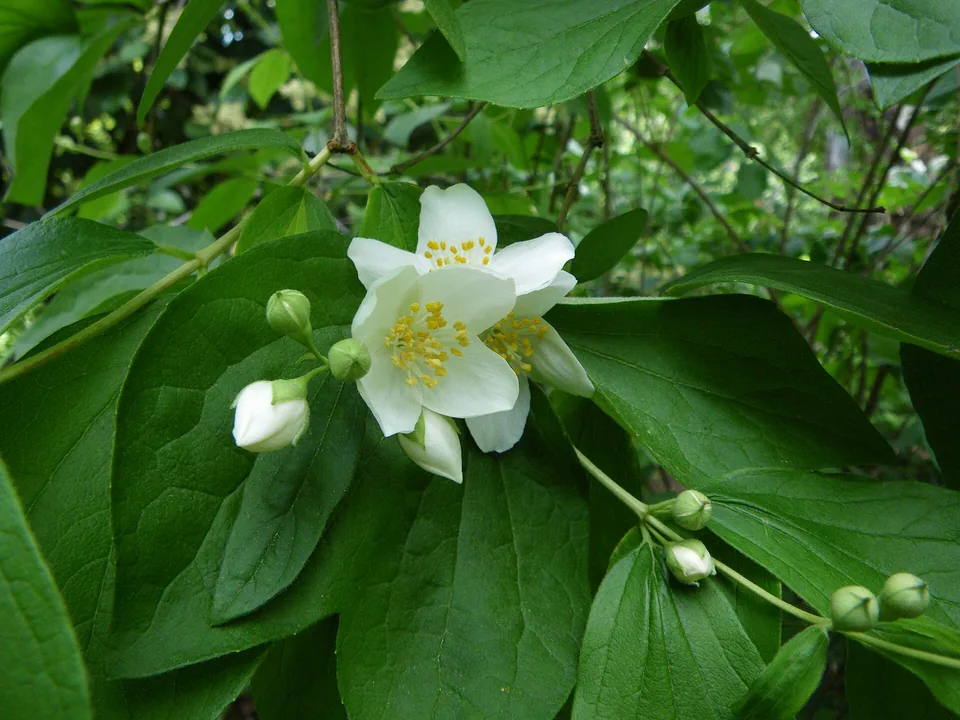
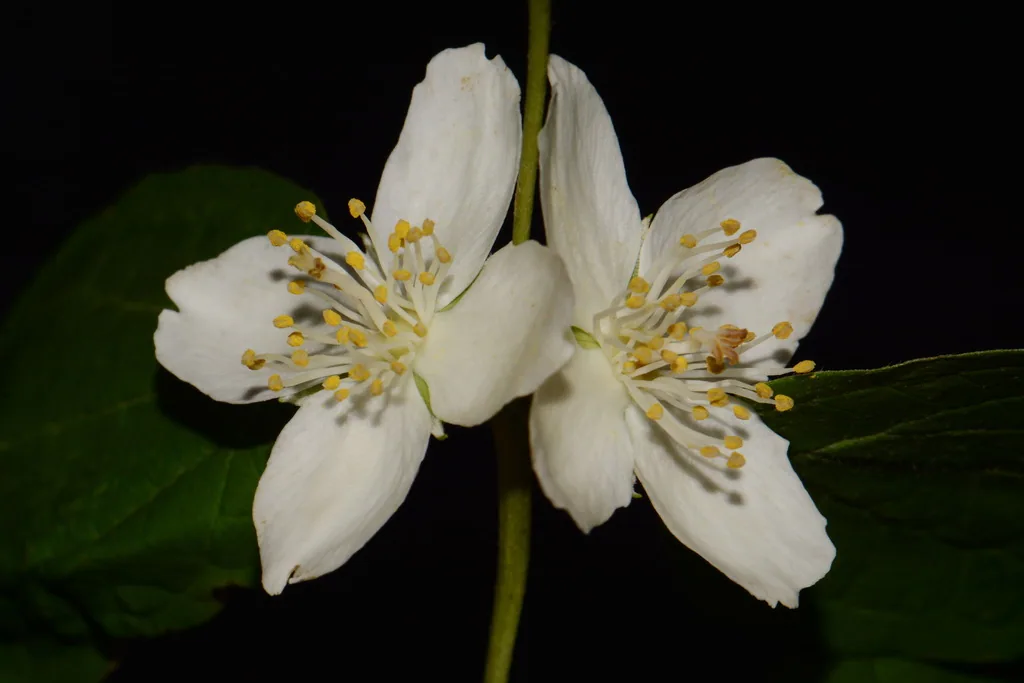
Philadelphus pubescens is a deciduous shrub native to the south-eastern United States and grown in gardens. [4] Its white, fragrant four-petalled flowers appear in late spring to early summer. [1] It grows in any moderately fertile soil, including heavy clay, and flowers more freely in full sun. [5]
This record is incomplete: the sources we read do not cover every field yet.
Not yet covered by our sources: Hardiness, warmest zone, Pruning
Hoary mock orange care
How to water Hoary mock orange
Moderate water; not drought tolerant
How much light Hoary mock orange needs
Full sun to semi-shade; flowers best in full sun
What the sources say (3)
Succeeds in semi-shade but prefers a position in full sun where it will flower more freelyLight
full sun
Shade tolerance
light shade
Water
moderate
Hardiness
Zone 6+Clonal offset plants are fairly easy to transplant. Best flowering occurs in more sunny sites.How much cold Hoary mock orange can take
Hardiness, coldest zone
6 [winter low −23.3 to −17.8 °C (−10 to 0 °F)]
What each source says
According to Practical Plants: 6 [winter low −23.3 to −17.8 °C (−10 to 0 °F)]
Hardiness, warmest zone
Not stated in the sources we read.
How to propagate Hoary mock orange
Seed, half-ripe cuttings, hardwood cuttings with a heel, layering, transplanting clonal offsets
What the sources say (4)
Seed - best if given 1 months cold stratification [1] . Sow February in a light position in a cold frame.Cuttings of half-ripe wood, 7 - 10cm long side-shoots, July/August in a shaded frame. Plant out in spring.Cuttings of mature wood of the current year's growth, 15 - 25cm with a heel, December in a sheltered bed outdoors. Fair to good percentage [8] .
Layering in summer. Very easy.Clonal offset plants are fairly easy to transplant. Best flowering occurs in more sunny sites.How to grow Hoary mock orange
The plant
Family
Hydrangeaceae
What the sources say (1)
hoary mockorange Hydrangeaceae Philadelphus
pubescens Loisel.
symbol: PHPU4
Leaf: Opposite, simple, oblong to ovateMature height
up to 366 cm (12 ft)
What the sources say (1)
Form: Shrub, with an overall rounded shape and arching branches, reaching up to 12 feet tall.Remedies
The sources we checked give no remedies for this plant.
Calendar
Late winter (February), in a cold frame after 1 month cold stratification
Late spring or early summer after the last frosts (seedlings); spring (rooted cuttings)
What each source says
seedlings: Late spring or early summer, after the last expected frosts
half-ripe cuttings: Spring
What the sources say (4)
seedlings: Plant them out into their permanent positions in late spring or early summer, after the last expected frosts.half-ripe cuttings: Cuttings of half-ripe wood, 7 - 10cm long side-shoots, July/August in a shaded frame. Plant out in spring.Plant them out into their permanent positions in late spring or early summer, after the last expected frosts.Cuttings of half-ripe wood, 7 - 10cm long side-shoots, July/August in a shaded frame. Plant out in spring.Not stated in the sources we read.
Months as given by the sources, which are mostly from the United States (northern hemisphere). In the southern hemisphere they shift by about six months.
Indicative values
Values from a secondary source, not checked word for word like the rest of this page. Use them as a starting point.
- Life cycle
- PerennialIndicative value, adapt it to your climate · Secondary source
- Hours of sun
- 6-8 hoursIndicative value, adapt it to your climate · Secondary source
- Drought tolerant
- yesIndicative value, adapt it to your climate · Secondary source
- Soil pH
- 6-7.5Indicative value, adapt it to your climate · Secondary source
- Care level
- MediumIndicative value, adapt it to your climate · Secondary source
- Growth rate
- LowIndicative value, adapt it to your climate · Secondary source
- Pruning
- March, April, February, MarchIndicative value, adapt it to your climate · Secondary source
Similar plants
- Mock Orange Philadelphus coronarius
- Ashy Hydrangea Hydrangea cinerea
- Chinese Hydrangea-vine Hydrangea glaucescens
- Deutzia Deutzia crenata
- Fuzzy Deutzia Deutzia scabra
- Hydrangea Hydrangea arborescens
- Japanese Hydrangea Vine Hydrangea hydrangeoides
- Mountain Hydrangea Hydrangea serrata
Sources
Every value above is quoted from these documents. Links lead to the original publisher.
- Virginia Tech Dendrology Fact Sheet · dendro.cnre.vt.edu, consulted
- Lady Bird Johnson Wildflower Center - The University of Texas at Austin · wildflower.org, consulted
- Philadelphus pubescens - Useful Temperate Plants · temperate.theferns.info, consulted
- Philadelphus pubescens - Trees and Shrubs Online · treesandshrubsonline.org, consulted
- Philadelphus pubescens — Practical Plants · practicalplants.org, consulted
- Know Your Natives – Ozark Mock Orange | Arkansas Native Plant Society · anps.org, consulted
- Philadelphus pubescens page · missouriplants.com, consulted
Written by Emilio Marruso · last checked