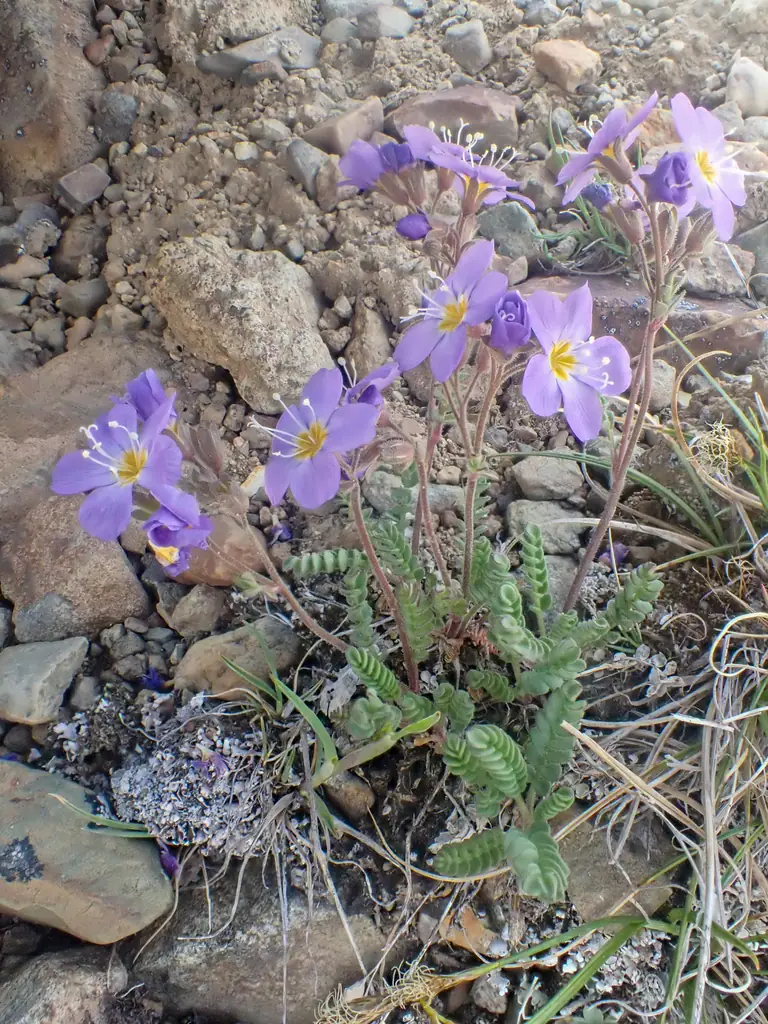
How to Grow and Care for Jacob's Ladder
Polemonium caeruleum
Written by Emilio Marruso · last checked
At a glance
Jacob's ladder is a perennial that comes back every year, growing into a clump 2 feet tall and 18 inches wide. Keep its soil moist but well drained, mulch in autumn or spring, and cut it back after flowering. It even sows itself around the garden, so one plant can soon become many.
- Water
Keep the soil moist but well drained; water the soil, not the leaves
What the sources say (5)
Watering: Keep soil moist but well-drained; do not let it dry out often
Choose a partially shaded spot for this plant as it will struggle in soil that dries out too often. Ideally, it needs moist, well-drained soil.
— How to Grow Polemonium (Jacob's ladder) | BBC Gardeners World Magazine [5] in moist, but well-drained, soil in sun to partial shade. Some cultivars can grow in full shade.
— Polemonium caeruleum - Fine Gardening [6] Watering notes: Keep well watered until established; mulch in autumn or spring to keep moisture in the soil; avoid wetting the leaves; dislikes damp or heavy soils
Keep it well watered until established. Deadhead regularly to encourage more flowers and cut out any dead stems.
— How to Grow Polemonium (Jacob's ladder) | BBC Gardeners World Magazine [5] Mulch around plants in the border in autumn or spring to keep moisture in the soil.
— How to Grow Polemonium (Jacob's ladder) | BBC Gardeners World Magazine [5] Dislikes damp or heavy soils[ 111 Title Popular Hardy Perennials.
— Polemonium caeruleum - Useful Temperate Plants [4] - Pruning
Cut back after flowering, then down to the ground in autumn
What the sources say (1)
Pruning: Cut back after flowering; cut down to ground level in autumn
cut back the plant to encourage another flush of flowers. Polemonium doesn’t need pruning. Cut down the plant in the autumn to ground level.
— How to Grow Polemonium (Jacob's ladder) | BBC Gardeners World Magazine [5] - Pests
Powdery mildew: keep the leaves dry and don't crowd the plants
- Watch out
Seeds itself around the garden: remove faded flowers before they drop seed
- Size
2 ft tall and 18 in wide
What the sources say (3)
Mature height: 61 cm (around two feet)
wild plants in Switzerland (Flora Helvetica): 30-90 cm: 30-90 cm hoch. Blätter wechselständig, unpaarig gefiedert , mit 8-15 Fiederpaaren
— Polemonium caeruleum L. [2] Caeruleum is a rather bushy plant with long leaves and grows to around two feet high with about an eighteen inch spread.
— Polemonium caeruleum [1] Mature width: 46 cm [18 in] (about eighteen inches)
Caeruleum is a rather bushy plant with long leaves and grows to around two feet high with about an eighteen inch spread.
— Polemonium caeruleum [1]
Overview
Jacob’s ladder is a hardy, early-summer flowering herbaceous perennial with ladder-like pinnate leaves. [5] It prefers moist but well-drained fertile soil and dislikes damp or heavy soils. [4] It self-seeds freely, which can become a nuisance unless plants are deadheaded. [4][5]
Jacob's Ladder care
How to water Jacob's Ladder
Watering
Keep soil moist but well-drained; do not let it dry out often
What the sources say (2)
Choose a partially shaded spot for this plant as it will struggle in soil that dries out too often. Ideally, it needs moist, well-drained soil.in moist, but well-drained, soil in sun to partial shade. Some cultivars can grow in full shade.Watering notes
Keep well watered until established; mulch in autumn or spring to keep moisture in the soil; avoid wetting the leaves; dislikes damp or heavy soils
What the sources say (3)
Keep it well watered until established. Deadhead regularly to encourage more flowers and cut out any dead stems.Mulch around plants in the border in autumn or spring to keep moisture in the soil.Dislikes damp or heavy soils[ 111 Title
Popular Hardy Perennials.How much light Jacob's Ladder needs
The sources give different values depending on region, zone or growing conditions.
What each source says
According to Gardeners’ World: Partial or dappled shade
According to Fine Gardening: Sun to partial shade
According to Useful Temperate Plants (PFAF): Sun or semi-shade
According to NDSU (student paper): Light or partial shade
What the sources say (6)
According to Gardeners’ World: Jacob’s ladder is the perfect cottage garden plant, happy in partial or dappled shade, beneath deciduous treesAccording to Fine Gardening: in moist, but well-drained, soil in sun to partial shade. Some cultivars can grow in full shade.According to Useful Temperate Plants (PFAF): A very easily grown plant, it prefers a moist well-drained fertile soil in sun or semi-shadeAccording to NDSU (student paper): grow best in light or partially shady areas with well-drained soil.A very easily grown plant, it prefers a moist well-drained fertile soil in sun or semi-shadein moist, but well-drained, soil in sun to partial shade. Some cultivars can grow in full shade.How much cold Jacob's Ladder can take
Hardiness, coldest zone
The sources give different values depending on region, zone or growing conditions.
What each source says
According to NDSU (student paper): 2 [winter low −45.6 to −40 °C (−50 to −40 °F)]
According to Fine Gardening: 4 [winter low −34.4 to −28.9 °C (−30 to −20 °F)]
Hardiness, warmest zone
The sources give different values depending on region, zone or growing conditions.
What each source says
According to NDSU (student paper): 7 [winter low −17.8 to −12.2 °C (0 to 10 °F)]
According to Fine Gardening: 8 [winter low −12.2 to −6.7 °C (10 to 20 °F)]
How to propagate Jacob's Ladder
The sources disagree:
What the sources say (3)
Propagation Sow seed in a cold frame in spring or fall. Divide in spring.prick the seedlings out into individual pots and plant them out in the summer.
Division in early spring or early autumnThese
plants are propagated easily from seed sown in the fall or by dividing
the plants in late summer.How to grow Jacob's Ladder
The plant
Life cycle
perennial
What the sources say (1)
caeruleum is an herbaceous perennial which blooms from April or May on through August or September.Family
Polemoniaceae
What the sources say (1)
Checklist: 1034730 - Polemoniaceae - Polemonium - Polemonium caeruleum L.Mature height
61 cm (around two feet)
What each source says
wild plants in Switzerland (Flora Helvetica): 30-90 cm:
What the sources say (2)
wild plants in Switzerland (Flora Helvetica): 30-90 cm: 30-90 cm hoch. Blätter wechselständig, unpaarig gefiedert , mit 8-15 FiederpaarenCaeruleum is a rather bushy plant with long leaves and grows to around two feet high with about an eighteen inch spread.Mature width
46 cm [18 in] (about eighteen inches)
What the sources say (1)
Caeruleum is a rather bushy plant with long leaves and grows to around two feet high with about an eighteen inch spread.Jacob's Ladder pests and problems
Powdery mildew
Symptom: White powdery substance on the leaves
What to do: Cut out and destroy affected foliage; avoid wetting the leaves and do not crowd plants, to improve air circulation
What the sources say (2)
but a white powdery substance on the leaves could be powdery mildew . Cut out and destroy any affected foliage and in autumn.
— How to Grow Polemonium (Jacob's ladder) | BBC Gardeners World Magazine [5] Propagation Sow seed in a cold frame in spring or fall. Divide in spring. Problems Powdery mildew.
— Polemonium caeruleum - Fine Gardening [6] Excessive self-seeding
Symptom: Seedlings appear around the garden
What to do: Deadhead before seed is released or collect the seed
What the sources say (2)
They can self-sow to the point of nuisance, however
— Polemonium caeruleum - Useful Temperate Plants [4] To restrict its spread, deadhead the plants before they release their seed or collect the seed to sow yourself.
— How to Grow Polemonium (Jacob's ladder) | BBC Gardeners World Magazine [5]
Remedies
Each remedy shows what official sources say about it; traditional remedies without an official source are marked as such. Harmful ones are listed so you know to avoid them.
Treating the plant
powdery mildew
cutting out affected foliage Not verified
Traditional remedy, not verified by an official source.
How: Cut out and destroy any affected foliage.
Calendar
Sowing
The sources give different values depending on region, zone or growing conditions.
What each source says
According to Fine Gardening: Spring or fall, in a cold frame
According to Gardeners’ World: Autumn (overwinter under cover) or spring
According to NDSU (student paper): Fall
What the sources say (5)
According to Fine Gardening: Propagation Sow seed in a cold frame in spring or fall. Divide in spring.According to Gardeners’ World: You can sow in autumn and overwinter the small plants undercover or save the seed and sow in the spring, but bear in mind that those plants won’t flower that year.According to NDSU (student paper): These
plants are propagated easily from seed sown in the fall or by dividing
the plants in late summer.Propagation Sow seed in a cold frame in spring or fall. Divide in spring.You can sow in autumn and overwinter the small plants undercover or save the seed and sow in the spring, but bear in mind that those plants won’t flower that year.Planting
The sources give different values depending on region, zone or growing conditions.
What each source says
According to Gardeners’ World (plants): Early spring or autumn
According to Useful Temperate Plants (seedlings): Summer
What the sources say (3)
According to Gardeners’ World (plants): Plant Jacob’s ladder in early spring or autumn while the soil is warm and moist, to give it the best chance to establish and put down roots before the summer.According to Useful Temperate Plants (seedlings): prick the seedlings out into individual pots and plant them out in the summer.Plant Jacob’s ladder in early spring or autumn while the soil is warm and moist, to give it the best chance to establish and put down roots before the summer.Pruning
Cut back after flowering; cut down to ground level in autumn
What the sources say (1)
cut back the plant to encourage another flush of flowers. Polemonium doesn’t need pruning. Cut down the plant in the autumn to ground level.Months as given by the sources, which are mostly from the United States (northern hemisphere). In the southern hemisphere they shift by about six months.
Similar plants
- Jacob's Ladder Polemonium reptans
- Carolina Phlox Phlox carolina
- Creeping Phlox Phlox stolonifera
- Cup and Saucer Cobaea scandens
- Downy Phlox Phlox pilosa
- Drummond's Phlox Phlox drummondii
- Garden Phlox Phlox paniculata
- Meadow Phlox Phlox maculata
Sources
Every value above is quoted from these documents. Links lead to the original publisher.
- Polemonium caeruleum · ndsu.edu, consulted
- Polemonium caeruleum L. · infoflora.ch, consulted
- Flora of New Zealand | Taxon Profile | Polemonium caeruleum · nzflora.info, consulted
- Polemonium caeruleum - Useful Temperate Plants · temperate.theferns.info, consulted
- How to Grow Polemonium (Jacob's ladder) | BBC Gardeners World Magazine · gardenersworld.com, consulted
- Polemonium caeruleum - Fine Gardening · finegardening.com, consulted
- How to Plant and Grow Jacob’s Ladder Flowers | Gardener’s Path · gardenerspath.com, consulted
Written by Emilio Marruso · last checked