
How to Grow and Care for Eurasian Aspen
Populus tremula
Written by Emilio Marruso · last checked
At a glance
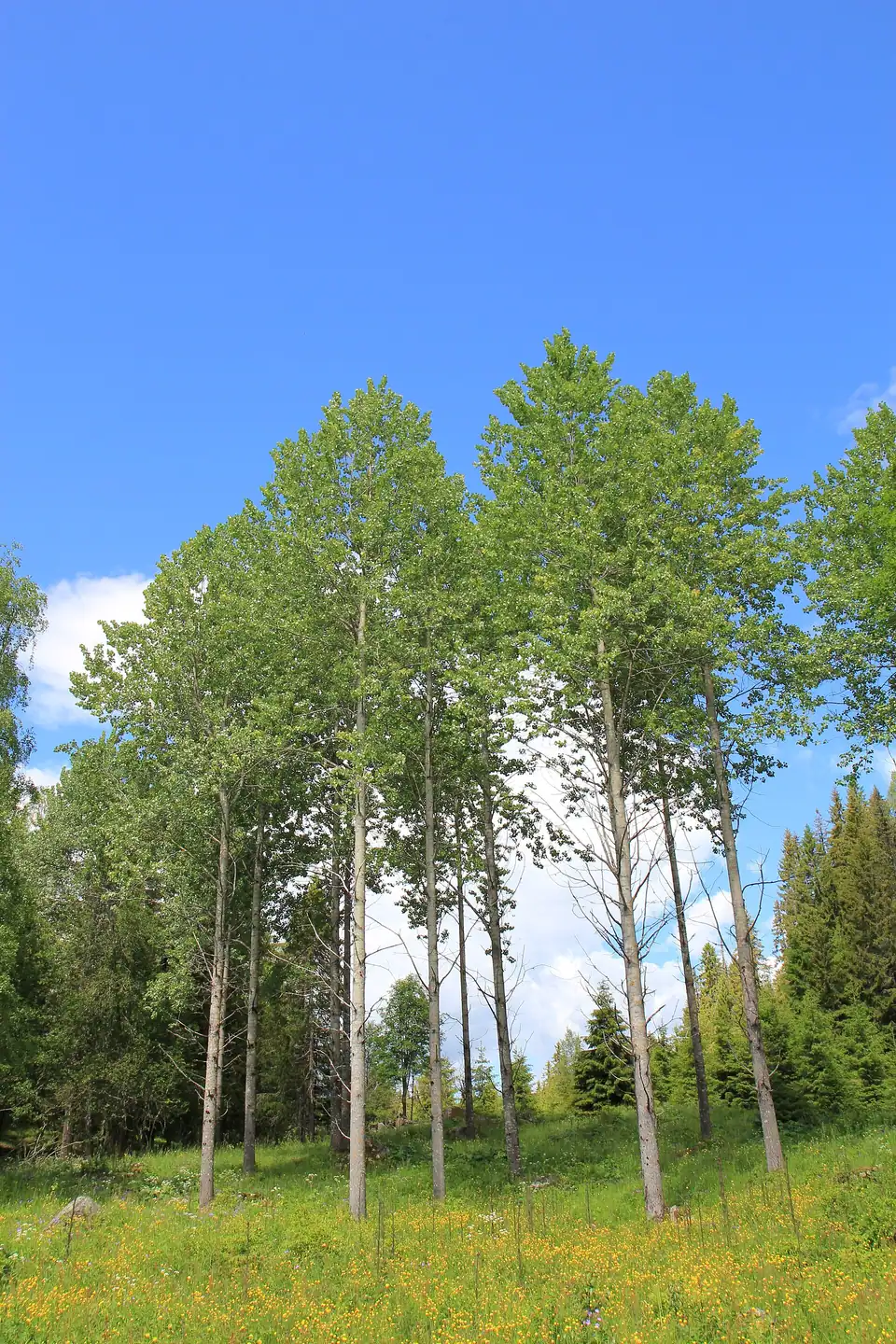
European aspen is an easygoing tree that grows 33 to 82 feet tall in full sun or part shade. Give it regular water, especially during its first two years, and prune it while it rests, from November to March. Its inner bark can even be dried, ground into a powder and added to flour for homemade bread.
- Sun
Full sun to part shade
What the sources say (3)
Light: Full sun to part shade
Sun or part shade - Hardy to USDA Zone 2
— Populus tremula | Landscape Plants | Oregon State University [3] Grow aspen in an open spot with plenty of light, in moist but free-draining soil.
— How To Grow And Care For An Aspen Tree | BBC Gardeners World Magazine [5] Recommended Temperature Zone: Sunset: 1-3,35-45 USDA: 1-6 Sun Exposure: Full sun
— European Aspen (Populus tremula) [7] - Water
Regular water; water well for the first two years after planting
What the sources say (2)
Watering: Regular water
Sun Exposure: Full sun Origin: Europe Growth Habits: Deciduous tree, 20 to 50 feet tall (6 to 15 m.), 10 to 30 feet in spread (3 to 9 m.) Flowers: Greenish flowers Watering Needs: Regular water
— European Aspen (Populus tremula) [7] Watering notes: Water well for the first two years after planting
Aspen trees require very little care once established. Water well for the first two years after planting
— How To Grow And Care For An Aspen Tree | BBC Gardeners World Magazine [5] - Planting
Plant rooted cuttings in fall, once they have grown on
What the sources say (1)
Planting: Autumn (rooted cuttings, after growing on)
aspen cuttings will grow quite fast and be ready to plant out in the autumn.
— Aspen - How To Grow Trees [6] - Pruning
Prune while dormant, November to March
What the sources say (1)
Pruning: Dormant season, November to March
Aspen trees require very little pruning, but if you do want to remove a dead or damaged branch, or control its shape in any way, the best time to do this is in the dormant season, from November to March.
— How To Grow And Care For An Aspen Tree | BBC Gardeners World Magazine [5] - Harvest
The inner bark can be dried, ground and added to flour for bread
- Pests
Asian longhorned beetle and leaf beetles; leaf rust and white rot of the trunk
What the sources say (5)
Pests: Asian longhorned beetle (Anoplophora glabripennis), Chrysomela tremulae
The Eurasian aspen is a susceptible host for the Asian longhorned beetle (Anoplophora glabripennis)
— Populus tremula [2] The leaf-feeding beetles of Chrysomela tremulae can damage young plantations of the hybrids
— Populus tremula [2] Diseases: Melampsora leaf rusts, Phellinus tremulae stem white rot, Neofabraea populi, Entoleuca mammata
Like other poplars aspen can be attacked by several species of leaf rusts of genus Melampsora.
— Populus tremula [2] The main agent responsible for the death of old and large tree is the stem white rot fungus Phellinus tremulae.
— Populus tremula [2] The fungi Neofabraea populi and Entoleuca mammata, which have been imported into Europe and Scandinavia from North America, can potentially cause severe infections
— Populus tremula [2] - Watch out
Sends up suckers from the roots that are hard to remove: pull them as the tree grows
- Size
33 to 82 ft tall
What the sources say (1)
Mature height: 1000-2500 cm (10-25 m)
It is a medium-sized deciduous tree growing to 10–25 m tall
— Aspen - Keele University [4] - Propagation
From seed, root cuttings, suckers, or stem cuttings in winter
What the sources say (3)
Propagation: Seed; root cuttings; suckers; hardwood and semi-hardwood cuttings in winter
Aspen propagates itself from seed and by suckers. This means you can propagate new aspen trees from seed or by taking root cuttings.
— How To Grow And Care For An Aspen Tree | BBC Gardeners World Magazine [5] In the same family as willows, aspen grows readily from cuttings. To get good material for these cuttings, root cuttings are first taken.
— Aspen - How To Grow Trees [6] Propagation: Seed or occasionally cutting - by semi-hardwood, hardwood secondary cuttings, in winter. Use outdoor beds.
— European Aspen (Populus tremula) [7]
Overview
European aspen makes a fine garden tree but grows to 25 m [82 ft], so it suits larger gardens. [5] It does best in an open, sunny spot in moist but free-draining soil and sends up suckers freely. [5] Aspen can be propagated from seed or by root cuttings. [5]
This record is incomplete: the sources we read do not cover every field yet.
Not yet covered by our sources: Hardiness, coldest zone
Eurasian Aspen care
Measurements in square brackets are our conversion into the other unit system; the quoted text is unchanged.
How to water Eurasian Aspen
Watering
Regular water
What the sources say (1)
Sun Exposure: Full sun
Origin: Europe
Growth Habits: Deciduous tree, 20 to 50 feet tall (6 to 15 m.), 10 to 30 feet in spread (3 to 9 m.)
Flowers: Greenish flowers
Watering Needs: Regular waterWatering notes
Water well for the first two years after planting
What the sources say (1)
Aspen trees require very little care once established. Water well for the first two years after plantingHow much light Eurasian Aspen needs
Full sun to part shade
What the sources say (3)
Sun or part shade
-
Hardy to USDA Zone 2Grow aspen in an open spot with plenty of light, in moist but free-draining soil.Recommended Temperature Zone:
Sunset: 1-3,35-45
USDA: 1-6
Sun Exposure: Full sunHow much cold Eurasian Aspen can take
Hardiness, coldest zone
Not stated in the sources we read.
Hardiness, warmest zone
6 [winter low −23.3 to −17.8 °C (−10 to 0 °F)]
What the sources say (1)
Recommended Temperature Zone:
Sunset: 1-3,35-45
USDA: 1-6
Sun Exposure: Full sunHow to propagate Eurasian Aspen
Seed; root cuttings; suckers; hardwood and semi-hardwood cuttings in winter
What the sources say (3)
Aspen propagates itself from seed and by suckers. This means you can propagate new aspen trees from seed or by taking root cuttings.In the same family as willows, aspen grows readily from cuttings. To get good material for these cuttings, root cuttings are first taken.Propagation: Seed or occasionally cutting
- by semi-hardwood, hardwood secondary cuttings, in winter. Use outdoor beds.How to grow Eurasian Aspen
The plant
Family
Salicaceae
What the sources say (1)
Common name:
European Aspen
European Trembling Aspen
European Quaking Aspen
Pronunciation:
pop-U-lus TREM-ew-la
Family:
SalicaceaeMature height
1000-2500 cm (10-25 m)
What the sources say (1)
It is a medium-sized deciduous tree growing to 10–25 m tallPests and diseases
Pests
Asian longhorned beetle (Anoplophora glabripennis), Chrysomela tremulae
Diseases
Melampsora leaf rusts, Phellinus tremulae stem white rot, Neofabraea populi, Entoleuca mammata
What the sources say (3)
Like other poplars aspen can be attacked by several species of leaf rusts of genus Melampsora.The main agent responsible for the death of old and large tree is the stem white rot fungus Phellinus tremulae.The fungi Neofabraea populi and Entoleuca mammata, which have been imported into Europe and Scandinavia from North America, can potentially cause severe infectionsEurasian Aspen pests and problems
Suckering
Symptom: Tendency to send up suckers from the roots, which are difficult to remove.
What to do: Remove the suckers that sprout up from the roots as the tree grows.
What the sources say (2)
Bear in mind that it has a tendency to send up suckers, which are difficult to remove.
— How To Grow And Care For An Aspen Tree | BBC Gardeners World Magazine [5] As your aspen tree grows, remove the suckers that sprout up from the roots.
— How To Grow And Care For An Aspen Tree | BBC Gardeners World Magazine [5]
Remedies
Each remedy shows what official sources say about it; traditional remedies without an official source are marked as such. Harmful ones are listed so you know to avoid them.
Treating the plant
suckers
removing root suckers Not verified
Traditional remedy, not verified by an official source.
How: As the aspen grows, remove the suckers that sprout up from the roots.
Calendar
Autumn (rooted cuttings, after growing on)
What the sources say (1)
aspen cuttings will grow quite fast and be ready to plant out in the autumn.Dormant season, November to March
What the sources say (1)
Aspen trees require very little pruning, but if you do want to remove a dead or damaged branch, or control its shape in any way, the best time to do this is in the dormant season, from November to March.Months as given by the sources, which are mostly from the United States (northern hemisphere). In the southern hemisphere they shift by about six months.
Edibility
Reported by the source, quoted verbatim. Do not eat a plant on the basis of this page alone: identification mistakes can be dangerous.
Inner bark - dried, ground into a powder then added to flour and used for making bread etc
[8]
Similar plants
- Black Poplar Populus nigra
- Quaking Aspen Populus tremuloides
- White Poplar Populus alba
- Cottonwood Populus deltoides
- Swamp Cottonwood Populus heterophylla
- Black Willow Salix nigra
- Boxleaf azara Azara microphylla
- Carolina Willow Salix caroliniana
Sources
Every value above is quoted from these documents. Links lead to the original publisher.
- Populus tremula - EUFORGEN European forest genetic resources programme · euforgen.org, consulted
- Populus tremula · forest.jrc.ec.europa.eu, consulted
- Populus tremula | Landscape Plants | Oregon State University · landscapeplants.oregonstate.edu, consulted
- Aspen - Keele University · keele.ac.uk, consulted
- How To Grow And Care For An Aspen Tree | BBC Gardeners World Magazine · gardenersworld.com, consulted
- Aspen - How To Grow Trees · treegrowing.tcv.org.uk, consulted
- European Aspen (Populus tremula) · desert-tropicals.com, consulted
- Populus tremula - Useful Temperate Plants · temperate.theferns.info, consulted
Written by Emilio Marruso · last checked