
How to Grow and Care for Strawberry guava
Psidium littorale
Written by Emilio Marruso · last checked
At a glance
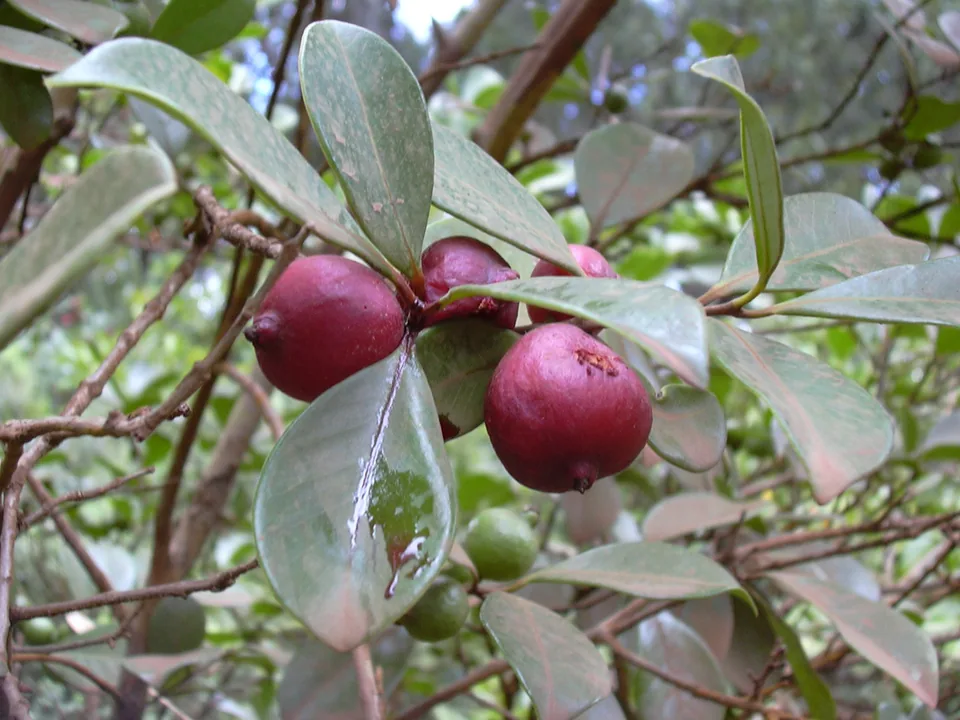
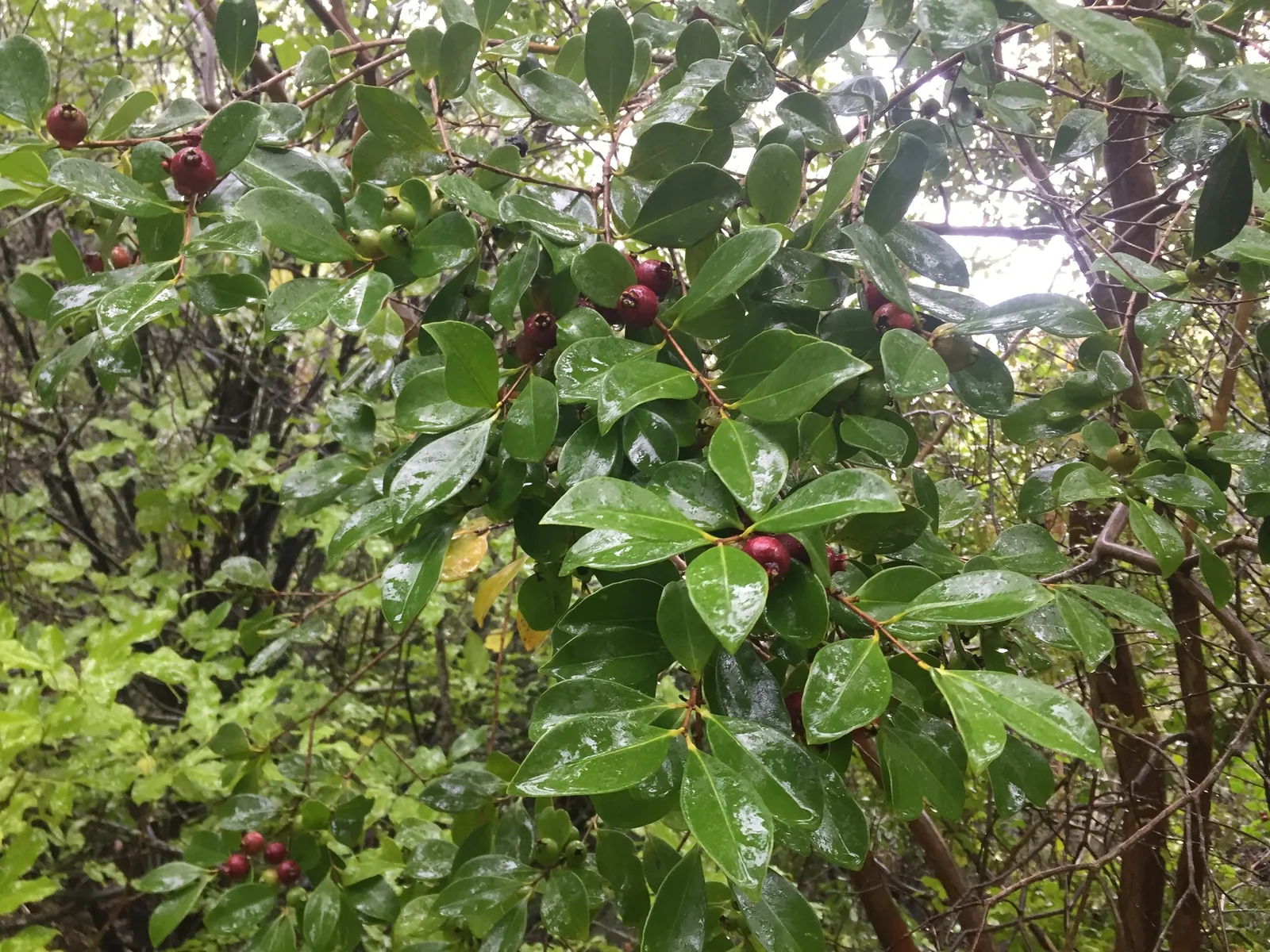
This guava tree rewards you with bright red, pear-shaped fruits, 1.5 inches across, that ripen to a very dark red in July, a popular treat for people and wildlife alike. It grows happily in full sun or partial shade, handles drought once established, and even grows in a container. Pick the fruit promptly, before fruit fly larvae find it.
- Sun
Full sun to partial shade
What the sources say (1)
Light: Full sun to partial shade
Light requirement: full sun to partial shade Soil tolerances: clay; sand; loam; alkaline; acidic; well-drained Drought tolerance: moderate
— ENH-687 [1] - Water
Handles drought once established; a thick layer of organic mulch helps
What the sources say (1)
Watering: Drought-tolerant once established; benefits from a thick, organic mulch
Plants are drought-tolerant once established but benefit from a thick, organic mulch.
— ENH-687 [1] - Cold
Survives winters down to 30 °F (−1.1 °C)
Half hardy: mild winters or an unheated greenhouse · USDA 10a · RHS H3 · Z10
- Pruning
Prune after fruiting
What the sources say (1)
Pruning: After fruiting
Any necessary pruning should be done after fruiting.
— ENH-687 [1] - Harvest
Edible red fruits, 1.5 inches wide, ripen to very dark red in July
What the sources say (2)
Harvest: Fruit ripens to a very dark red in July; fruiting year-round
The 1.5-inch-diameter, bright red, pear-shaped fruits ripen to a very dark red in July and are a popular treat - for people and wildlife.
— ENH-687 [1] Fruit characteristics: attracts birds; showy; fruit/leaves a litter problem Fruiting: year-round
— ENH-687 [1] - Pests
Fruit fly larvae eat the fruit but don't harm the tree: pick the fruit early
What the sources say (1)
Pests: fruit fly larvae
No pests or diseases are of major concern. Fruit fly larvae devour the fruit but do no harm to the tree.
— ENH-687 [1] - Size
15–25 ft tall and 10–25 ft wide
- Propagation
By air layering or seed; plants grown from seed take 7–8 years to fruit
- Containers
Grows in containers too
What the sources say (1)
In containers: Yes
Uses: shade; deck or patio; specimen; espalier; fruit; container or planter; highway median
— ENH-687 [1]
Overview
Strawberry guava is an evergreen shrub or small tree grown as a landscape plant for its fruit. [1] It grows in full sun or partial shade on a wide range of soils and is drought-tolerant once established. [1] It has escaped cultivation in south Florida and its use should be tempered. [1]
Strawberry guava care
How to water Strawberry guava
Drought-tolerant once established; benefits from a thick, organic mulch
What the sources say (1)
Plants are drought-tolerant once established but benefit from a thick, organic mulch.How much light Strawberry guava needs
Full sun to partial shade
What the sources say (1)
Light requirement: full sun to partial shade Soil tolerances: clay; sand; loam; alkaline; acidic; well-drained Drought tolerance: moderateHow much cold Strawberry guava can take
Hardiness, coldest zone
10a [winter low −1.1 to 1.7 °C (30 to 35 °F)]
What the sources say (1)
USDA hardiness zones: 10A through 11 (Figure 2)Hardiness, warmest zone
11 [winter low 4.4 to 10 °C (40 to 50 °F)]
What the sources say (1)
USDA hardiness zones: 10A through 11 (Figure 2)Where to grow Strawberry guava
Yes
What the sources say (1)
Uses: shade; deck or patio; specimen; espalier; fruit; container or planter; highway medianHow to propagate Strawberry guava
Air-layering or seeds
What the sources say (1)
Propagation is by air-layering’s or by seeds. Seeds germinate easily and rapidly.How to grow Strawberry guava
The plant
Family
Myrtaceae
What the sources say (1)
Family: Myrtaceae USDA hardiness zones: 10A through 11 (Figure 2) Origin: native to BrazilMature height
457.2-762 cm (15-25 ft)
What the sources say (1)
Height: 15 to 25 feet Spread: 10 to 25 feetMature width
304.8-762 cm (10-25 ft)
What the sources say (1)
Height: 15 to 25 feet Spread: 10 to 25 feetYears to first fruit
7-8 (seedling plants)
What the sources say (1)
Seedling plants take seven or eight years to bear fruit.Pests and diseases
Pests
fruit fly larvae
What the sources say (1)
No pests or diseases are of major concern. Fruit fly larvae devour the fruit but do no harm to the tree.Strawberry guava pests and problems
Fruit fly larvae
Symptom: Fruit fly larvae devour the fruit but do no harm to the tree.
What to do: Pick the fruit for eating before the fruit fly larvae discover it.
Remedies
Each remedy shows what official sources say about it; traditional remedies without an official source are marked as such. Harmful ones are listed so you know to avoid them.
Treating the plant
fruit fly larvae
picking the fruit early Official source, not independently tested
How: Pick the fruit for eating before the fruit fly larvae discover it.
Pick the fruit for eating before the fruit fly larvae discover it.
— ENH-687 [1]
Getting rid of it
invasive plant
pulling or uprooting by hand Not verified
Traditional remedy, not verified by an official source.
How: Small plants can be removed by hand; larger plants can be uprooted, but they can resprout if root fragments are left in the ground.
digging out Not verified
Traditional remedy, not verified by an official source.
How: Dig out the plant and dispose of the seeds in greenwaste or landfill if practical.
Calendar
Harvest
Fruit ripens to a very dark red in July; fruiting year-round
Pruning
After fruiting
What the sources say (1)
Any necessary pruning should be done after fruiting.Months as given by the sources, which are mostly from the United States (northern hemisphere). In the southern hemisphere they shift by about six months.
Edibility
Reported by the source, quoted verbatim. Do not eat a plant on the basis of this page alone: identification mistakes can be dangerous.
The 1.5-inch-diameter, bright red, pear-shaped fruits ripen to a very dark red in July and are a popular treat - for people and wildlife.
[1]
Indicative values
Values from a secondary source, not checked word for word like the rest of this page. Use them as a starting point.
- Life cycle
- PerennialIndicative value, adapt it to your climate · Secondary source
- Hours of sun
- 6-8 hoursIndicative value, adapt it to your climate · Secondary source
- Drought tolerant
- yesIndicative value, adapt it to your climate · Secondary source
- Soil pH
- 5.5-7Indicative value, adapt it to your climate · Secondary source
- Care level
- MediumIndicative value, adapt it to your climate · Secondary source
- Growth rate
- LowIndicative value, adapt it to your climate · Secondary source
Similar plants
- Crimson Bottle Brush Melaleuca citrina
- Feijoa Acca sellowiana
- Jaboticaba Plinia cauliflora
- Myrtle Myrtus communis
- Peppermint Agonis flexuosa
- Punktree Melaleuca quinquenervia
- River redgum Eucalyptus camaldulensis
- Silver Dollar Tree Eucalyptus cinerea
Sources
Every value above is quoted from these documents. Links lead to the original publisher.
- ENH-687 · edis.ifas.ufl.edu, consulted
Written by Emilio Marruso · last checked