
How to Grow and Care for Galcham oak
Quercus aliena
Written by Emilio Marruso · last checked
At a glance
This oak grows happily in full sun or partial shade, asking only for moist, well-drained soil and moderate, steady water. In September and October its acorns ripen, and once cooked they become a kitchen treat: dry them, grind them into flour and use it to thicken stews or mix it into bread. Sow fresh acorns outdoors as soon as they're ripe.
- Sun
Full sun to partial shade
What the sources say (3)
Light: Full sun to partial shade
Prefers full sun; tolerates part shade. Prefers rich, moist, well-drained loams or sandy soils.
— Species Records | Boone County Arboretum [8] Exposure: Full Sun Partial Shade
— Quercus aliena | Chicago Botanic Garden [1] Light full sun Shade tolerance light shade Water moderate
— Oriental White Oak (Quercus aliena) — Practical Plants [4] - Water
Moderate water; it does not handle drought
What the sources say (1)
Watering: Moderate water; not drought tolerant
Water moderate Hardiness Zone 5+ Soil textures loamy, clay Soil pH acid, neutral, alkaline Tolerances high wind Wind Yes Tolerates Nutritionally Poor Soil No Drought intolerant
— Oriental White Oak (Quercus aliena) — Practical Plants [4] - Cold
Survives winters down to −20 °F (−28.9 °C)
Very hardy · USDA 5 · RHS H7 · Z5
What the sources say (5)
Hardiness, coldest zone: 5 [winter low −28.9 to −23.3 °C (−20 to −10 °F)]
Does not move well, so plant in a permanent location. Zones 5-8.
— Species Records | Boone County Arboretum [8] Plant Type: Tree Hardiness Zone: 5 - 8
— Quercus aliena | Chicago Botanic Garden [1] Shade tolerance light shade Water moderate Hardiness Zone 5+
— Oriental White Oak (Quercus aliena) — Practical Plants [4] - Soil
Moist, well-drained soil; avoid soggy spots
What the sources say (2)
Watering notes: Moist, well-drained soil; avoid waterlogged sites
Prefers full sun; tolerates part shade. Prefers rich, moist, well-drained loams or sandy soils.
— Species Records | Boone County Arboretum [8] Tolerates close proximity to black walnut (juglone). Avoid waterlogged sites.
— Species Records | Boone County Arboretum [8] - Harvest
Acorns ripen in September and October; eat them cooked, or dry and grind them for stews and bread
What the sources say (2)
- Propagation
Grows from seed
What the sources say (1)
Propagation: Seed
Seed - it quickly loses viability if it is allowed to dry out. It can be stored moist and cool overwinter but is best sown as soon as it is ripe in an outdoor seed bed
— Oriental White Oak (Quercus aliena) — Practical Plants [4] - Sowing
Sow acorns as soon as they're ripe, in an outdoor seed bed
What the sources say (1)
Sowing: As soon as ripe, in an outdoor seed bed
Seed - it quickly loses viability if it is allowed to dry out. It can be stored moist and cool overwinter but is best sown as soon as it is ripe in an outdoor seed bed
— Oriental White Oak (Quercus aliena) — Practical Plants [4]
Overview
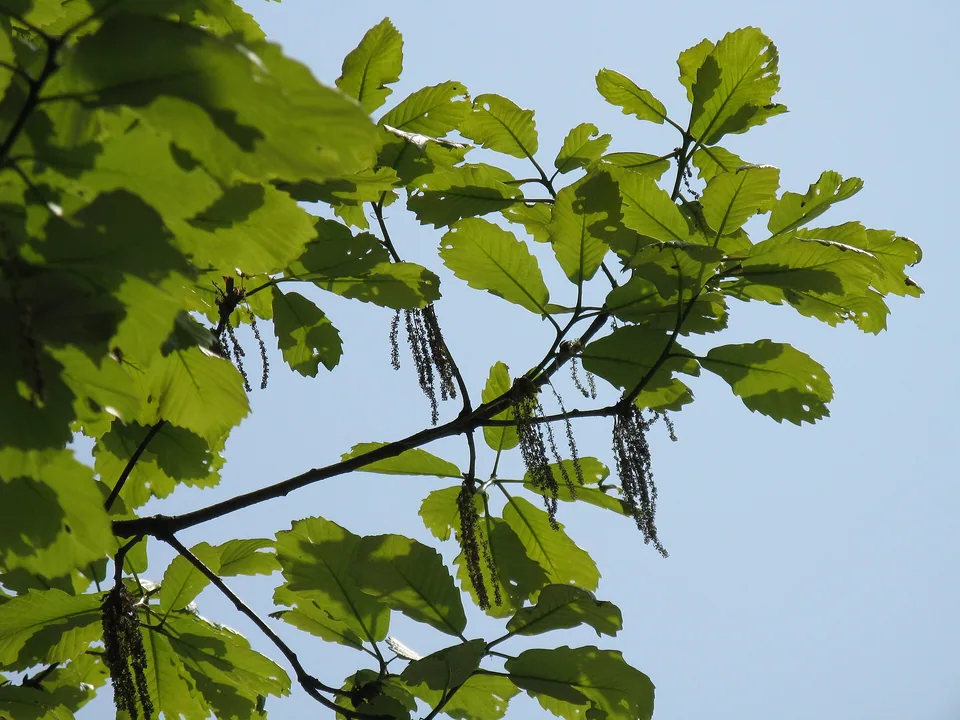
Quercus aliena is a deciduous oak native to Japan, Korea and China. [2] It is a slow-growing, long-lived tree with a spreading crown, still rare in cultivation outside its native area. [8] It grows best where summers are hot and often grows poorly in areas with cooler summers. [3]
This record is incomplete: the sources we read do not cover every field yet.
Not yet covered by our sources: Pruning
Galcham oak care
How to water Galcham oak
Watering
Moderate water; not drought tolerant
What the sources say (1)
Water
moderate
Hardiness
Zone 5+
Soil textures
loamy, clay
Soil pH
acid, neutral, alkaline
Tolerances
high wind
Wind
Yes
Tolerates Nutritionally Poor Soil
No
Drought
intolerantWatering notes
Moist, well-drained soil; avoid waterlogged sites
How much light Galcham oak needs
Full sun to partial shade
What the sources say (3)
Prefers full sun; tolerates part shade. Prefers rich, moist, well-drained loams or sandy soils.Exposure:
Full Sun
Partial ShadeLight
full sun
Shade tolerance
light shade
Water
moderateHow much cold Galcham oak can take
Hardiness, coldest zone
5 [winter low −28.9 to −23.3 °C (−20 to −10 °F)]
What the sources say (3)
Does not move well, so plant in a permanent location. Zones 5-8.Plant Type:
Tree
Hardiness Zone:
5 - 8Shade tolerance
light shade
Water
moderate
Hardiness
Zone 5+How to propagate Galcham oak
Seed
What the sources say (1)
Seed - it quickly loses viability if it is allowed to dry out. It can be stored moist and cool overwinter but is best sown as soon as it is ripe in an outdoor seed bedRemedies
The sources we checked give no remedies for this plant.
Calendar
As soon as ripe, in an outdoor seed bed
What the sources say (1)
Seed - it quickly loses viability if it is allowed to dry out. It can be stored moist and cool overwinter but is best sown as soon as it is ripe in an outdoor seed bedSeptember-October (acorns ripen)
Not stated in the sources we read.
Months as given by the sources, which are mostly from the United States (northern hemisphere). In the southern hemisphere they shift by about six months.
Edibility
Reported by the source, quoted verbatim. Do not eat a plant on the basis of this page alone: identification mistakes can be dangerous.
Seed - cooked [2] [5] . The seed is about 25mm long, it can be dried, ground into a powder and used as a thickening in stews etc or mixed with cereals for making bread.
[4]The wood is used in East Asia for boat building and wood flooring. Crushed seeds have been used as a soup thickener and for mixing into cereals and breads.
[8]
Indicative values
Values from a secondary source, not checked word for word like the rest of this page. Use them as a starting point.
- Life cycle
- PerennialIndicative value, adapt it to your climate · Secondary source
- Mature height
- 1219.2-2438.4 cm (40-80 ft)Indicative value, adapt it to your climate · Secondary source
- Drought tolerant
- yesIndicative value, adapt it to your climate · Secondary source
- Soil pH
- 5.5-6.5Indicative value, adapt it to your climate · Secondary source
- Growth rate
- HighIndicative value, adapt it to your climate · Secondary source
- Pruning
- March, April, May, June, July, August, September, March, April, May, August, MayIndicative value, adapt it to your climate · Secondary source
Similar plants
- Black Oak Quercus velutina
- Blackjack Oak Quercus marilandica
- Bluejack Oak Quercus incana
- Bluff Oak Quercus austrina
- Bur Oak Quercus macrocarpa
- Canyon Live Oak Quercus chrysolepis
- Cherrybark Oak Quercus pagoda
- Chestnut Oak Quercus montana
Sources
Every value above is quoted from these documents. Links lead to the original publisher.
- Quercus aliena | Chicago Botanic Garden · chicagobotanic.org, consulted
- Quercus aliena - Trees and Shrubs Online · treesandshrubsonline.org, consulted
- Quercus aliena - Useful Temperate Plants · temperate.theferns.info, consulted
- Oriental White Oak (Quercus aliena) — Practical Plants · practicalplants.org, consulted
- Quercus aliena · oaksoftheworld.fr, consulted
- Quercus aliena Blume - AsianFagaceae.com · asianfagaceae.com, consulted
- Woody Plants Database · woodyplants.cals.cornell.edu, consulted
- Species Records | Boone County Arboretum · bcarboretum.org, consulted
Written by Emilio Marruso · last checked