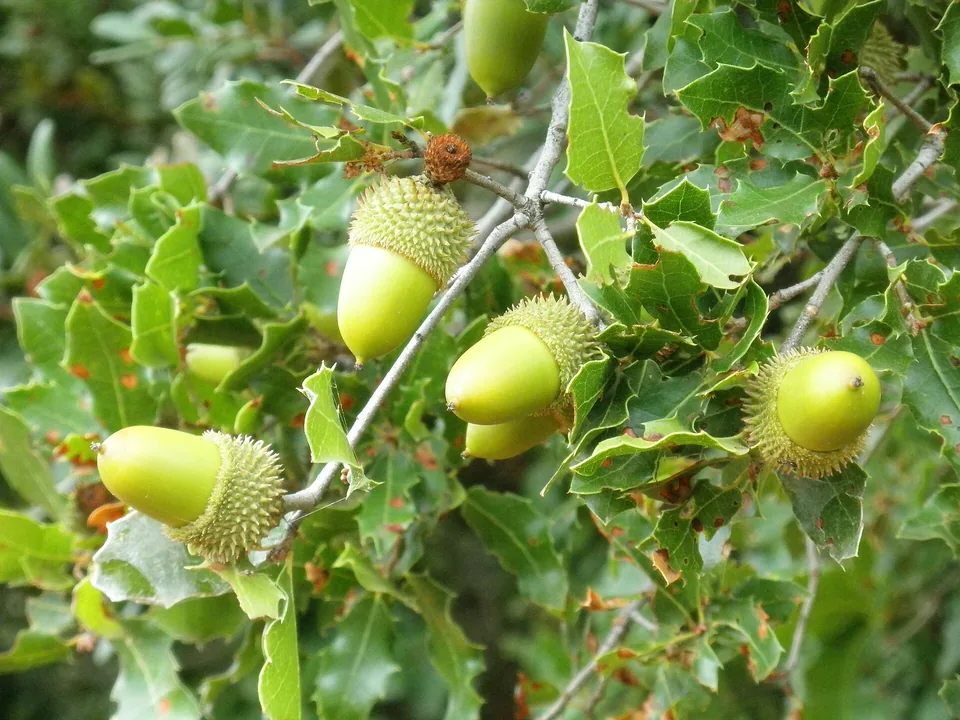
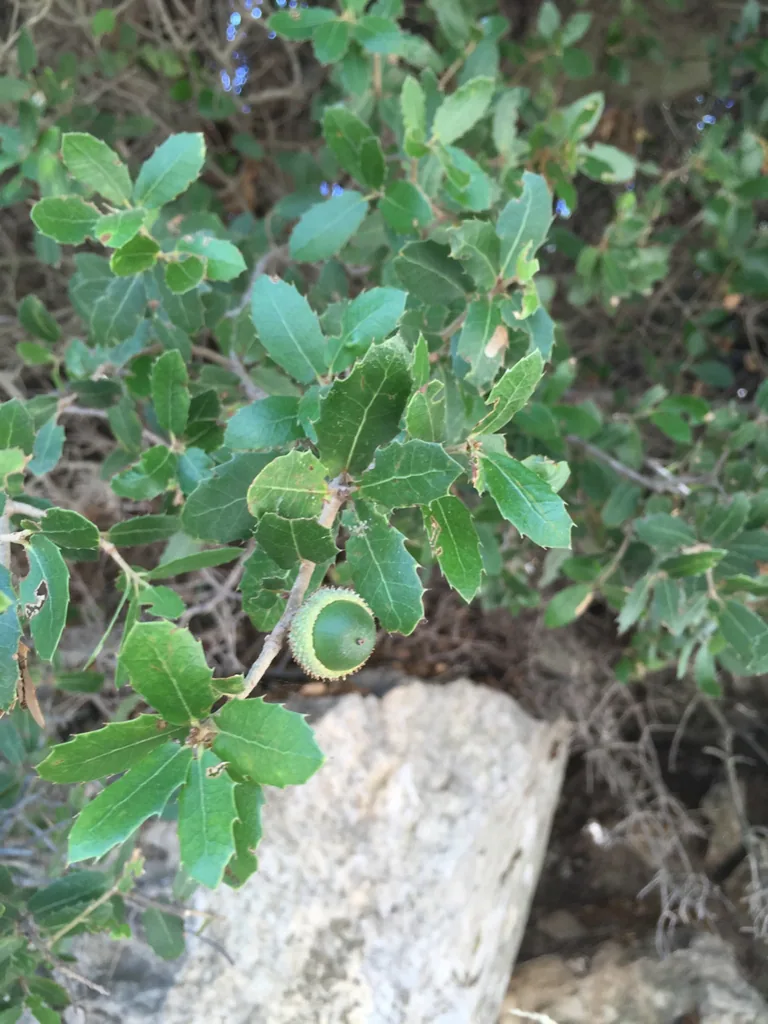

How to Grow and Care for Kermes Oak
Quercus coccifera
Written by Emilio Marruso · last checked
Toxic to: People · Why
At a glance
The kermes oak is a tough, easygoing oak: it loves plenty of sun, shrugs off drought and grows in soils from acidic to alkaline. Plant it in late May or September, give it plenty of room and keep its roots out of soggy ground. As a bonus, its acorns are edible, usually cooked, or dried and ground into a powder.
- Sun
Needs lots of sun
What the sources say (1)
Light: High light requirement (much sun)
Resistencia: - Encharcamiento: poco. - Viento: mucho. - Sol: mucho. - Ambiente marítimo: mucho. Necesidades Hídricas: resistente a la sequía. Luz: mucha.
— Quercus Coccífera L. [6] - Water
Handles drought well, but never let the soil stay soggy
What the sources say (3)
Watering: Drought resistant
Resistencia: - Encharcamiento: poco. - Viento: mucho. - Sol: mucho. - Ambiente marítimo: mucho. Necesidades Hídricas: resistente a la sequía. Luz: mucha.
— Quercus Coccífera L. [6] It is highly drought-tolerant and well adapted to challenging environmental conditions.
— Kermes Oak – Flora – Jardim Gulbenkian [5] Watering notes: Low tolerance of waterlogging
Resistencia: - Encharcamiento: poco. - Viento: mucho. - Sol: mucho. - Ambiente marítimo: mucho. Necesidades Hídricas: resistente a la sequía. Luz: mucha.
— Quercus Coccífera L. [6] - Soil
Grows in acidic to alkaline soil, pH 5.5–8.5
- Spacing
Leave 16 ft between plants
What the sources say (1)
Spacing: 500 cm (5 m)
Distancia mínima a infraestructuras: 5 m (mantener el seto en formación) Distancia recomendable entre individuos: 5 m Dimensiones del alcorque: No se recomienda su uso en aceras
— Quercus Coccífera L. [6] - Planting
Plant in late May or September, once the plant has started growing
What the sources say (1)
Planting: Late May or September (transplanting once growth has commenced)
Any transplanting should be done once growth has commenced in late May or in September
— Quercus coccifera - Useful Temperate Plants [4] - Harvest
The acorns are edible, usually cooked, or dried and ground into a powder
- Propagation
Grows from seed
What the sources say (1)
Propagation: Seed
Seed - it quickly loses viability if it is allowed to dry out. It can be stored moist and cool overwinter but is best sown as soon as it is ripe in an outdoor seed bed
— Quercus coccifera - Useful Temperate Plants [4] - Sowing
Sow the acorns in fall, in a seed bed or pots
What the sources say (1)
Sowing: Autumn (nursery sowing)
Apto para calles estrechas: NO Época plantación: la siembra en vivero suele hacerse en otoño
— Quercus Coccífera L. [6] - Safety
Only mildly toxic; its bitter taste keeps anyone from eating much
Overview
Kermes oak is an evergreen shrub or small tree of the Mediterranean that adapts to dry, rocky soils and drought. [1] It is highly drought-tolerant and occurs naturally in dry, sunny habitats, particularly on rocky, calcareous soils. [5] It is propagated by seed. [4]
This record is incomplete: the sources we read do not cover every field yet.
Not yet covered by our sources: Hardiness, coldest zone, Hardiness, warmest zone, Pruning
Kermes Oak care
How to water Kermes Oak
Watering
Drought resistant
What the sources say (2)
Resistencia: - Encharcamiento: poco. - Viento: mucho. - Sol: mucho. - Ambiente marítimo: mucho. Necesidades Hídricas: resistente a la sequía. Luz: mucha.It is highly drought-tolerant and well adapted to challenging environmental conditions.Watering notes
Low tolerance of waterlogging
What the sources say (1)
Resistencia: - Encharcamiento: poco. - Viento: mucho. - Sol: mucho. - Ambiente marítimo: mucho. Necesidades Hídricas: resistente a la sequía. Luz: mucha.How much light Kermes Oak needs
High light requirement (much sun)
What the sources say (1)
Resistencia: - Encharcamiento: poco. - Viento: mucho. - Sol: mucho. - Ambiente marítimo: mucho. Necesidades Hídricas: resistente a la sequía. Luz: mucha.How much cold Kermes Oak can take
Hardiness, coldest zone
Not stated in the sources we read.
Hardiness, warmest zone
Not stated in the sources we read.
Best soil for Kermes Oak
Soil pH, minimum
5.5
What the sources say (1)
Preferencia de suelo: - pH: 5,5 - 8,5 - Prefiere suelos silíceos y calizos.Soil pH, maximum
8.5
What the sources say (1)
Preferencia de suelo: - pH: 5,5 - 8,5 - Prefiere suelos silíceos y calizos.Where to grow Kermes Oak
500 cm (5 m)
What the sources say (1)
Distancia mínima a infraestructuras: 5 m (mantener el seto en formación) Distancia recomendable entre individuos: 5 m Dimensiones del alcorque: No se recomienda su uso en acerasHow to propagate Kermes Oak
Seed
What the sources say (1)
Seed - it quickly loses viability if it is allowed to dry out. It can be stored moist and cool overwinter but is best sown as soon as it is ripe in an outdoor seed bedHow to grow Kermes Oak
The plant
Family
Fagaceae
What the sources say (1)
It belongs to the Fagaceae family.Remedies
Each remedy shows what official sources say about it; traditional remedies without an official source are marked as such. Harmful ones are listed so you know to avoid them.
Treating the plant
kermes scale
hand removal of scale and pruning out infested branches Not verified
Traditional remedy, not verified by an official source.
How: Scale can be removed by hand, and infested branches can be pruned out and destroyed to help keep infestations under control.
Is Kermes Oak poisonous?
Reported by the source, quoted verbatim. This is not medical or veterinary advice: if a person or an animal may have eaten this plant, contact a poison control centre or a veterinarian.
Tannins are only of low toxicity and, because of their bitter taste and astringency, are unlikely to be eaten in large quantities.
[4]- Poisonous parts
All parts of the plant contain tannins. Whilst tannins are found in many foods, and have a range of medicinal uses.
[4]- Toxic principle
All parts of the plant contain tannins. Whilst tannins are found in many foods, and have a range of medicinal uses.
[4]- Symptoms
However, if they are taken in excess, they can cause stomach pains; constipation followed by bloody diarrhoea: excessive thirst; and excessive urination
[4]- Severity
Tannins are only of low toxicity and, because of their bitter taste and astringency, are unlikely to be eaten in large quantities.
[4]
Calendar
Autumn (nursery sowing)
What the sources say (1)
Apto para calles estrechas: NO Época plantación: la siembra en vivero suele hacerse en otoñoLate May or September (transplanting once growth has commenced)
What the sources say (1)
Any transplanting should be done once growth has commenced in late May or in SeptemberNot stated in the sources we read.
Months as given by the sources, which are mostly from the United States (northern hemisphere). In the southern hemisphere they shift by about six months.
Edibility
Reported by the source, quoted verbatim. Do not eat a plant on the basis of this page alone: identification mistakes can be dangerous.
The seed is usually cooked before eating, though it can also be eaten raw. It can be eaten whole, though it is more commonly dried, then ground into a powder
[4]
Indicative values
Values from a secondary source, not checked word for word like the rest of this page. Use them as a starting point.
- Life cycle
- PerennialIndicative value, adapt it to your climate · Secondary source
- Drought tolerant
- yesIndicative value, adapt it to your climate · Secondary source
- USDA hardiness zones
- 6-8 [winter low −23.3 to −6.7 °C (−10 to 20 °F)]Indicative value, adapt it to your climate · Secondary source
- Care level
- MediumIndicative value, adapt it to your climate · Secondary source
- Growth rate
- LowIndicative value, adapt it to your climate · Secondary source
- Pruning
- March, April, March, AprilIndicative value, adapt it to your climate · Secondary source
Similar plants
- Black Oak Quercus velutina
- Blackjack Oak Quercus marilandica
- Bluejack Oak Quercus incana
- Bluff Oak Quercus austrina
- Bur Oak Quercus macrocarpa
- Canyon Live Oak Quercus chrysolepis
- Cherrybark Oak Quercus pagoda
- Chestnut Oak Quercus montana
Sources
Every value above is quoted from these documents. Links lead to the original publisher.
- Quercus coccifera - EUFORGEN European forest genetic resources programme · euforgen.org, consulted
- FILMED · uv.es, consulted
- Bean's Trees and Shrubs · beanstreesandshrubs.org, consulted
- Quercus coccifera - Useful Temperate Plants · temperate.theferns.info, consulted
- Kermes Oak – Flora – Jardim Gulbenkian · gulbenkian.pt, consulted
- Quercus Coccífera L. · dipucadiz.es, consulted
Written by Emilio Marruso · last checked