
How to Grow and Care for Hill's Oak
Quercus ellipsoidalis
Written by Emilio Marruso · last checked
At a glance
This oak grows into a grand shade tree, 50–60 feet tall and 40–50 feet wide, a real gift for a big yard in full sun. You can even raise one yourself from seed. Give it soil that isn't alkaline, skip pruning in the growing season where oak wilt is present, and choose its spot well: its deep taproot makes moving it hard.
- Sun
Full sun
What the sources say (2)
- Soil
Avoid alkaline soil: the leaves turn yellow in it
- Pruning
Where oak wilt is present, never prune during the growing season
What the sources say (1)
Pruning: Not during the growing season in oak wilt-infested areas
Susceptible to the deadly oak wilt. Do not prune in wilt-infested areas during the growing season.
— Lady Bird Johnson Wildflower Center - The University of Texas at Austin [5] - Pests
Yellownecked caterpillars, anthracnose and oak wilt, a disease that can kill the tree
What the sources say (3)
Pests: Yellownecked caterpillar
Pathogen Anthracnose [Trees and Shrubs] Oak Leaf Blister Smooth Patch Wetwood Wood Rots and Decays Botryosphaeria Dieback/Canker Bacterial Leaf Scorch Yellownecked Caterpillar
— Northern Pin Oak | Drush Site-Install [4] Diseases: Anthracnose, oak leaf blister, smooth patch, wetwood, wood rots and decays, Botryosphaeria dieback/canker, bacterial leaf scorch, oak wilt
Pathogen Anthracnose [Trees and Shrubs] Oak Leaf Blister Smooth Patch Wetwood Wood Rots and Decays Botryosphaeria Dieback/Canker Bacterial Leaf Scorch Yellownecked Caterpillar
— Northern Pin Oak | Drush Site-Install [4] Yellownecked Caterpillar Drowning and Edema Drought Oak Wilt Size Large Exposure (Outdoor) Full Sun
— Northern Pin Oak | Drush Site-Install [4] - Watch out
Hard to transplant because of its deep taproot: choose its spot well
- Size
50–60 ft tall and 40–50 ft wide
What the sources say (3)
Mature height: 1524-1829 cm (50-60 ft)
Ultimate Height: 50-60 feet Ultimate Spread: 40-50 feet
— Quercus ellipsoidalis (Northern Pin Oak) – Purdue Arboretum Explorer [1] Maximum Height Height Value 60.00 Height Unit Feet
— Northern Pin Oak | Drush Site-Install [4] Mature width: 1219-1524 cm (40-50 ft)
Ultimate Height: 50-60 feet Ultimate Spread: 40-50 feet
— Quercus ellipsoidalis (Northern Pin Oak) – Purdue Arboretum Explorer [1] - Propagation
Grows from seed
What the sources say (1)
Propagation: Seed
Oaks are most often propagated from seed. No pretreatment is necessary.
— Lady Bird Johnson Wildflower Center - The University of Texas at Austin [5]
Overview
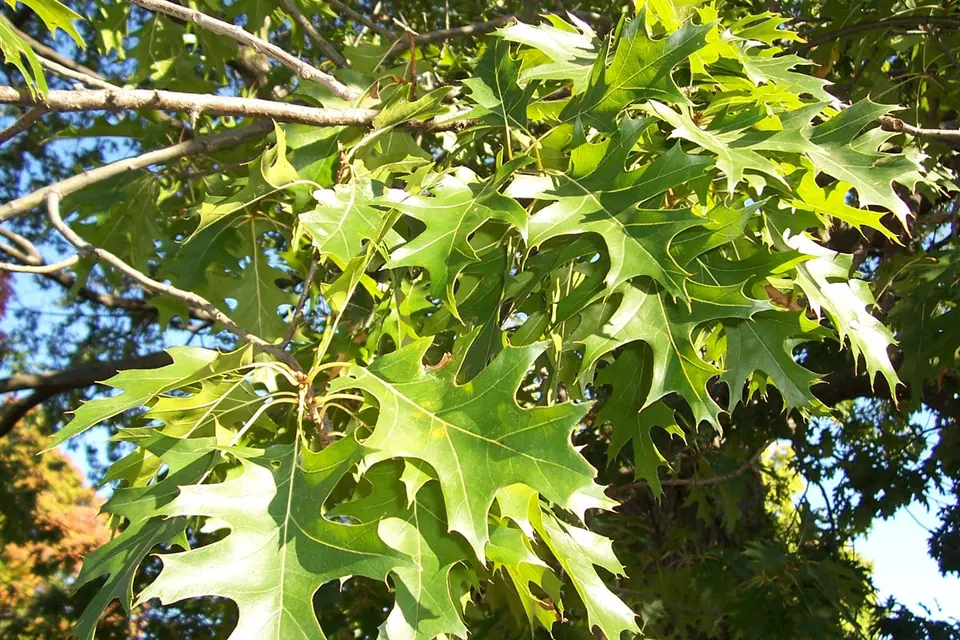
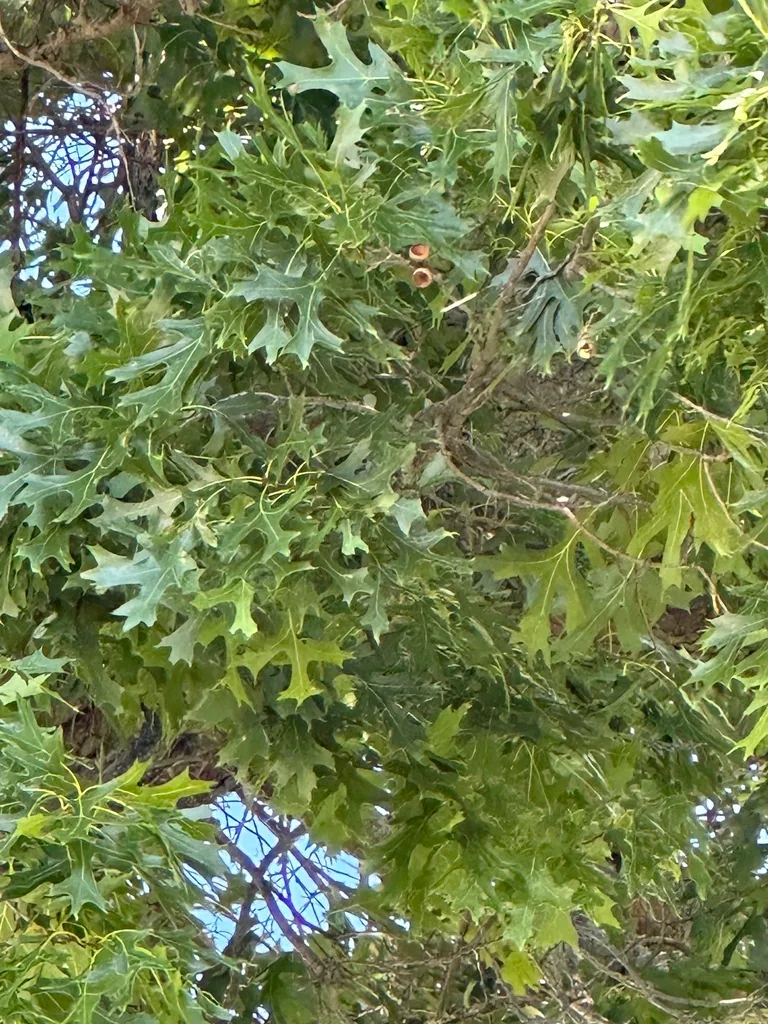
Northern pin oak is a deciduous tree grown as a specimen, shade and street tree in parks. [1] The tree is susceptible to oak wilt and is difficult to transplant because of its deep taproot. [5][4]
This record is incomplete: the sources we read do not cover every field yet.
Not yet covered by our sources: Hardiness, warmest zone
Hill's Oak care
How to water Hill's Oak
The sources give different values depending on region, zone or growing conditions.
What each source says
According to Purdue Arboretum: Dry to medium
According to Illinois Extension: Moist, well drained soils; tolerates dryness
According to Lady Bird Johnson Wildflower Center: Dry
What the sources say (3)
According to Purdue Arboretum: Light Requirements:
- Sun
Soil Water Requirements:
- Dry to medium 74According to Illinois Extension: Culture
Full sun; prefers moist, well drained soils but can also tolerate dryness.According to Lady Bird Johnson Wildflower Center: Light Requirement: Sun
Soil Moisture: Dry
Soil pH: Circumneutral (pH 6.8-7.2)
Soil Description: Dry, sandy soils.How much light Hill's Oak needs
Full sun
What the sources say (2)
Culture
Full sun; prefers moist, well drained soils but can also tolerate dryness.Slow-growing; long lived. Requires full sun. Susceptible to the deadly oak wilt.How much cold Hill's Oak can take
Hardiness, coldest zone
The sources give different values depending on region, zone or growing conditions.
What each source says
According to Purdue Arboretum: 4 [winter low −34.4 to −28.9 °C (−30 to −20 °F)]
According to Trees and Shrubs Online: 3 [winter low −40 to −34.4 °C (−40 to −30 °F)]
What the sources say (2)
According to Purdue Arboretum: Hardiness:
- USDA Zone 4 552
Deciduous / Evergreen:
- Deciduous 880According to Trees and Shrubs Online: winter hardiness (it is one of the few North American oaks hardy in USDA Zone 3)Hardiness, warmest zone
Not stated in the sources we read.
Best soil for Hill's Oak
Soil pH, minimum
The sources give different values depending on region, zone or growing conditions.
What each source says
According to Lady Bird Johnson Wildflower Center: 6.8
What the sources say (1)
According to Lady Bird Johnson Wildflower Center: Light Requirement: Sun
Soil Moisture: Dry
Soil pH: Circumneutral (pH 6.8-7.2)
Soil Description: Dry, sandy soils.Soil pH, maximum
The sources give different values depending on region, zone or growing conditions.
What each source says
According to Lady Bird Johnson Wildflower Center: 7.2
What the sources say (1)
According to Lady Bird Johnson Wildflower Center: Light Requirement: Sun
Soil Moisture: Dry
Soil pH: Circumneutral (pH 6.8-7.2)
Soil Description: Dry, sandy soils.How to propagate Hill's Oak
Seed
What the sources say (1)
Oaks are most often propagated from seed. No pretreatment is necessary.How to grow Hill's Oak
The plant
Family
Fagaceae
What the sources say (1)
Family: - Fagaceae (Beech Family) 46 Genus: - Quercus (Oak) 33 Plant Type: - Tree 583Mature height
1524-1829 cm (50-60 ft)
Mature width
1219-1524 cm (40-50 ft)
What the sources say (1)
Ultimate Height: 50-60 feet Ultimate Spread: 40-50 feetPests and diseases
Pests
Yellownecked caterpillar
What the sources say (1)
Pathogen Anthracnose [Trees and Shrubs] Oak Leaf Blister Smooth Patch Wetwood Wood Rots and Decays Botryosphaeria Dieback/Canker Bacterial Leaf Scorch Yellownecked CaterpillarDiseases
Anthracnose, oak leaf blister, smooth patch, wetwood, wood rots and decays, Botryosphaeria dieback/canker, bacterial leaf scorch, oak wilt
What the sources say (2)
Pathogen Anthracnose [Trees and Shrubs] Oak Leaf Blister Smooth Patch Wetwood Wood Rots and Decays Botryosphaeria Dieback/Canker Bacterial Leaf Scorch Yellownecked CaterpillarYellownecked Caterpillar Drowning and Edema Drought Oak Wilt Size Large Exposure (Outdoor) Full SunHill's Oak pests and problems
Chlorosis in alkaline soils
Symptom: Yellowing of leaves in alkaline soils.
What the sources say (1)
While this species is still prone to chlorosis (yellowing of leaves) in alkaline soils, it is more tolerant to high pH than Q. palustris.
— Quercus ellipsoidalis (Northern Pin Oak) – Purdue Arboretum Explorer [1] Oak wilt
Symptom: The tree is susceptible to the deadly oak wilt.
What to do: Do not prune in wilt-infested areas during the growing season.
What the sources say (1)
Susceptible to the deadly oak wilt. Do not prune in wilt-infested areas during the growing season.
— Lady Bird Johnson Wildflower Center - The University of Texas at Austin [5] Difficult transplanting
Symptom: Difficult to transplant due to deep taproot.
What the sources say (1)
Culture Full sun; prefers moist, well drained soils but can also tolerate dryness. Notes Difficult to transplant due to deep taproot.
— Northern Pin Oak | Drush Site-Install [4]
Remedies
Each remedy shows what official sources say about it; traditional remedies without an official source are marked as such. Harmful ones are listed so you know to avoid them.
Treating the plant
oak wilt
no pruning from april to july, paint wounds Official source, not independently tested
How: Do not prune oaks from April through July to prevent infection by sap beetles; immediately cover unavoidable wounds with a latex-based paint or shellac.
DO NOT prune oaks from April through July to prevent infection by sap beetles. Immediately cover unavoidable wounds with a latex-based paint or shellac.
— extension.umn.edu [7]
Calendar
Pruning
Not during the growing season in oak wilt-infested areas
What the sources say (1)
Susceptible to the deadly oak wilt. Do not prune in wilt-infested areas during the growing season.Months as given by the sources, which are mostly from the United States (northern hemisphere). In the southern hemisphere they shift by about six months.
Indicative values
Values from a secondary source, not checked word for word like the rest of this page. Use them as a starting point.
- Life cycle
- PerennialIndicative value, adapt it to your climate · Secondary source
- Growth rate
- HighIndicative value, adapt it to your climate · Secondary source
Similar plants
- Black Oak Quercus velutina
- Blackjack Oak Quercus marilandica
- Bluejack Oak Quercus incana
- Bluff Oak Quercus austrina
- Bur Oak Quercus macrocarpa
- Canyon Live Oak Quercus chrysolepis
- Cherrybark Oak Quercus pagoda
- Chestnut Oak Quercus montana
Sources
Every value above is quoted from these documents. Links lead to the original publisher.
- Quercus ellipsoidalis (Northern Pin Oak) – Purdue Arboretum Explorer · arboretum.purdue.edu, consulted
- Virginia Tech Dendrology Fact Sheet · dendro.cnre.vt.edu, consulted
- Quercus ellipsoidalis · oaksoftheworld.fr, consulted
- Northern Pin Oak | Drush Site-Install · selectors.extension.illinois.edu, consulted
- Lady Bird Johnson Wildflower Center - The University of Texas at Austin · wildflower.org, consulted
- Quercus ellipsoidalis - Trees and Shrubs Online · treesandshrubsonline.org, consulted
- extension.umn.edu · extension.umn.edu
Written by Emilio Marruso · last checked