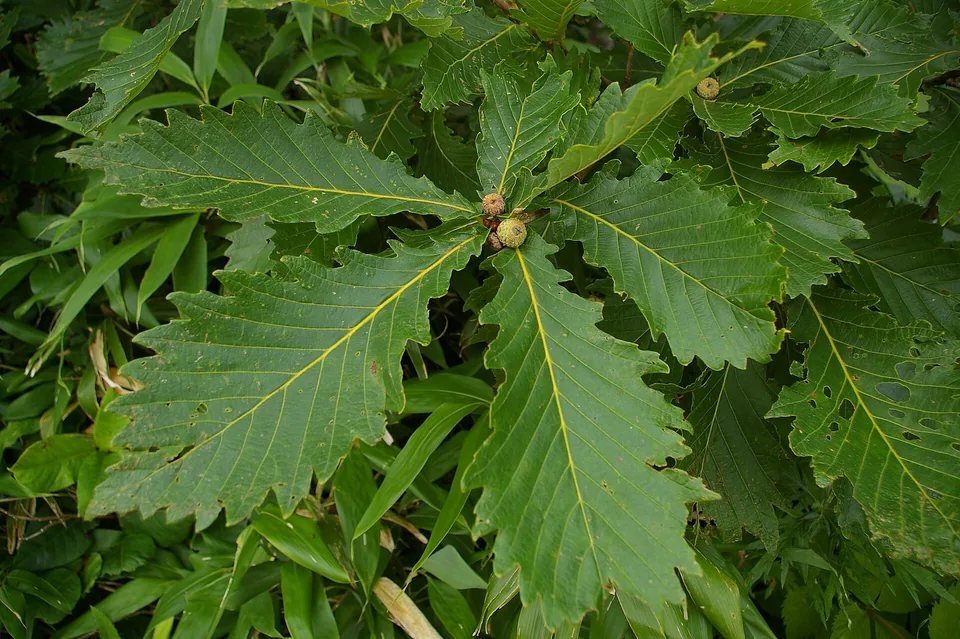
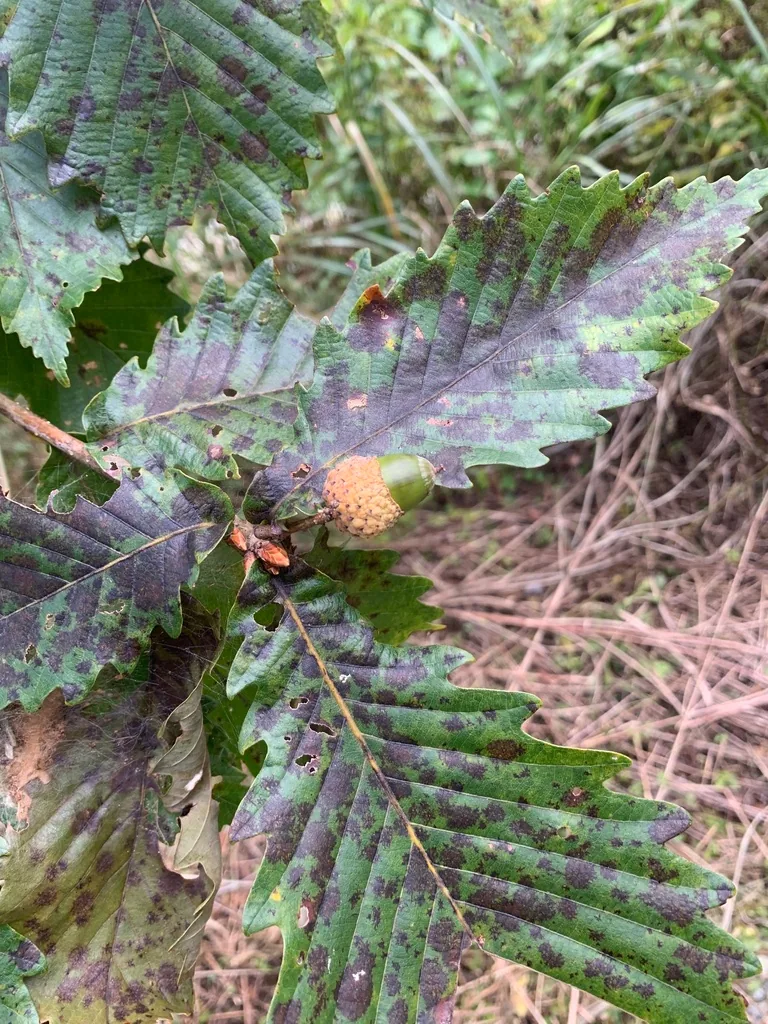

How to Grow and Care for Mongolian oak
Quercus mongolica
Written by Emilio Marruso · last checked
At a glance
Mongolian oak is a member of the beech family that asks for very little. It grows happily in sun or part shade, and while it likes moist, well-drained soil, it also tolerates drought. Keep an eye out for scale, leaf miners and galls, and this easygoing tree will be a welcome addition to your garden.
- Sun
Sun to part shade
- Water
Likes moist soil, but tolerates drought
- Soil
Moist soil that drains well
What the sources say (1)
Watering: Moist, well-drained soil
Water : Prefers moist, well drained soils.
— Mongolian Oak | NDSU Agriculture [1] - Pests
Watch for scale insects, leaf miners and galls
What the sources say (1)
Pests: scale, leaf miners, galls
No serious disease or insect issues but can get scale, leaf miners and galls. Excellent as a shade tree in large areas.
— Mongolian Oak | NDSU Agriculture [1]
Overview
Mongolian oak is a medium to large deciduous tree native to eastern Asia, with rosy to coppery fall color and leaves retained into winter. [1] It grows in sun to part shade, in fertile loam or a wide variety of soils, and is drought tolerant. [2] The Trees and Shrubs Online account calls it ideal as an oak for cold winter climates. [4]
This record is incomplete: the sources we read do not cover every field yet.
Not yet covered by our sources: Hardiness, warmest zone, Pruning, Propagation
Mongolian oak care
How to water Mongolian oak
Watering
Moist, well-drained soil
What the sources say (1)
Water : Prefers moist, well drained soils.Watering notes
Drought tolerant
What the sources say (1)
Drought tolerant.How much light Mongolian oak needs
How much cold Mongolian oak can take
Hardiness, coldest zone
The sources give different values depending on region, zone or growing conditions.
What each source says
According to NDSU Extension: 3 [winter low −40 to −34.4 °C (−40 to −30 °F)]
According to Oregon State University: 3 [winter low −40 to −34.4 °C (−40 to −30 °F)]
subsp. mongolica, fonte: Trees and Shrubs Online: 4 [winter low −34.4 to −28.9 °C (−30 to −20 °F)]
What the sources say (3)
According to NDSU Extension: Hardiness: Zone 3According to Oregon State University: Hardy to USDA Zone 3subsp. mongolica, fonte: Trees and Shrubs Online: USDA Hardiness Zone 4Hardiness, warmest zone
Not stated in the sources we read.
How to propagate Mongolian oak
Not stated in the sources we read.
How to grow Mongolian oak
The plant
Family
Fagaceae
What the sources say (1)
General
Scientific Name: Quercus mongolica
Family: Fagaceae (Beech)
Hardiness: Zone 3
Leaves: DeciduousPests and diseases
Pests
scale, leaf miners, galls
What the sources say (1)
No serious disease or insect issues but can get scale, leaf miners and galls.
Excellent as a shade tree in large areas.Remedies
The sources we checked give no remedies for this plant.
Calendar
Pruning
Not stated in the sources we read.
Months as given by the sources, which are mostly from the United States (northern hemisphere). In the southern hemisphere they shift by about six months.
Indicative values
Values from a secondary source, not checked word for word like the rest of this page. Use them as a starting point.
- Life cycle
- PerennialIndicative value, adapt it to your climate · Secondary source
- Mature height
- 914.4-1828.8 cm (30-60 ft)Indicative value, adapt it to your climate · Secondary source
- Soil pH
- 5.5-6.5Indicative value, adapt it to your climate · Secondary source
- Care level
- MediumIndicative value, adapt it to your climate · Secondary source
- Growth rate
- HighIndicative value, adapt it to your climate · Secondary source
- Pruning
- March, April, June, July, AugustIndicative value, adapt it to your climate · Secondary source
- Propagation
- Seed Propagation, Cutting, Grafting Propagation, Layering Propagation, Air Layering PropagationIndicative value, adapt it to your climate · Secondary source
Similar plants
- Black Oak Quercus velutina
- Bluejack Oak Quercus incana
- Cherrybark Oak Quercus pagoda
- Chestnut Oak Quercus montana
- Chisos Oak Quercus canbyi
- Cork Oak Quercus suber
- Darlington oak Quercus hemisphaerica
- Dwarf Chinquapin Oak Quercus prinoides
Sources
Every value above is quoted from these documents. Links lead to the original publisher.
- Mongolian Oak | NDSU Agriculture · ndsu.edu, consulted
- Quercus mongolica | Landscape Plants | Oregon State University · landscapeplants.oregonstate.edu, consulted
- Quercus mongolica · oaksoftheworld.fr, consulted
- Quercus mongolica - Trees and Shrubs Online · treesandshrubsonline.org, consulted
- Quercus mongolica grosseserrata — Practical Plants · practicalplants.org, consulted
- Quercus mongolica Fisch. ex Ledeb. - AsianFagaceae.com · asianfagaceae.com, consulted
Written by Emilio Marruso · last checked