
How to Grow and Care for Downy oak
Quercus pubescens
Written by Emilio Marruso · last checked
Toxic to: People · Why
At a glance
The downy oak is a tree for a sunny spot, and while young it happily accepts some shade from the side. Once settled in, it handles dry spells fairly well. Its acorns even have a story: cooked, or dried and ground into flour, they can thicken stews or go into bread, a food for hard times.
- Sun
Sunny spot; young plants accept shade from the side
What the sources say (2)
Light: Sunny position; young plants tolerate side shade
Prefers a sunny position, though young plants tolerate reasonable levels of side shade
— Quercus pubescens - Useful Temperate Plants [6] It behaves as a heliophilous and thermophilous species and is perfectly adapted to stand both moderate summer drought stress
— Quercus pubescens [1] - Water
Once settled in, it handles dry spells fairly well
What the sources say (2)
Watering notes: Established plants are moderately drought tolerant
Tolerates moderate exposure, surviving well but being somewhat stunted. Established plants are moderately drought tolerant
— Quercus pubescens - Useful Temperate Plants [6] is perfectly adapted to stand both moderate summer drought stress and low winter temperatures
— Quercus pubescens [1] - Harvest
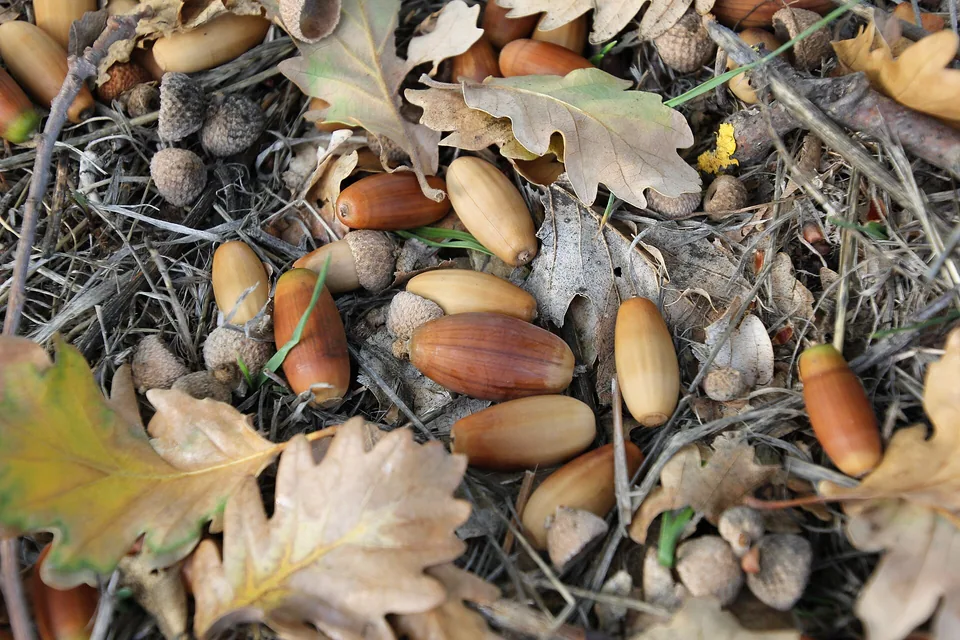
Acorns are eaten cooked, or dried and ground into flour for stews and bread
- Pests
Watch for gypsy moth caterpillars and oak decline
What the sources say (2)
Pests: gypsy moth (Lymantria dispar)
This tree may also be attacked by the gypsy moth (Lymantria dispar)
— Quercus pubescens [1] Diseases: oak decline (Phytophthora cinnamomi, Phytophthora ramorum, Phytophthora quercina)
In particular, downy oak is susceptlible to Phytophthora cinnamomi, Phytophthora ramorum and highly vulnerable to Phytophthora quercina
— Quercus pubescens [1] - Safety
Its tannins are only mildly toxic, and their bitter taste stops people eating much
Overview
Downy oak is valued in landscape and reforestation projects for its drought and frost resistance and ornamental qualities. [2] It prefers a sunny position, although young plants tolerate side shade. [6] Its acorns are cooked and used as a famine food. [6]
This record is incomplete: the sources we read do not cover every field yet.
Not yet covered by our sources: Watering, Hardiness, coldest zone, Hardiness, warmest zone, Pruning, Propagation
Downy oak care
How to water Downy oak
Watering
Not stated in the sources we read.
Watering notes
Established plants are moderately drought tolerant
What the sources say (2)
Tolerates moderate exposure, surviving well but being somewhat stunted. Established plants are moderately drought tolerantis perfectly adapted to stand both moderate summer drought stress and low winter temperaturesHow much light Downy oak needs
Sunny position; young plants tolerate side shade
What the sources say (2)
Prefers a sunny position, though young plants tolerate reasonable levels of side shadeIt behaves as a heliophilous and thermophilous species and is perfectly adapted to stand both moderate summer drought stressHow much cold Downy oak can take
Hardiness, coldest zone
Not stated in the sources we read.
Hardiness, warmest zone
Not stated in the sources we read.
How to propagate Downy oak
Not stated in the sources we read.
How to grow Downy oak
The plant
Family
Fagaceae
What the sources say (1)
Scientific name:
Quercus pubescens Willd. subsp. pubescens
Common name:
Downy Oak
Family:
FagaceaePests and diseases
Pests
gypsy moth (Lymantria dispar)
What the sources say (1)
This tree may also be attacked by the gypsy moth (Lymantria dispar)Diseases
oak decline (Phytophthora cinnamomi, Phytophthora ramorum, Phytophthora quercina)
What the sources say (1)
In particular, downy oak is susceptlible to Phytophthora cinnamomi, Phytophthora ramorum and highly vulnerable to Phytophthora quercinaRemedies
The sources we checked give no remedies for this plant.
Is Downy oak poisonous?
Reported by the source, quoted verbatim. This is not medical or veterinary advice: if a person or an animal may have eaten this plant, contact a poison control centre or a veterinarian.
Calendar
Pruning
Not stated in the sources we read.
Months as given by the sources, which are mostly from the United States (northern hemisphere). In the southern hemisphere they shift by about six months.
Edibility
Reported by the source, quoted verbatim. Do not eat a plant on the basis of this page alone: identification mistakes can be dangerous.
Similar plants
- Black Oak Quercus velutina
- Blackjack Oak Quercus marilandica
- Bluejack Oak Quercus incana
- Bluff Oak Quercus austrina
- Bur Oak Quercus macrocarpa
- Canyon Live Oak Quercus chrysolepis
- Cherrybark Oak Quercus pagoda
- Chestnut Oak Quercus montana
Sources
Every value above is quoted from these documents. Links lead to the original publisher.
- Quercus pubescens · forest.jrc.ec.europa.eu, consulted
- Quercus pubescens - EUFORGEN European forest genetic resources programme · euforgen.org, consulted
- Quercus pubescens - Trees and Shrubs Online · treesandshrubsonline.org, consulted
- Quercus pubescens Willd. subsp. pubescens – Giardino della Flora Appenninica · giardinocapracotta.unimol.it, consulted
- World Plants · worldplants.ca, consulted
- Quercus pubescens - Useful Temperate Plants · temperate.theferns.info, consulted
- I boschi di roverella, l'ultima frontiera prima della formazione della steppa - waldwissen.net · waldwissen.net, consulted
Written by Emilio Marruso · last checked