
How to Grow and Care for Quercus pyrenaica
Quercus pyrenaica
Written by Emilio Marruso · last checked
At a glance
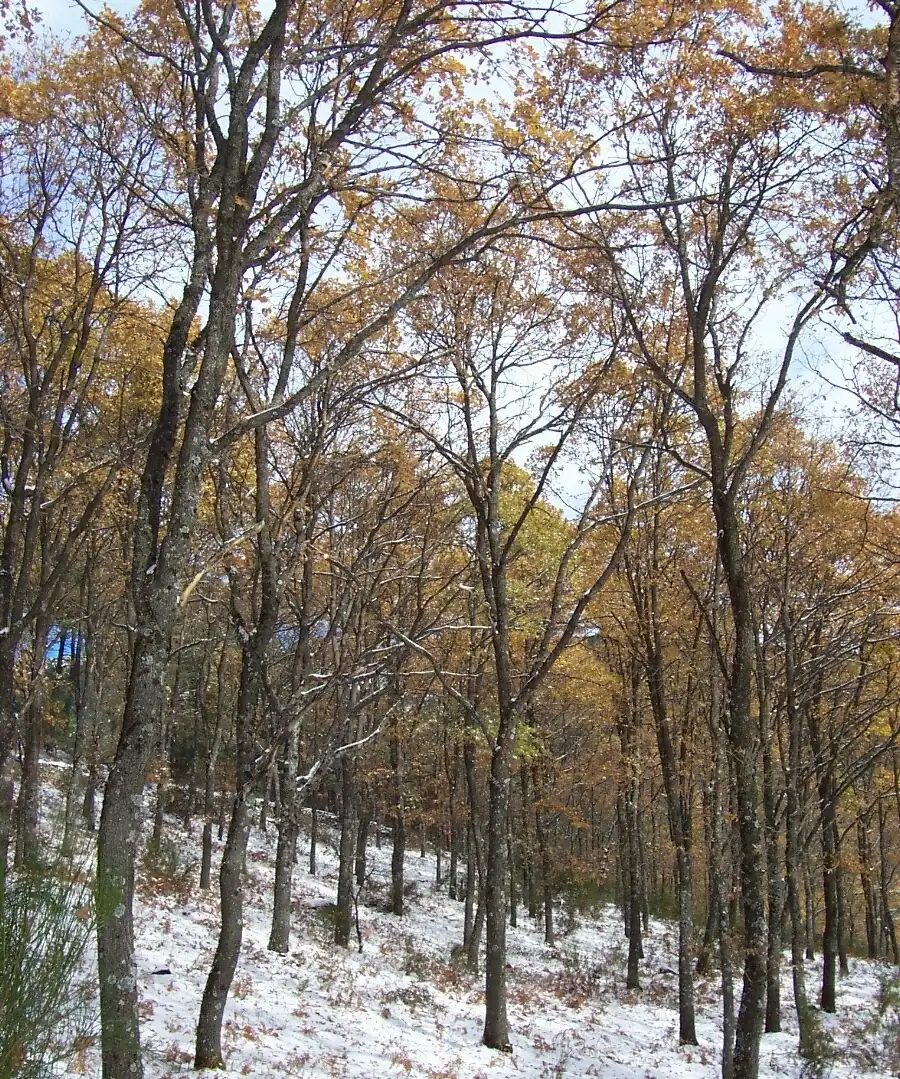
The Pyrenean oak grows into a grand tree, up to 66 ft tall and rarely more than 82 ft. Once it is established, it handles some drought, so it asks very little of you. You can grow it from seed: sow the seeds as soon as they are ripe in an outdoor seed bed, and watch a future giant begin.
- Water
Handles some drought once it is established
What the sources say (1)
Watering: Somewhat drought tolerant once established
Established trees are somewhat drought tolerant
— Quercus pyrenaica - Useful Temperate Plants [4] - Pests
Oak leaf roller, gypsy moth and brown-tail moth caterpillars; root rot and powdery mildew
What the sources say (4)
Pests: green oak leaf roller moth (Tortrix viridana), gypsy moth (Lymantria dispar), brown-tail moth (Euproctis chrysorrhoea)
Pyrenean oaks, like other oaks, can be seriously damaged by the green oak leaf roller moth (Tortrix viridana) and the gypsy moth (Limantria dispar), this latter able to feed several on tree species but preferring oaks
— Quercus pyrenaica [2] Forest defoliations can also be caused by the brown-tail moth (Euproctis chrysorrhoe), an invasive and generalist tree pest
— Quercus pyrenaica [2] Diseases: Phytophthora root pathogens (P. cinnamomi, P. ramorum), powdery mildew (Erysiphe quercicola)
As for the other oaks, Pyrenean oak is vulnerable to root pathogens of the genus Phytophthora (P. cinnamomi, P. ramorum)
— Quercus pyrenaica [2] The powdery mildew (Erysiphe quercicola) is a fungus which may have significant impacts on regeneration or on mature oaks in decline
— Quercus pyrenaica [2] - Size
Up to 66 ft tall, rarely more than 82 ft
What the sources say (1)
Mature height: up to 2000 cm [787 in], rarely exceeding 2500 cm [984 in] (up to 20 m [65.6 ft], rarely exceeding 25 m [82 ft])
Pyrenean oak (Quercus pyrenaica Willd., syn. Quercus toza Bosc) is a medium-sized oak up to 20 m, rarely exceeding 25 m
— Quercus pyrenaica [2] - Propagation
Grows from seed
What the sources say (1)
Propagation: Seed
It can be stored moist and cool overwinter but is best sown as soon as it is ripe in an outdoor seed bed
— Quercus pyrenaica - Useful Temperate Plants [4] - Sowing
Sow the seeds as soon as they are ripe, in an outdoor seed bed
What the sources say (1)
Sowing: As soon as the seed is ripe, in an outdoor seed bed
It can be stored moist and cool overwinter but is best sown as soon as it is ripe in an outdoor seed bed
— Quercus pyrenaica - Useful Temperate Plants [4]
Overview
Pyrenean oak is a deciduous tree native to the Iberian Peninsula, south-western France and northern Morocco, mostly on siliceous soils. [1]
This record is incomplete: the sources we read do not cover every field yet.
Not yet covered by our sources: Light, Hardiness, coldest zone, Hardiness, warmest zone, Pruning
Quercus pyrenaica care
How to water Quercus pyrenaica
Somewhat drought tolerant once established
What the sources say (1)
Established trees are somewhat drought tolerantHow much light Quercus pyrenaica needs
Not stated in the sources we read.
How much cold Quercus pyrenaica can take
Hardiness, coldest zone
Not stated in the sources we read.
Hardiness, warmest zone
Not stated in the sources we read.
How to propagate Quercus pyrenaica
Seed
What the sources say (1)
It can be stored moist and cool overwinter but is best sown as soon as it is ripe in an outdoor seed bedHow to grow Quercus pyrenaica
The plant
Mature height
up to 2000 cm [787 in], rarely exceeding 2500 cm [984 in] (up to 20 m [65.6 ft], rarely exceeding 25 m [82 ft])
What the sources say (1)
Pyrenean oak (Quercus pyrenaica Willd., syn. Quercus toza Bosc) is a medium-sized oak up to 20 m, rarely exceeding 25 mPests and diseases
Pests
green oak leaf roller moth (Tortrix viridana), gypsy moth (Lymantria dispar), brown-tail moth (Euproctis chrysorrhoea)
What the sources say (2)
Pyrenean oaks, like other oaks, can be seriously damaged by the green oak leaf roller moth (Tortrix viridana) and the gypsy moth (Limantria dispar), this latter able to feed several on tree species but preferring oaksForest defoliations can also be caused by the brown-tail moth (Euproctis chrysorrhoe), an invasive and generalist tree pestDiseases
Phytophthora root pathogens (P. cinnamomi, P. ramorum), powdery mildew (Erysiphe quercicola)
What the sources say (2)
As for the other oaks, Pyrenean oak is vulnerable to root pathogens of the genus Phytophthora (P. cinnamomi, P. ramorum)The powdery mildew (Erysiphe quercicola) is a fungus which may have significant impacts on regeneration or on mature oaks in declineRemedies
The sources we checked give no remedies for this plant.
Calendar
Sowing
As soon as the seed is ripe, in an outdoor seed bed
What the sources say (1)
It can be stored moist and cool overwinter but is best sown as soon as it is ripe in an outdoor seed bedPruning
Not stated in the sources we read.
Months as given by the sources, which are mostly from the United States (northern hemisphere). In the southern hemisphere they shift by about six months.
Similar plants
- Black Oak Quercus velutina
- Blackjack Oak Quercus marilandica
- Bluejack Oak Quercus incana
- Bluff Oak Quercus austrina
- Bur Oak Quercus macrocarpa
- Canyon Live Oak Quercus chrysolepis
- Cherrybark Oak Quercus pagoda
- Chestnut Oak Quercus montana
Sources
Every value above is quoted from these documents. Links lead to the original publisher.
- Quercus pyrenaica - EUFORGEN European forest genetic resources programme · euforgen.org, consulted
- Quercus pyrenaica · forest.jrc.ec.europa.eu, consulted
- Quercus pyrenaica - Trees and Shrubs Online · treesandshrubsonline.org, consulted
- Quercus pyrenaica - Useful Temperate Plants · temperate.theferns.info, consulted
- Quercus pyrenaica · oaksoftheworld.fr, consulted
- DESCRIPCIÓN · forestales.net, consulted
Written by Emilio Marruso · last checked