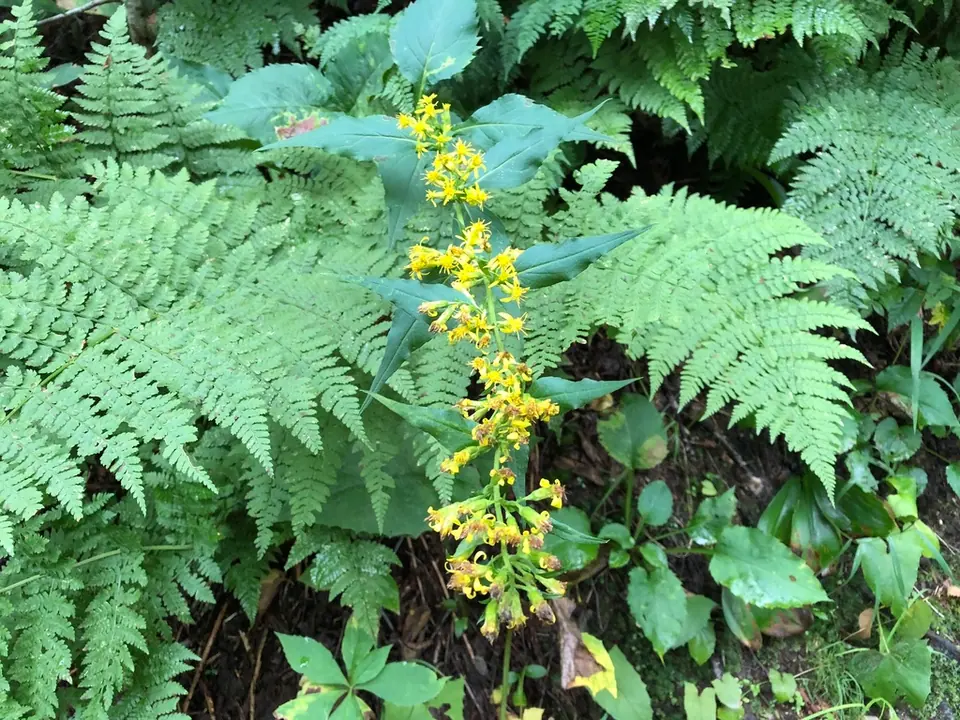
How to Grow and Care for Broad-leaved goldenrod
Solidago flexicaulis
Written by Emilio Marruso · last checked
At a glance
This goldenrod is wonderfully easygoing: it grows anywhere from full sun to full shade, though it blooms more in partial or dappled shade. Give it well-drained soil and moderate moisture; once established, it handles dry soil and needs no mulch. Divide it in spring or fall, or sow seed in fall or winter, and watch it spread into a cheerful patch.
- Sun
Full sun to full shade; blooms more in partial or dappled shade
What the sources say (6)
Light: Full sun to full shade; blooms more in partial or dappled shade or sun
According to Tennessee Smart Yards: Full sun to shade, moderately wet to moderately dry moisture level
— Solidago flexicaulis | Tennessee Smart Yards [2] According to Northern Gardener: While this goldenrod will tolerate total shade, it blooms more in partial or dappled shade, or sun.
— Plant Profile: Zigzag Goldenrod - Northern Gardener [7] According to Fine Gardening: Grow in lean to moderately fertile, well-drained soil in full sun or part shade.
— Zigzag goldenrod - Fine Gardening [6] Full sun to shade, moderately wet to moderately dry moisture level
— Solidago flexicaulis | Tennessee Smart Yards [2] Growing Conditions Water Use: Medium Light Requirement: Sun , Part Shade , Shade
— Lady Bird Johnson Wildflower Center - The University of Texas at Austin [3] While this goldenrod will tolerate total shade, it blooms more in partial or dappled shade, or sun.
— Plant Profile: Zigzag Goldenrod - Northern Gardener [7] - Water
Moderate moisture; once established it handles dry soil and needs no mulch
What the sources say (9)
Watering: Moderate moisture; established plants tolerate dry soil
According to Lady Bird Johnson Wildflower Center: Growing Conditions Water Use: Medium Light Requirement: Sun , Part Shade , Shade
— Lady Bird Johnson Wildflower Center - The University of Texas at Austin [3] According to Northern Gardener: Site: Performs well in partial shade and shade, with moderate moisture and well-drained soils. Established plants tolerate dry soil.
— Plant Profile: Zigzag Goldenrod - Northern Gardener [7] According to Fine Gardening: Tolerance : Deer Tolerant, Drought Tolerant, Frost Tolerant - Moisture : Dry to Medium
— Zigzag goldenrod - Fine Gardening [6] According to Tennessee Smart Yards: Full sun to shade, moderately wet to moderately dry moisture level, adaptable to a range of soils
— Solidago flexicaulis | Tennessee Smart Yards [2] Site: Performs well in partial shade and shade, with moderate moisture and well-drained soils. Established plants tolerate dry soil.
— Plant Profile: Zigzag Goldenrod - Northern Gardener [7] Growing Conditions Water Use: Medium Light Requirement: Sun , Part Shade , Shade
— Lady Bird Johnson Wildflower Center - The University of Texas at Austin [3] Tolerance : Deer Tolerant, Drought Tolerant, Frost Tolerant - Moisture : Dry to Medium
— Zigzag goldenrod - Fine Gardening [6] Watering notes: Prefers well-drained soil; adapted to dry conditions and does not need mulching
It tolerates all soil types but prefers well-drained sites
— Plant Profile: Zigzag Goldenrod - Northern Gardener [7] Very easy care for a woodland plant, it does not require mulching as it is adapted to dry conditions.
— Lady Bird Johnson Wildflower Center - The University of Texas at Austin [3] - Soil
Well-drained soil
What the sources say (2)
Watering notes: Prefers well-drained soil; adapted to dry conditions and does not need mulching
It tolerates all soil types but prefers well-drained sites
— Plant Profile: Zigzag Goldenrod - Northern Gardener [7] Very easy care for a woodland plant, it does not require mulching as it is adapted to dry conditions.
— Lady Bird Johnson Wildflower Center - The University of Texas at Austin [3] - Harvest
Collect the seed in late October, when it fluffs up; no cleaning needed, store it dry
What the sources say (3)
Harvest: Seed: late October, soon after flowering
Fruit/Seed Collection Dates: Late October Seed Cleaning: None required
— Solidago flexicaulis | Native Iowa Woodland Understory Restoration: A Guide to Species Reintroduction [1] Description: Fresh seed or root division. will spread on its own. Seed Collection: Seeds ripen soon after plant blooms.
— Lady Bird Johnson Wildflower Center - The University of Texas at Austin [3] Saving seeds: Collect the seed in late October, when the pappus expands; no cleaning is required; store dry.
Fruit/Seed Maturation Sign: Pappus expands Fruit/Seed Collection Dates: Late October Seed Cleaning: None required Storage: Dry
— Solidago flexicaulis | Native Iowa Woodland Understory Restoration: A Guide to Species Reintroduction [1] - Pests
Powdery mildew, rust and leaf spots; deer and rabbits nibble the leaves, so plant alliums nearby
- Watch out
Spreads by roots and self-seeds freely: remove faded flowers to stop the seeding
What the sources say (4)
Propagation: Division (spring or fall); seed (needs cold stratification); spreads by rhizomes
According to Native Iowa Woodland Understory Restoration (Iowa State): These studies suggest that introduction using transplants has a high potential for success, while introduction by seed requires further study.
— Solidago flexicaulis | Native Iowa Woodland Understory Restoration: A Guide to Species Reintroduction [1] Deadhead to prevent prolific self-seeding. Propagation Divide in spring or fall.
— Zigzag goldenrod - Fine Gardening [6] Zigzag goldenrod propagates well from division or seed.
— Plant Profile: Zigzag Goldenrod - Northern Gardener [7] Propagation Material: Root Division , Seeds Description: Fresh seed or root division.
— Lady Bird Johnson Wildflower Center - The University of Texas at Austin [3] - Size
1 to 3 ft tall
What the sources say (1)
Mature height: 30-91 cm (1-3 ft)
adaptable to a range of soils, strongly acid to neutral pH. 1-3 feet height, blooms late summer into fall, yellow flowers,
— Solidago flexicaulis | Tennessee Smart Yards [2] - Propagation
Divide in spring or fall; young plants settle in better than seed
What the sources say (4)
Propagation: Division (spring or fall); seed (needs cold stratification); spreads by rhizomes
According to Native Iowa Woodland Understory Restoration (Iowa State): These studies suggest that introduction using transplants has a high potential for success, while introduction by seed requires further study.
— Solidago flexicaulis | Native Iowa Woodland Understory Restoration: A Guide to Species Reintroduction [1] Deadhead to prevent prolific self-seeding. Propagation Divide in spring or fall.
— Zigzag goldenrod - Fine Gardening [6] Zigzag goldenrod propagates well from division or seed.
— Plant Profile: Zigzag Goldenrod - Northern Gardener [7] Propagation Material: Root Division , Seeds Description: Fresh seed or root division.
— Lady Bird Johnson Wildflower Center - The University of Texas at Austin [3] - Sowing
Sow in fall or winter: the seed needs a cold spell to sprout
What the sources say (1)
Sowing: Fall or winter (seed needs a cold period), or after artificial cold stratification
Seeds do need a winter or cold period to germinate, so they should be sown in fall or winter, or refrigerated for artificial cold stratification.
— Plant Profile: Zigzag Goldenrod - Northern Gardener [7]
Overview
Zigzag goldenrod is a North American woodland perennial with zigzag stems, broad toothed leaves and yellow flower clusters from late summer into fall. [3][4] It is one of the most shade-tolerant goldenrods and spreads by rhizomes and self-seeding. [2] It attracts bees and butterflies, and birds eat the seed. [2]
This record is incomplete: the sources we read do not cover every field yet.
Not yet covered by our sources: Pruning
Broad-leaved goldenrod care
How to water Broad-leaved goldenrod
Watering
Moderate moisture; established plants tolerate dry soil
What each source says
According to Lady Bird Johnson Wildflower Center: Medium water use
According to Northern Gardener: Moderate moisture; established plants tolerate dry soil
According to Fine Gardening: Dry to medium
According to Tennessee Smart Yards: Moderately wet to moderately dry
What the sources say (7)
According to Lady Bird Johnson Wildflower Center: Growing Conditions
Water Use: Medium
Light Requirement: Sun , Part Shade , ShadeAccording to Northern Gardener: Site: Performs well in partial shade and shade, with moderate moisture and well-drained soils. Established plants tolerate dry soil.According to Fine Gardening: Tolerance :
Deer Tolerant, Drought Tolerant, Frost Tolerant
-
Moisture :
Dry to MediumAccording to Tennessee Smart Yards: Full sun to shade, moderately wet to moderately dry moisture level, adaptable to a range of soilsSite: Performs well in partial shade and shade, with moderate moisture and well-drained soils. Established plants tolerate dry soil.Growing Conditions
Water Use: Medium
Light Requirement: Sun , Part Shade , ShadeTolerance :
Deer Tolerant, Drought Tolerant, Frost Tolerant
-
Moisture :
Dry to MediumWatering notes
Prefers well-drained soil; adapted to dry conditions and does not need mulching
What the sources say (2)
It tolerates all soil types but prefers well-drained sitesVery easy care for a woodland plant, it does not require mulching as it is adapted to dry conditions.How much light Broad-leaved goldenrod needs
Full sun to full shade; blooms more in partial or dappled shade or sun
What each source says
According to Tennessee Smart Yards: Full sun to shade
According to Northern Gardener: Tolerates total shade; blooms more in partial or dappled shade, or sun
According to Fine Gardening: Full sun or part shade
What the sources say (6)
According to Tennessee Smart Yards: Full sun to shade, moderately wet to moderately dry moisture levelAccording to Northern Gardener: While this goldenrod will tolerate total shade, it blooms more in partial or dappled shade, or sun.According to Fine Gardening: Grow in lean to moderately fertile, well-drained soil in full sun or part shade.Full sun to shade, moderately wet to moderately dry moisture levelGrowing Conditions
Water Use: Medium
Light Requirement: Sun , Part Shade , ShadeWhile this goldenrod will tolerate total shade, it blooms more in partial or dappled shade, or sun.How much cold Broad-leaved goldenrod can take
Hardiness, coldest zone
The sources give different values depending on region, zone or growing conditions.
What each source says
According to Northern Gardener: 2 [winter low −45.6 to −40 °C (−50 to −40 °F)]
According to Fine Gardening: 3 [winter low −40 to −34.4 °C (−40 to −30 °F)]
Hardiness, warmest zone
The sources give different values depending on region, zone or growing conditions.
What each source says
According to Northern Gardener: 8 [winter low −12.2 to −6.7 °C (10 to 20 °F)]
According to Fine Gardening: 9 [winter low −6.7 to −1.1 °C (20 to 30 °F)]
How to propagate Broad-leaved goldenrod
Division (spring or fall); seed (needs cold stratification); spreads by rhizomes
What each source says
According to Native Iowa Woodland Understory Restoration (Iowa State): Transplants establish better than seed
What the sources say (4)
According to Native Iowa Woodland Understory Restoration (Iowa State): These studies suggest that introduction using transplants has a high potential for success, while introduction by seed requires further study.Deadhead to prevent prolific self-seeding.
Propagation Divide in spring or fall.Zigzag goldenrod propagates well from division or seed.Propagation Material: Root Division , Seeds
Description: Fresh seed or root division.How to grow Broad-leaved goldenrod
The plant
Family
Asteraceae
What the sources say (1)
Family:
Asteraceae
Common Name(s):
Zig zag goldenrod
Flowering Time:
August to SeptemberMature height
30-91 cm (1-3 ft)
What the sources say (1)
adaptable to a range of soils, strongly acid to neutral pH. 1-3 feet height, blooms late summer into fall, yellow flowers,Harvest and storage
Saving seeds
Collect the seed in late October, when the pappus expands; no cleaning is required; store dry.
What the sources say (1)
Fruit/Seed Maturation Sign:
Pappus expands
Fruit/Seed Collection Dates:
Late October
Seed Cleaning:
None required
Storage:
DryBroad-leaved goldenrod pests and problems
Fungal diseases
Symptom: Spot anthracnose, powdery mildew, rust, fungal spots
What the sources say (1)
Propagation Divide in spring or fall. Problems Spot anthracnose, powdery mildew, rust, fungal spots.
— Zigzag goldenrod - Fine Gardening [6] Deer and rabbit browsing
Symptom: Deer and rabbits often browse the foliage
What to do: Surround with alliums or other mammal-repellent plants
What the sources say (2)
Be aware that deer and rabbits often browse on the foliage of zigzag goldenrod.
— Plant Profile: Zigzag Goldenrod - Northern Gardener [7] If you have deer or rabbit visitors, consider surrounding zigzag goldenrod with alliums or other mammal-repellent plants present through the growing season.
— Plant Profile: Zigzag Goldenrod - Northern Gardener [7] Self-seeding and spread
Symptom: Prolific self-seeding and spreading by rhizomes
What to do: Deadhead to prevent self-seeding
What the sources say (2)
Care Grow in lean to moderately fertile, well-drained soil in full sun or part shade. Deadhead to prevent prolific self-seeding.
— Zigzag goldenrod - Fine Gardening [6] It does very well in a shade garden, though its spreading nature may take some care to keep in line.
— Solidago flexicaulis (Zigzag Goldenrod): Minnesota Wildflowers [4]
Remedies
Each remedy shows what official sources say about it; traditional remedies without an official source are marked as such. Harmful ones are listed so you know to avoid them.
Treating the plant
deer and rabbit browsing
border of alliums Not verified
Traditional remedy, not verified by an official source.
How: Surround the plant with alliums or other mammal-repellent plants present through the growing season.
Calendar
Sowing
Fall or winter (seed needs a cold period), or after artificial cold stratification
What the sources say (1)
Seeds do need a winter or cold period to germinate, so they should be sown in fall or winter, or refrigerated for artificial cold stratification.Harvest
Seed: late October, soon after flowering
What the sources say (2)
Fruit/Seed Collection Dates:
Late October
Seed Cleaning:
None requiredDescription: Fresh seed or root division. will spread on its own.
Seed Collection: Seeds ripen soon after plant blooms.Pruning
Not stated in the sources we read.
Months as given by the sources, which are mostly from the United States (northern hemisphere). In the southern hemisphere they shift by about six months.
Indicative values
Values from a secondary source, not checked word for word like the rest of this page. Use them as a starting point.
- Life cycle
- Herbaceous PerennialIndicative value, adapt it to your climate · Secondary source
- Drought tolerant
- yesIndicative value, adapt it to your climate · Secondary source
- Soil pH
- 5.5-7.5Indicative value, adapt it to your climate · Secondary source
- Care level
- MediumIndicative value, adapt it to your climate · Secondary source
- Growth rate
- LowIndicative value, adapt it to your climate · Secondary source
- Pruning
- February, March, April, AugustIndicative value, adapt it to your climate · Secondary source
Similar plants
Sources
Every value above is quoted from these documents. Links lead to the original publisher.
- Solidago flexicaulis | Native Iowa Woodland Understory Restoration: A Guide to Species Reintroduction · understory.nrem.iastate.edu, consulted
- Solidago flexicaulis | Tennessee Smart Yards · tnyards.utk.edu, consulted
- Lady Bird Johnson Wildflower Center - The University of Texas at Austin · wildflower.org, consulted
- Solidago flexicaulis (Zigzag Goldenrod): Minnesota Wildflowers · minnesotawildflowers.info, consulted
- Zigzag Goldenrod, Solidago flexicaulis L. · friendsofeloisebutler.org, consulted
- Zigzag goldenrod - Fine Gardening · finegardening.com, consulted
- Plant Profile: Zigzag Goldenrod - Northern Gardener · northerngardener.org, consulted
Written by Emilio Marruso · last checked