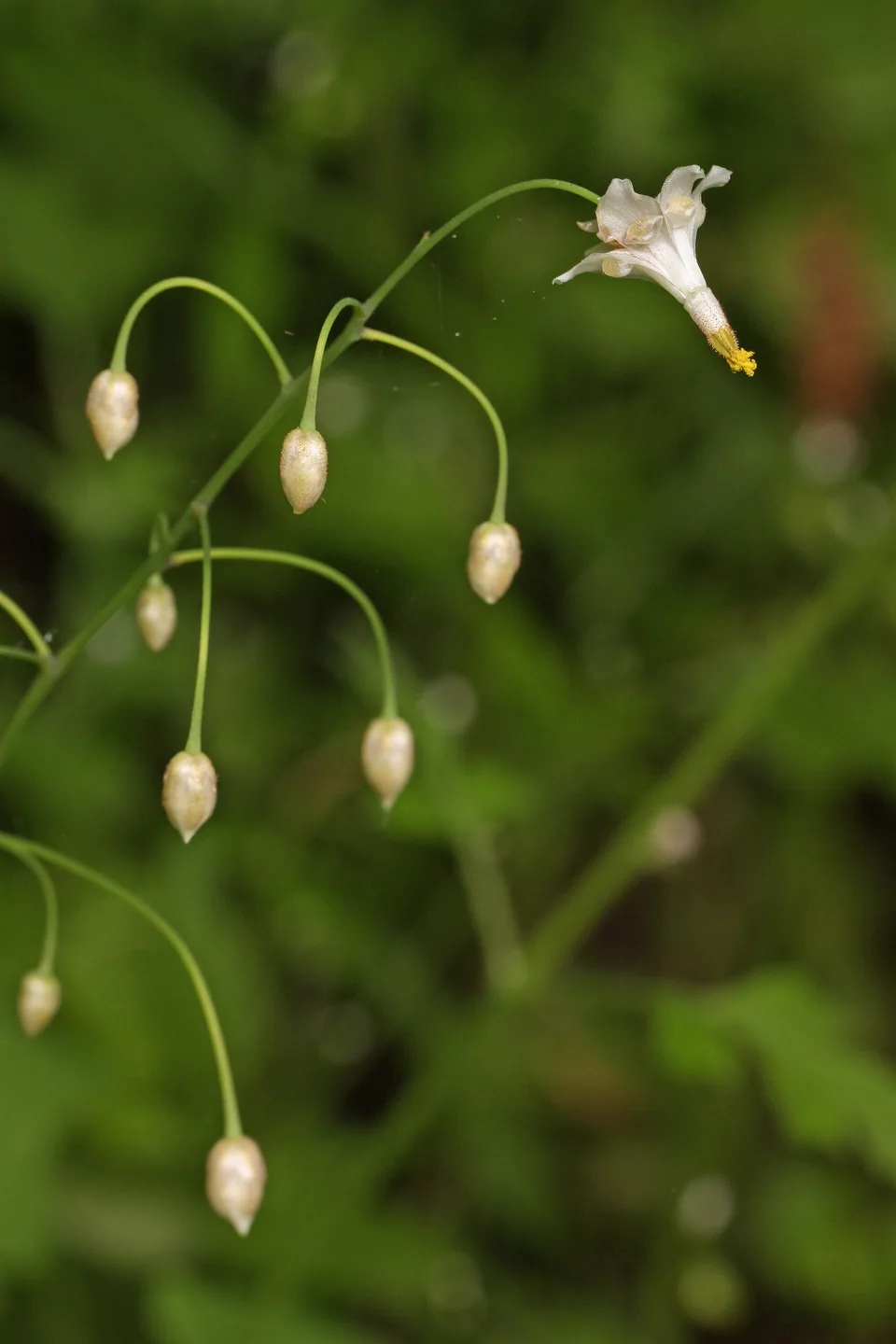
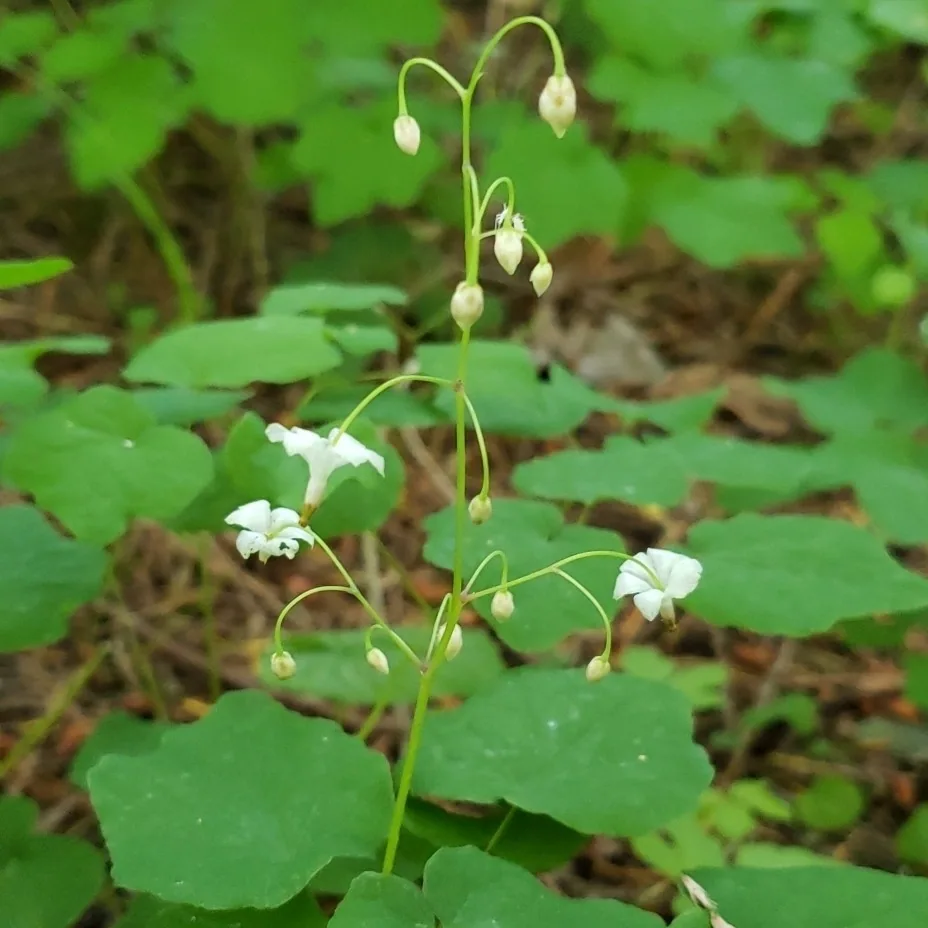

How to Grow and Care for White inside-out-flower
Vancouveria hexandra
Written by Emilio Marruso · last checked
At a glance
Looking for something green for the shady corners of your garden? This perennial is happy anywhere from part sun to full shade, in soil kept moist but never soggy. Plant seeds or root pieces in fall, give it extra water through its first season, and enjoy a low plant 10–20 inches tall that even grows happily in pots.
- Sun
Part sun to full shade
What the sources say (2)
- Water
Keep the soil moist but not soggy; give extra water during the first season
What the sources say (2)
Watering: Keep soil moist but not soggy
Water as needed to keep the soil moist (but not soggy).
— What Are Inside-Out Flowers - Care Of Inside-Out Flower In The Garden | Gardening Know How [2] Watering notes: Supplemental water for at least the first season while plants establish
Requires consistently moist soil; should receive supplemental water for at least the first season while they become established in the garden.
— Plant Data Sheet http://depts.washington.edu/propplnt/Plants/Vancouveria hexandra.htm [7] - Planting
Plant in fall, from seeds or root pieces
What the sources say (1)
Planting: Fall (seeds or rhizomes)
Plant seeds or rhizomes in your containers or in the field in the fall.
— Plant Propagation Protocol for Vancouveria hexandra [4] - Pruning
In spring, cut off the parts damaged by winter
What the sources say (1)
Pruning: Spring (winter-damaged growth)
Prune winter-damaged growth in spring to make way for healthy new growth.
— What Are Inside-Out Flowers - Care Of Inside-Out Flower In The Garden | Gardening Know How [2] - Size
10–20 in tall
What the sources say (1)
Mature height: 25-50 cm (10-20 in)
Perennial, deciduous to nearly evergreen, low growing, spreading, 10-20 inches ( 25-50 cm) tall; young stems wiry.
— Vancouveria hexandra | Landscape Plants | Oregon State University [1] - Propagation
Divide the roots in spring or fall, or grow it from seed
What the sources say (2)
Propagation: Division of rhizomes (spring or fall); seed
To propagate divide plants in the spring or fall.
— Vancouveria hexandra | Landscape Plants | Oregon State University [1] Plants Seed or vegetative (rhizome) N/A 7 cubic inch Ray Leach Conetainers, then up-potted
— Plant Propagation Protocol for Vancouveria hexandra [4] - Sowing
Sow in fall
What the sources say (1)
Sowing: Fall
Plant seeds or rhizomes in your containers or in the field in the fall.
— Plant Propagation Protocol for Vancouveria hexandra [4] - Containers
Grows in containers too
What the sources say (1)
In containers: Yes
Inside-out flowers are versatile plants that perform well in rock gardens , wildflower gardens , containers, borders, along paths and walkways and under trees.
— What Are Inside-Out Flowers - Care Of Inside-Out Flower In The Garden | Gardening Know How [2]
Overview
Northern inside-out flower is a low-growing, spreading perennial that spreads by underground rhizomes. [1] It grows in part sun to full shade and is divided in spring or fall to propagate. [1]
White inside-out-flower care
How to water White inside-out-flower
Watering
Keep soil moist but not soggy
What the sources say (1)
Water as needed to keep the soil moist (but not soggy).Watering notes
Supplemental water for at least the first season while plants establish
What the sources say (1)
Requires consistently moist soil; should receive supplemental water for at least the first season while they become established in the garden.How much light White inside-out-flower needs
Part sun to full shade
How much cold White inside-out-flower can take
Hardiness, coldest zone
The sources give different values depending on region, zone or growing conditions.
What each source says
According to Gardening Know How: 5 [winter low −28.9 to −23.3 °C (−20 to −10 °F)]
According to Oregon State University: 6 [winter low −23.3 to −17.8 °C (−10 to 0 °F)]
What the sources say (2)
According to Gardening Know How: Inside-out flowers are suitable for growing in USDA plant hardiness zones 5 through 7.According to Oregon State University: Hardy to USDA Zone 6 Native to southwest Washington, Oregon, and northern CaliforniaHardiness, warmest zone
The sources give different values depending on region, zone or growing conditions.
What each source says
According to Gardening Know How: 7 [winter low −17.8 to −12.2 °C (0 to 10 °F)]
According to UW ESRM 412 protocol (2017): 8 [winter low −12.2 to −6.7 °C (10 to 20 °F)]
What the sources say (2)
According to Gardening Know How: Inside-out flowers are suitable for growing in USDA plant hardiness zones 5 through 7.According to UW ESRM 412 protocol (2017): Occupies elevations from 100-1700m. [5] Survives in USDA Hardiness Zones 5-8.Where to grow White inside-out-flower
Yes
What the sources say (1)
Inside-out flowers are versatile plants that perform well in rock gardens , wildflower gardens , containers, borders, along paths and walkways and under trees.How to propagate White inside-out-flower
Division of rhizomes (spring or fall); seed
How to grow White inside-out-flower
The plant
Life cycle
perennial
What the sources say (1)
Perennial, deciduous to nearly evergreen, low growing, spreading, 10-20 inches ( 25-50 cm) tall; young stems wiry.Family
Berberidaceae
What the sources say (1)
Common name:
Northern Inside-out Flower
American Barrenwort
Pronunciation:
van-koo-VE-ree-uh heks-AN-druh
Family:
BerberidaceaeMature height
25-50 cm (10-20 in)
What the sources say (1)
Perennial, deciduous to nearly evergreen, low growing, spreading, 10-20 inches ( 25-50 cm) tall; young stems wiry.Remedies
The sources we checked give no remedies for this plant.
Calendar
Sowing
Fall
What the sources say (1)
Plant seeds or rhizomes in your containers or in the field in the fall.Planting
Fall (seeds or rhizomes)
What the sources say (1)
Plant seeds or rhizomes in your containers or in the field in the fall.Pruning
Spring (winter-damaged growth)
What the sources say (1)
Prune winter-damaged growth in spring to make way for healthy new growth.Months as given by the sources, which are mostly from the United States (northern hemisphere). In the southern hemisphere they shift by about six months.
Indicative values
Values from a secondary source, not checked word for word like the rest of this page. Use them as a starting point.
- Hours of sun
- 4-6 hoursIndicative value, adapt it to your climate · Secondary source
- Soil
- Humus richIndicative value, adapt it to your climate · Secondary source
- Soil pH
- 5.5-7Indicative value, adapt it to your climate · Secondary source
- Care level
- MediumIndicative value, adapt it to your climate · Secondary source
- Growth rate
- HighIndicative value, adapt it to your climate · Secondary source
- Pests
- Diptera - true fliesIndicative value, adapt it to your climate · Secondary source
Similar plants
- American Barberry Berberis canadensis
- Blue Cohosh Caulophyllum thalictroides
- Chinese Barberry Berberis eurybracteata
- Chinese Mahonia Berberis fortunei
- Creeping Hollygrape Berberis repens
- Darwin Barberry Berberis darwinii
- Fremont Barberry Berberis fremontii
- Grapeholly Berberis ilicina
Sources
Every value above is quoted from these documents. Links lead to the original publisher.
- Vancouveria hexandra | Landscape Plants | Oregon State University · landscapeplants.oregonstate.edu, consulted
- What Are Inside-Out Flowers - Care Of Inside-Out Flower In The Garden | Gardening Know How · gardeningknowhow.com, consulted
- American barrenwort - Fine Gardening · finegardening.com, consulted
- Plant Propagation Protocol for Vancouveria hexandra · courses.washington.edu, consulted
- Inside-out Flower | Vancouveria hexandra - Benton Soil And Water Conservation District · bentonswcd.org, consulted
- Vancouveria hexandra | Northern Inside-out Flower | Wildflowers of the Pacific Northwest · pnwflowers.com, consulted
- Plant Data Sheet http://depts.washington.edu/propplnt/Plants/Vancouveria hexandra.htm · courses.washington.edu, consulted
Written by Emilio Marruso · last checked