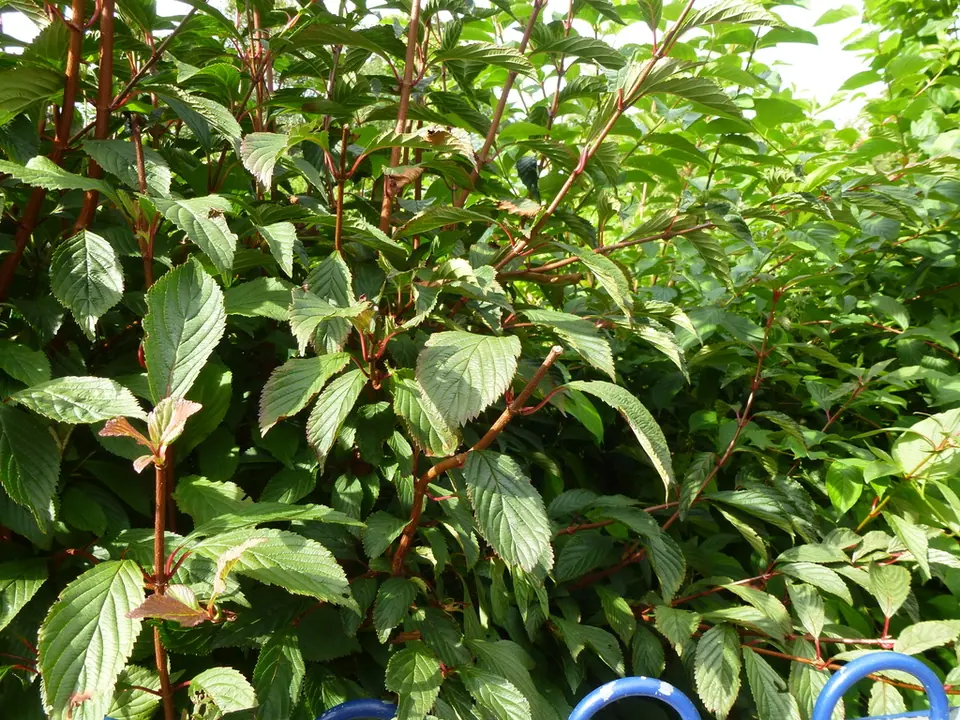
How to Grow and Care for Viburnum bodnantense
Viburnum bodnantense
Written by Emilio Marruso · last checked
At a glance
This easygoing shrub grows 10 ft or more tall in sun or partial shade and asks for very little: an annual mulch of compost each early spring is usually all the feeding it needs. Its buds shrug off frost, and if cold or rain browns some open flowers, the plant usually produces more. It even gives sweet fruit you can eat raw or cooked.
- Sun
Sun to partial shade
What the sources say (3)
Light: Sun to partial shade
It prefers a deep rich loamy soil in sun or semi-shade
— Viburnum x bodnantense - Useful Temperate Plants [3] is happy in full sun and partial shade and is fully hardy in sheltered or exposed positions
— Plant Focus – December 2021: Bodnant Viburnum – Viburnum x bodnantense – Highdown Gardens [8] Plant in moist, well-drained soil, sun to partial shade. Zones 5-8.
— Species Records | Boone County Arboretum [6] - Water
Never let it dry out completely; it dislikes dry spots
What the sources say (2)
Watering notes: Ill-adapted for dry situations; does not like drying out completely
An easily grown plant, it succeeds in most soils but is ill-adapted for poor soils and for dry situations
— Viburnum x bodnantense - Useful Temperate Plants [3] While happy on chalk, it does not like drying out completely
— Plant Focus – December 2021: Bodnant Viburnum – Viburnum x bodnantense – Highdown Gardens [8] - Cold
Survives winters down to −20 °F (−28.9 °C)
Very hardy · USDA 5 · RHS H7 · Z5
What the sources say (2)
Hardiness, coldest zone: 5 [winter low −28.9 to −23.3 °C (−20 to −10 °F)]
Plant in moist, well-drained soil, sun to partial shade. Zones 5-8.
— Species Records | Boone County Arboretum [6] Hardiness, warmest zone: 8 [winter low −12.2 to −6.7 °C (10 to 20 °F)]
Plant in moist, well-drained soil, sun to partial shade. Zones 5-8.
— Species Records | Boone County Arboretum [6] - Feeding
Each early spring, 2 in of compost or rotted manure around it, leaving the base clear
What the sources say (3)
When: Early spring, as an annual mulch
Viburnums need little or no regular feeding in most garden soils. Annual mulching should be sufficient. In early spring, apply a mulch
— How to grow viburnum / RHS Growing Guide [7] How often: Little or no regular feeding in most garden soils; an annual mulch is enough
Viburnums need little or no regular feeding in most garden soils. Annual mulching should be sufficient.
— How to grow viburnum / RHS Growing Guide [7] Natural fertilizers: A 5 cm [2 in] mulch of home-made compost or well-rotted manure, leaving a mulch-free circle at the base of the plant
a 5cm (2in) layer of bulky organic matter such as home-made compost or well-rotted manure. Leave a mulch-free circle immediately around the base of the plant to prevent rotting.
— How to grow viburnum / RHS Growing Guide [7] - Pruning
Prune every year, right after flowering
What the sources say (1)
Pruning: After flowering, annually
Prune annually after flowering – V. × bodnantense and V. farreri , removing up to a third of the old wood at the base
— How to grow viburnum / RHS Growing Guide [7] - Harvest
Sweet fruit you can eat raw or cooked, though there isn't much of it
- Pests
Watch for honey fungus and leaf spot
What the sources say (1)
Diseases: honey fungus, fungal leaf spot
All viburnums are susceptible to honey fungus and fungal leaf spot.
— How to grow viburnum / RHS Growing Guide [7] - Watch out
Frost or long wet spells can brown open flowers; a south-facing spot near a building helps
- Size
10 ft tall or more
What the sources say (1)
Mature height: 304.8 or more (10 ft [3 m] or more)
Bodnant Viburnum (V. x bodnantense) : This rather open, coarse plant grows to 10 feet or more. It is grown primarily for winter bloom.
— Viburnum | Home & Garden Information Center [4] - Propagation
Softwood cuttings in early summer or half-ripe ones in midsummer; seeds don't come true
What the sources say (3)
Propagation: Seed (hybrid, does not breed true); softwood cuttings in early summer; half-ripe cuttings in mid summer, in a frame
Seed - this species is a hybrid and will not breed true from seed, if seedlings are required then the seed is best sown in a cold frame as soon as it is ripe.
— Viburnum x bodnantense - Useful Temperate Plants [3] Cuttings of soft-wood, early summer in a frame
— Viburnum x bodnantense - Useful Temperate Plants [3] Cuttings of half-ripe wood, 5 - 8 cm long with a heel if possible, mid summer in a frame
— Viburnum x bodnantense - Useful Temperate Plants [3]
Overview
Viburnum x bodnantense is a hybrid between V. farreri and V. grandiflorum, named after Bodnant Garden. [2] It is a deciduous shrub grown primarily for fragrant winter bloom. [4] The fragrant flowers appear on bare branches. [2]
This record is incomplete: the sources we read do not cover every field yet.
Not yet covered by our sources: Watering
Viburnum bodnantense care
How to water Viburnum bodnantense
Watering
Not stated in the sources we read.
Watering notes
Ill-adapted for dry situations; does not like drying out completely
What the sources say (2)
An easily grown plant, it succeeds in most soils but is ill-adapted for poor soils and for dry situationsWhile happy on chalk, it does not like drying out completelyHow much light Viburnum bodnantense needs
Sun to partial shade
What the sources say (3)
It prefers a deep rich loamy soil in sun or semi-shadeis happy in full sun and partial shade and is fully hardy in sheltered or exposed positionsPlant in moist, well-drained soil, sun to partial shade. Zones 5-8.How much cold Viburnum bodnantense can take
Hardiness, coldest zone
5 [winter low −28.9 to −23.3 °C (−20 to −10 °F)]
What the sources say (1)
Plant in moist, well-drained soil, sun to partial shade. Zones 5-8.Hardiness, warmest zone
8 [winter low −12.2 to −6.7 °C (10 to 20 °F)]
What the sources say (1)
Plant in moist, well-drained soil, sun to partial shade. Zones 5-8.How to propagate Viburnum bodnantense
Seed (hybrid, does not breed true); softwood cuttings in early summer; half-ripe cuttings in mid summer, in a frame
What the sources say (3)
Seed - this species is a hybrid and will not breed true from seed, if seedlings are required then the seed is best sown in a cold frame as soon as it is ripe.Cuttings of soft-wood, early summer in a frameCuttings of half-ripe wood, 5 - 8 cm long with a heel if possible, mid summer in a frameHow to grow Viburnum bodnantense
The plant
Family
Adoxaceae
What the sources say (1)
recently they have been moved into the family Adoxaceae, along with elderberries ( Sambucus species).Mature height
304.8 or more (10 ft [3 m] or more)
What the sources say (1)
Bodnant Viburnum (V. x bodnantense) : This rather open, coarse plant grows to 10 feet or more. It is grown primarily for winter bloom.Pests and diseases
Diseases
honey fungus, fungal leaf spot
What the sources say (1)
All viburnums are susceptible to honey fungus and fungal leaf spot.Fertilizing
When
Early spring, as an annual mulch
What the sources say (1)
Viburnums need little or no regular feeding in most garden soils. Annual mulching should be sufficient.
In early spring, apply a mulchHow often
Little or no regular feeding in most garden soils; an annual mulch is enough
What the sources say (1)
Viburnums need little or no regular feeding in most garden soils. Annual mulching should be sufficient.Natural fertilizers
A 5 cm [2 in] mulch of home-made compost or well-rotted manure, leaving a mulch-free circle at the base of the plant
What the sources say (1)
a 5cm (2in) layer of bulky organic matter such as home-made compost or well-rotted manure. Leave a mulch-free circle immediately around the base of the plant to prevent rotting.Viburnum bodnantense pests and problems
Frost damage to open flowers
Symptom: Open flowers are susceptible to freezing temperatures, though buds are frost-proof.
What to do: Siting with southern exposure or near a building provides some protection from frosts.
What the sources say (1)
Open flowers are susceptible to freezing temperatures, though buds are frost-proof, and continue the floral display. Siting with southern exposure or near a building provides some protection from frosts.
— Viburnum x bodnantense - Scott Arboretum & Gardens [2] Winter wet and frost on flowers
Symptom: In prolonged wet spells, flowers may turn brown and rot, and harsh frost may also turn them brown.
What to do: Plants usually produce more blooms, and affected flowers can be picked off.
What the sources say (1)
In prolonged wet spells, flowers may turn brown and rot, and harsh frost may also turn them brown. Plants usually produce more blooms, and you can pick off affected flowers to improve the appearance if you wish
— How to grow viburnum / RHS Growing Guide [7]
Remedies
Each remedy shows what official sources say about it; traditional remedies without an official source are marked as such. Harmful ones are listed so you know to avoid them.
Treating the plant
aphids
steady stream of water from the hose Not verified
Traditional remedy, not verified by an official source.
How: A steady stream of water from the hose.
insecticidal soap spray Works
How: Spray thoroughly to contact aphids directly, covering both upper and lower leaf surfaces.
They can be gotten rid of with a steady stream of water from the hose, insecticidal soap, or horticultural oil.
— gardeningknowhow.com [9] What the evidence says If control is needed, aphids can be managed with low-toxicity options: - Insecticidal soap - Horticultural oil
— hgic.clemson.edu [10] horticultural oil spray Works
Apply 2% horticultural oils only if temperatures are below 85°F - Apply late in the day - Do not apply if rainfall is expected within 24 hours - Do not apply to drought-stressed plants
— hgic.clemson.edu [10] How: Spray thoroughly to contact aphids directly, covering both upper and lower leaf surfaces.
They can be gotten rid of with a steady stream of water from the hose, insecticidal soap, or horticultural oil.
— gardeningknowhow.com [9] What the evidence says If control is needed, aphids can be managed with low-toxicity options: - Insecticidal soap - Horticultural oil
— hgic.clemson.edu [10]
thrips
insecticidal soap spray Partly works
How: Spray with insecticidal soap if necessary, taking care to spare beneficial insects.
Spray with insecticidal soap, if necessary, but be careful, as there are many beneficial insects that feed on thrips.
— gardeningknowhow.com [9] What the evidence says Insecticidal soaps (requires thorough coverage and repeated applications every 5 to 7 days when temperatures are below 85°F)
— hgic.clemson.edu [10]
spider mites
strong spray of water Partly works
How: Knock the mites off with a strong spray from the hose.
Mites can be knocked off with a strong spray from the hose or treated with insecticidal soap.
— gardeningknowhow.com [9] What the evidence says Early intervention and physical removal can help reduce spider mite populations. - Use strong sprays of water to dislodge mites regularly
— hgic.clemson.edu [10] insecticidal soap spray Works
How: Treat the mites with insecticidal soap.
Mites can be knocked off with a strong spray from the hose or treated with insecticidal soap.
— gardeningknowhow.com [9] What the evidence says Low-toxicity options are preferred for spider mite management: - Insecticidal soap - Horticultural oil
— hgic.clemson.edu [10]
scale
scraping scale off by hand Partly works
How: Light infestations of scale can be scraped off by hand.
Light infestations of scale bugs can be scraped off by hand
— gardeningknowhow.com [9] What the evidence says Early detection and physical removal can help manage light infestations. - Scrape off scale by hand when infestations are light
— hgic.clemson.edu [10] dormant horticultural oil spray Works
Apply when temperatures are between 40°F and 85°F and no rainfall expected for 24 hours
— hgic.clemson.edu [10] How: Apply a 2% horticultural oil spray (5 tablespoons per gallon of water) before new growth begins.
Apply a 2% horticultural oil spray (5 tablespoons per gallon of water) before new growth begins to kill overwintering adults and eggs
— hgic.clemson.edu [10] What the evidence says Dormant and growing-season treatments are effective when properly timed.
— hgic.clemson.edu [10]
viburnum leaf beetle
pruning out egg-infested twigs in winter Official source, not independently tested
How: Prune out egg infested twigs during the winter months.
Select non-chemical management options as your first choice! - Prune out egg infested twigs during winter months.
— hortsense.cahnrs.wsu.edu [11] hand-picking larvae Official source, not independently tested
How: Hand-pick and kill emerging larvae.
Prune out egg infested twigs during winter months. - Hand-pick and kill emerging larvae.
— hortsense.cahnrs.wsu.edu [11]
powdery mildew
horticultural oil spray Works
Apply 2% horticultural oils only if temperatures are below 85°F - Apply late in the day - Do not apply if rainfall is expected within 24 hours - Do not apply to drought-stressed plants
— hgic.clemson.edu [10] How: Apply 2% horticultural oil only below 85°F, late in the day.
To prevent foliar injury: - Apply 2% horticultural oils only if temperatures are below 85°F
— hgic.clemson.edu [10] What the evidence says Powdery mildew can be controlled with fungicides containing: - Myclobutanil - Propiconazole - Thiophanate-methyl - Horticultural oil
— hgic.clemson.edu [10] sulfur Harmful
How: Sulfur is sometimes used for powdery mildew control.
Note: Although sulfur is sometimes used for powdery mildew control, it is not recommended for sulfur-sensitive plants, such as viburnums.
— hgic.clemson.edu [10] What the evidence says Note: Although sulfur is sometimes used for powdery mildew control, it is not recommended for sulfur-sensitive plants, such as viburnums.
— hgic.clemson.edu [10]
leaf spot
raking up and destroying fallen leaves Partly works
How: Rake up and destroy infected fallen leaves and apply a fresh layer of mulch beneath plants.
Rake up and destroy infected fallen leaves - Apply a fresh layer of mulch beneath plants
— hgic.clemson.edu [10] What the evidence says Rake up and destroy infected fallen leaves - Apply a fresh layer of mulch beneath plants Removing this leaf material and applying mulch will minimize the risk of the disease recurring the next season.
— hgic.clemson.edu [10]
frost damage to open flowers
picking off frost-browned flowers Official source, not independently tested
How: Pick off affected flowers to improve the appearance.
Plants usually produce more blooms, and you can pick off affected flowers to improve the appearance if you wish
— How to grow viburnum / RHS Growing Guide [7]
Calendar
Pruning
After flowering, annually
What the sources say (1)
Prune annually after flowering – V. × bodnantense and V. farreri , removing up to a third of the old wood at the baseMonths as given by the sources, which are mostly from the United States (northern hemisphere). In the southern hemisphere they shift by about six months.
Edibility
Reported by the source, quoted verbatim. Do not eat a plant on the basis of this page alone: identification mistakes can be dangerous.
Fruit - raw or cooked. A sweet flavour, though not borne very freely
[3]
Indicative values
Values from a secondary source, not checked word for word like the rest of this page. Use them as a starting point.
- Life cycle
- PerennialIndicative value, adapt it to your climate · Secondary source
- Hours of sun
- 6-8 hoursIndicative value, adapt it to your climate · Secondary source
- Watering
- AverageIndicative value, adapt it to your climate · Secondary source
- Soil pH
- 5.5-6.5Indicative value, adapt it to your climate · Secondary source
- Care level
- MediumIndicative value, adapt it to your climate · Secondary source
- Growth rate
- HighIndicative value, adapt it to your climate · Secondary source
Similar plants
- Arrow-wood Viburnum Viburnum dentatum
- Blackhaw Viburnum prunifolium
- Blue Haw Viburnum cassinoides
- Bracted Viburnum Viburnum bracteatum
- Chinese Evergreen Viburnum Viburnum propinquum
- Chinese Snowball Viburnum Viburnum macrocephalum
- Cranberry Viburnum Viburnum trilobum
- Doublefile Viburnum Viburnum plicatum
Sources
Every value above is quoted from these documents. Links lead to the original publisher.
- Viburnum × bodnantense - Trees and Shrubs Online · treesandshrubsonline.org, consulted
- Viburnum x bodnantense - Scott Arboretum & Gardens · scottarboretum.org, consulted
- Viburnum x bodnantense - Useful Temperate Plants · temperate.theferns.info, consulted
- Viburnum | Home & Garden Information Center · hgic.clemson.edu, consulted
- Winter Viburnums | BBC Gardeners World Magazine · gardenersworld.com, consulted
- Species Records | Boone County Arboretum · bcarboretum.org, consulted
- How to grow viburnum / RHS Growing Guide · rhs.org.uk, consulted
- Plant Focus – December 2021: Bodnant Viburnum – Viburnum x bodnantense – Highdown Gardens · highdowngardens.co.uk, consulted
- gardeningknowhow.com · gardeningknowhow.com
- hgic.clemson.edu · hgic.clemson.edu
- hortsense.cahnrs.wsu.edu · hortsense.cahnrs.wsu.edu
Written by Emilio Marruso · last checked