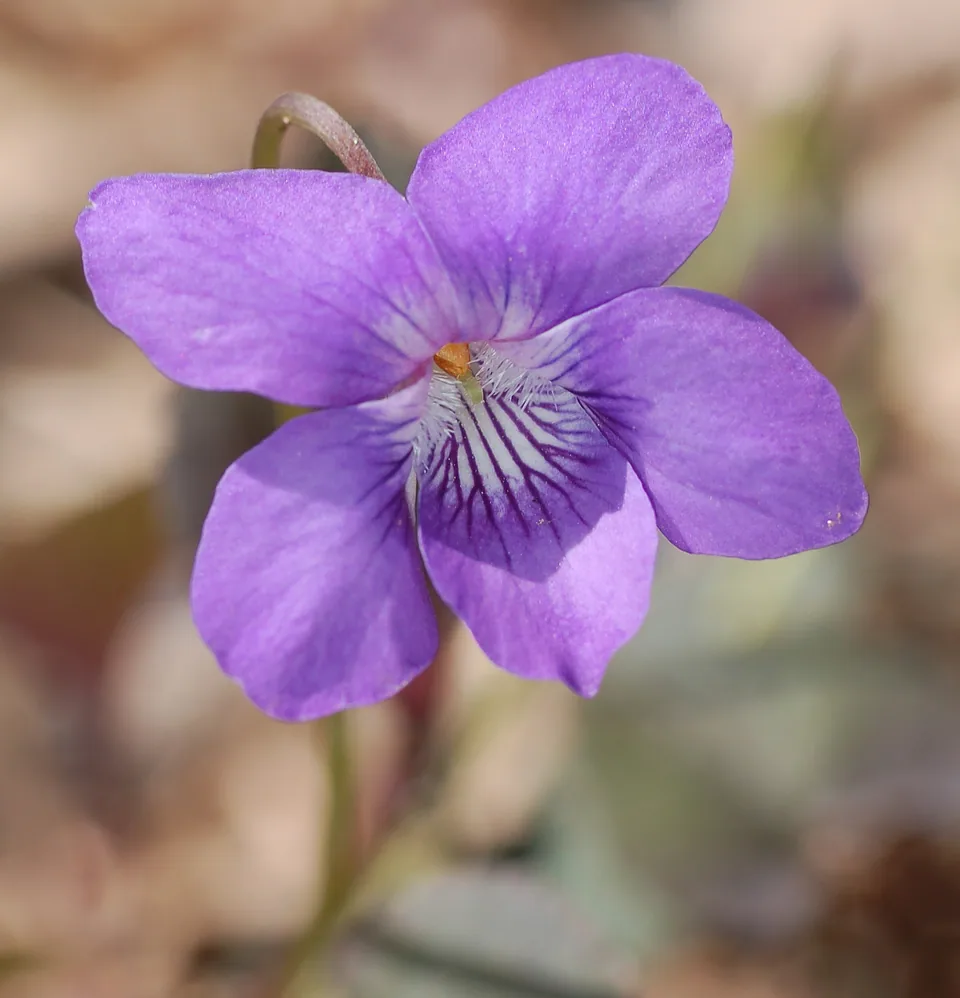
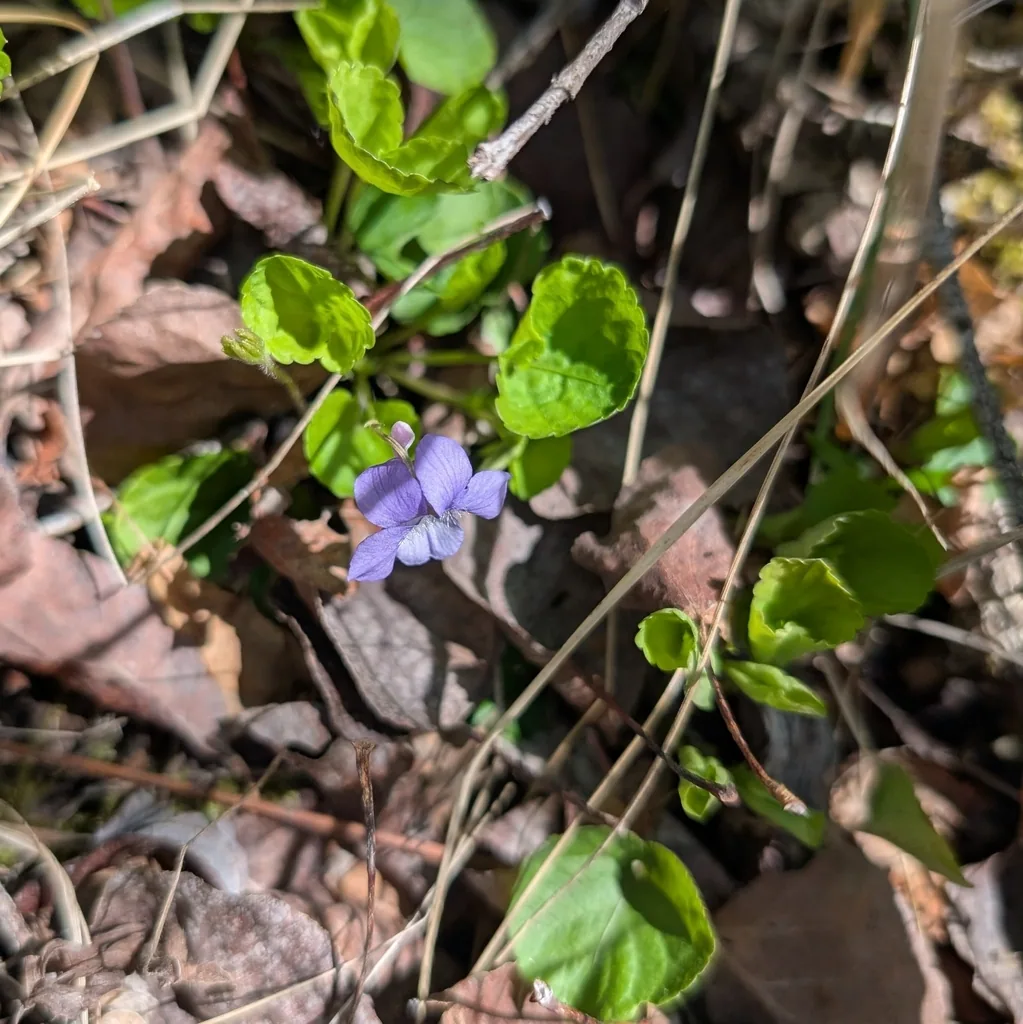

How to Grow and Care for Alpine violet
Viola labradorica
Written by Emilio Marruso · last checked
At a glance
This violet is happy where many plants struggle: in partial to full shade, with soil that stays consistently moist. Plant it in spring or fall, water it regularly in dry spells, add a light mulch and tidy its tired leaves after flowering. It grows in containers too, and you can make more plants by dividing it or sowing seed.
- Sun
Partial to full shade
What the sources say (2)
- Water
Keep the soil moist, more water in dry spells; never soggy, a light mulch helps
What the sources say (2)
Watering: Water regularly, especially during dry periods; the plants prefer consistently moist soil
Water regularly, particularly during dry periods, as these plants prefer consistently moist soil.
— How To Grow Labrador violet (Viola labradorica) In Your Garden [4] Watering notes: Avoid waterlogged conditions; a light mulch layer helps retain moisture
However, avoid waterlogged conditions. A light mulch layer can help retain moisture and suppress weeds.
— How To Grow Labrador violet (Viola labradorica) In Your Garden [4] - Soil
Slightly acidic soil, pH 6–6.5
- Spacing
6–12 in between plants
What the sources say (1)
Spacing: 15-30 cm (6-12 in)
Space plants about 6 to 12 inches (15 to 30 cm) apart
— How To Grow Labrador violet (Viola labradorica) In Your Garden [4] - Planting
Plant in spring or fall
What the sources say (1)
Planting: Spring or fall
Plant in either spring or fall
— How To Grow Labrador violet (Viola labradorica) In Your Garden [4] - Pruning
After flowering, remove tired leaves
What the sources say (1)
Pruning: After flowering (remove tired foliage)
Remove any tired foliage after flowering if desired
— How To Grow Labrador violet (Viola labradorica) In Your Garden [4] - Harvest
In some places people gather it from the wild as food
- Propagation
Grow new plants from seed or by dividing the plant
- Containers
Grows in containers too
What the sources say (1)
In containers: Yes
Growing in pots and containers : Suitable for containers, especially in shaded balcony gardens.
— How To Grow Labrador violet (Viola labradorica) In Your Garden [4]
Overview
Labrador violet is a low evergreen perennial of cool, moist woods, grown as an ornamental ground cover. [2] It prefers partial or dappled shade and cool, moist, well-drained, humus-rich soil. [2]
This record is incomplete: the sources we read do not cover every field yet.
Not yet covered by our sources: Hardiness, coldest zone
Alpine violet care
How to water Alpine violet
Watering
Water regularly, especially during dry periods; the plants prefer consistently moist soil
What the sources say (1)
Water regularly, particularly during dry periods, as these plants prefer consistently moist soil.Watering notes
Avoid waterlogged conditions; a light mulch layer helps retain moisture
What the sources say (1)
However, avoid waterlogged conditions. A light mulch layer can help retain moisture and suppress weeds.How much light Alpine violet needs
Partial to full shade
How much cold Alpine violet can take
Hardiness, coldest zone
Not stated in the sources we read.
Best soil for Alpine violet
Soil pH, minimum
6
What the sources say (1)
Prefers a pH between 6 and 6.5.Soil pH, maximum
6.5
What the sources say (1)
Prefers a pH between 6 and 6.5.Where to grow Alpine violet
In containers
Yes
What the sources say (1)
Growing in pots and containers : Suitable for containers, especially in shaded balcony gardens.Spacing
15-30 cm (6-12 in)
What the sources say (1)
Space plants about 6 to 12 inches (15 to 30 cm) apartHow to propagate Alpine violet
How to grow Alpine violet
The plant
Life cycle
perennial
What the sources say (1)
Carpel Number/Pistil
3
Duration
Perennial
Fruit Complexity
Simple
Fruit DehiscenceFamily
Violaceae
What the sources say (1)
Classification
- Species Distribution Map
- Synonyms
- Specimens
- Photos
##
Characteristics
Classification
Dicots
Family
Violaceae
Genus
Viola
Species
Viola labradorica SchrankRemedies
The sources we checked give no remedies for this plant.
Calendar
Sowing
The sources give different values depending on region, zone or growing conditions.
What each source says
According to Gardeners HQ (indoor start): Late winter or early spring, indoors
According to Gardeners HQ (quick guide): Early spring or late summer
According to Rock Garden Plants database: Winter
What the sources say (3)
According to Gardeners HQ (indoor start): Start indoors in late winter or early spring, about six to eight weeks before the last frost.According to Gardeners HQ (quick guide): Sow seeds in early spring or late summer.According to Rock Garden Plants database: seed in winter, barely covered, germ. 1-3 months, 13-16°CPlanting
Spring or fall
What the sources say (1)
Plant in either spring or fallPruning
After flowering (remove tired foliage)
What the sources say (1)
Remove any tired foliage after flowering if desiredMonths as given by the sources, which are mostly from the United States (northern hemisphere). In the southern hemisphere they shift by about six months.
Edibility
Reported by the source, quoted verbatim. Do not eat a plant on the basis of this page alone: identification mistakes can be dangerous.
The plant is harvested from the wild for local use as a food.
[2]
Indicative values
Values from a secondary source, not checked word for word like the rest of this page. Use them as a starting point.
- Mature height
- 7.6-15.2 cm (0.25-0.5 ft)Indicative value, adapt it to your climate · Secondary source
- Hours of sun
- 1-2 hoursIndicative value, adapt it to your climate · Secondary source
- Drought tolerant
- yesIndicative value, adapt it to your climate · Secondary source
- Care level
- MediumIndicative value, adapt it to your climate · Secondary source
- Growth rate
- LowIndicative value, adapt it to your climate · Secondary source
Similar plants
- Bog White Viola Viola lanceolata
- Canadian Violet Viola canadensis
- Spearleaf Violet Viola hastata
- Walter's Violet Viola walteri
- Wild White Violet Viola macloskeyi
- Bird-Foot Violet Viola pedata
- Common Blue Violet Viola sororia
- Field Pansy Viola arvensis
Sources
Every value above is quoted from these documents. Links lead to the original publisher.
- Viola labradorica (Dog Violet): Minnesota Wildflowers · minnesotawildflowers.info, consulted
- Viola labradorica - Useful Temperate Plants · temperate.theferns.info, consulted
- Viola labradorica / Species Page / Plant Atlas · tennessee-kentucky.plantatlas.usf.edu, consulted
- How To Grow Labrador violet (Viola labradorica) In Your Garden · gardenershq.com, consulted
- Viola labradorica Schrank · flora.kadel.cz, consulted
Written by Emilio Marruso · last checked